
Grief, Surrender, Stability, Trust, Humility, Endurance, Worship, Fatherhood, Perspective, Resilience
Job 1:21 ESV
And he said, Naked I came from my mother’s womb, and naked shall I return. The LORD gave, and the LORD has taken away; blessed be the name of the LORD.

Loss has a way of stripping a man down to what is real. The noise fades, the plans collapse, and the only thing left is what you truly believe about God when life hurts. Some men tighten their fists and demand an explanation, but others choose a deeper strength that does not depend on feeling okay. These words come from a man standing in fresh grief, refusing to let pain turn him into a bitter man. They speak to the man who wants to be steady when the ground shifts, not numb, not fake, but anchored. They call you toward worship that is honest enough to name the loss and strong enough to still honor the Lord.
The author of Job is not named, and the book is set in an ancient patriarchal world that looks more like the era of the early fathers than the time of Israel’s kings. Job is introduced as a man of integrity and reverence, and the opening chapter moves quickly from abundance to sudden disaster. In that culture, family, livestock, and household strength were tied to identity and security, and losing them meant more than financial pain. It was a social and personal collapse. These words mattered because they show what a righteous man does when his world caves in. He does not perform. He responds.
What Job says reveals God as the rightful Owner, not a tool for a man’s comfort. The LORD is not treated like a vending machine for blessing, and He is not accused as if He owes Job a painless life. Job names God as the Giver and recognizes that everything in his hands was received, not earned as a claim against heaven. The line does not call evil good or pretend loss is light. It places God above the moment and refuses to make grief the final authority. Blessing the name of the LORD in that hour is not denial. It is allegiance.
You live in a world that trains men to measure worth by what they can build, protect, and control. This verse calls you to a different kind of strength, the kind that releases ownership and keeps faithfulness when life does not cooperate. It shows up when you lead your home through unexpected bills, when a relationship changes, when a plan you counted on falls apart, when a door closes that you thought God opened. In those moments, you do not have to become passive or hollow. You can take action, make wise decisions, and still hold your life with open hands, refusing to speak about God as if He exists to serve your comfort.
The house is quiet after everyone goes to bed, and a man sits at the kitchen table staring at a message he did not want to read. He does not slam anything. He does not post about it. He just feels the weight in his chest and the frustration in his throat. His hands rest on the table, and after a long minute he whispers the only honest sentence he can manage: Lord, everything I have is Yours. Then he gets up, checks on his kids, and goes to bed still hurting, still responsible, and still choosing not to turn his pain into bitterness.
Job 1 holds the full scene around these words, including the losses, the grief, and the way Job refuses to sin with his mouth in the first shock of suffering. The chapter also sets the stage for the conversations that follow and the bigger questions the book will confront.
THE DEEPER DIVE
Job 1:21 stands in the middle of the first great turning point in Job’s story. The chapter begins by painting a picture of a man who is spiritually serious, materially prosperous, and deeply involved with his family. Job is called blameless and upright, a man who fears God and turns away from evil. He has seven sons, three daughters, thousands of animals, and many servants. He regularly offers burnt offerings after his children’s feast days, saying that they might have sinned and cursed God in their hearts. This shows a man who does not take his children’s spiritual condition lightly and who recognizes his role as a spiritual intercessor in his home.
The scene then shifts to a heavenly council, where “the Satan” (the adversary or accuser) appears among the sons of God. The question raised is whether Job fears God “for nothing,” or whether his reverence is just a response to his protected, prosperous life. God points to Job’s integrity, while the adversary insists that if Job’s blessings are removed, he will curse God to His face. God permits the adversary to touch Job’s possessions and children, but not his own body. What follows is a series of hammer blows: raiders attack and steal animals, fire from heaven burns up sheep, more raiders take camels, and a great wind collapses the house where Job’s children are gathered, killing them all. The messengers arrive in succession, each piling on more grief.
Job’s response is both human and holy. He tears his robe and shaves his head, two normal signs of deep mourning in the ancient Near East. Then he falls to the ground, not only in collapse but in worship. His words in verse 21 are the heart of that response. They do not erase his pain, and they do not offer a neat explanation for what has happened. Instead, they reveal how he has understood his life for a long time: as something received from God, held temporarily, and ultimately returned. The chapter ends by stating that in all this, Job did not sin or charge God with wrong. His confession in 1:21 is not the final word of the book, but it is the first clear window into a heart that has been shaped by reverence long before suffering arrived.
WHAT JOB 1:21 SHOWS ABOUT GOD’S CALL
Job 1:21 shows that God’s call on a man touches not just his actions but his view of everything he has. When Job says “Naked I came from my mother’s womb, and naked shall I return,” he is recognizing that he entered life with nothing and will leave it with nothing. That perspective undercuts entitlement. His wealth, his children, his position in the community, and even his physical health are not ultimate possessions. They are trusts.
“The LORD gave” shows that Job has seen his blessings as gifts from the covenant God, not as trophies he earned apart from God. He has been diligent and responsible, but he has never believed that his prosperity is simply self-made. “The LORD has taken away” acknowledges God’s right to rearrange what He has placed in Job’s hands. Job does not say that the losses do not hurt, and he does not pretend they are good in themselves. He does, however, place them under God’s sovereignty.
“Blessed be the name of the LORD” reveals that Job understands his highest calling as honoring God’s character, not preserving his own comfort. He blesses the name of the LORD, focusing on who God is, rather than blessing only the visible gifts God gives. God’s call on Job, in this moment, is to worship honestly in the middle of unexplained loss. That call includes truthfulness about pain and, at the same time, a refusal to reduce God to a dispenser of blessings whose worth is measured by how pleasant life feels.
HOW JOB 1:21 FLOWS
Job 1:21 makes the most sense when it is seen in the sequence of Job 1:
Verses 1–5: Job is introduced. His character, wealth, and care for his children are established. He is portrayed as a man of integrity, reverence, and responsibility.
Verses 6–12: The heavenly court scene raises the central question: does Job fear God because God is worthy, or because God has blessed him so richly This conversation happens beyond Job’s awareness, but it frames the entire story.
Verses 13–19: A series of disasters strikes Job’s household. Each messenger brings news of another loss. Livestock, servants, and children are all taken in swift succession.
Verses 20–22: Job responds with mourning and worship. He tears his robe, shaves his head, falls to the ground, and speaks the words of verse 21. The chapter closes with the statement that Job did not sin or accuse God of wrongdoing.
In that flow, Job 1:21 sits as the hinge between catastrophe and worship. The narrative does not soften the impact of the losses, and it does not rush past Job’s grief. It simply lets his confession stand as his first clear response. That response does not end his struggle. Later chapters will show him crying out with confusion and anguish. But in chapter 1, his instinct is to frame his entire life in relation to God’s giving and taking and to bless God’s name even while he mourns.
WORD AND PHRASE STUDY (PLAIN-LANGUAGE FOCUS)
Several phrases in Job 1:21 open up the depth of what Job is saying:
“Naked I came from my mother’s womb” – The word “naked” points to vulnerability and complete lack of possessions. Job is not speaking about shame here, but about arriving in life empty handed. Birth brings him into the world with nothing but his existence.
“and naked shall I return” – He will leave the world as he entered it, without taking his wealth, status, or even family with him. The “return” is a way of speaking about death, going back to the dust and into God’s hands.
“The LORD gave” – The title “LORD” here is God’s covenant name, often represented as Yahweh. Job recognizes that every good thing he has enjoyed has come from this God’s hand. The giving is not random; it is personal and purposeful.
“and the LORD has taken away” – Job attributes ultimate control over his circumstances to the same Lord who gave. He does not blame secondary causes alone, such as raiders, weather, or fate. He acknowledges that those events are under God’s larger rule, even if he does not understand why they were allowed.
“blessed be the name of the LORD” – To bless God’s name is to speak well of His character, to honor who He is. The “name” sums up God’s reputation and revealed nature. Job chooses to praise that name, not because he enjoys what has happened, but because he believes God remains worthy of praise regardless of his own situation.
When these phrases are taken together, they reveal a man who sees his life from the standpoint of dependence, gift, and worship. He does not trivialize his suffering, but he refuses to let it dictate his view of God.
IMPLICATIONS FOR IDENTITY, CALLING, AND RISK
Job 1:21 presses deeply into how a man understands himself. If your identity is built primarily on what you earn, achieve, or control, any loss will feel like the collapse of who you are. Job’s perspective redirects identity to something more solid. You began with nothing and will leave with nothing. That does not diminish your work or your responsibilities, but it means they do not define your worth. Your identity is anchored in belonging to God, not in the size of your herds, bank accounts, or following.
Calling, in this light, includes both what you do with what God entrusts and how you respond when He allows that trust to change. You are called to work, to lead, to provide, and to love faithfully. You are also called to trust and worship when a job is lost, a door closes, a relationship changes, or a plan breaks. Job 1:21 does not demand that you feel nothing in those moments. It calls you to recognize that God’s character does not crumble when your plans do.
Risk looks different when you live how Job speaks. You can make decisions that prioritize obedience, integrity, and faithfulness over security. You may give generously, even when finances are tight, because you believe the Lord who gave is still your provider. You may take on a hard assignment or stay in a difficult place because you are convinced it is where God has you, even if it does not maximize comfort. The verse does not invite recklessness, but it does free you from being controlled by the fear of losing what you cannot ultimately keep.
HOW THIS SHOWS UP IN ORDINARY DECISIONS
In daily life, Job 1:21 shows up in quiet, private crossroads. A man sees a business opportunity that promises quick gain but requires compromising integrity. If his identity rests in what he can secure, he will likely take it. If he knows that everything he has is gift and that he will leave with nothing, he can walk away, choosing to honor God’s name over short term profit.
Another man faces a sudden expense or financial setback. The fear rises quickly, and with it the temptation to grumble against God or to chase every possible shortcut, including ones that do not reflect trust or honesty. Job’s words call him to acknowledge the loss, take wise steps, and still say, “You gave what I had. You are not less God now.” That does not pay the bill, but it shapes how he carries the pressure.
A father or husband walks through a season where his plans for his family are interrupted by illness, relocation, or some other unexpected change. Job 1:21 invites him to lead his home with a calm that is not fake, guiding his family to see that their ultimate security was never in a particular schedule, school, or house. It was, and is, in the God who gave those good things and who is still worthy of their trust when some of them are taken.
In each of these situations, the verse quietly asks: will you define God by your circumstances, or will you define your circumstances in light of who God is
CONNECTION TO JOB’S OWN WORDS LATER
Job’s initial confession in 1:21 is not the end of his emotional journey. As the book progresses, he speaks with far more intensity and anguish. He curses the day of his birth, questions why he lives at all, protests his innocence, and demands an audience with God. His speeches are raw and, at times, right up against the edge of what is safe to say. At several points, he sounds like a man struggling not to slip into accusing God of injustice.
Yet even within that struggle, there remains a thread of clinging trust. Job continues to address God, not abandon Him. He longs for a mediator, believes that his Redeemer lives, and holds to a hope that he will see God. When God finally speaks from the whirlwind near the end of the book, Job is confronted with a vast picture of God’s wisdom in creation and providence. He realizes he has spoken without full knowledge and repents in humility. His early words in 1:21, spoken in the shock of grief, are not erased. They are deepened and set in the context of a larger encounter with God’s greatness.
By the time Job’s fortunes are restored in the final chapter, it is clear that the real turning point was not the return of blessings, but the revelation of who God is. Job ends up with renewed blessings, but his anchoring is no longer in those gifts. The God whose name he blessed in chapter 1, and whose wisdom he bows before at the end, is the constant. Job 1:21 is the starting note of that long, hard song.
WIDER BIBLICAL THREADS
Job 1:21 fits into a wider biblical witness about life, possessions, and trust. Ecclesiastes reflects repeatedly on the reality that a person comes into the world with nothing and leaves the same way, pointing out the futility of building identity on wealth or accomplishment. Psalm 24 declares that the earth is the Lord’s and everything in it, reminding readers that ultimate ownership belongs to God, not to us. Jesus warns against laying up treasures on earth, where moth and rust destroy, and calls His followers to seek first God’s kingdom and righteousness.
In the New Testament, James mentions Job as an example of steadfastness and points to the Lord’s compassion and mercy in the outcome of Job’s story. Peter writes to suffering believers, urging them to entrust their souls to a faithful Creator while doing good. Paul describes himself as “having nothing, yet possessing everything,” because his true riches are in Christ. All of these threads align with Job 1:21. Life is gift, not guarantee. God’s worth does not depend on our comfort. Trust can remain even when the things we value most are shaken.
PRACTICAL QUESTIONS FOR SELF-EXAMINATION
Job 1:21 is meant to move beyond admiration into examination. It can help to sit with questions like these:
Where am I clinging to something in my life as if I cannot be whole without it
How do I normally speak about God, even just in my own thoughts, when plans collapse or losses hit
What specific blessings in my life have I quietly started to treat as entitlements, rather than as gifts I received and will one day give up
If I knew I would leave this world with nothing in my hands, how would that change the way I handle money, influence, time, and relationships right now
When I think about future risks, am I more concerned with keeping my comfort or with honoring God’s name whatever comes
Bringing these questions to God honestly, possibly along with trusted brothers, opens space for Him to adjust your grip, your expectations, and your sense of where your life is truly anchored.
HELPFUL RESOURCES FOR DEEPER STUDY
For going deeper into Job 1:21 and the broader message of Job, these resources are solid starting points:
Job 1:21 – Multiple translations, interlinear Hebrew, and commentary links
https://biblehub.com/job/1-21.htm
Matthew Henry’s concise commentary on Job 1
https://www.christianity.com/bible/commentary/matthew-henry-concise/job/1
Explaining Job 1 with attention to structure and key themes
https://explainingthebook.com/2017/10/22/job-1-commentary/
Article length reflection on the meaning and application of Job 1:21
https://dailyverse.knowing-jesus.com/job-1-21
Background and theological overview of the book of Job
https://www.thegospelcoalition.org/commentary/job/



Wisdom For Costly Choices
Lord, I feel the weight of decisions that do not have easy answers, and I admit how quickly I slip into acting like I can carry them alone, so today I choose to take You at Your word and ask for wisdom. You see every angle I cannot see, every hidden consequence, every heart involved, and You promise to give wisdom generously without shaming me for needing it, so I bring You the choices in front of me and confess that my understanding is limited, my motives get mixed, and my fear of getting it wrong can paralyze me. I ask You to purify my motives, to pull out selfish ambition, pride, and fear of people, and to give me the kind of wisdom that is pure, peace-loving, considerate, and anchored in obedience to You. As I weigh options, talk with my wife, seek counsel from other men, and think through the details, keep me from rushing ahead in anxiety or dragging my feet in cowardice. Make me a man who listens for Your voice, who is willing to choose the harder right over the easier wrong, and who trusts that You will be with me on the other side of whatever decision obedience requires. In Jesus’ name, Amen.
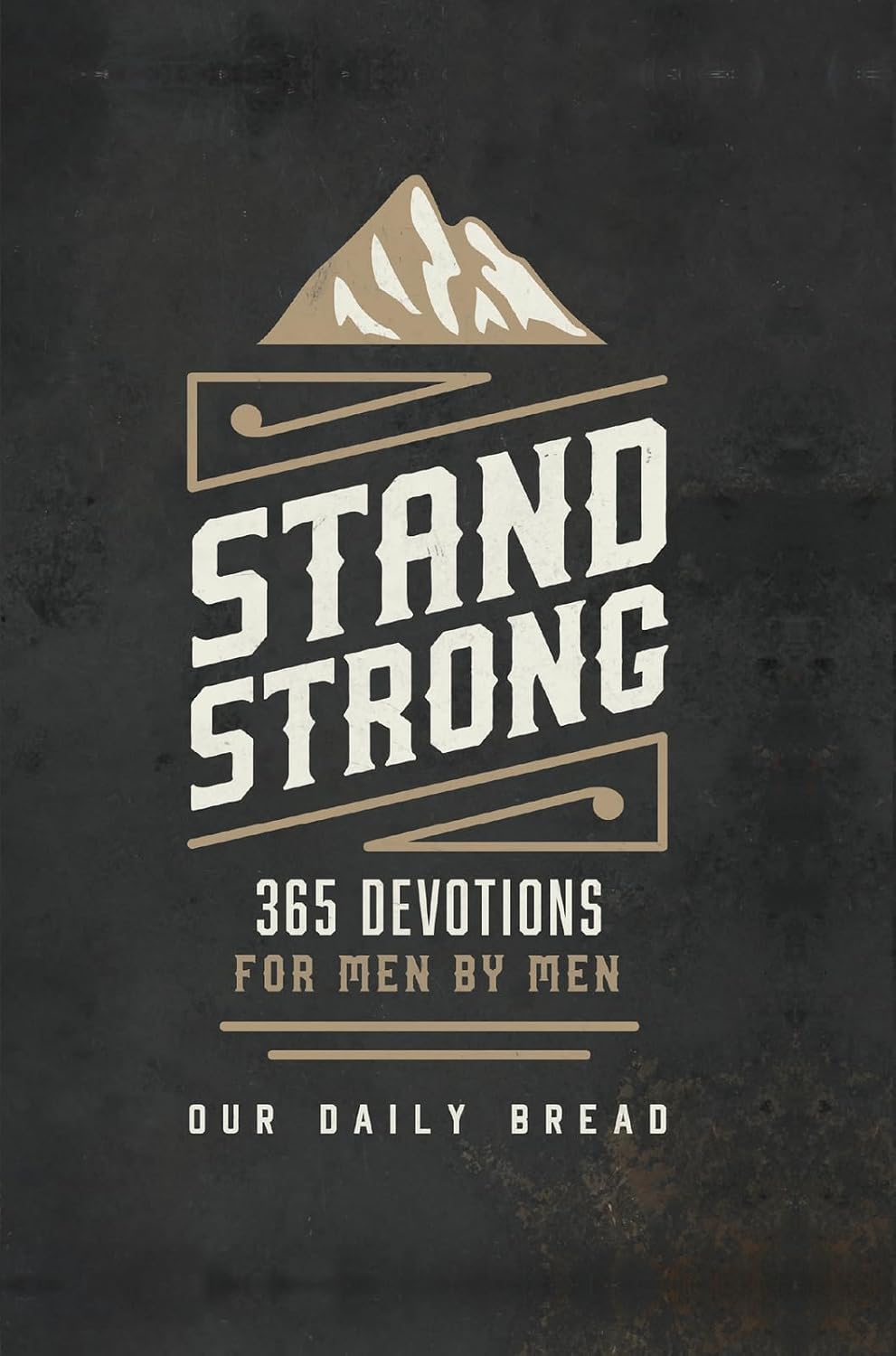
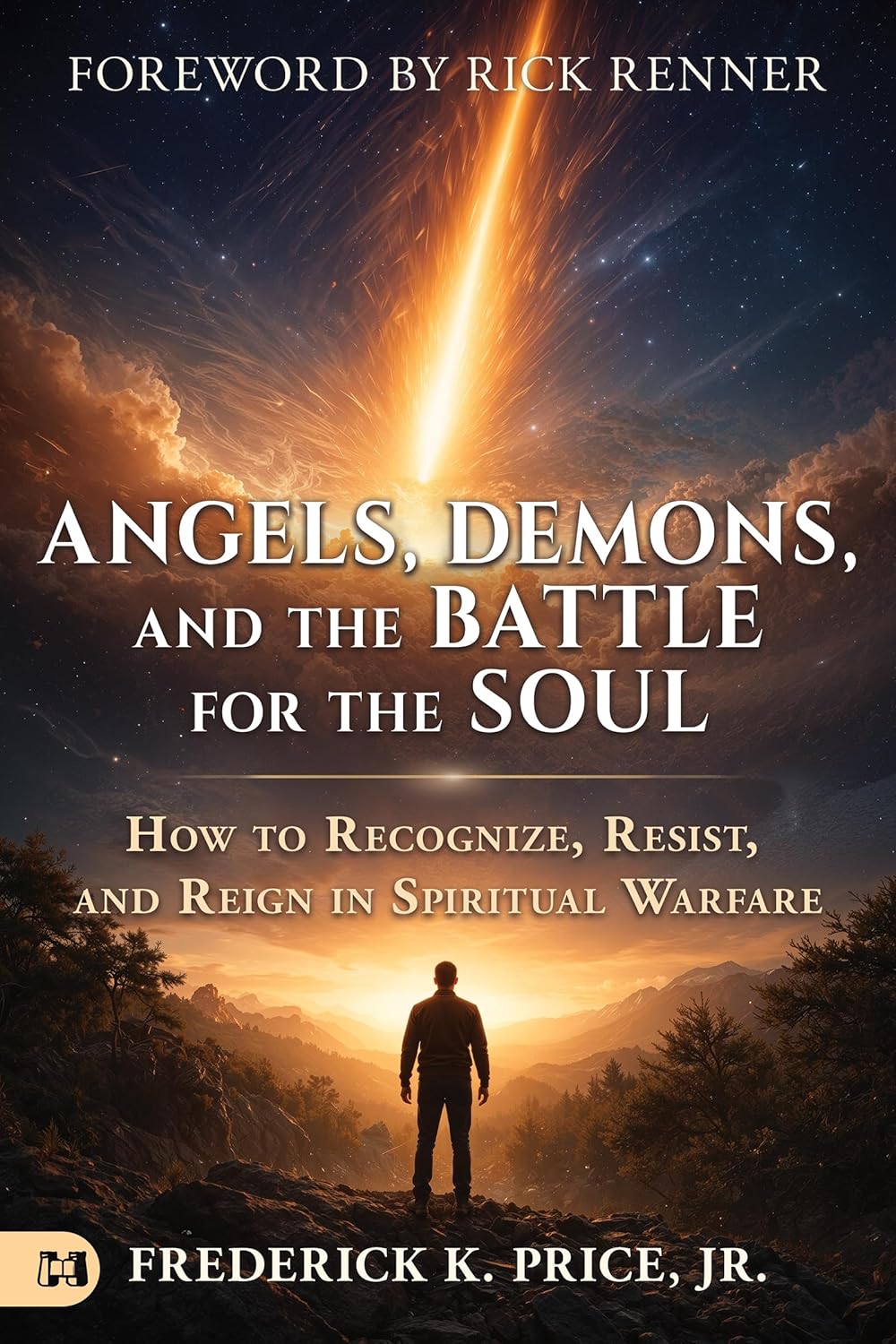
Stand Strong: 365 Devotions for Men by Men
Written by men for men, this devotional offers practical biblical encouragement for facing pressure, temptation, uncertainty, and everyday responsibilities with steady faith. It offers steady biblical encouragement for trusting God through loss, grief, and seasons without easy answers.
1627079009

Copyright Notice
Copyright © 2026 Men Building Faith. All rights reserved.
All content on this website, including text, articles, devotionals, blog posts, graphics, logos, designs, photographs, videos, downloads, and other original materials (collectively, “Content”), is owned by Men Building Faith and is protected by U.S. and international copyright laws.
No part of this site may be copied, reproduced, republished, uploaded, posted, publicly displayed, transmitted, distributed, sold, licensed, or otherwise exploited for any purpose without prior written permission from Men Building Faith, except for brief quotations used for noncommercial purposes with proper attribution and a link back to the original page.
NLT- Scripture quotations marked (NLT) are taken from the Holy Bible, New Living Translation, copyright ©1996, 2004, 2015 by Tyndale House Foundation. Used by permission of Tyndale House Publishers, Carol Stream, Illinois 60188. All rights reserved.
NIV- Scripture quotations taken from The Holy Bible, New International Version® NIV® Copyright © 1973, 1978, 1984, 2011 by Biblica, Inc. Used with permission. All rights reserved worldwide.
AMP- Scripture quotations taken from the Amplified® Bible (AMP), Copyright © 2015 by The Lockman Foundation. Used by permission
NKJV- Scripture taken from the New King James Version®. Copyright © 1982 by Thomas Nelson. Used by permission. All rights reserved
ESV- Scripture quotations are from the ESV® Bible (The Holy Bible, English Standard Version®), copyright © 2001 by Crossway Bibles, a publishing ministry of Good News Publishers. Used by permission. All rights reserved.