
2026 Retirement Fund for Religious Supports Nearly 19,000 Aging Sisters, Brothers, and Priests Nationwide
November 2, 2026
The U.S. Catholic bishopsâ 2026 Retirement Fund for Religious appeal will support nearly 19,000 aging sisters, brothers, and religious order priests, while new figures show how few institutes are adequately funded for retirement. The nationwide collection highlights an urgent care gap and gives parishes a practical way to honor generations of consecrated service.
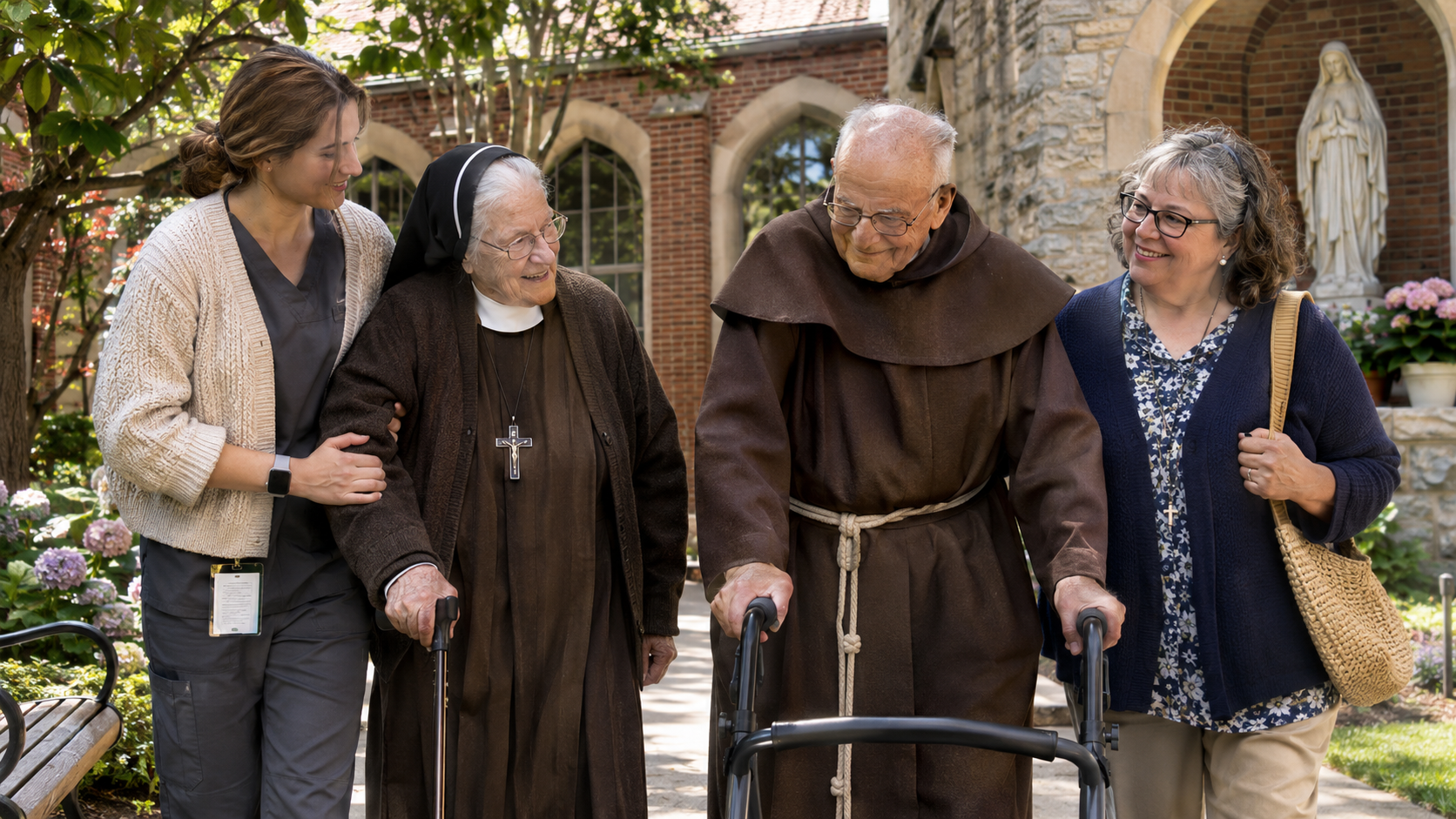
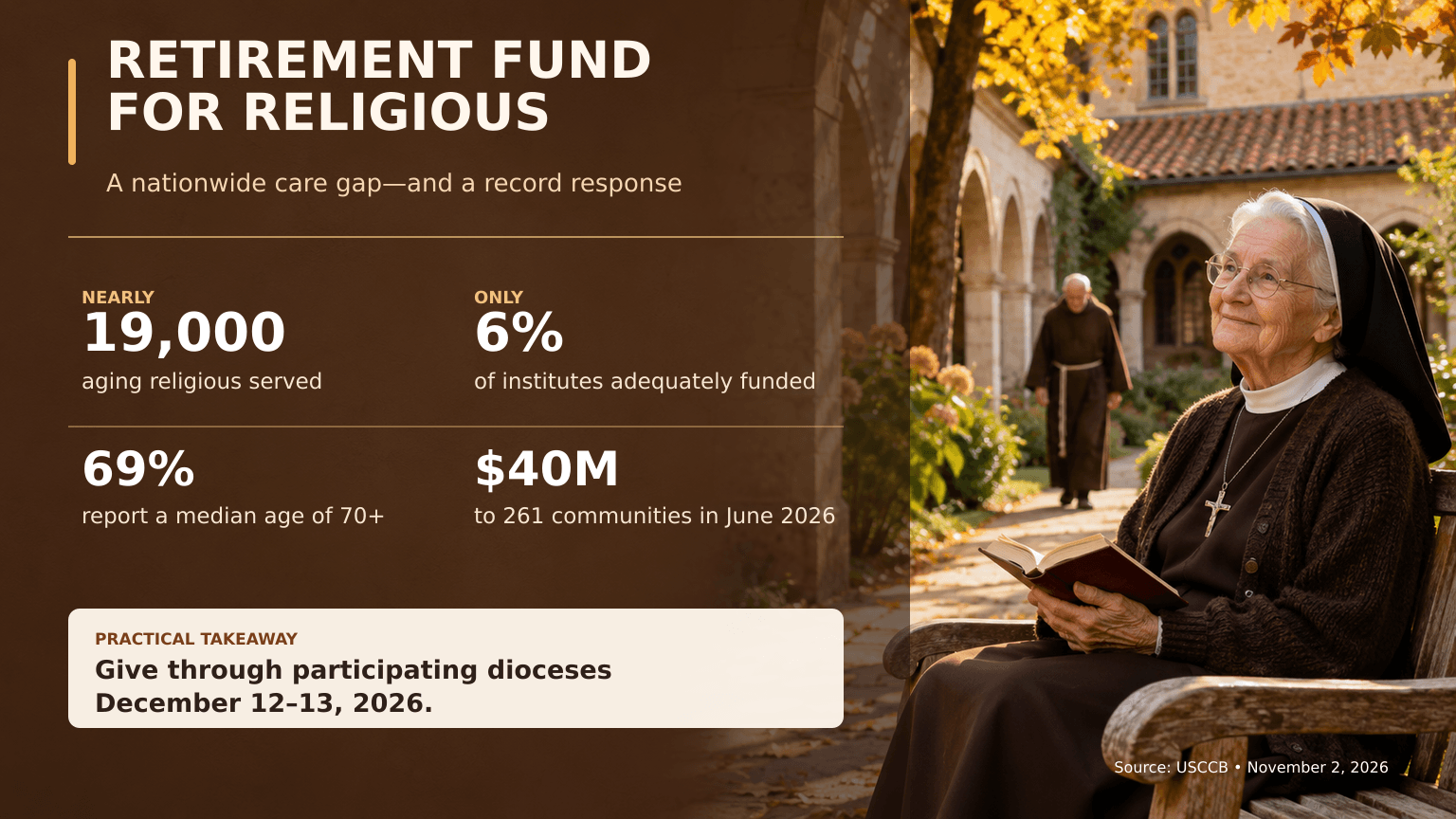
The United States Conference of Catholic Bishops announced that the 2026 Retirement Fund for Religious collection will be held December 12â13 in participating dioceses, although individual dioceses may choose another weekend. The appeal supports nearly 19,000 elderly Catholic sisters, brothers, and religious order priests across the country. The need is unusually sharp: only 6 percent of religious institutes reporting to the National Religious Retirement Office are adequately funded for retirement, and 69 percent reported a median member age of 70 or older. The bishopsâ announcement also documents a substantial response from Catholic donors. The 2025 appeal raised a record $37.1 million. In June 2026, the National Religious Retirement Office distributed a record $40 million in direct-care assistance to 261 religious communities. Those grants help communities meet expenses such as prescription medicine, nursing care, rehabilitation, and accessibility needs while continuing to plan for sustainable elder care. Since the national collection began in 1988, more than $1.04 billion has been distributed or allocated to religious institutes. The financial pressures remain considerable. The announcement reports that the average annual cost of care for a religious community member was about $62,000 in 2025, while skilled nursing averaged roughly $102,000. At the same time, the average annual Social Security benefit received by a religious was $9,390, compared with $24,856 for the average lay beneficiary. Those figures help explain why even careful communities can face a widening gap between retirement income and the cost of dignified care. This is not merely a year-end fundraising statistic; it is a nationwide picture of how congregations are supporting women and men who spent decades in prayer, education, health care, parish work, and service to people in need.
For Catholic parishes and families, the appeal offers a concrete opportunity to connect gratitude with stewardship. Many older religious entered ministry when stipends were modest and retirement planning was limited, so their institutes now carry responsibility for care with fewer active members available to contribute. The Retirement Fund for Religious does not replace a communityâs own planning or absolve leaders of prudent financial management. Rather, it supplements those efforts through direct-care grants and other assistance coordinated by the National Religious Retirement Office. That distinction matters because the collection is designed around the actual needs of recognized religious institutes rather than a generalized campaign about aging. Parish leaders can use the December weekend to explain consecrated life, introduce the ministries that local sisters, brothers, and priests have provided, and help younger Catholics understand that faithful service continues long after public ministry becomes less visible. Donors should follow their dioceseâs published schedule, since the national dates may be observed on a different weekend locally, and should give through official parish or diocesan channels. The larger Christian lesson is equally practical: honoring elders requires more than warm remembrance. It includes safe housing, skilled care, medicine, accessible buildings, companionship, and sound administration. The bishopsâ figures also encourage ministries of every tradition to examine whether the workers who built their institutions are being prepared for later life. Churches can respond by checking on retired clergy and missionaries, strengthening benevolence practices, supporting caregivers, and treating aging not as an institutional inconvenience but as a season worthy of patience and dignity. The record 2025 appeal and the record June 2026 distribution show that nationwide generosity can translate into specific care, while the 6 percent funding figure warns that the underlying challenge is far from resolved.
Catholic Religious Life and Elder Care
Catholic
Catholics, parish leaders, donors, and caregivers
United States Conference of Catholic Bishops
Aging Faithfully: The Holy Invitation of Growing Older
Alice Fryling
Alice Frylingâs Christian reflection on growing older complements this story by helping readers approach aging as a holy season marked by purpose, limits, community, and faithful care.