
91 Lawmakers Ask Congress to Invite Pope Leo XIV for Historic Joint Address
November 8, 2026
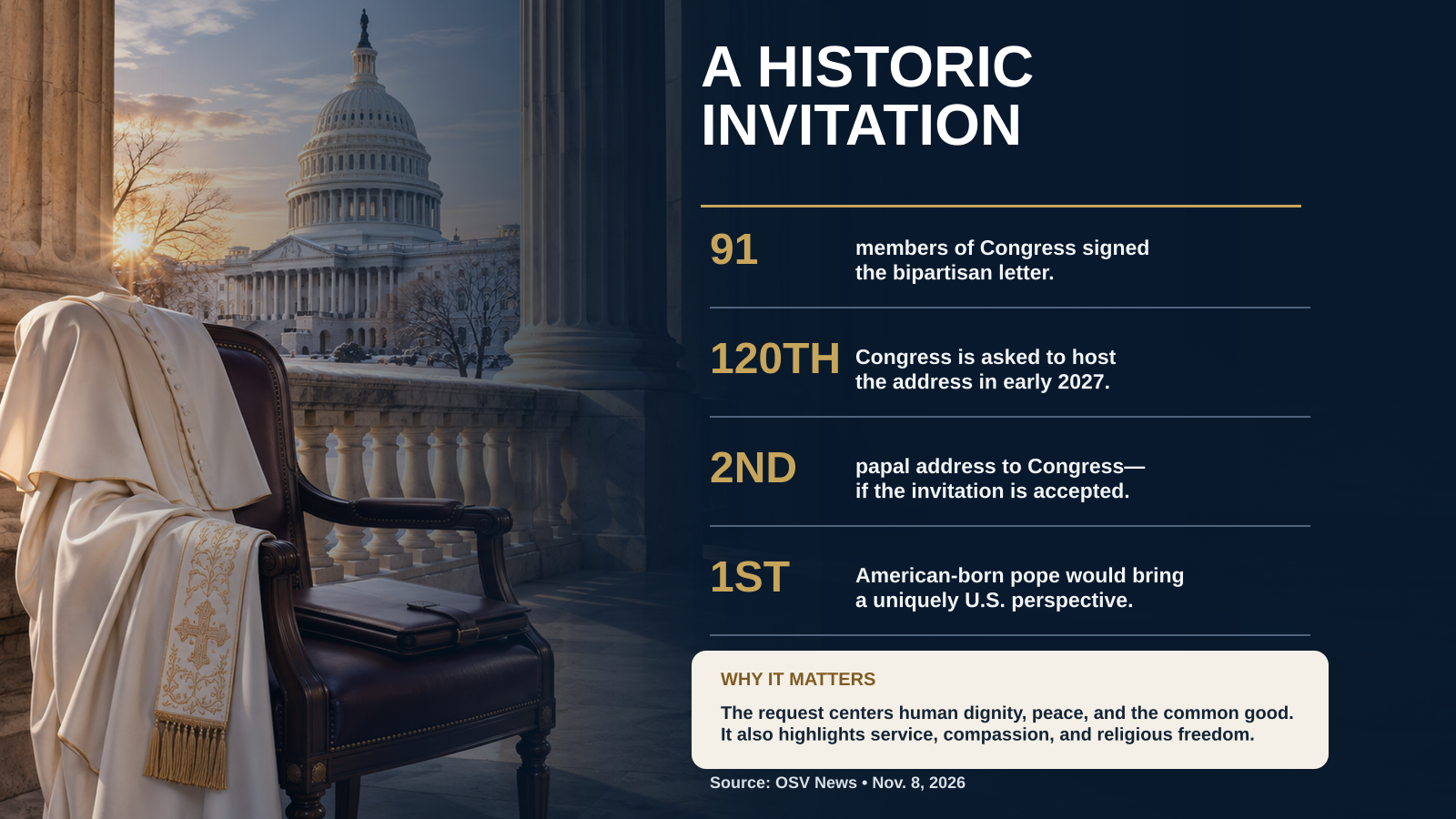
A bipartisan group of 91 members of Congress has asked House leaders to invite Pope Leo XIV, the first American-born pope, to address a joint session early in the 120th Congress. The request could produce only the second papal address to Congress and places human dignity, peace, service, compassion, the common good, and religious freedom at the center of a national public-witness moment.
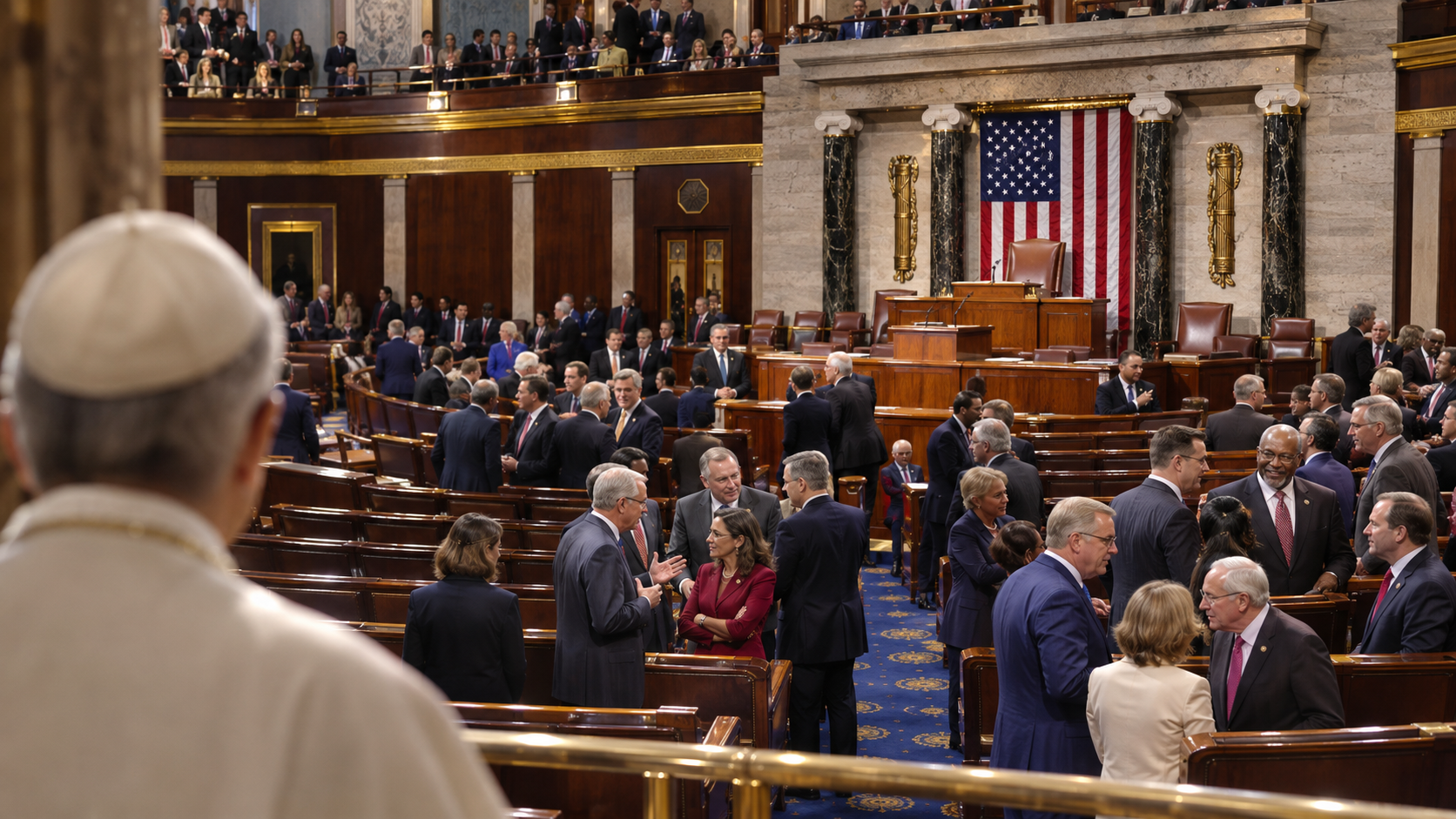
Ninety-one members of Congress have signed a bipartisan request asking House Speaker Mike Johnson and House Minority Leader Hakeem Jeffries to invite Pope Leo XIV to address a joint session at the beginning of the 120th Congress in 2027. Representatives Mike Thompson of California and Brian Fitzpatrick of Pennsylvania led the October 30 letter, which OSV News reported on November 8. The lawmakers framed the proposal as both historic and potentially unifying. Pope Leo XIV is the first American-born pope and was born in Chicago, giving a possible address an unusual connection to the United States as the nation enters a new Congress. If accepted and scheduled, the appearance would be only the second time a pope has spoken before a joint session of Congress. Pope Francis delivered the first such address in 2015, a precedent the letter describes as having substantial historical and cultural significance. The signers said Pope Leo’s perspective and ties to the country could help officials engage difficult domestic and international questions after a divisive election. Their letter highlighted service, compassion, and the importance of human dignity, while supporting statements also pointed to peace, the common good, solidarity, and the nation’s tradition of religious freedom. The request itself is not a confirmed visit or a completed schedule; it is an appeal to congressional leadership to extend a formal invitation. That distinction is important for readers tracking the story. At present, the verified development is the letter, its 91 congressional signers, its bipartisan sponsorship, its named recipients, and its request for an address early in the 120th Congress. Whether congressional leaders issue the invitation and whether the Vatican accepts it remain future decisions.
The proposal matters to Christian readers because it places explicitly moral language in a civic setting without reducing Catholic social teaching to a party platform. Human dignity, peace, the common good, service, compassion, solidarity, and religious freedom are themes with consequences for public policy, but they also arise from a Christian account of the human person and the obligations people owe one another. A papal address would not settle legislative disputes, nor would Catholics or other Christians necessarily agree on every prudential application. It could, however, invite lawmakers and citizens to examine whether political choices treat persons as ends rather than instruments, protect freedom of conscience, pursue peace with justice, and attend to people who are easily overlooked. The bipartisan character of the letter is also significant. The signers are not claiming that the pope belongs to one coalition; they are asking whether a moral witness rooted in faith might speak across hardened boundaries. Churches can use the moment constructively by studying the claims of Catholic social doctrine rather than reacting only to personalities or political symbolism. Parish groups, Christian schools, and adult-formation classes might compare the letter’s themes with Scripture, the Church’s teaching on the dignity of the person, and the practical responsibilities of citizenship. Religious-liberty advocates can also watch how congressional leaders describe the relationship between robust faith and public life. If an invitation is extended, careful reporting should separate the pope’s actual words from partisan interpretations placed upon them. If no address occurs, the letter still reveals a notable desire among 91 lawmakers for a public vocabulary that reaches beyond electoral advantage. The most useful Christian response is neither uncritical celebration nor reflexive suspicion, but informed attention: verify the next steps, listen to the moral claims, test applications with wisdom, and ask how churches can model principled dialogue in a polarized nation.
Catholic Public Witness, Human Dignity, and Congress
Roman Catholic
Catholics; Church Leaders; Religious Liberty Advocates; Civic Leaders; General Christian Readers
OSV News
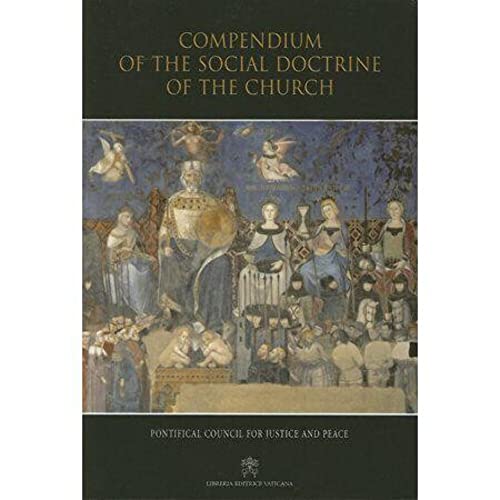
Compendium of the Social Doctrine of the Church
Pontifical Council for Justice and Peace
This 2005 first-edition USCCB paperback organizes Catholic teaching on the dignity of the human person, the common good, peace, solidarity, political life, and religious freedom—the same moral vocabulary that makes the proposed congressional address nationally relevant.