
Chicago Catholic Memorial Models Compassionate Ministry After Suicide Loss
October 9, 2026
The Archdiocese of Chicago’s At Peace memorial is drawing national attention as a visible Catholic commitment to accompany families grieving suicide loss. Located at Queen of Heaven Cemetery, the first-of-its-kind archdiocesan memorial combines sacred space, Christian hope, and the decades-long work of the LOSS ministry, offering churches a compassionate model for pastoral care without shame or isolation.
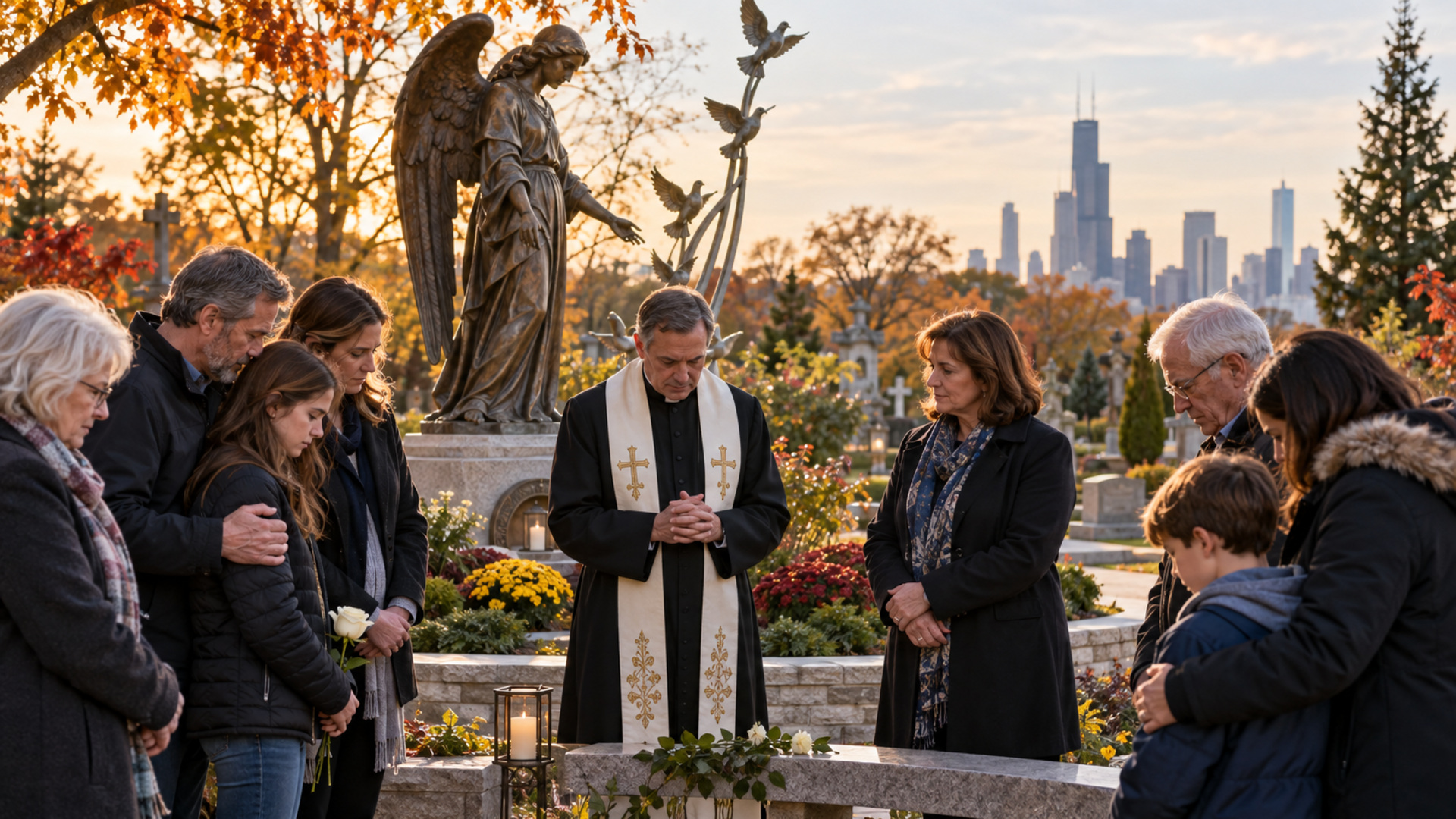
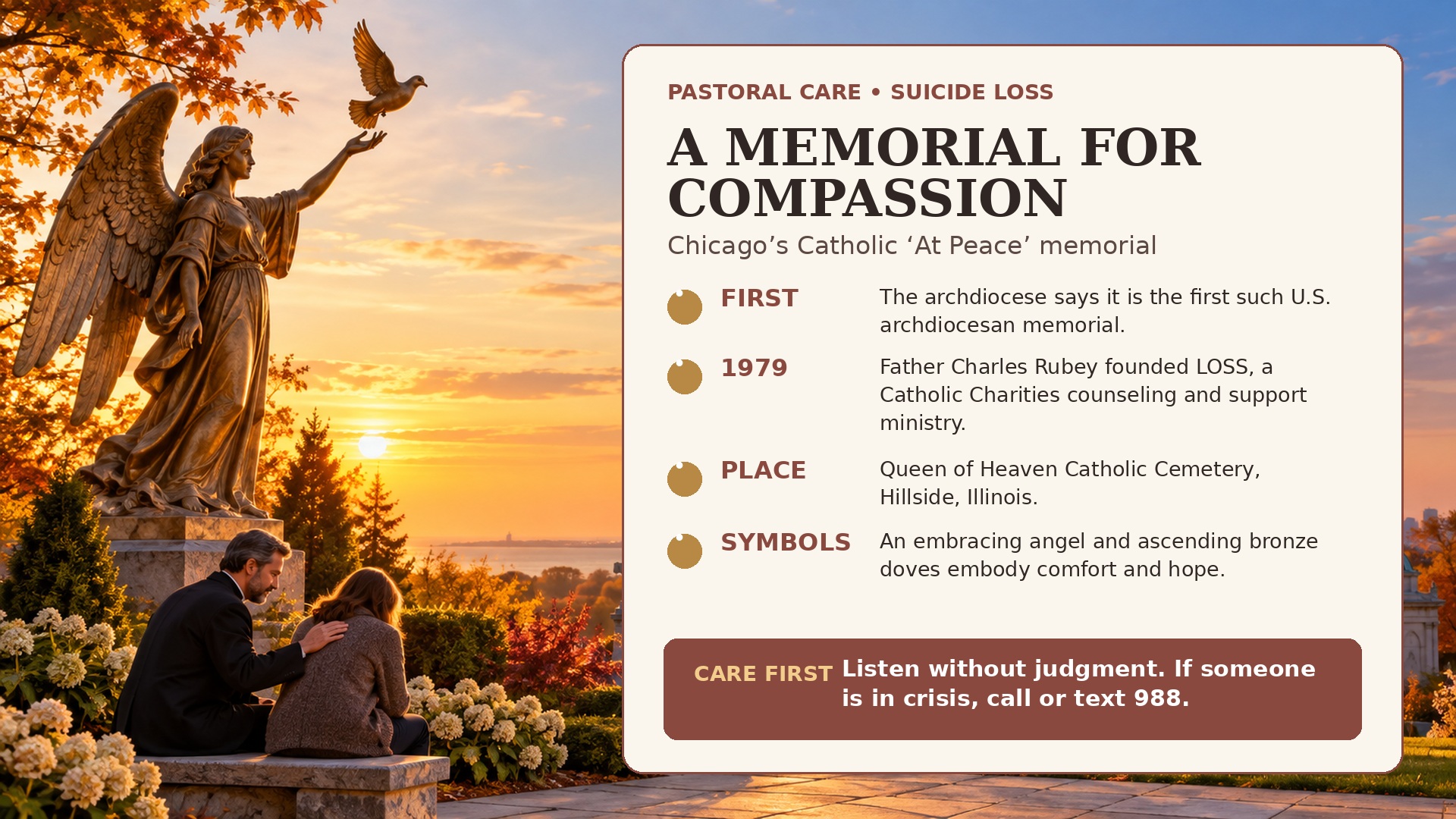
A new Associated Press report has brought national attention to the Archdiocese of Chicago’s At Peace memorial at Queen of Heaven Catholic Cemetery in Hillside, Illinois. The archdiocese says it is the first memorial created by a U.S. Catholic archdiocese specifically for people who died by suicide and the family members and friends who survive them. Dedicated in June and placed prominently near the cemetery’s main Wolf Road entrance, the memorial is intended to be a sacred setting for prayer, remembrance, and honest grief rather than a hidden marker associated with shame. Its design includes two original works: a bronze Embracing Angel whose wings surround a granite bench and a tall Ascending Doves sculpture with nine bronze birds rising from a granite base. The shrine honors the Rev. Charles Rubey, who founded Loving Outreach to Survivors of Suicide, or LOSS, in 1979. LOSS is a counseling and support ministry operated through Catholic Charities of the Archdiocese of Chicago, and Rubey’s decades of work have centered on helping survivors live with the complicated grief that follows suicide loss. The AP’s October 9 story connects the memorial to a broader shift in Catholic pastoral practice. Catholic teaching continues to regard suicide as gravely contrary to the love of God and the proper care of life, yet it also recognizes that serious psychological disturbance, anguish, or fear can diminish personal responsibility and teaches that Christians should not despair of a person’s eternal salvation. The memorial does not romanticize suicide or replace clinical care. Instead, it acknowledges mental illness, rejects cruel certainty about another person’s final standing before God, and gives grieving families a physical place where the church publicly says their loved one’s life mattered and their sorrow deserves patient accompaniment.
For Christian congregations across the country, the significance lies in the pastoral pattern the memorial represents. Families affected by suicide loss often carry trauma, unanswered questions, guilt, anger, social isolation, and fear of religious judgment at the same time. A church can deepen the wound when it offers simplistic explanations, assigns blame, speculates about eternal destiny, or treats grief as a problem that should be resolved quickly. The Chicago project points toward another approach: create space for lament, remember the whole life of the person who died, listen without rushing to defend God, connect survivors with qualified counselors and peer support, and speak carefully about both Christian hope and the reality of mental illness. Churches do not need a major cemetery monument to apply those practices. They can train clergy and lay leaders in suicide-loss postvention, build relationships with licensed local clinicians, include clear crisis information in pastoral resources, support survivor groups, review funeral and memorial language, and follow families long after public attention has moved on. The recommended book, Albert Y. Hsu’s Grieving a Suicide, is especially well matched because Hsu writes as a Christian who lost his father to suicide and addresses shock, lament, lingering theological questions, remembrance, healing community, and life after loss. InterVarsity Press published the revised and expanded paperback in 2017; the verified Amazon ASIN is 0830844937. Its discussion guide can help pastors, counselors, and survivor groups hold thoughtful conversations without promising easy answers. This story also requires a direct safety note: anyone in the United States who is in immediate emotional crisis or considering suicide can call or text 988, or use the chat at 988lifeline.org. Pastoral presence is valuable, but urgent danger calls for immediate crisis support and appropriate professional care.
Christian Suicide-Loss Ministry and Pastoral Care
Roman Catholic
Pastors, grief-ministry leaders, counselors, chaplains, Catholic parish teams, families affected by suicide loss, and Christian mental-health advocates
Associated Press

Grieving a Suicide: A Loved One’s Search for Comfort, Answers, and Hope, Revised and Expanded Edition
Albert Y. Hsu
Albert Y. Hsu’s revised and expanded 2017 InterVarsity Press paperback speaks from personal Christian experience of suicide loss and includes updated material and a survivor-group discussion guide. Amazon ASIN 0830844937 matches the verified 224-page edition and fits the story’s pastoral-care focus.