
Christian Leaders Assess Mixed Ballot Results on Life, Sports, and Church Freedom
November 5, 2026
Christian public-policy leaders are assessing a mixed set of November 3 state ballot results involving abortion, female sports, protections for minors, and limits on closing churches during emergencies. The outcomes show both gains and losses across the country, underscoring the need for careful verification, principled Christian engagement, and patient public witness after election night.
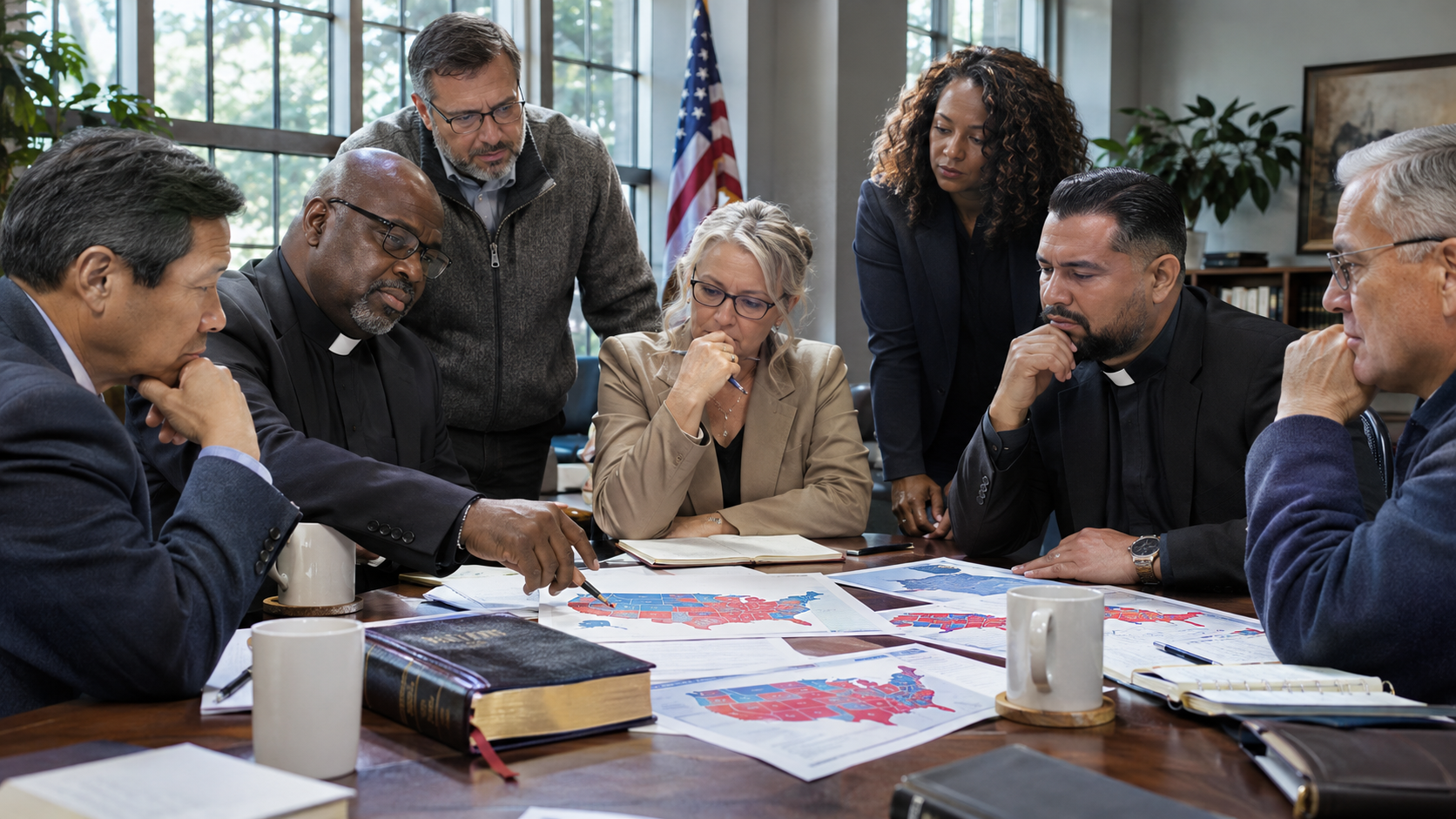
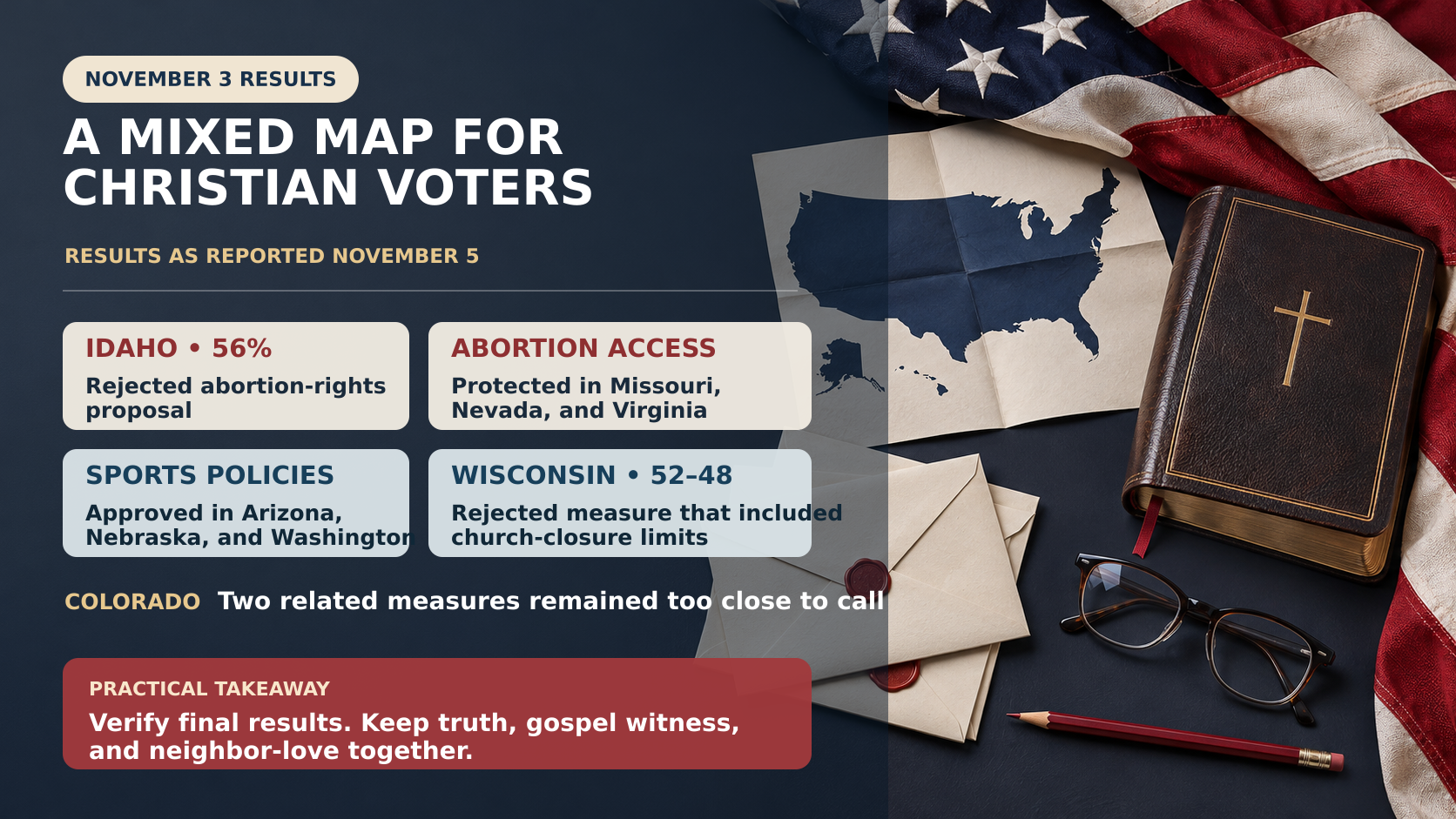
Baptist Press reported on November 5, 2026, that the Ethics & Religious Liberty Commission and state Baptist leaders were evaluating a varied set of November 3 ballot-measure results touching questions of life, sex, religious liberty, and the protection of minors. According to the report, 56 percent of Idaho voters rejected the Reproductive Freedom and Privacy Act, while measures in Missouri, Nevada, and Virginia protected abortion access. Arizona, Nebraska, and Washington approved policies described as protecting female sports on the basis of sex. In Wisconsin, voters rejected a measure by roughly 52 percent to 48 percent; the proposal included limits on government closure of churches during emergencies as well as protections for minors from sex-change procedures. Baptist Press listed 1,340,000 votes against the measure and 1,239,027 in favor at the time of publication. Two Colorado contests remained unsettled in the report’s election-night accounting. One concerned sports participation, where the published tally showed a narrow lead with 86 percent counted, and another concerned protections for minors from sex-change procedures. Because those Colorado results were too close to call when the story was filed, they should not be described as final without a later official update. The nationwide significance lies in the uneven map: voters in different states reached different conclusions on measures that Christian ministries often approach through convictions about the sanctity of life, the created nature of male and female, parental responsibility, care for vulnerable children, and the freedom of churches to gather. The report does not present a single national verdict. Instead, it shows that state constitutions, ballot wording, campaign communication, local coalitions, and voter understanding can produce sharply different outcomes even when proposals address related moral concerns. For churches, that complexity calls for accurate reporting and sober analysis rather than triumphalism, despair, or overstatement.
Christian engagement after an election should begin with truthfulness. Leaders can distinguish certified results from preliminary counts, read the actual text of measures, and avoid repeating slogans that obscure what voters approved or rejected. The Colorado contests in the Baptist Press report are a useful reminder that responsible commentary must preserve the difference between a lead and a final result. Churches should also resist turning worship gatherings into partisan rallies. Pastors can teach the biblical foundations that shape Christian moral reasoning—human beings made in God’s image, God’s care for children and the vulnerable, the integrity of the body, the authority of parents, the equal dignity of women and men, the proper limits of government, and the church’s responsibility to gather and serve—while acknowledging that political strategy requires prudence and careful attention to law. Public witness is strongest when conviction is joined to neighbor-love, factual precision, respectful speech, and tangible service. Congregations concerned about abortion can support mothers, fathers, pregnancy resource ministries, adoption, foster care, and families facing disability or economic hardship. Those concerned about minors and medical ethics can listen to families, seek sound evidence, and advocate without demeaning people who disagree. Those concerned about church freedom can review emergency plans and build constructive relationships with local officials before a crisis. The mixed results also give Christian citizens a reason to examine campaign communication: Were proposals clearly explained? Did churches equip members to evaluate claims? Were opponents treated as image-bearers rather than enemies? Scott Klusendorf’s second edition of The Case for Life: Equipping Christians to Engage the Culture is a relevant companion because it trains Christians to make a reasoned, focused defense of human life rather than relying on slogans. Whatever subsequent certifications or court challenges may bring, faithful participation requires the same disciplines: verify the facts, speak with clarity, protect the vulnerable, and keep the gospel larger than any electoral outcome.
Christian Ethics and Public Policy
Evangelical
Christians and Church Leaders
Baptist Press
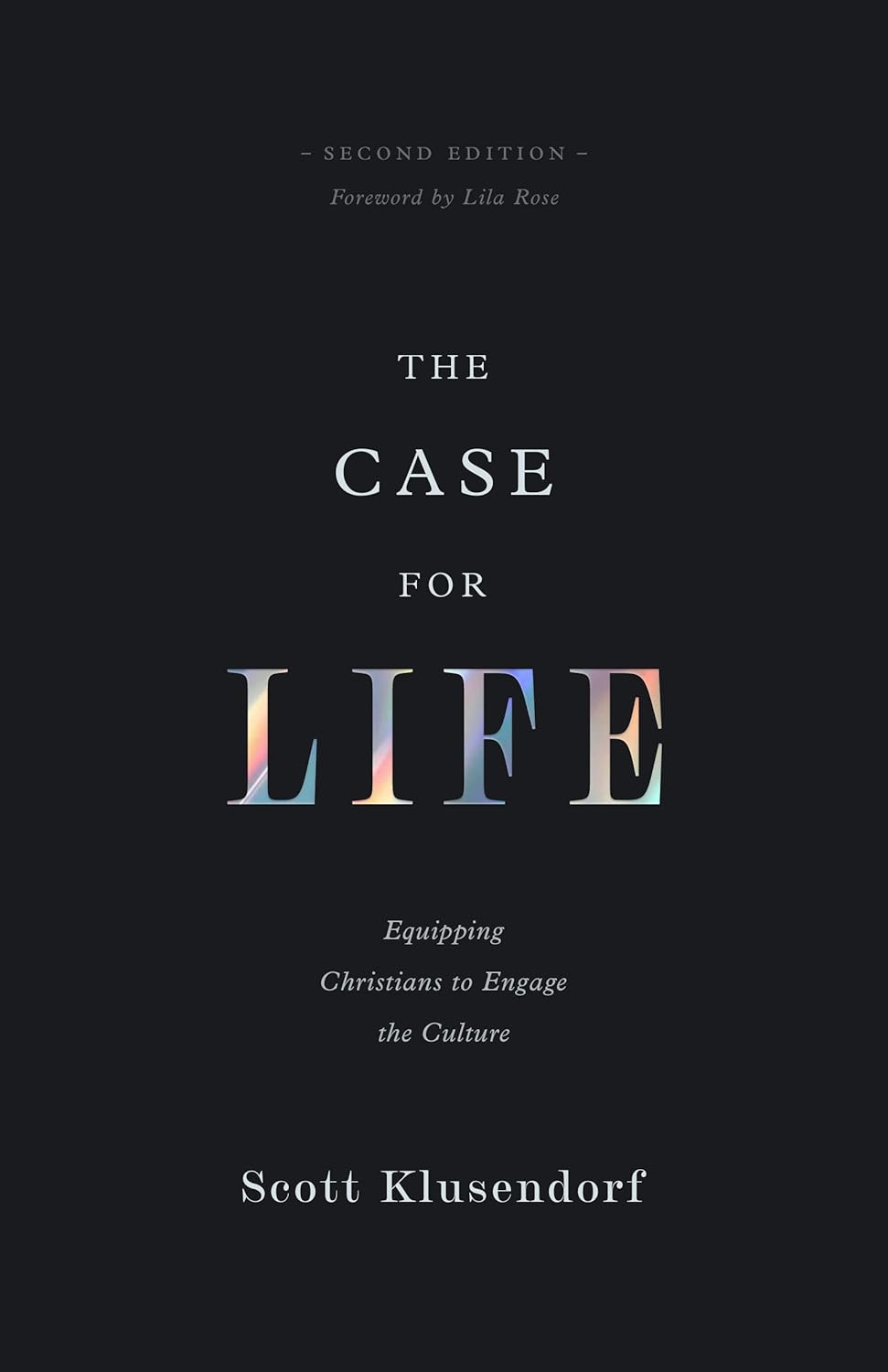
The Case for Life: Equipping Christians to Engage the Culture
Scott Klusendorf
Scott Klusendorf’s updated second edition equips Christians to explain the pro-life case with clarity and reason, directly supporting thoughtful engagement with ballot measures, public arguments, and conversations about the dignity of human life. Verified edition: Second edition, paperback, 2023; ASIN: 1433580675.