
Churches Urged to Build Patient, Reliable Care for Widows and Widowers
November 5, 2026
Baptist Press is urging churches to make thoughtful care for widows and widowers a visible part of congregational life. Drawing on pastoral experience and biblical commands, the report emphasizes patient presence, careful listening, reliable follow-through, and practical planning—an important reminder that grief ministry belongs within a church’s mission, budget, and ongoing family life.

Baptist Press reported on November 5, 2026, that churches can participate in Christ’s work by giving sustained, attentive care to widows and widowers rather than treating bereavement as a brief crisis that ends after a funeral. The report, written by Brandon Porter ahead of the Southern Baptist Convention’s November 8 Orphans and Widows Sunday emphasis, draws on the ministry experience of Caleb Turner of Mesquite Friendship Baptist Church in Texas and Michael Crisp of Chehalem Valley Baptist Church in Oregon. Both pastors describe care as a matter of faithful presence: initiating contact, listening before proposing solutions, respecting a grieving person’s pace, and remaining dependable over time. That approach reflects James 1:27, which identifies care for widows and orphans as an expression of pure religion, and 1 Timothy 5:3–16, where Paul gives the church practical guidance for honoring widows and discerning responsibilities within the family of faith. The pastors also caution churches against making assumptions. A widow or widower may be navigating loneliness, financial questions, household tasks, new social dynamics, or the desire to preserve independence, and those needs will not look identical from one person to another. Turner and Crisp therefore recommend asking thoughtful questions, recognizing that help can feel intrusive when it is imposed, and resisting the temptation to play matchmaker. The development matters nationwide because every congregation will eventually walk with members through the death of a spouse, yet the quality of that care often depends on whether the church has prepared before the loss occurs. A biblical ministry of presence requires more than sympathy; it calls for patient relationships, wise boundaries, practical help, and the kind of reliability that makes the local church feel like a true household of faith.
For pastors and ministry teams, the strongest implication is that care for widows and widowers should be designed into congregational life instead of left to informal goodwill alone. A church can begin by identifying members who have lost spouses, confirming how and when they prefer to be contacted, and assigning trusted leaders or small-group members to maintain consistent relationships. Care may include shared meals, transportation, help understanding household or financial decisions, prayer, companionship at difficult anniversaries, or simply an unhurried conversation. The goal is not to create dependence or to presume that every widowed person needs the same service. It is to make dependable Christian community available while honoring dignity, privacy, and personal agency. Leaders should also train volunteers to listen well, avoid simplistic explanations for suffering, protect confidential information, and recognize when professional grief counseling, legal advice, or financial expertise is appropriate. Including this ministry in the budget can support background checks, benevolence, transportation, home-maintenance assistance, educational resources, and gatherings that foster friendship without isolating widowed members into a permanent category. Sermons and Bible studies can teach the congregation why Scripture repeatedly calls God’s people to defend and honor those who may be vulnerable, while also acknowledging that widowers can experience overlooked forms of isolation and practical difficulty. Small groups can mark significant dates, invite participation without pressure, and notice when grief resurfaces months or years later. The practical test is not whether a church launches an impressive program, but whether grieving members know who will call, who will listen, and who will still be present after public attention has faded. By integrating this care with pastoral ministry, deacon service, benevolence, discipleship, and prayer, churches can bear witness to Christ’s compassion in a form that is personal, concrete, and durable. The book recommendation, Miriam Neff’s From One Widow to Another: Conversations on the New You, complements that purpose by offering practical, Christian encouragement from someone who has personally navigated widowhood.
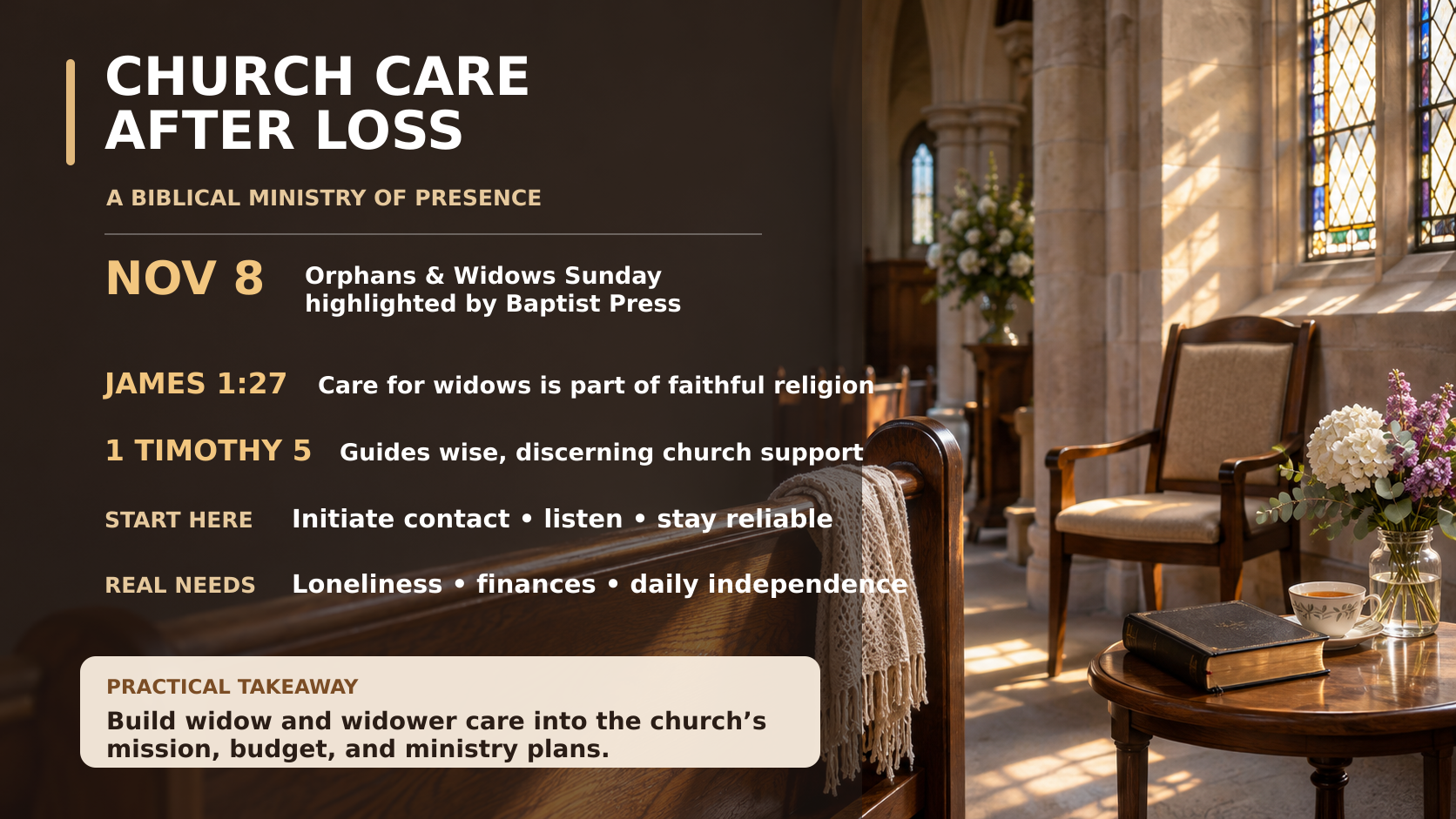
Widow and Widower Ministry
Evangelical
Pastors and Church Leaders
Baptist Press
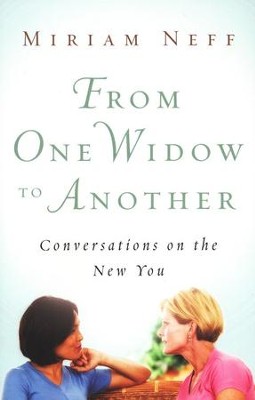
From One Widow to Another: Conversations on the New You
Miriam Neff
Miriam Neff combines firsthand experience of widowhood with practical Christian counsel, making the book a compassionate companion for churches and individuals seeking to understand grief, changing relationships, and the long work of rebuilding daily life. Verified edition: Paperback, 2009; ASIN: 080248784X.