
Durupınar Scans Renew Noah’s Ark Debate, but Experts Urge Caution
November 3, 2026
New scans and soil work at Turkey’s boat-shaped Durupınar formation have renewed claims about a possible connection to Noah’s Ark. Researchers report organized subsurface features and plan additional work in 2027, while Christian scholars urge believers to reject sensational conclusions and wait for transparent excavation, published evidence, and independent peer review.
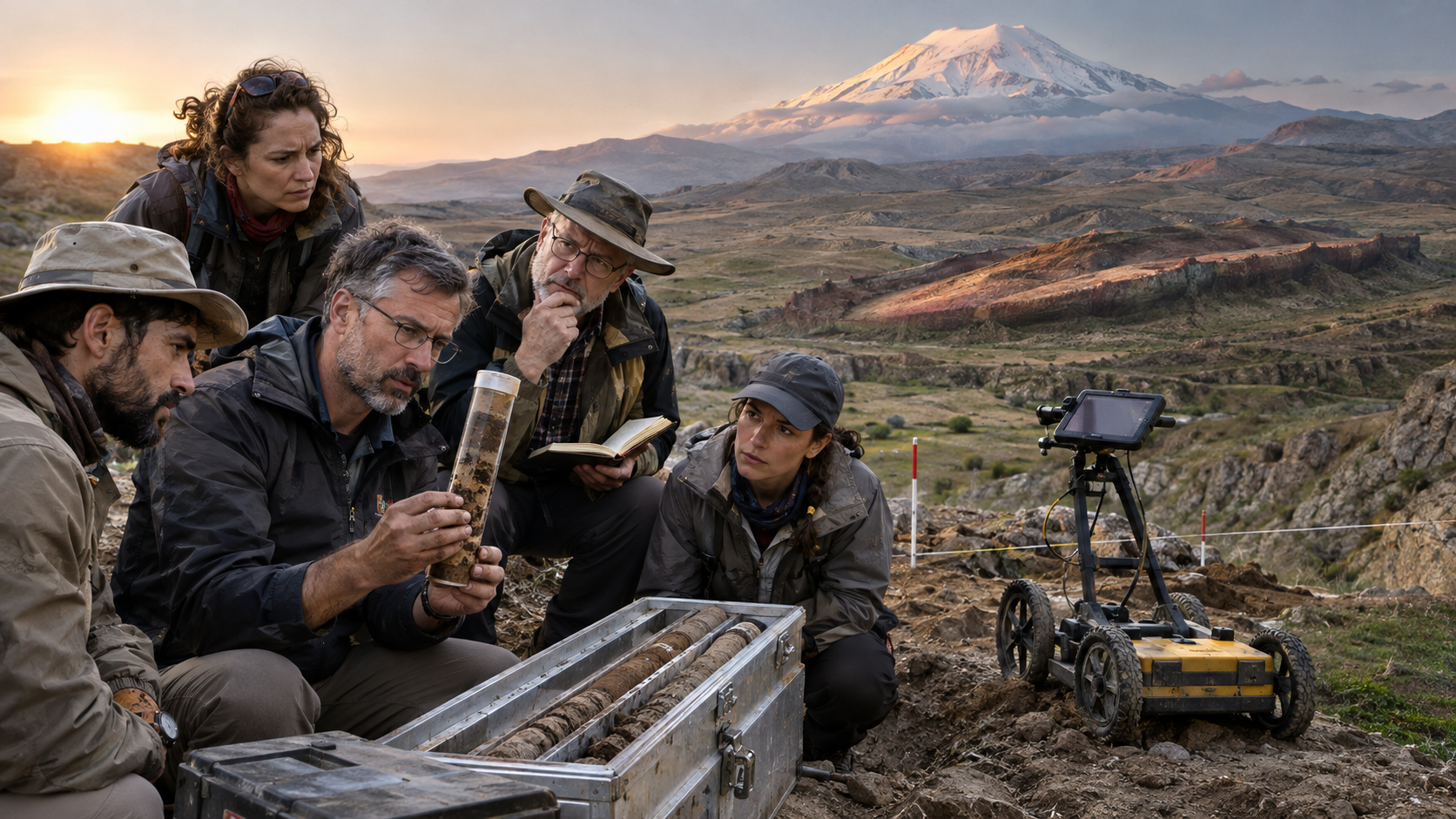
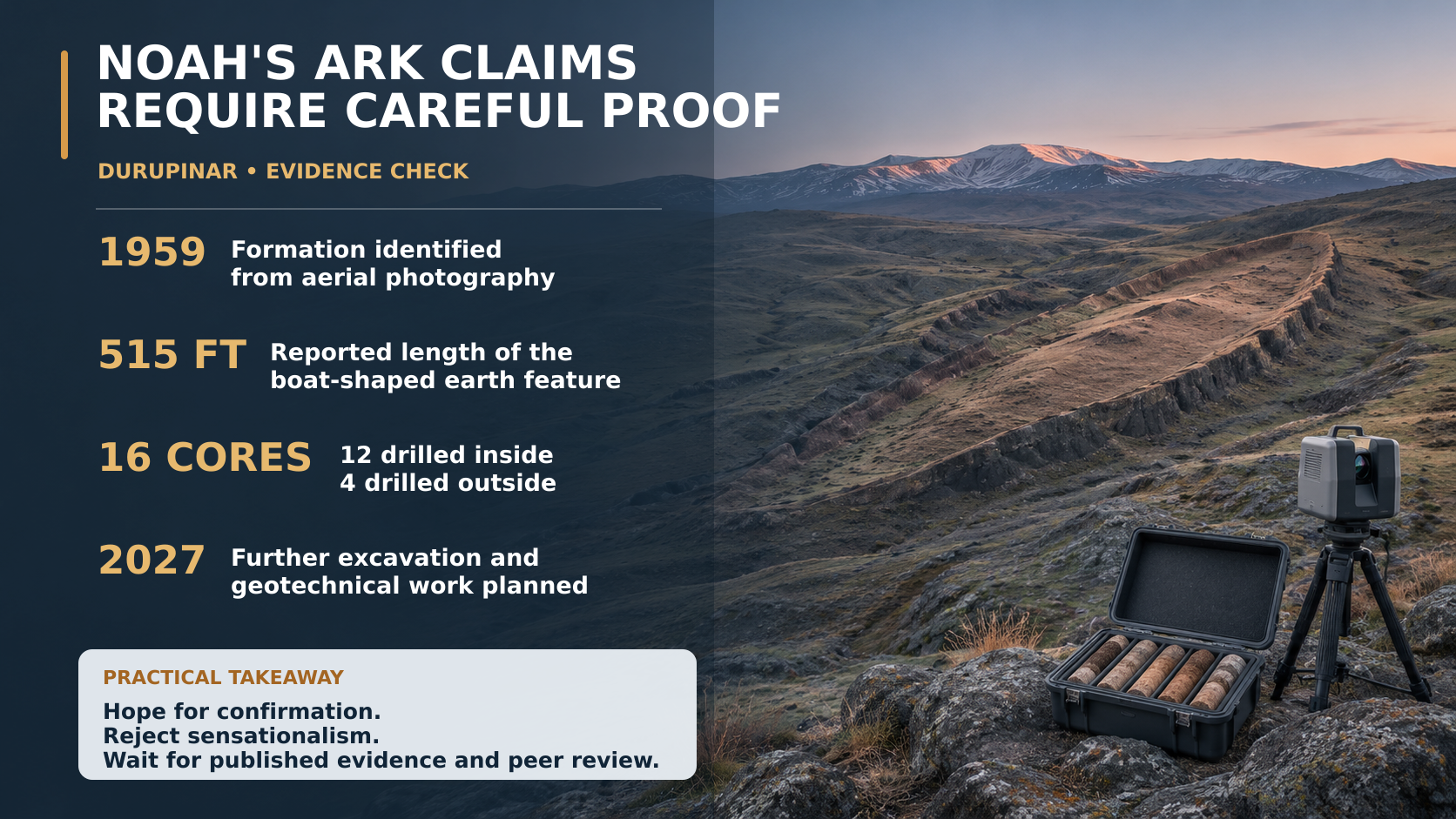
The boat-shaped Durupınar formation in eastern Turkey has returned to Christian news after researchers associated with the Noah’s Ark Scans project released preliminary findings from radar, soil testing, and core drilling. Baptist Press reports the formation was first identified in 1959 through aerial photography by Turkish army captain İlhan Durupınar and measures about 515 feet in length. Project representatives say ground-penetrating scans conducted in 2014, 2019, 2021, and 2023 revealed organized patterns beneath the surface, including shapes described as possible chambers and corridors. Soil tests followed in 2024, and the latest announcement referenced charred wood fragments found in cores. Researchers drilled 12 cores inside the feature and four outside it as controls, according to the report. Those observations are interesting because the site lies near Mount Ararat and because the formation’s dimensions and outline have long invited comparisons with the vessel described in Genesis. Yet the new announcement is preliminary, not a confirmed identification. Images, isolated fragments, and geometric-looking scan returns do not by themselves establish a constructed wooden ship, much less prove the precise identity of an ancient artifact. The project has announced plans for further excavation and geotechnical work in 2027. Until those steps produce accessible methods, documented contexts, laboratory results, and findings evaluated by specialists outside the project, the responsible description remains a disputed geological formation under investigation. Christians interested in biblical archaeology should therefore distinguish carefully between a research team’s interpretation, the physical data available for inspection, and the stronger conclusion promoted in headlines or social media.
The proper Christian response joins hopeful curiosity with intellectual restraint. Baptist Press quoted Christian scholars who welcomed careful investigation but warned against treating an attention-grabbing claim as settled evidence. Jim Parker, associated with New Orleans Baptist Theological Seminary, emphasized the need for peer review, while Answers in Genesis founder Ken Ham rejected sensationalism and noted the history of failed Ark claims. Their caution matters because biblical faith does not depend on every proposed archaeological discovery being authentic. Scripture’s authority is not strengthened by weak evidence, and it is not threatened when a dramatic claim remains unproved. Churches, teachers, and families can use this story as a practical lesson in discernment. Ask who collected each sample, where it was recovered, how contamination was prevented, which laboratories performed the analyses, whether raw scan data are available, and whether qualified geologists, archaeologists, and materials specialists have independently reviewed the conclusions. It is also important to separate evidence for human construction from evidence for a particular biblical identity. A verified ancient structure would still require secure dating, cultural context, and a persuasive chain of reasoning before anyone could identify it with Noah’s Ark. The 2027 work may clarify the formation, but it could also support a natural geological explanation or leave central questions unresolved. Believers need not fear uncertainty. Patient truth-seeking honors both God’s Word and God’s world. For now, the wisest takeaway is to follow the published evidence, resist viral certainty, and welcome rigorous testing capable of correcting both skepticism and enthusiasm alike.
Biblical Archaeology and Scripture
Evangelical
All Christians
Baptist Press
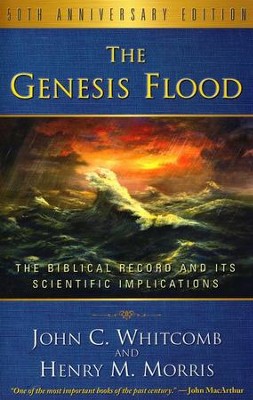
The Genesis Flood: The Biblical Record and Its Scientific Implications, 50th Anniversary Edition
John C. Whitcomb and Henry M. Morris
This influential evangelical study presents a classic young-earth interpretation of the Genesis flood and gives readers useful historical context for understanding why proposed Ark discoveries attract sustained Christian interest.