
IMB Sending Church Labs Expand a Practical Model for Missionary Care
October 8, 2026
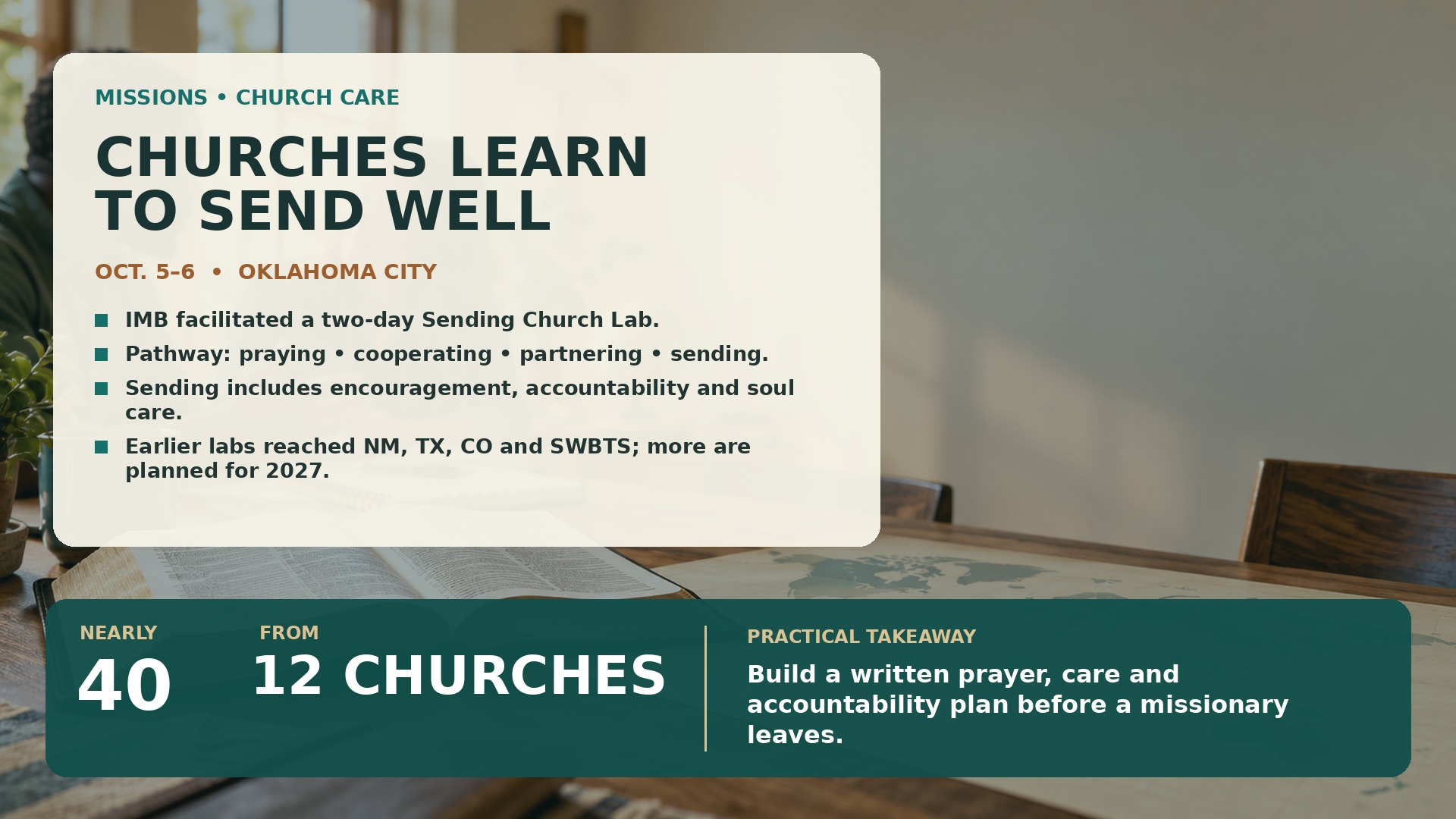
Nearly 40 leaders from 12 Oklahoma Baptist churches gathered October 5–6 for an IMB-facilitated Sending Church Lab focused on prayer, cooperation, partnership, sending, and long-term missionary care. The model matters nationally because it helps congregations move from general missions enthusiasm to concrete plans for developing, commissioning, encouraging, and remaining accountable to people they send across cultures.
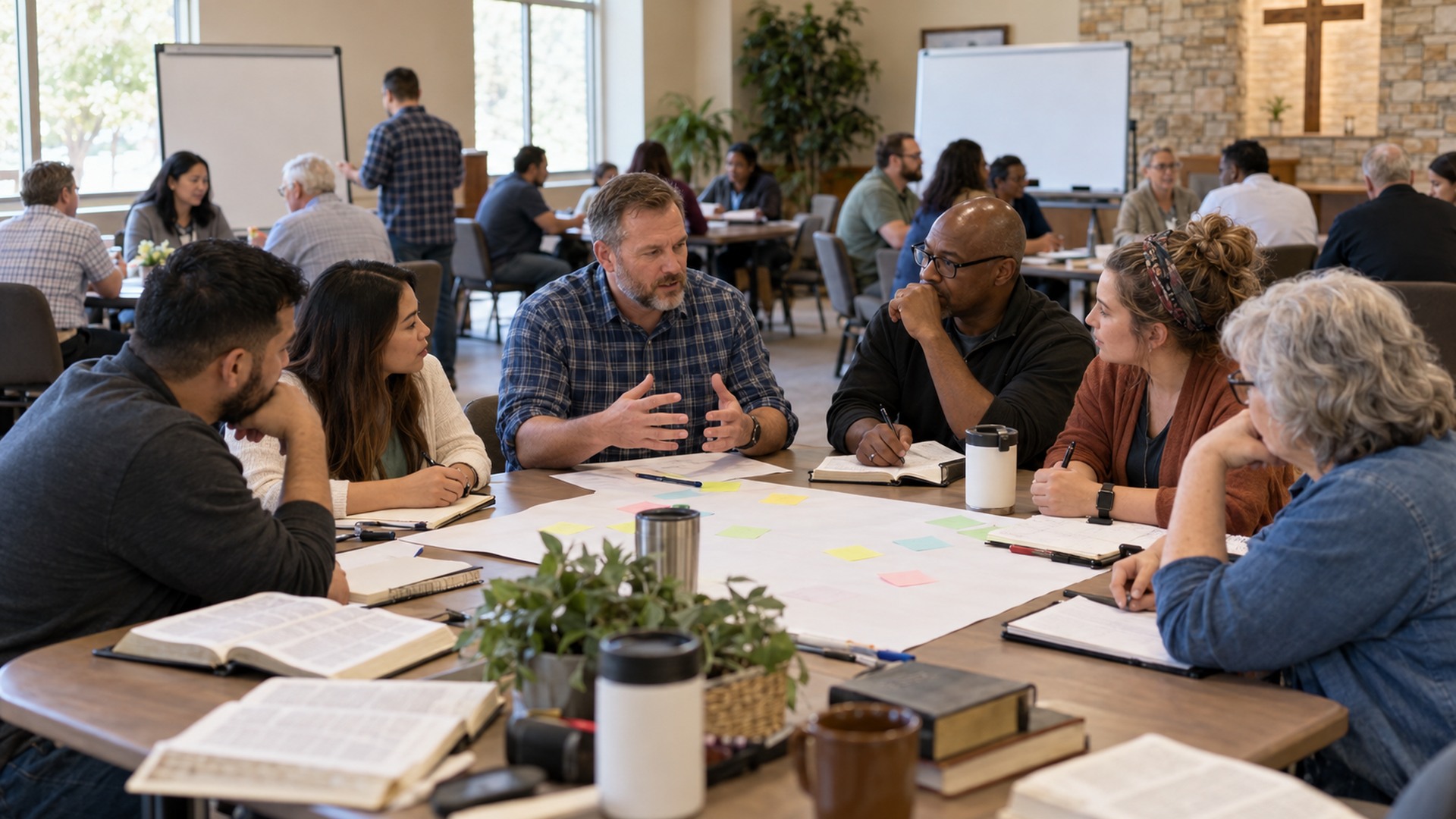
Nearly 40 representatives from 12 Oklahoma Baptist churches met October 5–6, 2026, at Council Road Baptist Church in the Oklahoma City area for a Sending Church Lab facilitated by the International Mission Board. The IMB’s October 8 report describes the gathering as a two-day process of conversation, self-assessment, and practical planning rather than a conventional conference built mainly around platform presentations. Pastors, church leaders, and missionaries considered what it means for a local congregation to take responsibility for sending people well. The framework moved through four connected practices: praying, cooperating, partnering, and sending. Within that sequence, sending was presented as more than approving a candidate or celebrating a commissioning service. It includes ongoing encouragement, meaningful accountability, advocacy, and care for the missionary’s spiritual life. Participants evaluated their congregations’ current strengths and weaknesses and worked toward plans suited to their own church contexts. That local-church emphasis reflects a central Southern Baptist missions conviction: the IMB can assess, train, deploy, and support missionaries, but congregations remain indispensable in recognizing calling, forming disciples, sustaining prayer, and walking with sent members over time. The Oklahoma lab also belongs to a broader effort. The IMB report says similar gatherings have been held during the past two years in New Mexico, Texas, Colorado, and at Southwestern Baptist Theological Seminary, with additional labs being planned for 2027. That geographic spread makes the development relevant beyond one state. It shows a repeatable model being used to help churches convert concern for the nations into defined practices, shared vocabulary, honest evaluation, and durable relationships with missionaries. The reported attendance—nearly 40 people representing 12 churches—also suggests a deliberately workshop-sized environment where leaders could discuss real obstacles and leave with actionable next steps.
The deeper significance of the Sending Church Lab is its insistence that missionary sending is a long covenant of care rather than a single transaction. Churches can be tempted to measure missions primarily by offerings, short-term trips, or the number of people commissioned. Those activities may be valuable, but they do not automatically provide the spiritual friendship, communication rhythms, pastoral attention, crisis support, and reentry care that missionaries and their families need. A church that sends well begins before an application is submitted. It cultivates prayer, tests character and gifting in ordinary ministry, teaches a biblical theology of the church and the nations, involves families and small groups, and prepares leaders to stay engaged when time zones, security concerns, or difficult seasons make communication less convenient. Cooperation with other churches and denominational partners can then supply expertise and scale without replacing the sending congregation’s responsibility. The lab’s four-part pathway offers leaders a useful diagnostic. A congregation may discover that it prays faithfully but has no process for developing candidates, partners generously but lacks relationships with field workers, or sends people without assigning anyone to maintain consistent care. Turning those observations into a written plan can clarify who will communicate, how often the church will pray publicly, how financial or pastoral needs will be handled, and what support will continue during stateside assignments or permanent return. The model is also adaptable beyond Southern Baptist life. Bible churches, independent congregations, and other evangelical networks can ask the same questions even when their organizational structures differ. The goal is not bureaucracy for its own sake. It is a more faithful partnership between the congregation that sends, the missionary who goes, the agency that serves, and the churches being strengthened or planted across cultures. For pastors and missions teams, the practical challenge is simple: identify one sent person or prospective missionary, listen carefully, and build a specific care plan before distance and urgency expose the gaps.
Missionary Sending and Long-Term Church Care
Evangelical Protestant — Southern Baptist
Pastors, missions leaders, sending churches, missionary-care teams, prospective missionaries, and denominational leaders
International Mission Board

The Sending Church Defined: Second Edition
Bradley Bell
Bradley Bell’s second edition defines a sending church as prayerful, deliberate, and proactive in developing, commissioning, supporting, and advocating for its sent members, closely matching the lab’s long-term care framework.