
LCMS Extends National Children-in-Worship Project Application Deadline
November 9, 2026
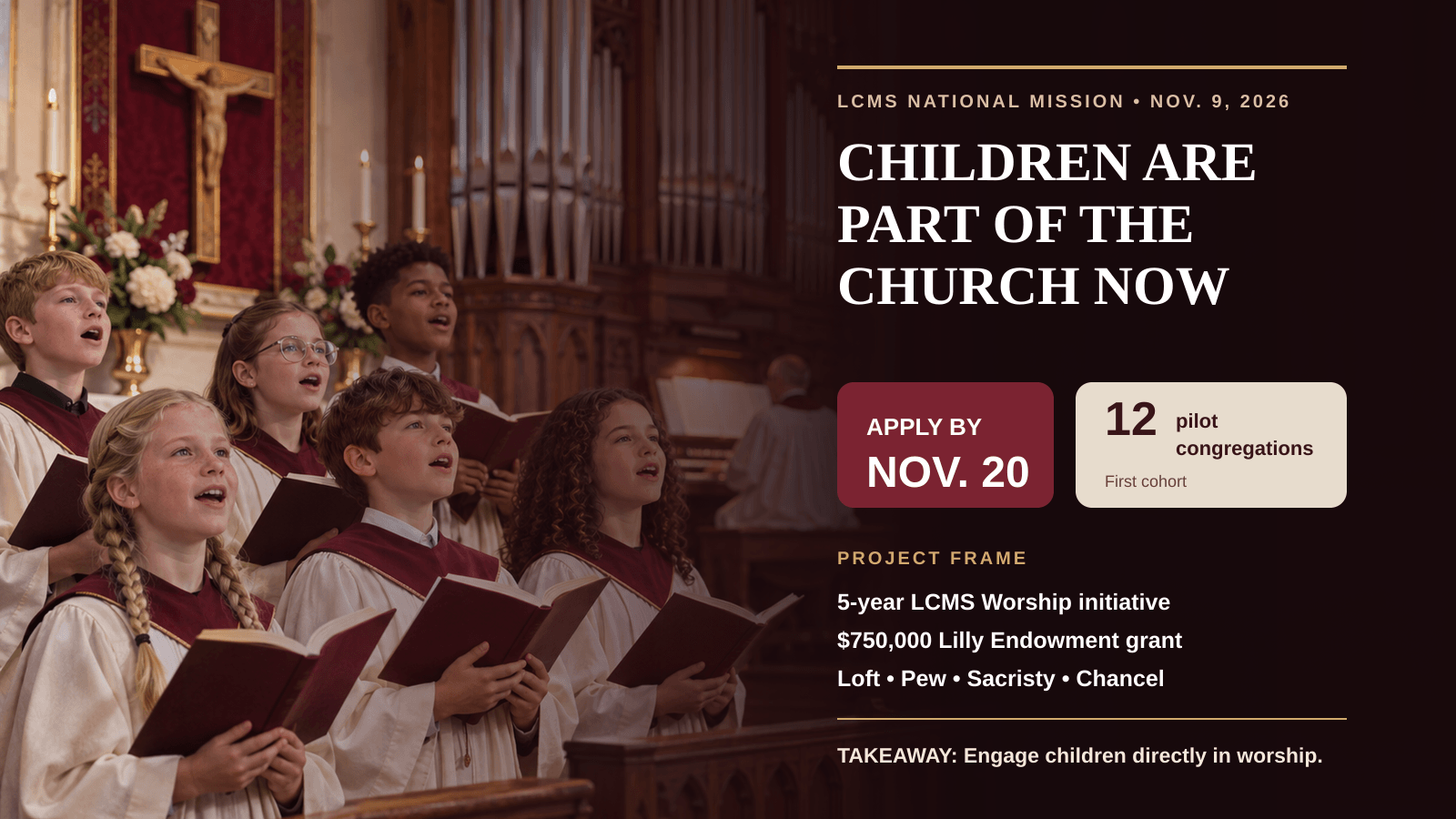
The Lutheran Church—Missouri Synod extended the application deadline for the second cohort of its national “Sing, Pray and Keep His Ways” project to Nov. 20. The five-year initiative helps congregations involve children directly in worship, catechesis and service, giving pastors, musicians and lay leaders a practical opportunity to strengthen faith across generations.
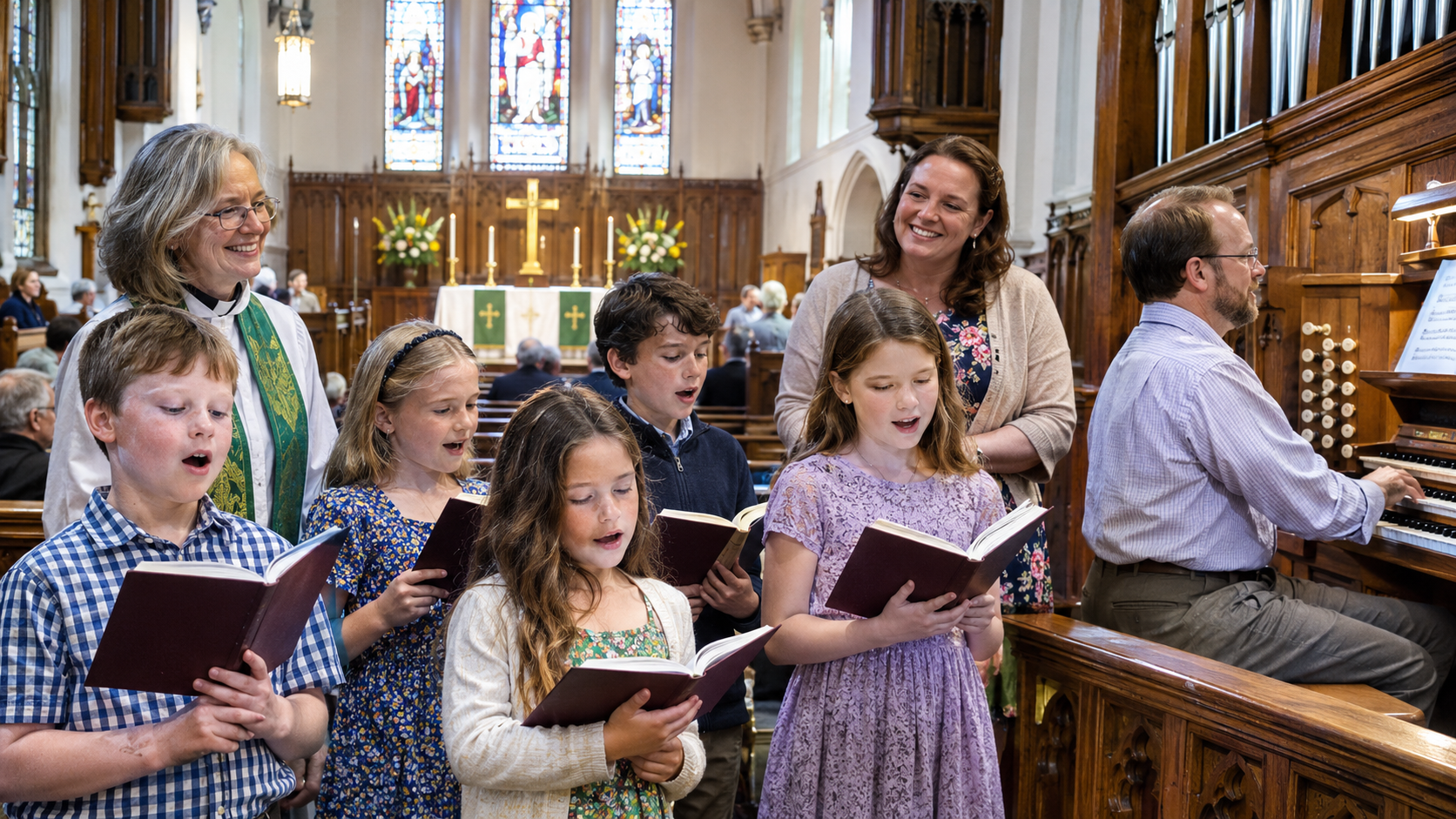
The Lutheran Church—Missouri Synod has extended the application deadline for the second cohort of “Sing, Pray and Keep His Ways” to Nov. 20, opening a fresh window for congregations to join a national experiment in children’s participation in worship. LCMS Reporter announced the extension on Nov. 9 and addressed pastors, deaconesses, church musicians and lay leaders who want to welcome younger members more intentionally into the Divine Service. The project’s purpose is both practical and theological: to nurture children’s faith through direct, active participation in corporate worship and to help them understand the rich Christian context of that worship. Local projects are organized around four locations in the sanctuary — the loft, pew, sacristy and chancel — so congregations can focus on music, congregational participation, preparation of the worship space and service near the altar. The first cohort includes 12 congregations from several states. A fuller September report from the denomination explained that the five-year initiative is administered by LCMS Worship and supported by a $750,000 grant from Lilly Endowment Inc. Those congregations have developed projects such as teaching children to use hymnals proficiently, training boys to serve as acolytes, forming girls for altar-guild service and creating intergenerational opportunities for Christian hospitality. The national scope is intentional: participating congregations meet to compare strengths, weaknesses and lessons, while resources developed by early cohorts are expected to be tested and refined by later ones before being shared more widely across the Synod. The extended deadline therefore matters beyond the next set of applicants. It creates another pathway for local churches to contribute to a larger body of tested practices for teaching children that Baptism gives them a present place in Christ’s church, not merely a future role after adulthood.
The project also offers a constructive answer to a recurring problem in congregational life: children can be physically present in worship while remaining functionally peripheral to it. “Sing, Pray and Keep His Ways” asks churches to move from passive inclusion to deliberate formation. A child who learns the hymnal, assists with reverent preparation, sings substantial Christian texts or serves alongside mature believers is receiving more than a task. The child is learning the vocabulary, rhythms, doctrine and relationships of the worshiping community. At the same time, adults are reminded that ministry to younger Christians is not entertainment or crowd management; it is the patient work of teaching the faith and sharing meaningful responsibility. The first cohort’s experience at the 2026 LCMS convention illustrated the approach. Children from participating congregations sang demanding sacred music, served as acolytes and assisted with altar-guild duties, while devotions connected their service to Christ’s resurrection, Christian vocation and the hope of eternal life. Churches considering the second cohort can begin by examining where children already participate, where unnecessary barriers remain and which adults are prepared to mentor them. They can also ask whether the words children sing and the practices they learn communicate the Gospel clearly enough to remain with them through suffering, temptation and ordinary Christian life. Not every congregation will have a large choir or elaborate sanctuary, but the framework can scale: one church may focus on congregational song, another on training servers, another on teaching families to follow the liturgy. The practical takeaway is to give children real, age-appropriate ways to receive, confess and serve within the church’s worship, supported by adults who explain not only what to do but why the church does it.
Children in Worship, Lutheran Catechesis, and Congregational Formation
Lutheran — The Lutheran Church—Missouri Synod
Pastors; Deaconesses; Church Musicians; Children’s Ministry Leaders; Lay Leaders
LCMS Reporter
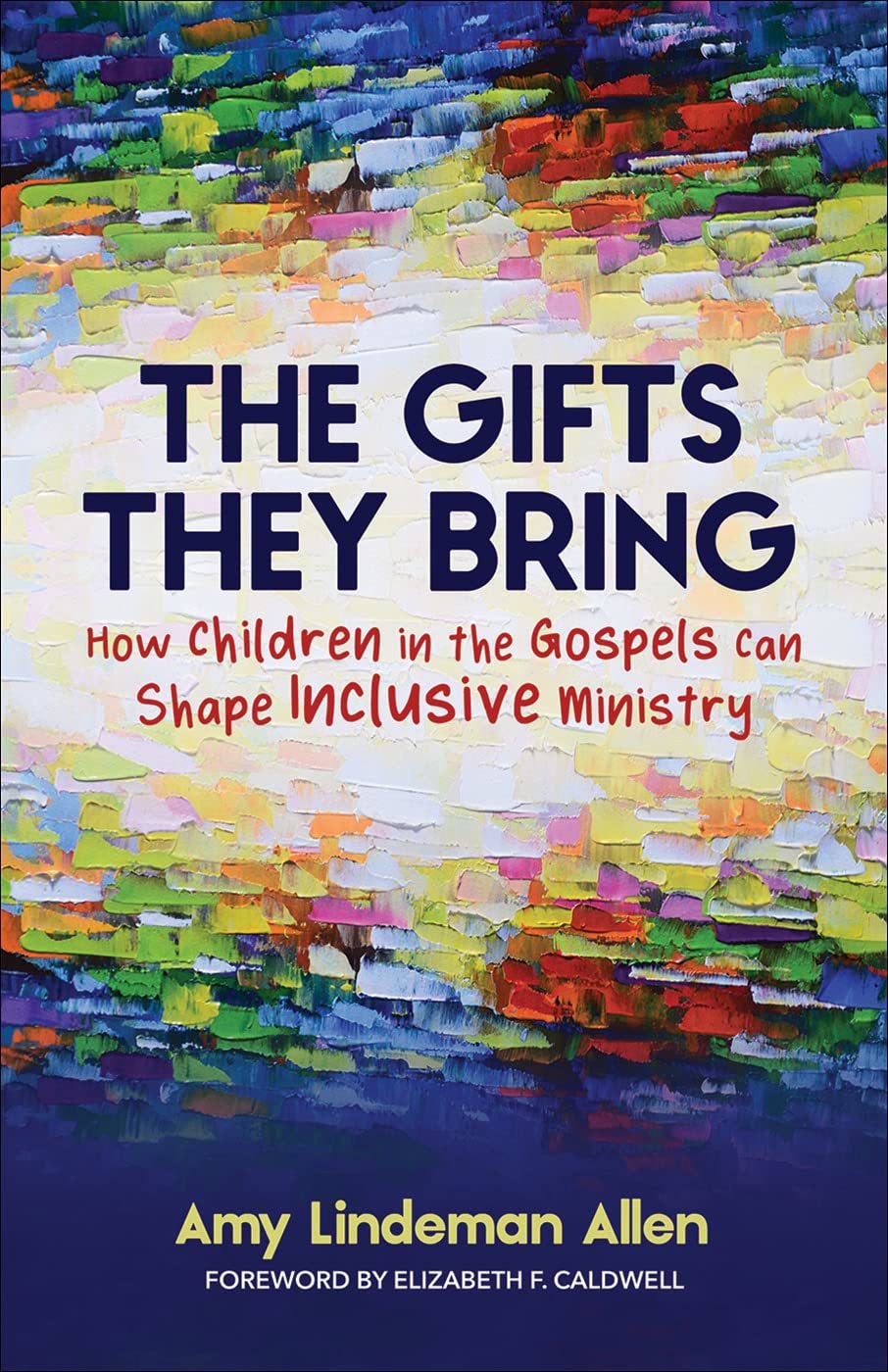
The Gifts They Bring: How Children in the Gospels Can Shape Inclusive Ministry
Amy Lindeman Allen
Amy Lindeman Allen’s Gospel-centered study helps ministry leaders recognize children as active members of the church whose participation, proclamation and service matter now. Paperback, Westminster John Knox Press, 2023; ISBN-13 978-0-664-26834-3; Amazon ASIN 066426834X.