
LCMS Publishes 2026 Convention Record with New Mission and Worship Priorities
November 6, 2026
The Lutheran Church—Missouri Synod has released the official proceedings of its 2026 national convention, preserving resolutions, elections, minutes, sermons, and major governance decisions for congregations nationwide. The record matters because it documents new mission priorities, the return of the Commission on Worship, expanded international fellowship, and changes affecting ministry preparation and denominational leadership.
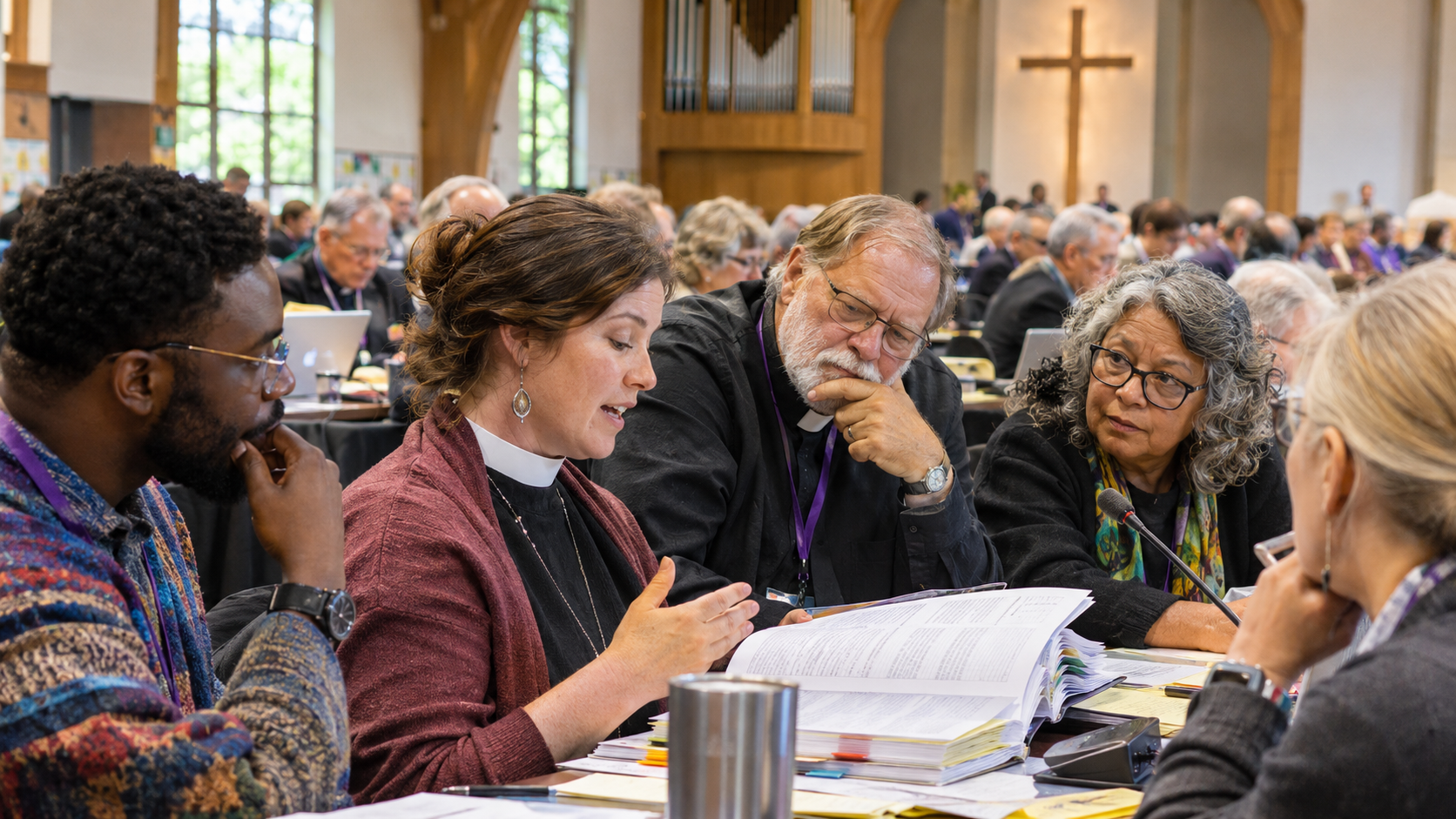
The Lutheran Church—Missouri Synod has made the official record of its 69th Regular Convention available to the church, giving pastors, congregations, delegates, schools, district leaders, and interested members a durable account of what the national body decided in 2026. Reporter, the LCMS news service, announced the release on November 6 and explained that the proceedings were compiled by the Office of the Secretary. The volume brings together the convention’s adopted resolutions, the third portion of the president’s report, election slates and results, official minutes, sermons, essays, and other materials that help readers distinguish formal action from commentary surrounding the meeting. That breadth is important in a nationwide denomination where local congregations are self-governing yet cooperate through agreed doctrine, mission work, education, mercy ministry, and churchwide structures. Instead of relying on memories, short summaries, or social-media discussion, readers can consult the same official source sent in print to congregations, delegates, boards, commissions, and other recognized leaders. The record also creates a shared reference point for evaluating how convention mandates are carried out between national gatherings. Its usefulness extends beyond institutional history: church councils can identify decisions that affect local ministry, pastors can explain the convention’s work accurately, and lay members can see how elected delegates debated and acted on matters of doctrine, witness, worship, governance, and partnership. Because the proceedings preserve both outcomes and supporting material, they allow congregations to read major decisions in context and to respond with informed prayer, study, and participation rather than secondhand impressions. That careful reading also protects future discussion from avoidable factual confusion.
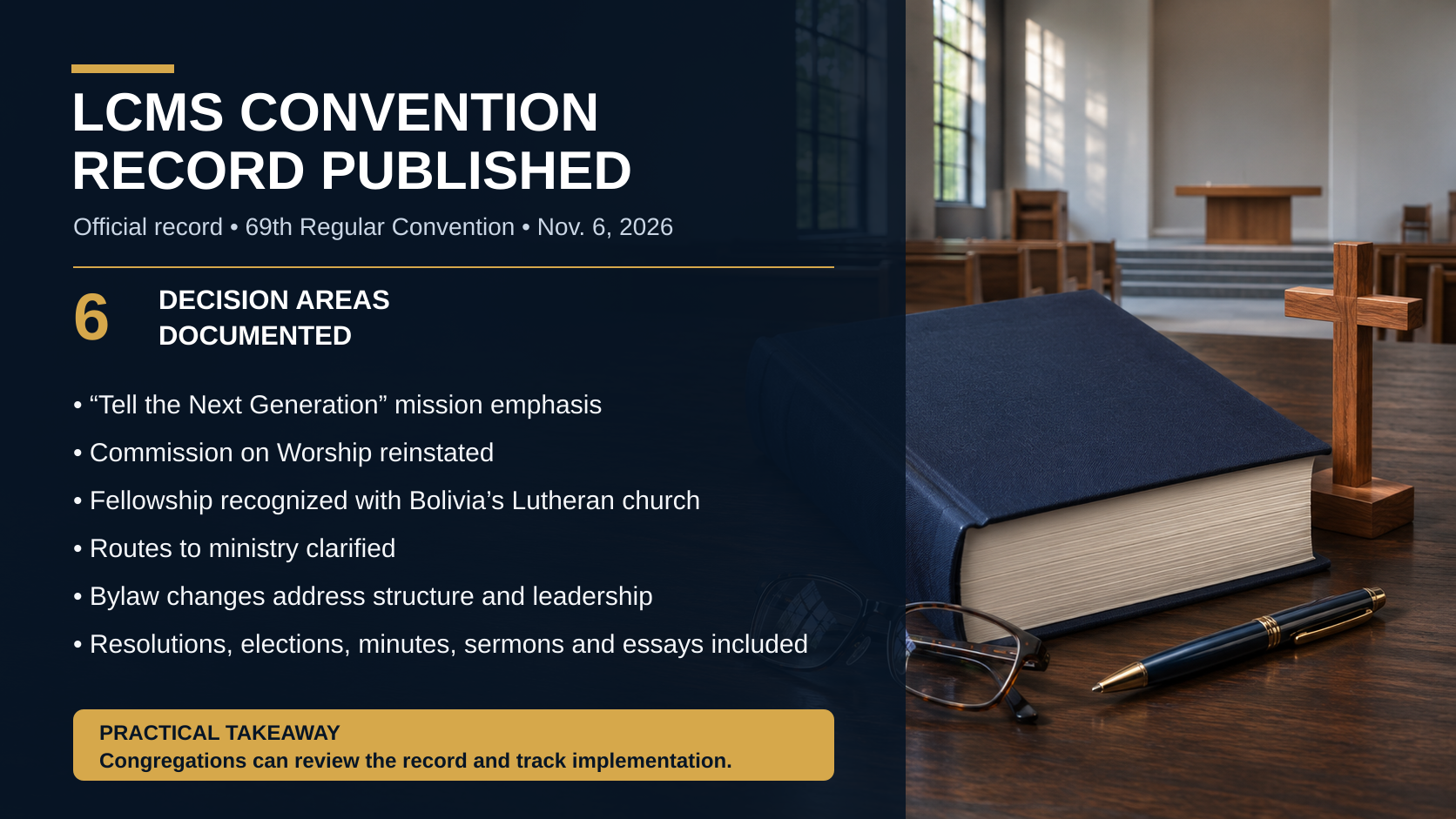
Several actions highlighted in the official announcement show why the newly published record deserves careful attention. Delegates adopted a mission emphasis summarized by the phrase Tell the Next Generation, directing renewed attention toward sharing the Gospel and forming younger Christians for faithful life and witness. They also reinstated the Commission on Worship, restoring a formal churchwide body devoted to worship questions and resources. Internationally, the convention recognized altar and pulpit fellowship with the Evangelical Lutheran Christian Church of Bolivia and authorized preparations connected with additional partner-church relationships, decisions that shape how the Synod expresses doctrinal unity and conducts cooperative mission. Delegates further clarified routes to ministry and approved bylaw changes concerning organizational structure and leadership. Each of these actions carries practical questions: who is responsible for implementation, how will congregations receive resources, what timelines apply, and how will leaders report progress? The proceedings provide the primary record needed to ask those questions responsibly. For local churches, a constructive next step is to assign appropriate leaders to review the relevant resolutions, compare them with current congregational priorities, and note any follow-up from district or national offices. Members may also use the sermons and essays devotionally and educationally, recognizing that convention records are more than administrative archives when they help the church remember its confession and serve its neighbors. The publication therefore matters not because every congregation will address every resolution in the same way, but because transparent access strengthens shared accountability. A church body that can read its own decisions, trace their implementation, and discuss them from the official text is better prepared to pursue mission, worship, formation, and fellowship with clarity.
Lutheran Denominational Governance and Mission Priorities
Lutheran (LCMS)
Church Leaders, Pastors, Delegates, and Congregations
Reporter (LCMS)
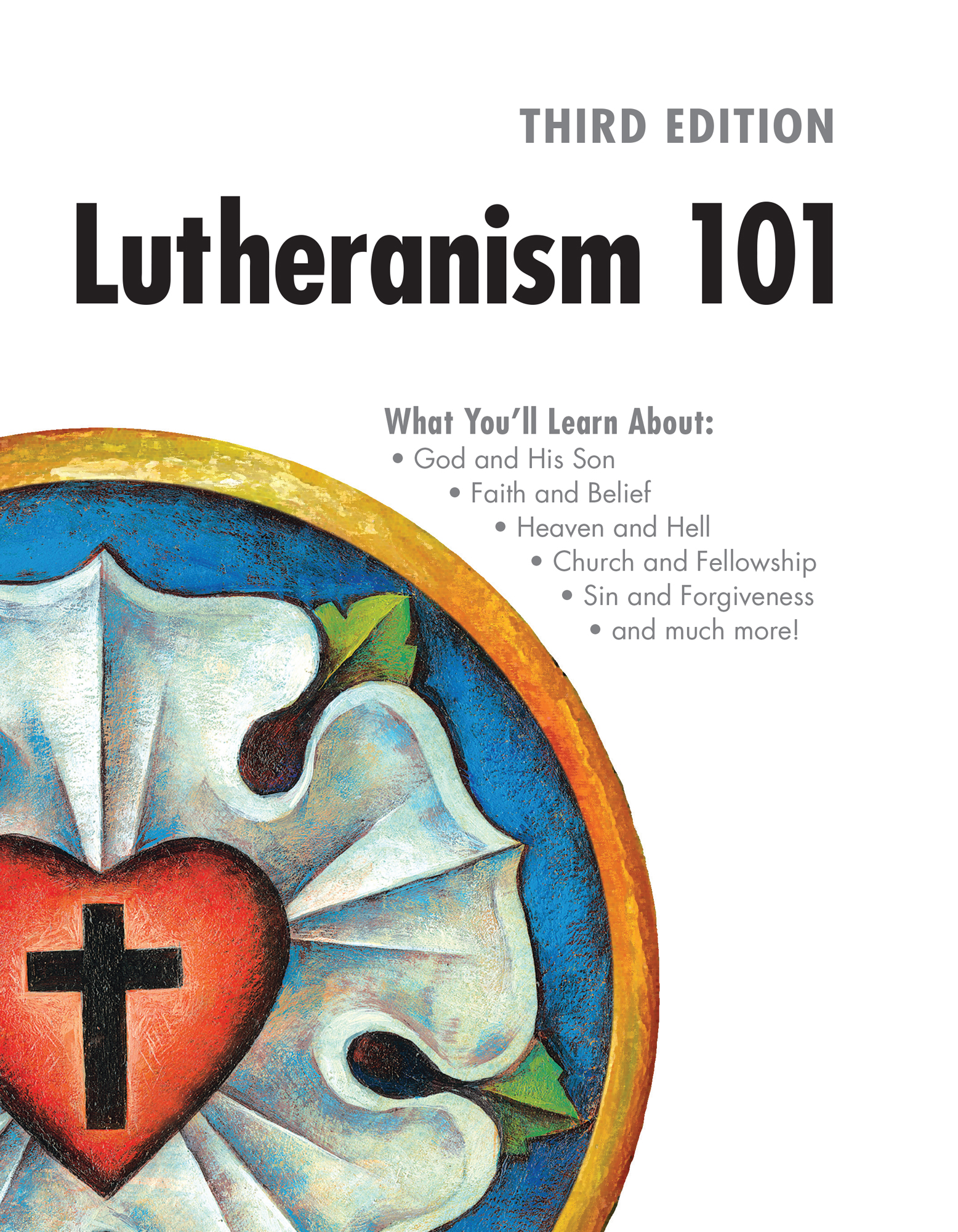
Lutheranism 101, Third Edition
Concordia Publishing House
This third-edition introduction to Lutheran doctrine, worship, the Confessions, and Christian vocation gives readers useful context for understanding why convention decisions about mission, worship, ministry, and fellowship matter to LCMS congregations.