
Lifeway Finds 93% of Protestant Pastors Reject Candidate Endorsements in Worship
October 13, 2026
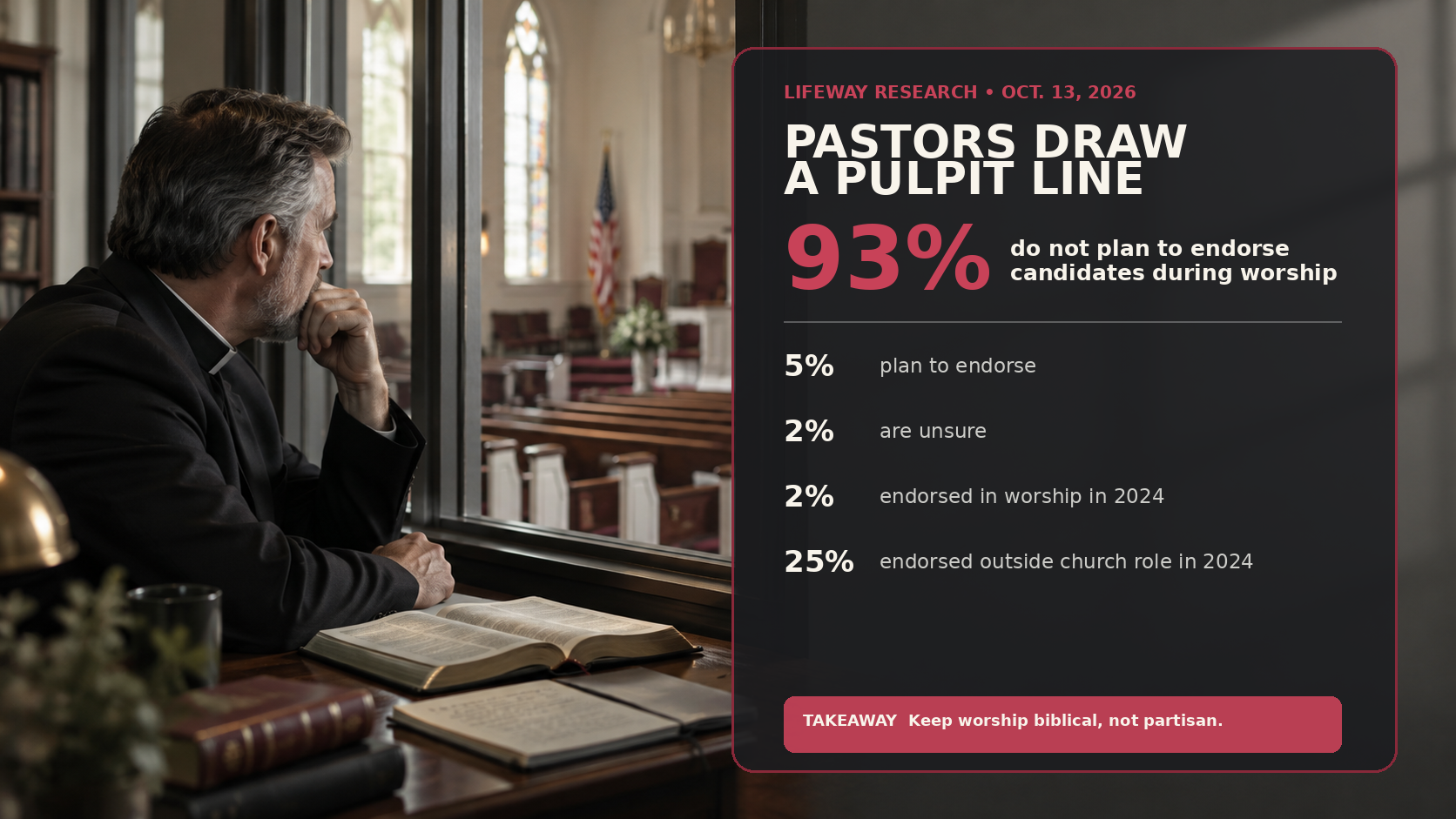
A new Lifeway Research study finds that 93 percent of U.S. Protestant pastors do not plan to endorse political candidates during a worship service, while 5 percent plan to do so and 2 percent are unsure. The finding suggests that most pastors view pulpit neutrality as a ministry conviction, not merely a response to tax rules.
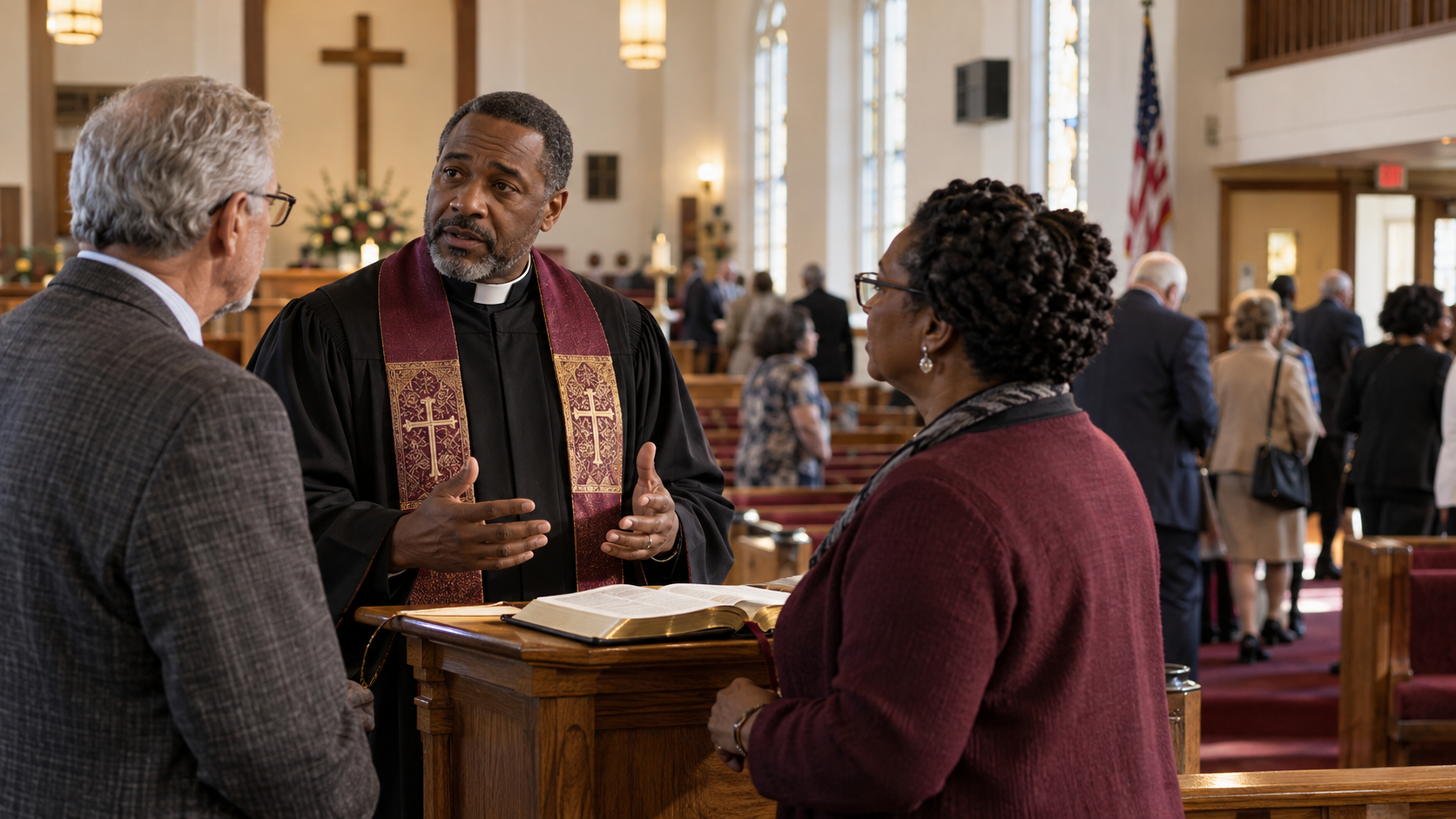
Lifeway Research reported on October 13, 2026, that 93 percent of U.S. Protestant pastors say they do not plan to endorse candidates for public office during a worship service. Five percent say they plan to make such endorsements, and 2 percent are unsure. The result is especially notable because the survey was conducted amid unsettled litigation and changing federal policy around the Johnson Amendment, the tax-code provision that has restricted candidate endorsements by tax-exempt organizations since 1954. A proposed 2025 settlement involving the Internal Revenue Service, National Religious Broadcasters, two Texas churches, and another religious nonprofit would have permitted endorsements through a church’s usual channels of communication without tax consequences. A federal district judge later rejected that settlement and dismissed the lawsuit, and an appeal remained pending when Lifeway published its analysis. Yet the pastoral response is far less ambiguous than the legal environment. Pastors have rarely used worship services for candidate endorsements: Lifeway’s earlier studies found that 2 percent did so in 2024, compared with 1 percent in both 2020 and 2016. The new finding therefore points to continuity rather than a rush toward partisan pulpits. It also distinguishes biblical engagement from organizational endorsement. Churches routinely teach about moral standards, justice, neighbor-love, human dignity, stewardship, and other convictions that inform public decisions. A pastor can equip believers to think Christianly about civic life without instructing the congregation to support a named candidate. That distinction matters for worship, where people of different backgrounds gather under the authority of Scripture and around the gospel rather than around a party coalition. For church boards and elders, the study provides a timely reason to clarify policies before campaign pressure intensifies.
The survey also reveals meaningful differences beneath the national total. Lifeway reported that 11 percent of African American pastors and 9 percent of pastors from other ethnic backgrounds plan to endorse candidates in worship, compared with 4 percent of white pastors. Pastors in the South are more likely than those in the Midwest to say yes, 7 percent versus 3 percent. By denominational family, Pentecostal pastors report the highest likelihood at 13 percent, followed by Baptists at 9 percent; Lutheran and Methodist pastors register 1 percent. These variations deserve careful interpretation rather than caricature. They may reflect distinct histories of public leadership, community advocacy, church-state experience, and pastoral authority. They do not erase the central result that large majorities across traditions decline to endorse candidates during worship. At the same time, the public has become more open to endorsements: Lifeway’s comparisons show acceptance rising from 13 percent of Americans in 2008 to 29 percent in 2024. Pastors may therefore face increasing requests to make their political preferences explicit. A faithful response begins with a clear theology of the church. Leaders can preach the whole counsel of God, address contested moral questions honestly, pray for governing authorities, encourage lawful participation, and form consciences without presenting one candidate as the church’s choice. They should also distinguish personal civic speech from official ministry communication; Lifeway found that 25 percent of pastors said they had endorsed a candidate outside their church role in 2024. Written guardrails can help congregations preserve trust, comply with applicable law, and respond consistently to candidates seeking access. Most importantly, pastors can model a tone in which truth is not softened, opponents are not dehumanized, and Christian unity is not reduced to electoral agreement. The practical takeaway is straightforward: keep the pulpit anchored to Scripture, and prepare believers to exercise civic responsibility without turning worship into a campaign event.
Church Political Engagement and Pastoral Integrity
United States Protestant / Evangelical
Pastors, elders, church boards, ministry leaders, and Christian voters
Lifeway Research

The Ballot and the Bible: How Scripture Has Been Used and Abused in American Politics and Where We Go from Here
Kaitlyn Schiess
Verified Amazon edition: Brazos Press paperback (2023), ASIN 1587435969. Schiess examines how Christians have interpreted Scripture in American political life, giving pastors and church members a useful framework for principled engagement without partisan misuse of the Bible.