
Lifeway Survey Finds Southern Baptist Churches Stable but Generational Gaps Persist
November 10, 2026
A new Lifeway Research analysis of 1,044 Southern Baptist congregations finds broad stability and optimism, yet exposes serious gaps in ministry to youth and young adults, member-led welcome, and pastoral capacity. The national picture matters because churches that appear financially steady may still need deliberate changes to reach the next generation and share leadership burdens.
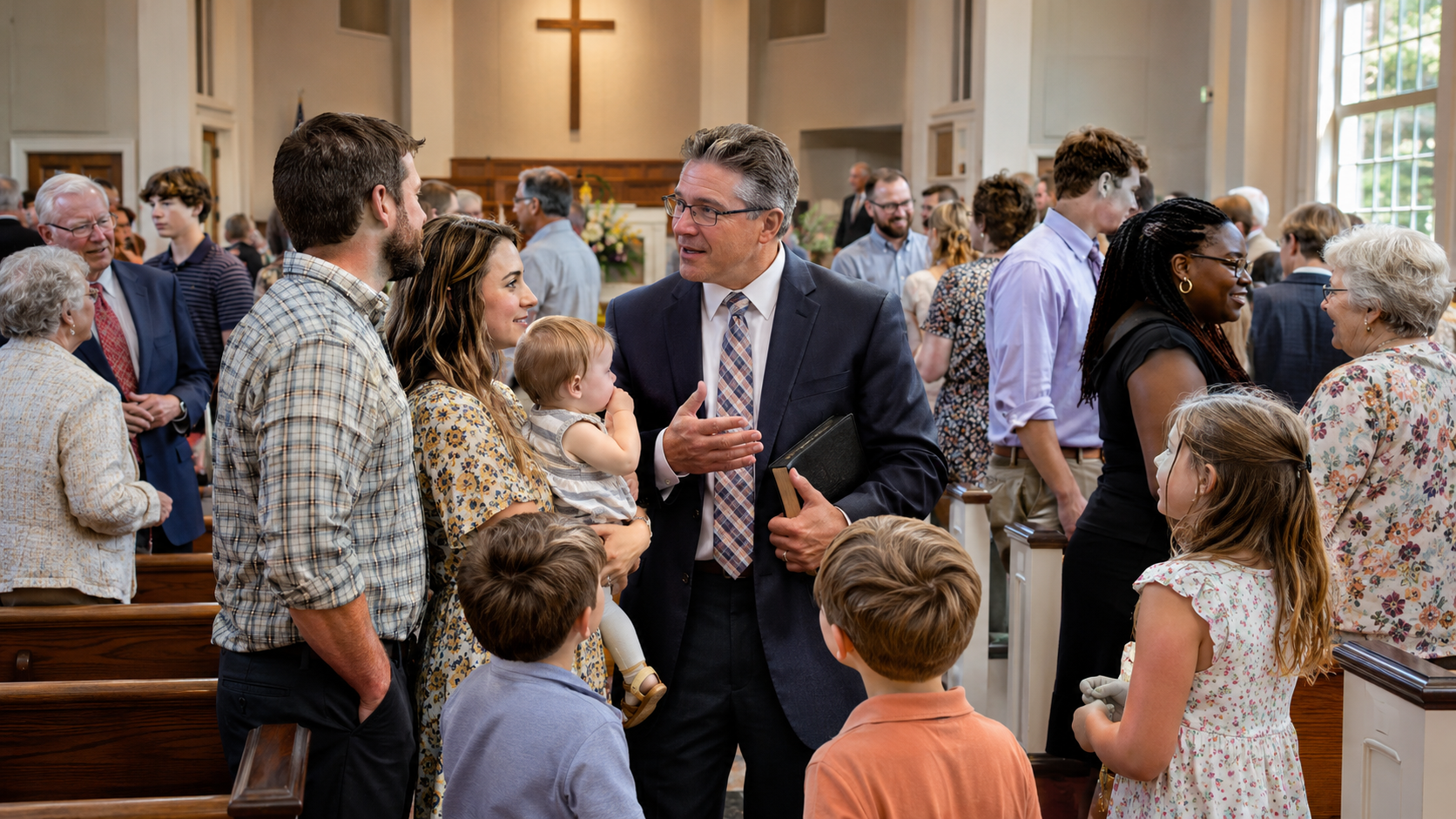
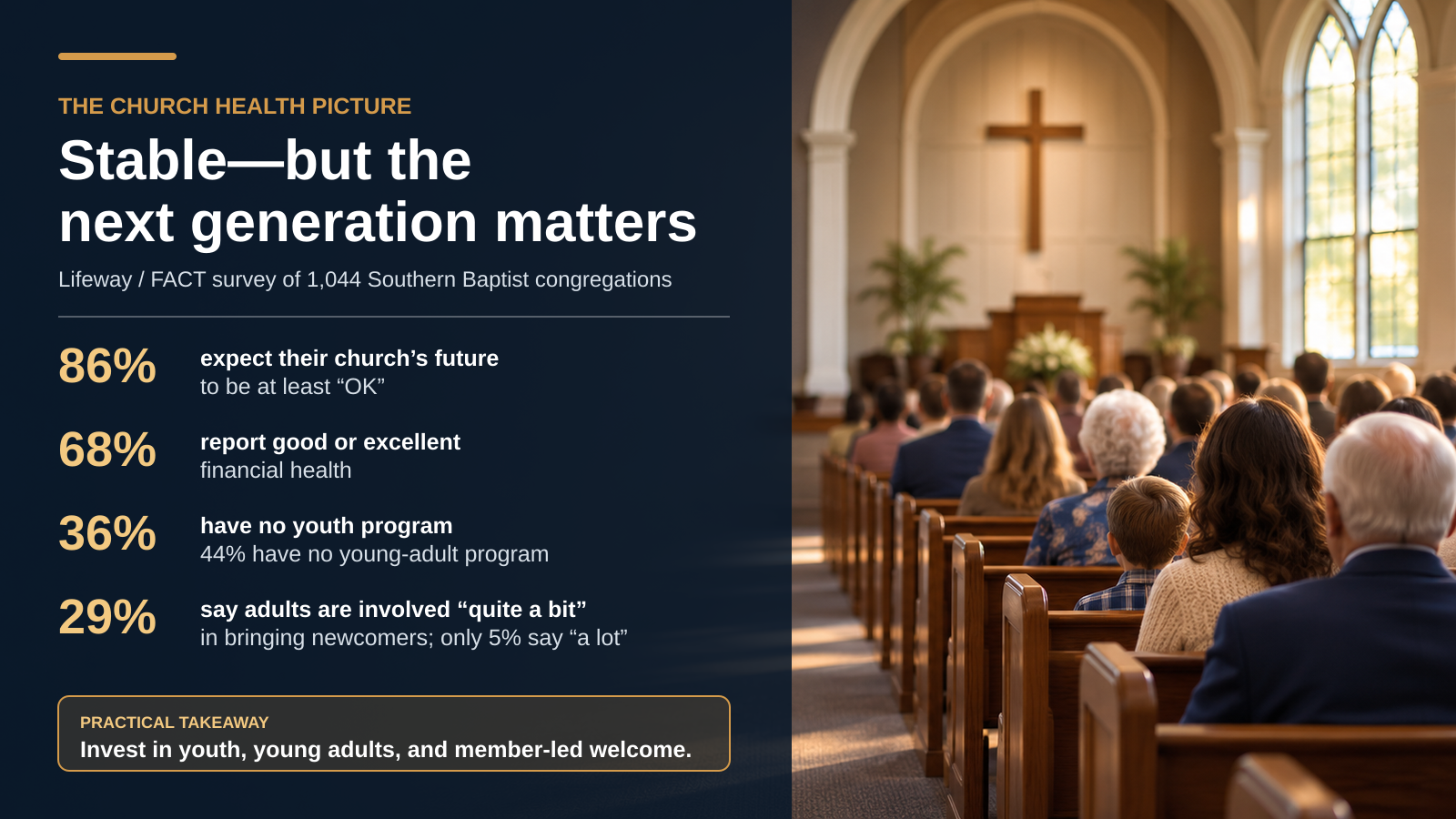
A national Lifeway Research analysis released through Baptist Press presents a mixed but useful picture of Southern Baptist congregational life. The findings come from 1,044 surveys completed in 2025 as part of the wider Faith Communities Today study, with responses weighted by church size and a reported sampling margin of error of plus or minus 3.4 percentage points at the 95 percent confidence level. Stability is the dominant theme: 86 percent of churches say their congregation’s future is at least “OK,” including 27 percent that describe themselves as thriving. Financially, 68 percent rate their condition as good or excellent, while 72 percent reported positive net income in their most recent fiscal year; 14 percent broke even and 14 percent posted a net loss. The research also shows that many congregations operate with lean staffing. Fifty-six percent have a single pastor and no assistant or associate pastor, 35 percent say they have less staff than they need, and 42 percent of sole or senior pastors have paid employment outside the church. Among those bivocational pastors, more than half work at least 40 hours a week in their nonchurch job. Pastors’ average age is 56, and 30 percent are at least 65. These numbers do not describe every church, but together they show why apparent institutional steadiness should not be confused with unlimited capacity. A congregation may own its building, meet its expenses, and remain confident about the future while depending heavily on one aging or bivocational leader. The same report says 59 percent consider their staffing about right, so leaders should interpret the national averages alongside their own congregation’s size, needs, and local ministry context.
The clearest warning concerns generational reach and congregational participation. In the average Southern Baptist church represented by the survey, senior adults comprise 32 percent of participants and middle-aged adults 31 percent, compared with 16 percent young adults, 9 percent youth, and 13 percent children. More than a third of churches, 36 percent, report no youth activities or programs, and 44 percent have none specifically for young adults; only 16 percent say young-adult programming receives significant emphasis. Churches generally describe themselves as outward-facing: 75 percent place substantial emphasis on talking about faith with people outside the congregation, and 84 percent say they actively seek and incorporate newcomers. Yet only 29 percent report that regularly participating adults are involved “quite a bit” in bringing in new people, including just 5 percent who are involved “a lot.” The practical lesson is not that every church must build a large menu of age-segmented programs. It is that leaders should examine whether their actual ministry rhythms make room for younger people, equip members to welcome neighbors, and distribute responsibility beyond an already stretched pastor. A useful response could include listening sessions with teenagers and young adults, a review of how newcomers move from first visit to meaningful relationship, intentional mentoring across generations, and realistic staffing or volunteer plans. The survey offers no single formula, but it gives churches a disciplined starting point: celebrate genuine stability while naming the gaps that could weaken future discipleship, evangelism, and leadership development if they remain unattended. Reviewing these indicators annually can turn a national snapshot into a local habit of prayerful, evidence-aware stewardship.
Congregational Health, Generational Ministry, and Pastor Capacity
Southern Baptist
Pastors, Church Leaders, Ministry Teams, and Congregations
Baptist Press

The Great Dechurching: Who's Leaving, Why Are They Going, and What Will It Take to Bring Them Back?
Jim Davis, Michael Graham, with Ryan P. Burge
This 2023 Zondervan hardcover uses national research to explain why Americans leave churches and how congregations can respond, making it a strong companion to Lifeway’s findings about generational reach, newcomer engagement, and long-term church health. ASIN 0310147433.