
Missouri Baptists Join Nationwide Goal for 450,000 Baptisms by 2033
November 6, 2026
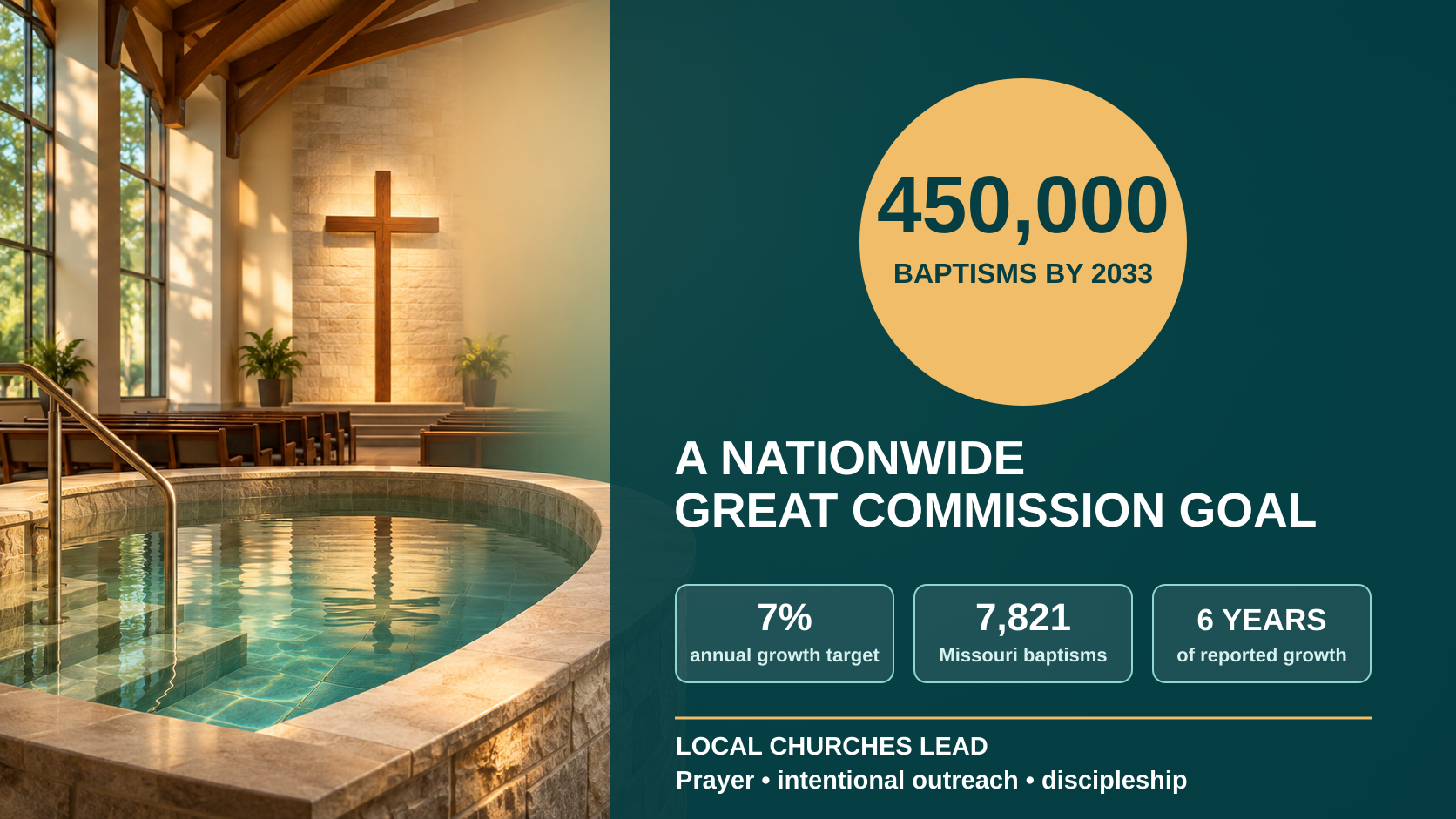
Missouri Baptist messengers have embraced a Southern Baptist Convention goal of seeing 450,000 baptisms nationwide by 2033, the two-thousandth anniversary traditionally associated with Christ’s Great Commission. The initiative calls for seven percent annual growth led by local churches, while Missouri reports 7,821 baptisms in 2026 and expects a sixth consecutive year of increase.
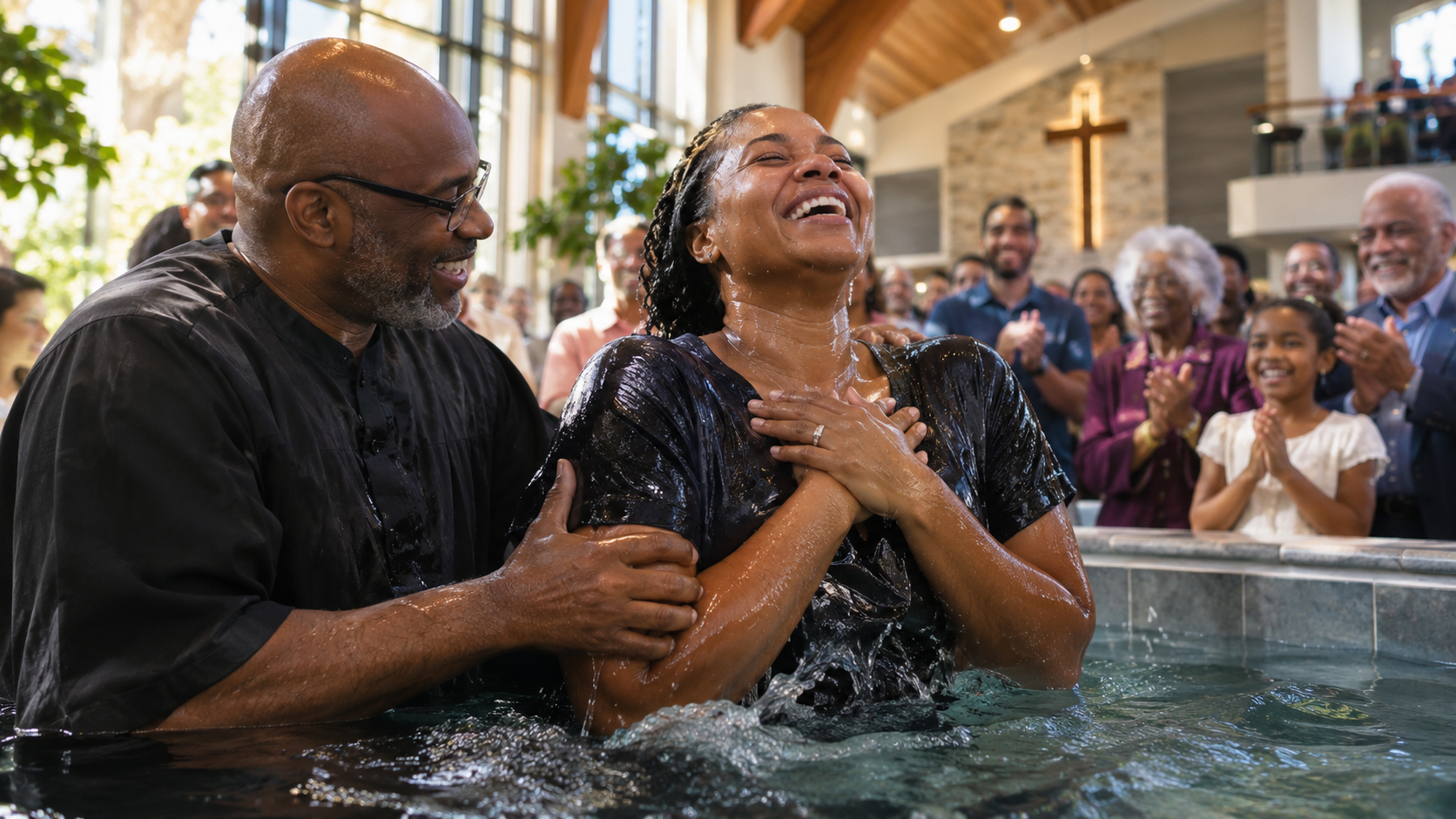
Missouri Baptist messengers have formally embraced a Southern Baptist Convention-wide goal of seeing 450,000 baptisms in 2033, adding state-level support to a nationwide effort focused on evangelism, discipleship, and the ministry of local churches. The Pathway reported the action on November 6 after the Missouri Baptist Convention’s 192nd annual meeting, held October 26–27 at the St. Charles Convention Center. The report says 1,183 messengers representing 494 churches participated, joined by 297 guests. Leaders presented 2033 as a meaningful horizon because it marks two thousand years since the time traditionally associated with Jesus’ Great Commission. Reaching 450,000 baptisms would require approximately seven percent annual growth, a rate that turns a large national number into a sequence of yearly local goals. The Missouri report also offers a concrete measure of current momentum: churches in the state had reported 7,821 baptisms for 2026 and expected the final total to exceed 8,000, which would represent a sixth consecutive year of growth. Those figures do not make baptism a competition or a substitute for faithful pastoral care. Baptism is a public act of obedience and identification with Christ, and every reported baptism represents a person who needs ongoing teaching, fellowship, prayer, and service within a church. The national goal matters most when it directs attention back to ordinary congregational work: sharing the Gospel clearly, inviting people to respond, preparing new believers for baptism, and helping them grow as disciples who can in turn bear witness to others. Faithful follow-up remains essential after every public profession and baptism.
The initiative’s strongest emphasis is that a national organization cannot produce baptisms by issuing a target; local churches must lead. According to The Pathway, Missouri leaders connected progress with prayer, intentional outreach, discipleship, and genuine congregational participation. That framework gives pastors and ministry teams a practical way to assess their own witness without reducing people to statistics. Churches can begin by asking whether members are equipped to explain the Gospel, whether worship services and small groups make room for seekers’ questions, whether baptism preparation is clear, and whether new believers are connected promptly with mentors and Bible study. Leaders can also examine barriers that are easy to overlook, such as unclear next steps, limited follow-up, language differences, or the absence of a planned pathway from profession of faith to baptism and continuing formation. The seven percent annual benchmark can be useful as a planning aid, but it should remain subordinate to biblical faithfulness, truthful reporting, and care for individuals. The Missouri figures illustrate how sustained growth can emerge across several years rather than through one temporary campaign. They also provide encouragement to churches in other states: nationwide progress will be the combined result of many congregations faithfully serving their own communities. A wise response is therefore neither pressure nor passivity. It is a renewed commitment to pray for people by name, cultivate relationships beyond the church’s walls, proclaim Christ with clarity, celebrate baptism reverently, and build durable discipleship after the water. If the 2033 goal strengthens those practices, its most important fruit will be measured not only in a total but in congregations more deeply committed to the Great Commission.
Baptism, Evangelism, and Great Commission Mobilization
Southern Baptist
Pastors, Church Leaders, Evangelism Teams, and Congregations
The Pathway

Evangelism: How the Whole Church Speaks of Jesus
J. Mack Stiles
Stiles explains how evangelism becomes a shared culture of the whole congregation, making this book a practical companion to a baptism initiative that depends on local churches, clear Gospel witness, and continuing discipleship.