
National Church Abuse Helpline Expands Support for Victims and Pastors
November 2, 2026
A national church abuse helpline now gives victims, pastors, and ministry leaders a direct path to safety guidance, reporting triage, referrals, and response coaching. Operated by the Evangelical Council for Abuse Prevention with Southern Baptist abuse-response partners, 833-611-HELP offers live weekday support and follow-up outside posted hours.
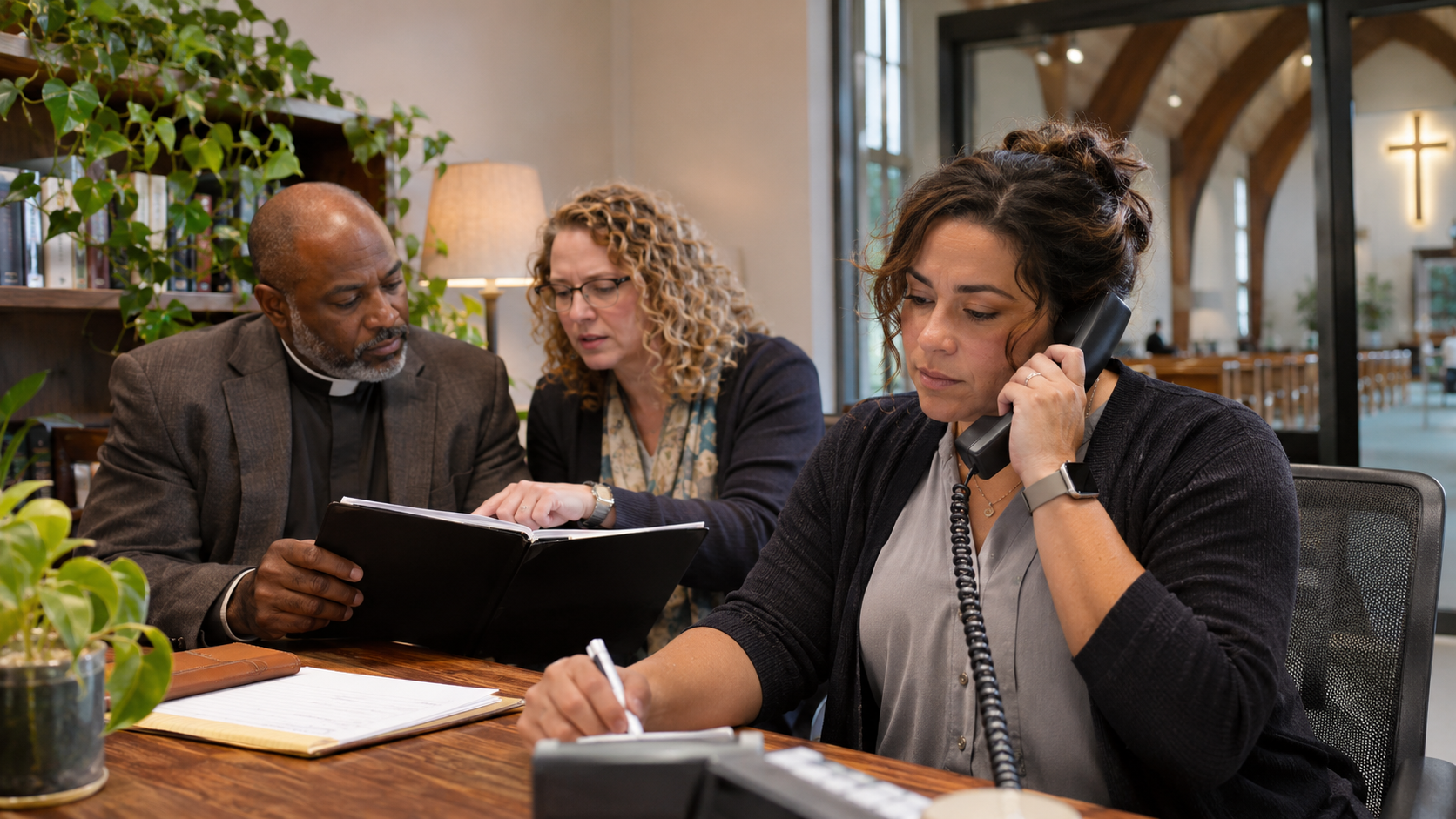
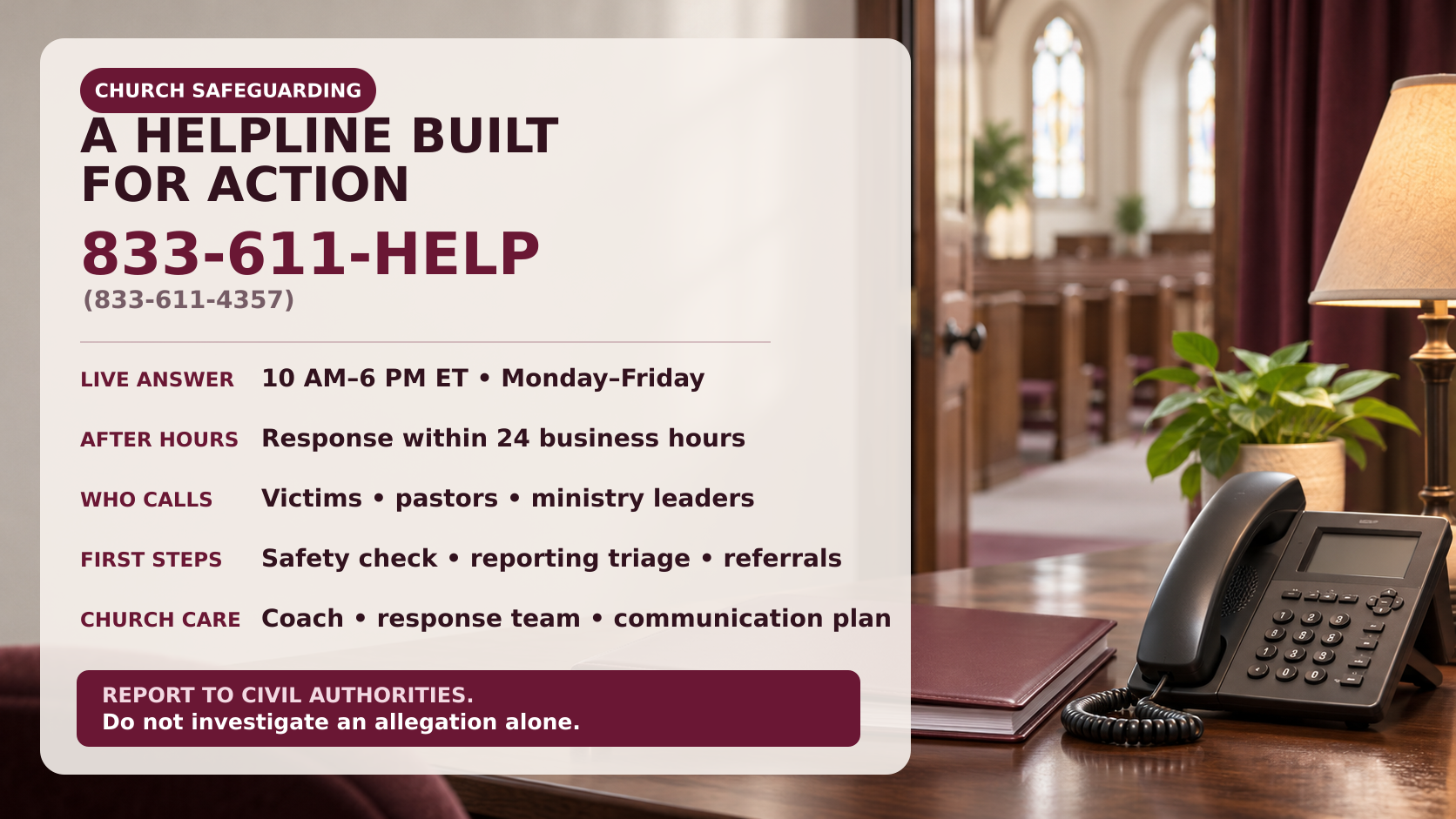
A national helpline is giving abuse survivors, pastors, and ministry leaders a direct place to seek informed guidance when allegations arise in a church or Christian organization. Baptist Press reports the service is operated through the Evangelical Council for Abuse Prevention in partnership with Southern Baptist Convention Abuse Prevention and Response. Callers can reach the line at 833-611-HELP, or 833-611-4357. Live answering is available from 10 a.m. to 6 p.m. Eastern Time, Monday through Friday, and contacts outside those hours are scheduled for a response within 24 business hours. The helpline serves both people who have experienced abuse and leaders trying to respond responsibly. That dual focus is significant because a survivor’s immediate needs and a church’s organizational duties often intersect during a crisis, yet they are not identical. Helpline staff begin by assessing safety and reporting obligations, then help callers identify appropriate next steps. Depending on the situation, those steps can include contacting law enforcement, locating counseling or legal support, connecting with specialized services, or arranging additional church-response coaching. The service can also help ministry leaders think through a response team and a communication plan. A helpline does not replace emergency services, civil authorities, licensed clinicians, attorneys, or a full independent investigation. It does, however, reduce the chance that frightened victims or unprepared leaders will face a complex situation alone. For churches across the United States, the development offers a concrete resource to place in written safeguarding policies, staff training materials, volunteer handbooks, and public care information before a report is received.
The central principle is simple: protecting people and reporting suspected crimes must take priority over protecting an institution’s reputation. A church should never attempt to investigate a criminal allegation by itself, pressure a victim to remain silent, or treat internal discipline as a substitute for the civil process. When a report arrives, leaders should first address immediate safety, follow mandatory-reporting law, preserve relevant records, avoid contaminating testimony, and communicate only through people assigned to the response. The helpline’s triage and referral role can help leaders recognize those boundaries while giving survivors a clearer route toward specialized care. Churches should also prepare before a crisis. Written screening, supervision, transportation, bathroom, overnight, digital-contact, and allegation-response policies need regular review. Staff and volunteers require practical training on grooming behavior, boundary violations, disclosures, documentation, and reporting. Leadership teams should know in advance which local law-enforcement agency, child-protection office, counselor, attorney, insurer, and independent investigator they would contact. Congregations also need a culture in which questions are welcomed and retaliation is forbidden. The new helpline is most useful when it becomes one part of that wider safeguarding system rather than a number discovered only after harm occurs. Pastors can add 833-611-HELP to emergency binders, staff contacts, membership-care resources, and websites, then test whether decision-makers understand when and how to use it. Survivors deserve to be heard with patience, dignity, and truth. Churches honor Christ not by concealing sin but by bringing wrongdoing into the light, cooperating with lawful authorities, caring for the wounded, and accepting accountability for failures.
Church Abuse Prevention and Survivor Care
Evangelical
Pastors and Church Leaders
Baptist Press
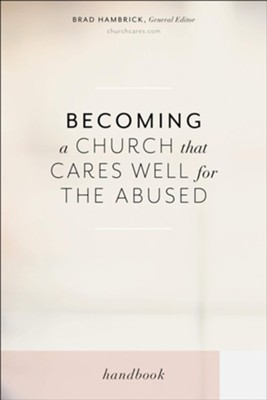
Becoming a Church that Cares Well for the Abused
Brad Hambrick, general editor
This practical church resource equips leaders to respond to abuse disclosures with survivor-centered care, lawful reporting, wise pastoral support, and appropriate outside expertise, closely matching the helpline’s purpose.