
Pentagon Creates Office of Religious Affairs to Elevate Chaplain Support
October 2, 2026
The Pentagon has established an Office of Religious Affairs that reports directly to the defense secretary and is charged with advocating for chaplaincy resources, religious support, and spiritual readiness. The move could strengthen care for service members and military families, while its explicit equal-treatment guardrail makes faithful attention to religious liberty essential.
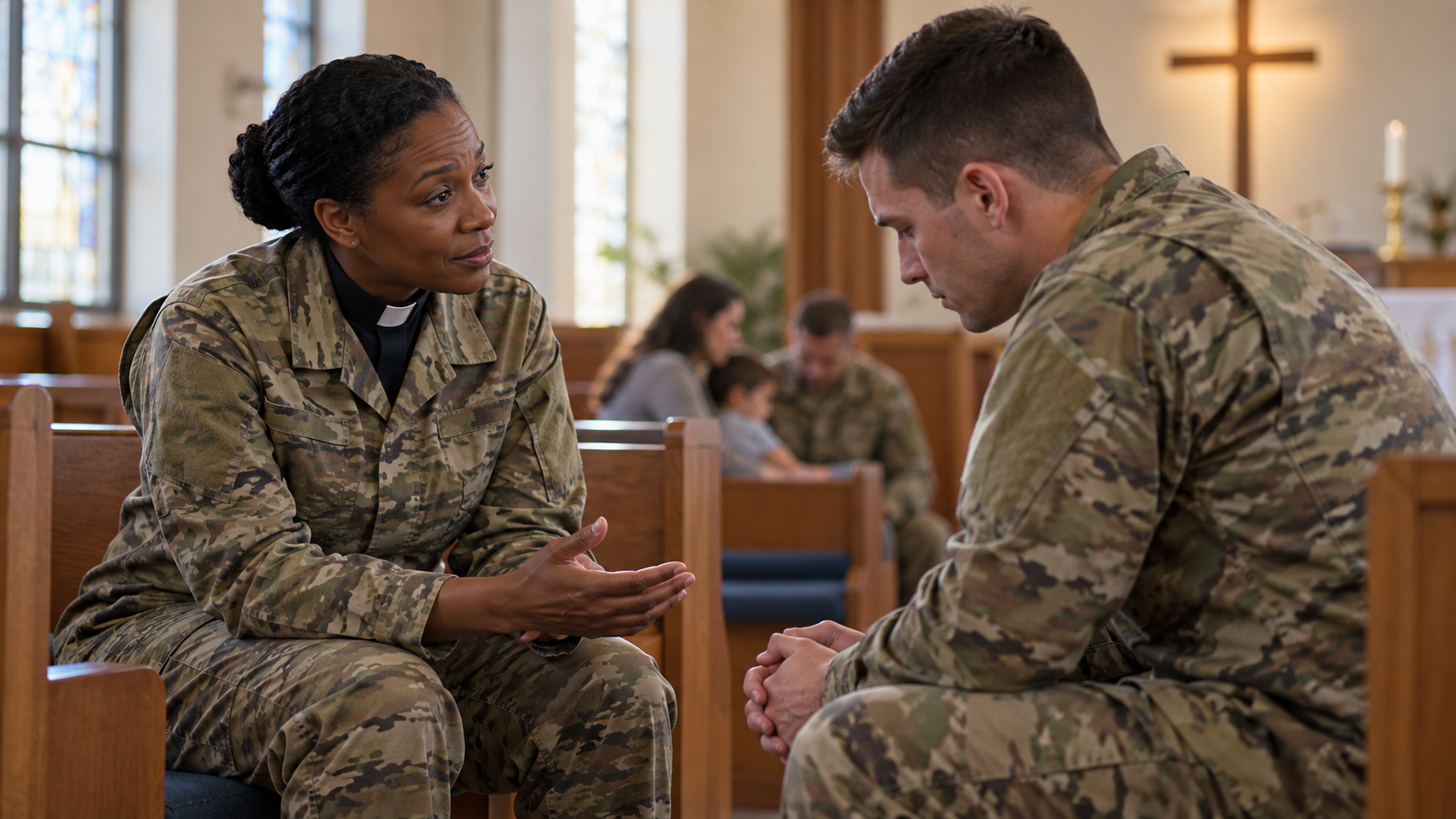
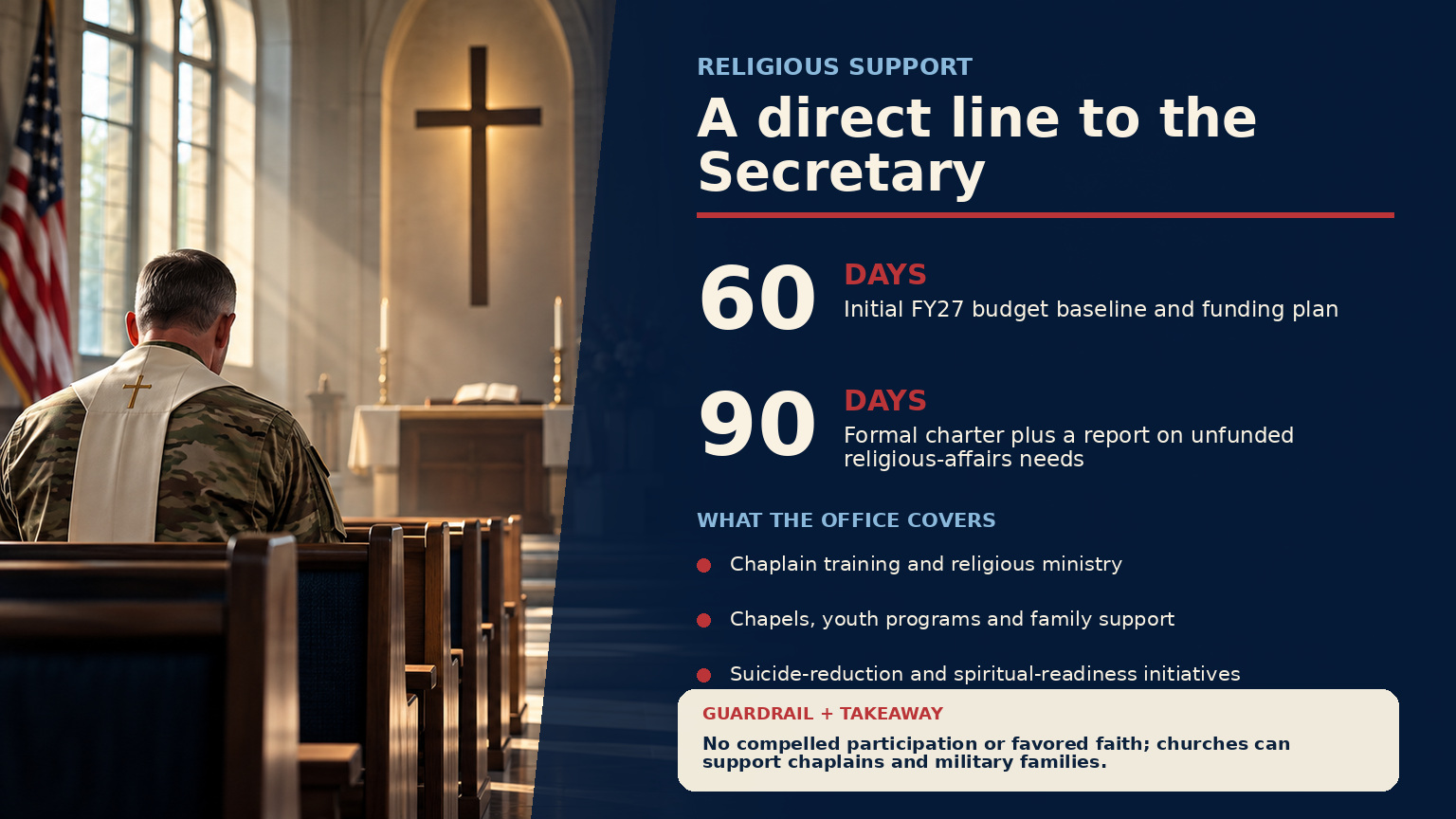
A new Office of Religious Affairs is being established at the Pentagon with direct access to the defense secretary and a broad assignment to strengthen religious support across the armed forces. The September 30 memorandum creating the office describes its director as a principal staff assistant and the senior adviser to the secretary and deputy secretary for religious affairs. According to the document, the office is intended to align policy and resources so service members, military families, and civilian personnel can exercise religion under the Constitution and federal law. The scope reaches well beyond a single program. The office is charged with advocating for the delivery of religious ministry, facilities and infrastructure, logistics, chaplain training and education, chaplain-led programs, chapel youth work, faith-based homeschool support for military families, resilience and suicide-reduction initiatives, contracted services from faith-based organizations, and research or technology related to spiritual readiness. The memo also moves the Armed Forces Chaplains Board under the director’s authority and directs the office to represent the secretary in relevant work with Congress, other agencies, and religious endorsing organizations. Two implementation deadlines make the announcement more than a symbolic reorganization. Within 60 days, department officials are to establish an initial budget baseline and submit a fiscal-year 2027 funding plan. Within 90 days, the office is to receive a formal departmental charter, while the military departments and their chiefs of chaplains submit a baseline report identifying unfunded and underfunded religious-affairs requirements. The Associated Press reported the creation on October 2 and noted that a director had not yet been named.
For Christian churches and ministries that support military communities, the office’s formation deserves both careful interest and principled scrutiny. Chaplains often serve people during deployment, grief, family separation, moral injury, crisis, and ordinary seasons when a service member is far from a home congregation. Better facilities, training, family programs, and access to religious resources can strengthen that ministry. At the same time, religious freedom in a plural military requires that institutional support never become religious pressure. The establishing memorandum directly addresses this concern, stating that nothing in it may compel religious participation or diminish the free-exercise rights of people of any faith or no faith. The Associated Press also recorded immediate criticism from church-state advocates who fear that recent faith-related initiatives could favor Christianity. That disagreement should not be hidden. It is part of the public significance of the new office and a reason to watch how its charter, leadership, budget, and policies are implemented. A Christian approach to religious liberty should defend the ability of Christian service members to worship and receive pastoral care while also honoring the conscience of Jewish, Muslim, Hindu, other religious, and nonreligious personnel. Churches can respond constructively by praying for chaplains, learning the ethical boundaries that govern military ministry, supporting families through deployment and relocation, and encouraging qualified pastors who may be called to chaplaincy. They can also ask whether the office’s promised resources reach installations and service members consistently rather than becoming a platform for one tradition. The coming 60- and 90-day milestones will reveal whether the office produces transparent funding priorities, credible professional leadership, and policies that join robust spiritual care with equal constitutional protection.
Military Chaplaincy and Religious Freedom
Christian; Ecumenical
Military Families; Chaplains; Pastors; Religious Liberty Advocates
Associated Press via ABC News

Liberty for All: Defending Everyone’s Religious Freedom in a Pluralistic Age
Andrew T. Walker
This 2021 Brazos Press paperback edition, ASIN 1587434490, offers a distinctly Christian case for defending religious freedom for every neighbor, a useful framework for evaluating military religious support without coercion or favoritism.