
Pew Finds a Generational Split in Young Adult Religious Engagement
October 28, 2026
New Pew research presents a divided picture of young adult faith. Americans ages 18 to 22 report unusually strong monthly worship attendance, while those ages 23 to 26 show lower participation, prayer, religious identity, and personal importance. Churches need patient biblical discipleship instead of quick claims about revival or decline.

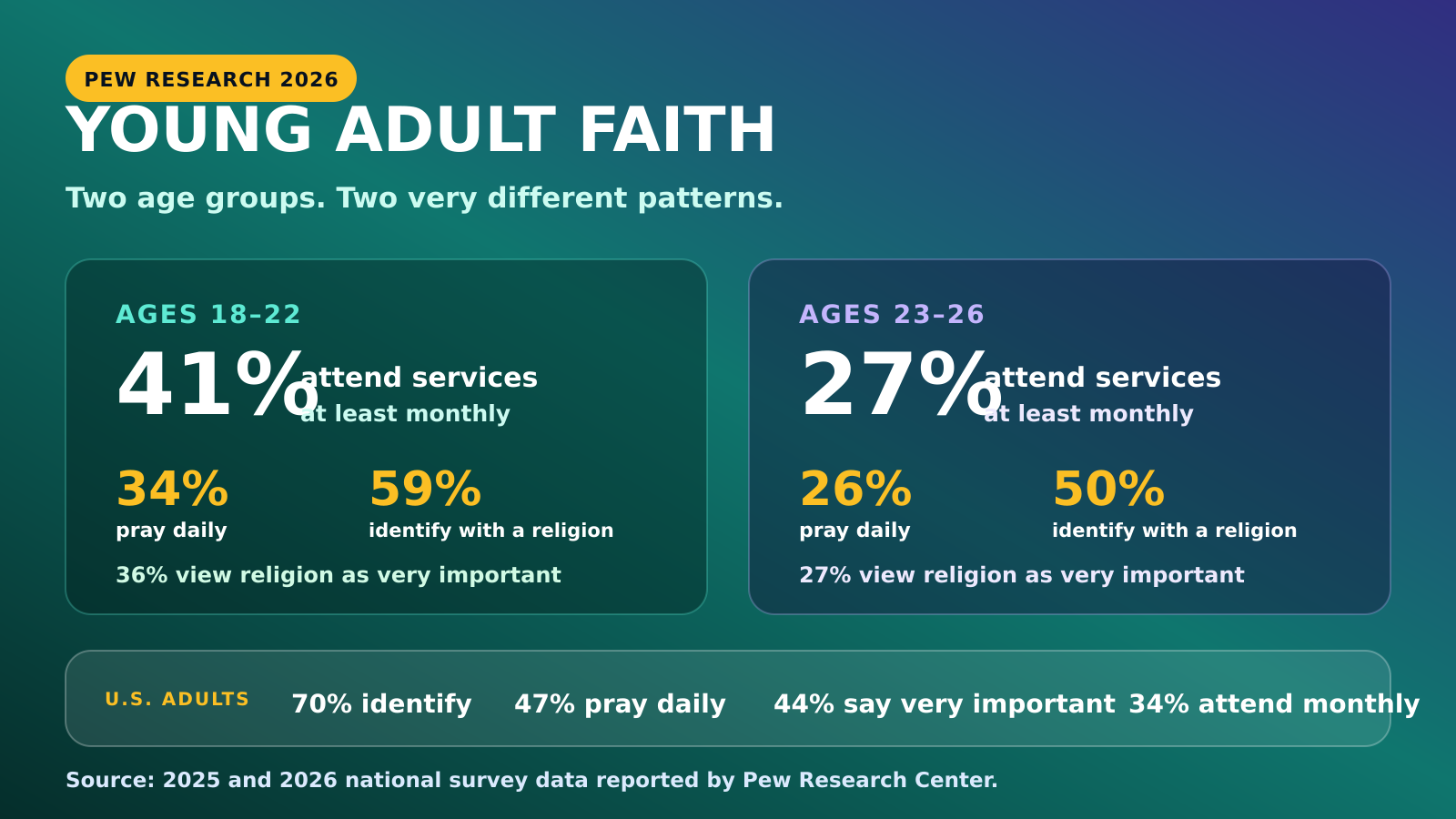
Pew Research Center’s latest national analysis reports broad stability in American religious practice since 2020, alongside sharply different patterns among the youngest adults. In 2026, 70 percent of American adults identified with a religion, 47 percent reported daily prayer, 44 percent described religion as very important in their lives, and 34 percent attended religious services at least monthly. Those national figures moved little compared with recent years. The most interesting findings appear inside the 18-to-26 age range. Pew separated adults born from 2004 through 2008, now roughly 18 to 22, from adults born from 2000 through 2003, now roughly 23 to 26. Among the younger group, 41 percent reported attending religious services at least once or twice each month. Their attendance exceeded the national adult figure of 33 percent used in Pew’s age comparison. Yet only 34 percent reported daily prayer, 36 percent called religion very important, and 59 percent identified with a religion. The slightly older group showed lower measures across every category in the comparison. Only 27 percent attended services monthly, 26 percent prayed daily, 27 percent viewed religion as very important, and 50 percent identified with a religion. Pew warns readers against treating one age group as proof of a lasting religious resurgence. Similar periods of stronger participation among the youngest adults appeared in earlier decades, followed by declining engagement as those cohorts aged. The report draws from 2025 and 2026 national surveys and compares current results with earlier Pew studies. Its value rests in careful measurement. Its limits also matter. Attendance describes behavior, while affiliation, prayer, conviction, repentance, and enduring discipleship measure different parts of religious life.
Churches should respond to these findings with focused relationships instead of broad labels about Generation Z. A crowded worship service offers encouragement, yet attendance alone does not establish durable faith. Jesus formed disciples through teaching, shared life, correction, mission, prayer, and obedience. Paul described his ministry among the Thessalonians as sharing both the gospel and his own life in 1 Thessalonians 2:8. Such formation requires trusted adults who know names, notice absence, answer hard questions, and model Christian faith beyond a weekly gathering. Churches serving 18-to-22-year-olds should build clear paths from attendance into small groups, service, Scripture engagement, prayer, mentoring, and meaningful responsibility. Leaders should also pay close attention to adults ages 23 to 26. Graduation, relocation, work demands, marriage decisions, financial pressure, and changing friendships often remove the structures supporting earlier church participation. A ministry calendar built mainly around students easily loses adults entering full-time work. Congregations should create intergenerational groups, vocational discipleship, flexible meeting times, and leadership roles suited to this transition. Men’s ministries hold a specific opportunity. Young men showed higher attendance in Pew’s analysis, yet strong attendance still needs deep formation, moral accountability, and service. Faith for Exiles by David Kinnaman and Mark Matlock connects closely with this challenge because it examines practices linked with resilient Christian faith among emerging adults. The book emphasizes intimacy with Jesus, cultural discernment, meaningful vocation, intergenerational relationships, and countercultural mission. Churches should measure more than event turnout. Track mentoring relationships, participation in prayer and Scripture, service commitments, baptisms, membership, leadership development, and continued engagement after major life transitions. Patient discipleship respects both the hopeful signs and the serious gaps found in Pew’s data.
Faith and Culture
Ecumenical
Young Adults
Pew Research Center
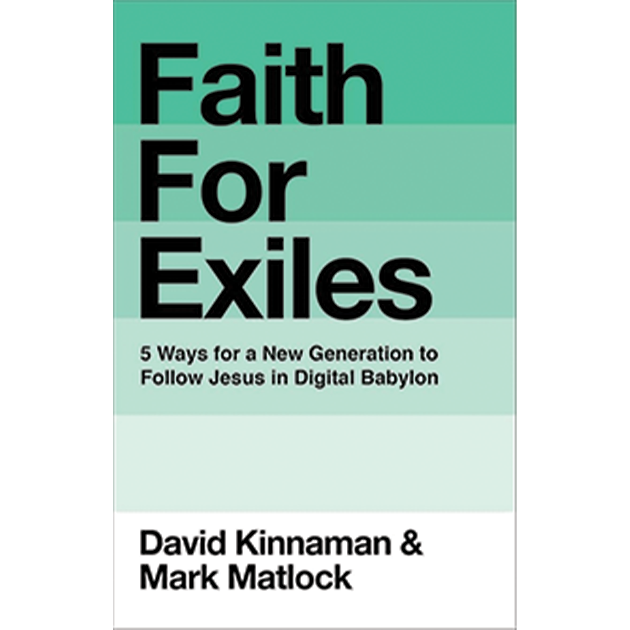
Faith for Exiles
David Kinnaman and Mark Matlock
Kinnaman and Matlock present five practices associated with resilient young Christians, giving churches a useful framework for turning attendance into enduring discipleship.