
Pope Leo Reaffirms Catholic Opposition to Death Penalty as U.S. Plans Livestream
October 10, 2026
Pope Leo XIV has again described the death penalty as inadmissible, emphasizing human dignity, repentance, and the ability of modern detention to protect society. His remarks arrived as U.S. officials prepared to livestream a military execution, prompting Catholic leaders to warn that punishment must never become public spectacle or erase the possibility of redemption.
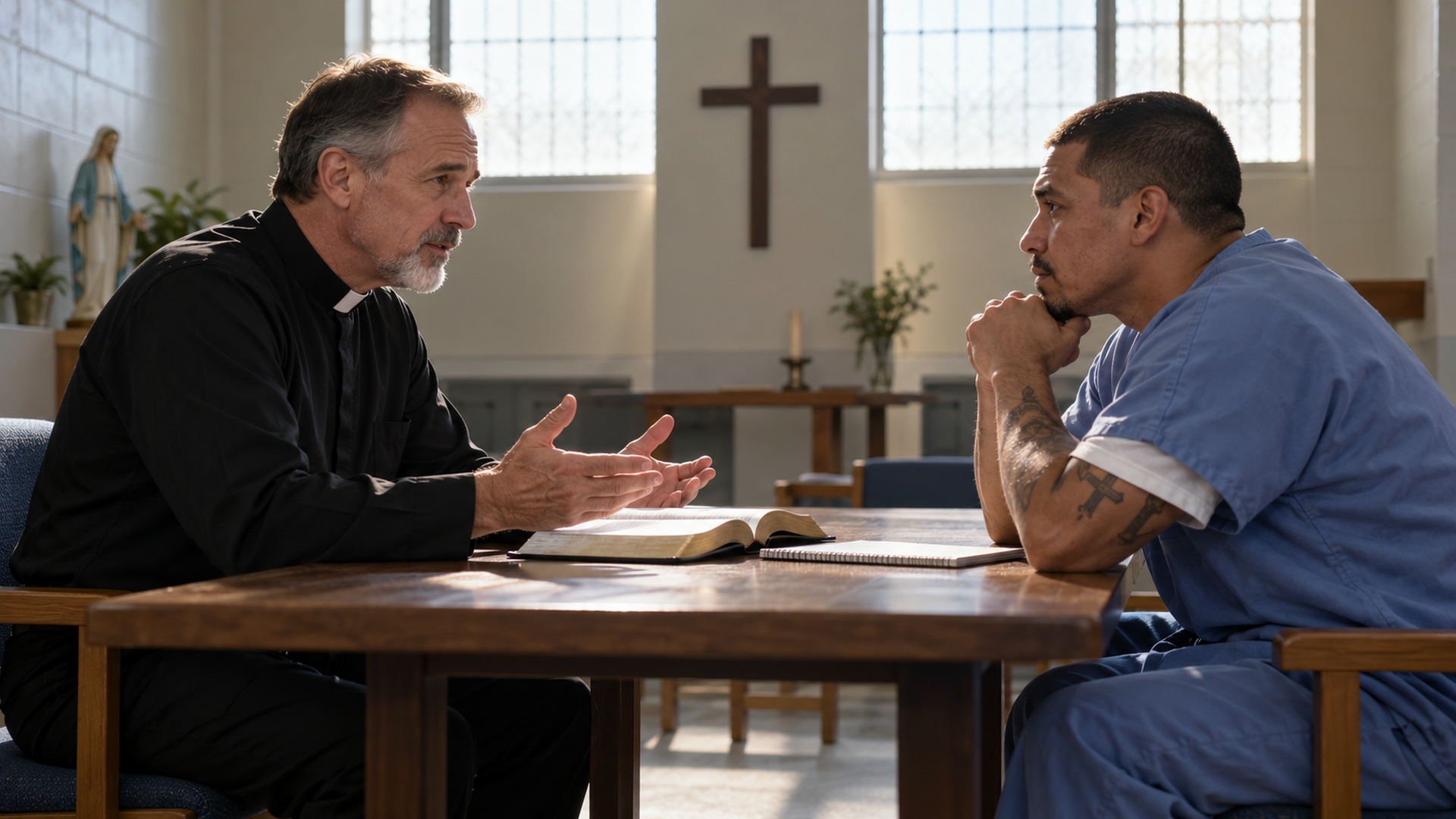
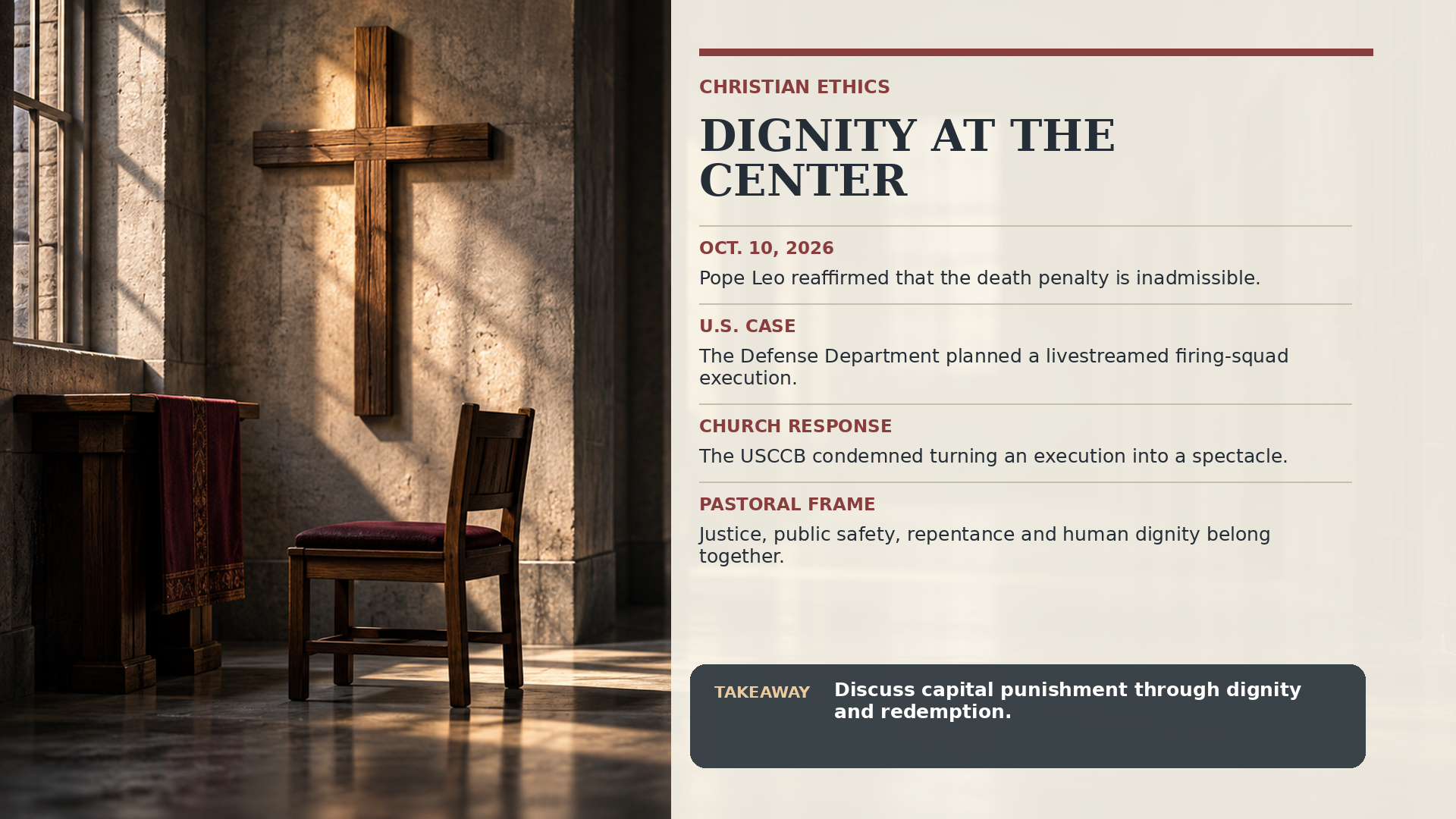
Associated Press reporting published October 10, 2026, placed Pope Leo XIV’s renewed opposition to capital punishment beside an immediate American controversy over the planned livestream of a military execution. The pope reiterated the Catholic position that the death penalty is inadmissible because it attacks the inviolability and dignity of the human person. He also argued that modern systems of detention can protect society while preserving an offender’s opportunity for repentance, moral conversion, and redemption. The remarks came as the U.S. Department of Defense planned to broadcast the firing-squad execution of Nidal Malik Hasan, who was convicted for carrying out the 2009 Fort Hood shooting. Catholic criticism addressed both the execution itself and the decision to make it viewable as a public event. Cardinal Pietro Parolin, the Vatican secretary of state, warned against transforming punishment into a spectacle and said such treatment violates human dignity. The U.S. Conference of Catholic Bishops likewise expressed dismay and characterized the planned presentation in stark moral terms. The case forces several questions into the same frame: the grievous harm endured by victims and families, the state’s obligation to protect the public, the offender’s accountability, and the Christian claim that no human being loses the dignity given by God. The church’s opposition does not minimize murder, excuse violence, or deny the anguish of survivors. It insists instead that justice must not imitate the destruction it condemns and that secure incarceration can serve public safety without making death the final instrument of punishment. That distinction is especially consequential when technology can turn a state action into content watched far beyond the place where a sentence is carried out.
For churches discussing this development, pastoral seriousness requires more than choosing a political slogan. Christian teaching on life and dignity calls believers to remember the dead, accompany survivors, support public safety, and resist every temptation to treat either victims or offenders as abstractions. A responsible conversation can begin with prayer for those whose loved ones were killed or wounded and with recognition that their suffering cannot be reduced to a talking point. It can then examine why the Catholic Church distinguishes retribution from vengeance and why it places continuing moral weight on repentance, even after a terrible crime. The proposed livestream adds a distinct concern. Public transparency and historical documentation are not identical to mass spectatorship, and churches can ask what habits are formed when an execution becomes a broadcast event. Does viewing encourage sober accountability, or does it risk curiosity, humiliation, emotional escalation, and the normalization of death as entertainment? Prison ministers and chaplains bring essential wisdom because they encounter the long consequences of violence, confinement, remorse, and grief. Their testimony can keep the discussion grounded in actual people rather than imagined categories. Congregations can also create space for disagreement while maintaining clear Christian disciplines: truthful speech, compassion for victims, rejection of cruelty, and confidence that judgment belongs ultimately to God. The pope’s statement matters nationally because federal practice influences public imagination far beyond one case. It invites Christians to consider whether the means chosen by the state reflect the dignity the church proclaims, and whether the gospel’s language of repentance and redemption still has meaning when society faces its most difficult offenders.
Christian Ethics, Human Dignity, and Capital Punishment
Roman Catholic
Catholic clergy and laity, prison ministers, Christian ethics readers, chaplains, and policymakers
Associated Press

Dead Man Walking: The Eyewitness Account of the Death Penalty That Sparked a National Debate
Helen Prejean
Prejean’s eyewitness prison-ministry account engages victims’ grief, accountability, human dignity, and conversion—the same moral tensions raised by the church’s opposition to capital punishment.