
Reconstructed African Baptist Meeting House Restores a National Faith Story
October 9, 2026
A reconstructed African Baptist Meeting House in Williamsburg, Virginia, has been rededicated on the footprint of a congregation formed by enslaved and free Black Christians in 1776. The project matters nationally because archaeology, architecture, and living church memory are restoring a chapter of Baptist witness that was once hidden beneath a parking lot.
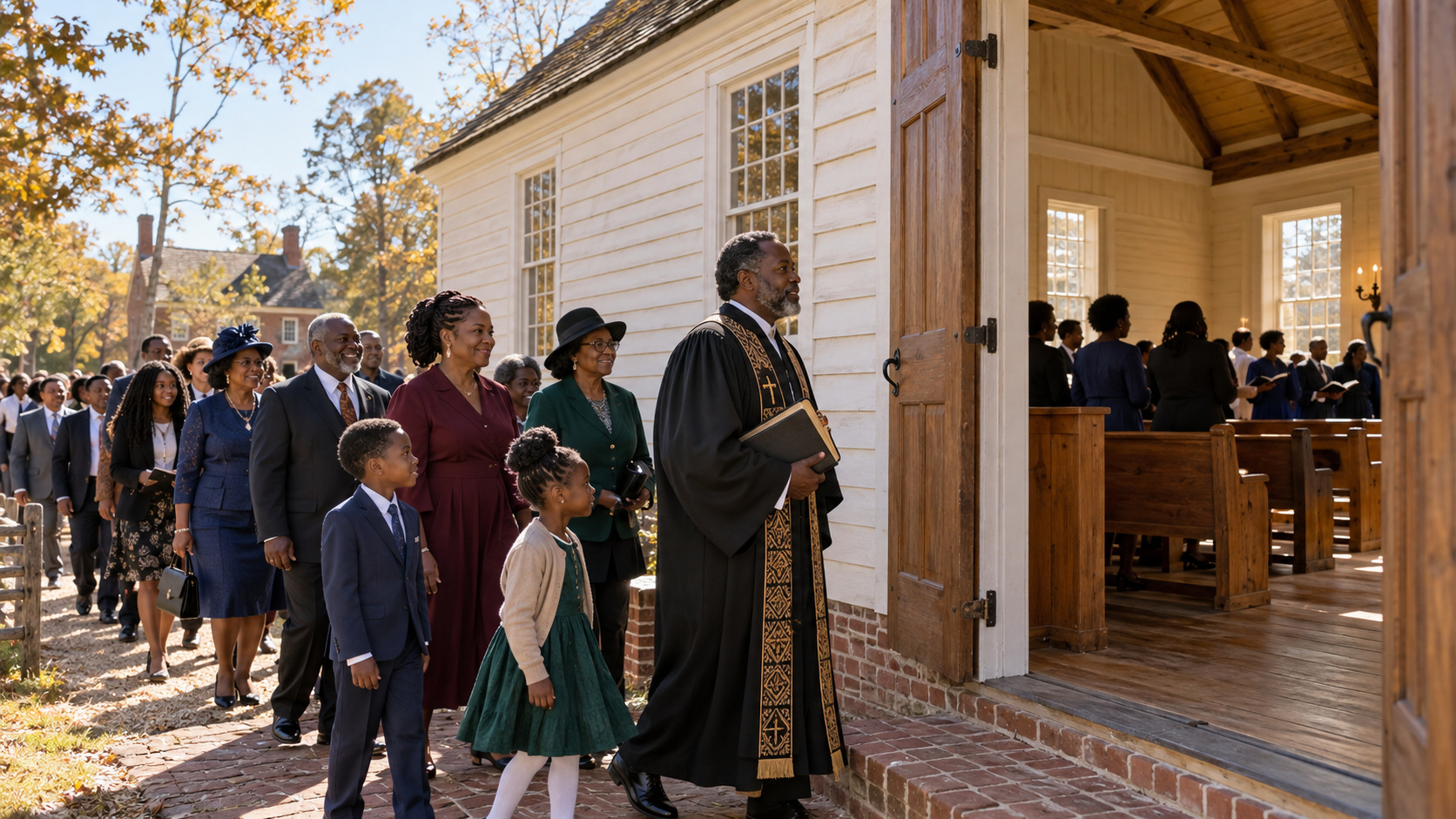
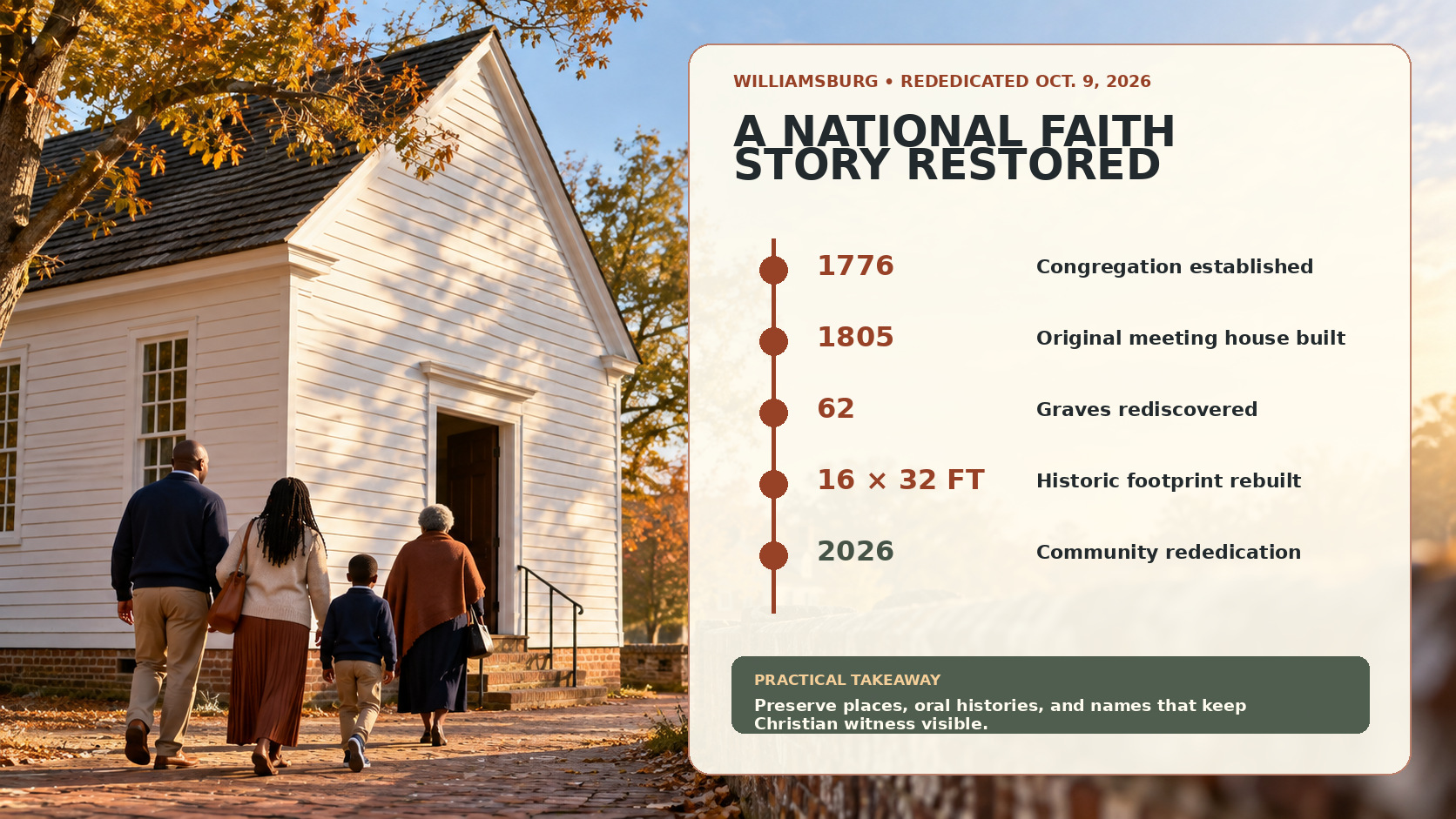
A community rededication on October 9, 2026, returned an African Baptist meeting house to a historic Williamsburg landscape where a Black Christian congregation had worshiped for generations. According to Associated Press reporting published that day, the congregation now known as First Baptist Church was established in 1776 by enslaved and free African Americans who gathered despite laws that restricted Black assembly. Members constructed a meeting house in 1805 using recycled materials. A tornado destroyed that building in 1834, another was built in 1856, and the original site was later covered by a parking lot. The recent reconstruction did not begin with a romantic guess about the past. Archaeological work that started in 2021 located the original foundation and identified 62 graves, giving the project physical evidence to place beside congregational memory and documentary research. The new structure follows the historic 16-by-32-foot footprint and uses pine and white oak with period-informed details, while planned practical features such as an accessibility ramp, heating, ventilation, and air conditioning recognize that a restored church building must welcome present-day visitors. The result is both modest and powerful: a small white meeting house that makes visible the faith, courage, and communal organization of people whose worship was constrained by slavery and racial law. The current congregation, reported at 215 members, is not simply receiving a museum object. It is reconnecting with a place where Christian identity, Black community life, and the struggle for dignity were joined long before the United States fulfilled its stated promises of religious and civic freedom.
This restoration deserves nationwide Christian attention because sacred places teach when their stories are told honestly. The meeting house points to worshipers who confessed Christ within a social order that denied their equality, and it asks churches today to consider whose names, graves, buildings, and testimonies have disappeared from familiar accounts of American Christianity. Preserving that history does not require treating the eighteenth-century congregation as a symbol without complexity. It requires careful evidence, respect for descendants, and a willingness to let the site reveal both Christian perseverance and the injustice that made such perseverance necessary. Pastors and Christian educators can use the story to connect church history with discipleship, religious liberty, archaeology, local memory, and the biblical conviction that every person bears God's image. Families can learn why a foundation or burial ground matters even when little remains above ground. Congregations can examine their own archives, record oral histories, identify neglected cemeteries, and partner with qualified historians before fragile evidence is lost. The reconstruction also demonstrates that accessibility and preservation need not be enemies; a building can retain a historic scale while making thoughtful provision for people who will gather and learn there now. Henry Louis Gates Jr.'s companion book, The Black Church: This Is Our Story, This Is Our Song, broadens the frame by tracing the Black church's influence across four centuries. It cannot replace the specific testimony of First Baptist Williamsburg, but it can help readers place this recovered site within a much larger tradition of preaching, worship, institution building, mutual aid, and public witness. The practical invitation is to visit responsibly, support truthful preservation, and help local churches keep their own histories available to the next generation.
Black Church History and Christian Witness
Baptist; African American Church
Churches, Pastors, Historians, Families, Christian Educators
Associated Press

The Black Church: This Is Our Story, This Is Our Song
Henry Louis Gates, Jr.
Henry Louis Gates, Jr.'s hardcover, ASIN 1984880330, supplies a broad four-century history that helps readers situate First Baptist Williamsburg within the larger Black church tradition.