
Revised SBC Pay Data Shows Pastors’ Gains Still Trail Inflation
October 12, 2026
Revised Southern Baptist compensation data shows modest gains for pastors and church staff since 2024, but senior pastors’ average increase still trailed inflation. The national findings give congregations a timely benchmark for budget season and invite a deeper conversation about fair pay, local ministry conditions, and sustainable care for those who serve the church.

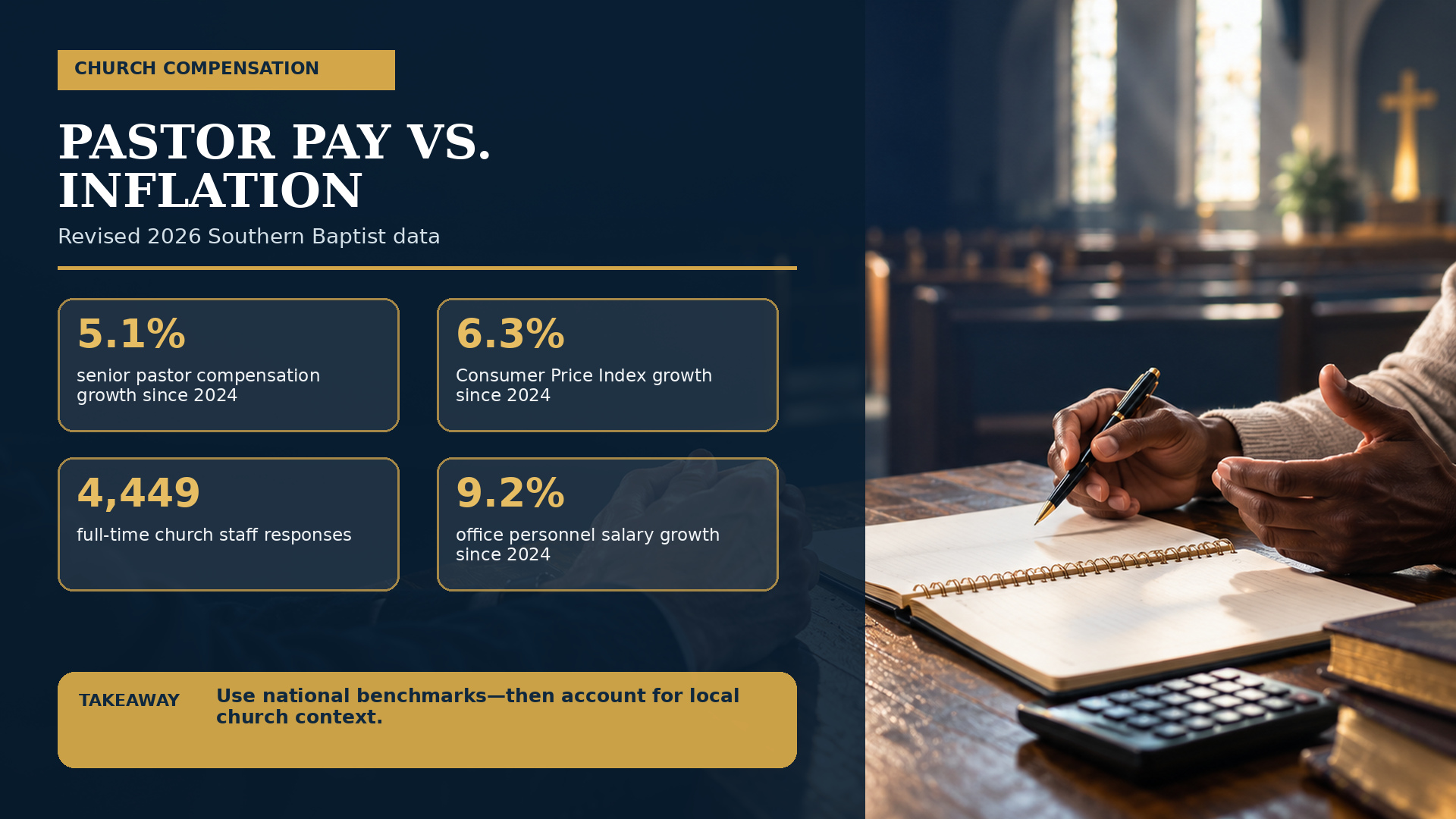
Baptist Press reported on October 12, 2026, that revised figures from the latest Southern Baptist church compensation study show average pay increases for pastors and other employees since 2024, while also revealing where those gains did and did not keep pace with the broader economy. Among full-time senior pastors, average compensation and the average total pay package each rose 5.1 percent over the two-year period. The Consumer Price Index rose 6.3 percent during the same span, meaning the typical increase in the national survey did not fully match inflation. Other full-time staff ministers saw average compensation rise 4.9 percent and their total package rise 5.3 percent. Office personnel were the exception: their average salary rose 9.2 percent and their total package rose 8.5 percent, both above the two-year inflation measure. Looking across four years offers additional perspective. From 2022 to 2026, the CPI increased 12.7 percent, while senior pastor compensation increased 14.9 percent and the total package increased 13.4 percent. The study drew 4,449 responses from full-time senior pastors, other staff ministers, and office personnel. It was conducted from April 29 through June 29, 2026, through cooperation among state Baptist conventions, Lifeway Research, and GuideStone. These national averages do not dictate what any one congregation should pay, but they do establish a credible reference point for churches that want to compare their practices with a large, current body of denominational data. They also keep the conversation anchored in measurable conditions rather than assumptions about what ministry families can absorb.
For local churches, the most constructive response is neither alarm nor complacency but careful stewardship. A national average can illuminate a pattern, yet it cannot capture housing costs, insurance premiums, family size, ministry tenure, educational requirements, regional labor markets, or the expectations placed on a particular role. Finance committees and elders should therefore use the report as a starting point, then review the complete compensation picture in their own setting. That review should distinguish cash salary from benefits, retirement contributions, housing arrangements, reimbursed ministry expenses, and costs that an employee bears personally. It should also ask whether annual adjustments have preserved purchasing power and whether the church’s expectations can be sustained without chronic overwork. Scripture calls leaders to handle resources faithfully and to honor those who labor in teaching and shepherding; those commitments belong together. Congregations with limited budgets may not be able to make every correction at once, but transparency can still produce a responsible plan. Leaders can set priorities, explain constraints honestly, establish a multiyear path, and invite qualified outside guidance when needed. Pastors, in turn, can help by providing accurate information without framing the process as a test of personal worth. The report is most useful when it prompts prayerful, fact-based conversation about mission, people, and long-term health. Fair compensation is not merely a private employment issue. It affects pastoral stability, family well-being, succession, staff trust, and a church’s capacity to serve its community. Wise benchmarking can help congregations care for ministry workers while preserving the generosity, accountability, and gospel focus that should characterize every church budget.
Pastoral Compensation and Church Stewardship
Southern Baptist / Evangelical Protestant
Pastors, elders, finance committees, personnel teams, church members, and denominational leaders
Baptist Press

The Resilient Pastor: Leading Your Church in a Rapidly Changing World
Glenn Packiam
Packiam’s practical theology of pastoral resilience helps church leaders understand compensation pressure within the wider work of sustaining healthy pastors and faithful congregations.