
SBC Seminary Undergraduate Programs Bring New Energy to Campuses
November 12, 2026
Undergraduate colleges at five of the six Southern Baptist seminaries are reshaping campus life and expanding the path into ministry preparation. Baptist Press reports that combined main-campus undergraduate enrollment rose 24 percent over a decade, with particularly strong growth at Midwestern. The trend matters because students are encountering rigorous biblical formation earlier while seminaries build deeper relationships with future pastors, missionaries, and Christian professionals.
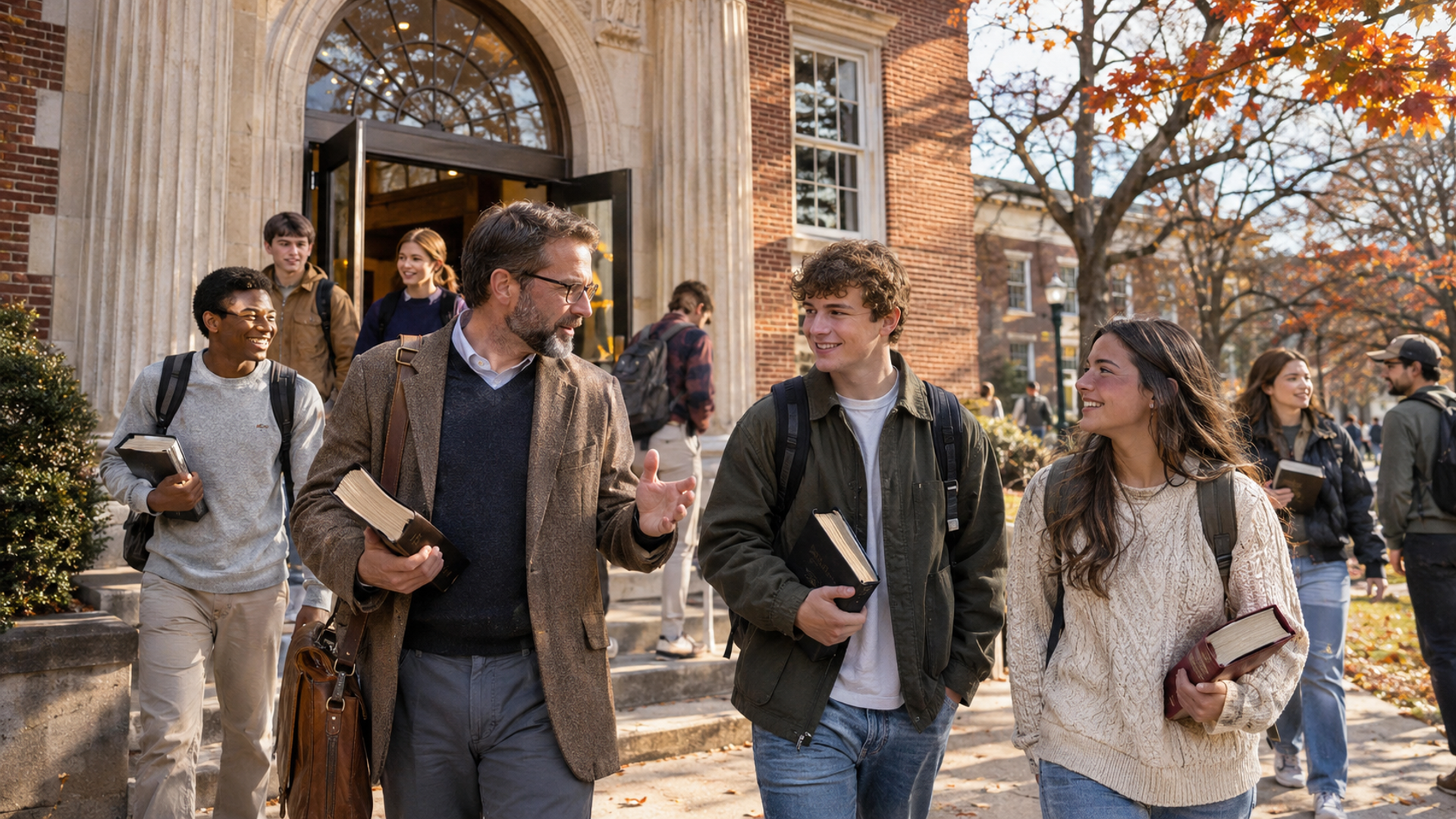
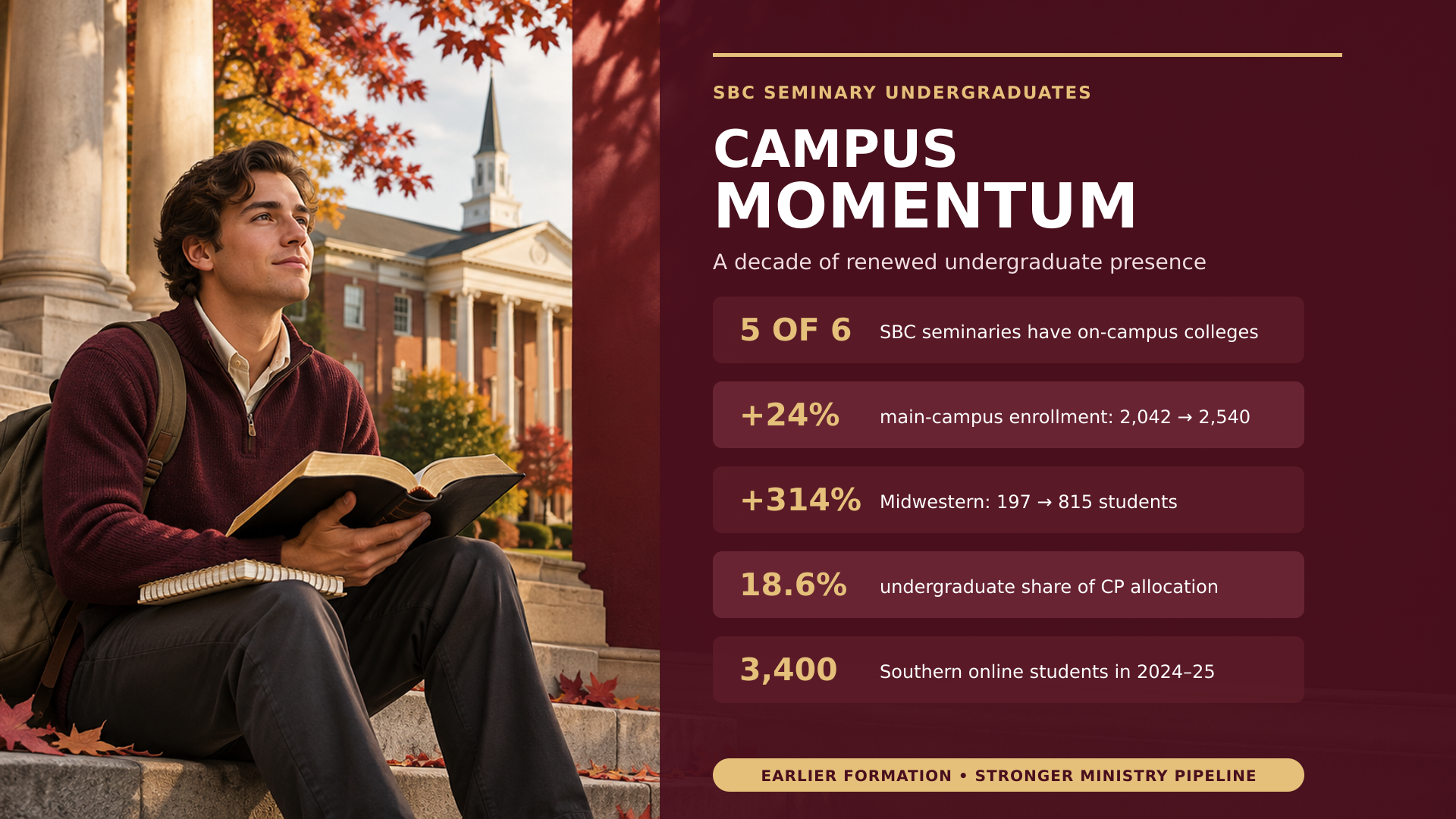
Undergraduate education has become a larger part of the Southern Baptist seminary landscape, with five of the six SBC seminaries now operating residential colleges on their main campuses. Baptist Press reported that combined main-campus undergraduate enrollment at those institutions increased 24 percent over the past decade, rising from 2,042 students to 2,540. Midwestern Baptist Theological Seminary recorded the most dramatic change, growing from 197 undergraduates to 815, a 314 percent increase. New Orleans Baptist Theological Seminary and Southern Baptist Theological Seminary also posted gains, while Southwestern and Southeastern experienced declines in main-campus counts even as off-campus and online patterns complicated the picture. Gateway Seminary remains the only SBC seminary without an on-campus undergraduate college. The numbers point to more than a recruitment shift. Younger students bring a different cadence to campuses historically organized around graduate theological education: residence life, student activities, classroom expectations, mentoring needs, and vocational discernment all change when eighteen- to twenty-two-year-olds become a visible part of the community. Several schools have also reintroduced or renamed their undergraduate identities in recent years, including Spurgeon College at Midwestern, Texas Baptist College at Southwestern, and Judson College at Southeastern. Accelerated pathways that combine a bachelorâs degree and Master of Divinity in about five years can reduce duplication and move qualified students toward ministry service sooner. Financial patterns reflect the change as well. The undergraduate share of Cooperative Program allocation calculations increased from 14.6 percent to 18.6 percent over the decade. Online reach is another major factor: Southern reported nearly 3,400 online undergraduate students in the 2024â25 academic year, compared with 1,824 a decade earlier. Together, residential and distance options are widening access to Bible, theology, ministry, and liberal arts education within institutions historically devoted to preparing pastors and missionaries.
For churches and families, the growth deserves both gratitude and careful evaluation. An undergraduate college attached to a seminary can place students near seasoned theologians, pastors, missionaries, and ministry practitioners at an age when convictions, habits, and vocational direction are still taking shape. It can also create a clear bridge for students who sense a call to pastoral ministry, counseling, worship leadership, missions, Christian education, or other forms of church service. Yet the value of these programs should not be measured only by enrollment growth. Christian higher education must form students who love Christ, read Scripture responsibly, serve local congregations, think carefully, work honestly, and exhibit the character required for long-term faithfulness. Churches therefore retain an essential role. A college or seminary can teach doctrine and provide mentoring, but it cannot replace the ordinary life of a local body that knows a student, observes gifts, corrects weaknesses, and affirms a call over time. Prospective students should ask how a program integrates academic rigor, church involvement, spiritual formation, and practical service rather than choosing solely on speed or cost. Parents and pastors can help young adults compare residential, online, and accelerated options with realistic attention to maturity, finances, and vocation. Seminary leaders, meanwhile, face the responsibility of maintaining graduate-level excellence while supporting younger students with appropriate community and pastoral care. The healthiest interpretation of the trend is not that every ministry-minded teenager should enroll immediately. It is that Southern Baptist institutions are creating more entry points for serious Christian formation, and the church now has an opportunity to steward those pathways wisely. When campus energy is joined to theological depth and accountable local-church service, undergraduate growth can strengthen a broader pipeline of faithful leaders for congregations, schools, mission fields, and workplaces across the United States.
Southern Baptist Seminary Undergraduate Education and Ministry Formation
Southern Baptist / Evangelical
Prospective Ministry Students, Parents, Pastors, and Christian Educators
Baptist Press
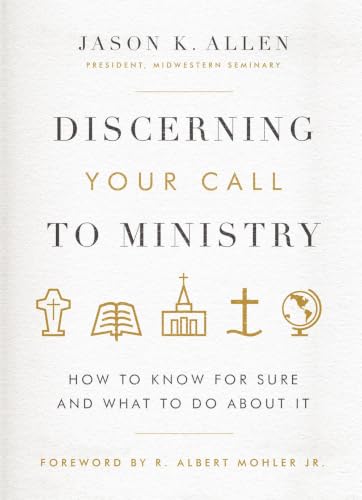
Discerning Your Call to Ministry: How to Know for Sure and What to Do About It (2016 hardcover edition; ASIN 0802414664)
Jason K. Allen
Allenâs diagnostic guide helps students and churches examine ministry calling with biblical seriousness, making it a fitting companion to expanded undergraduate ministry pathways.