
Southern Baptist Cooperative Program Begins Fiscal Year 2.52 Percent Below Budget
November 4, 2026
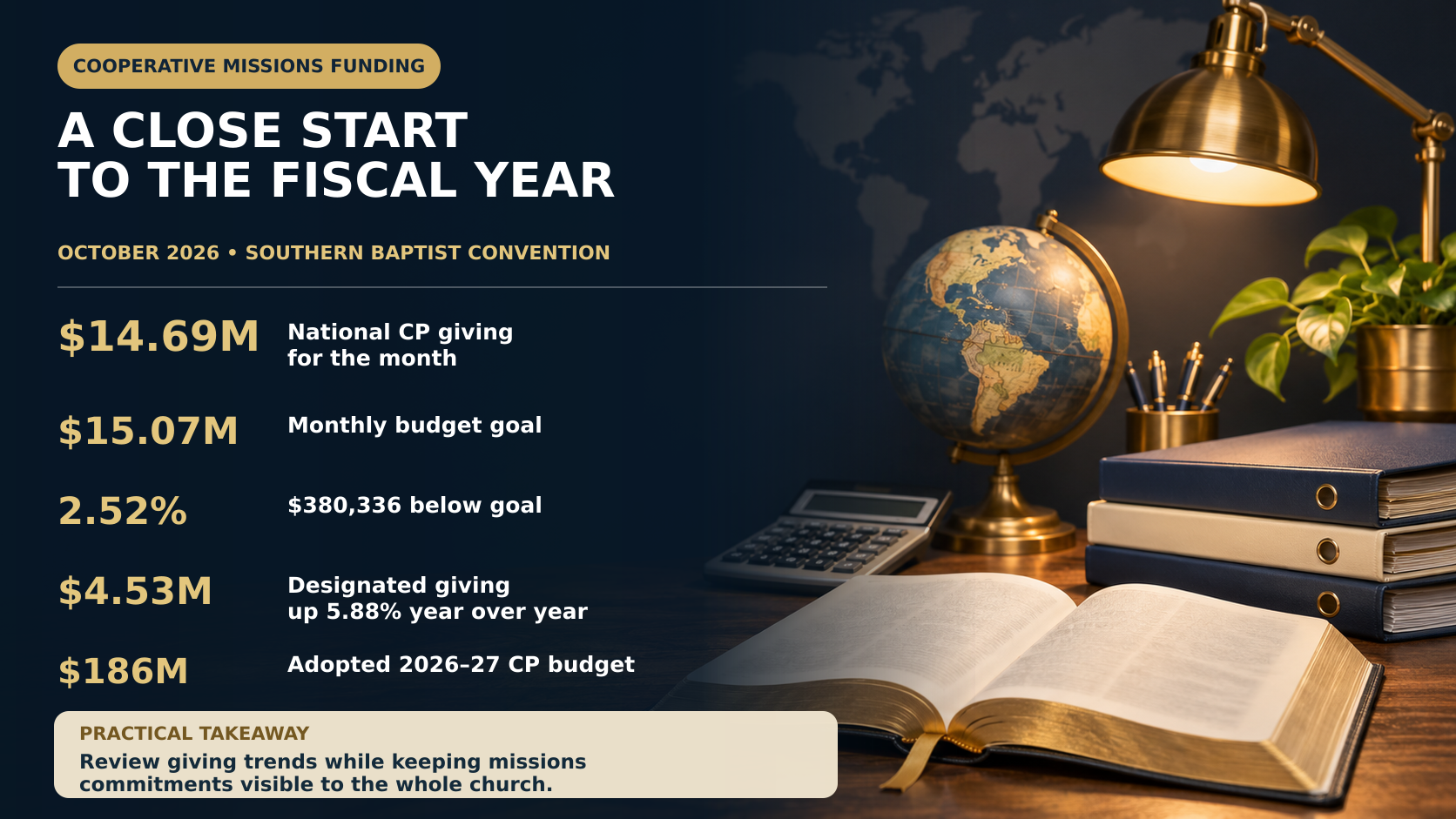
National Cooperative Program giving opened the Southern Baptist Convention’s fiscal year 2.52 percent below the October budget goal, while designated gifts rose nearly 6 percent from the prior year. The mixed result matters because church giving supports international and North American missions, theological education, denominational operations, and religious-liberty work across the United States and beyond.

Baptist Press reported on November 4, 2026, that Southern Baptist national Cooperative Program receipts totaled $14,689,663.55 in October, the first month of the 2026–27 fiscal year. The monthly budget target was $15,070,000, leaving giving $380,336.45, or 2.52 percent, below goal. October Cooperative Program gifts also trailed the comparable month a year earlier, but designated giving moved in the opposite direction. Designated receipts reached $4,529,440.16, compared with $4,278,060.23 at the same point in the previous year, an increase of $251,379.93, or 5.88 percent. When national Cooperative Program and designated gifts were combined, total receipts were essentially level with the previous October. The convention-adopted Cooperative Program budget for 2026–27 is $186 million. Under the approved allocation plan, 51 percent of national Cooperative Program funds go to international missions through the International Mission Board, 22.64 percent go to North American missions through the North American Mission Board, and 22.07 percent support the six Southern Baptist seminaries and the Southern Baptist Historical Library and Archives. The remaining allocation directs 2.65 percent to the convention operating budget and 1.64 percent to the Ethics and Religious Liberty Commission. The SBC Executive Committee distributes Cooperative Program and designated gifts to convention entities weekly and reports receipts monthly. These figures describe one month rather than a completed annual trend, so they should not be read as a forecast of the full fiscal year. They nevertheless provide a timely national snapshot of how thousands of autonomous churches are collectively financing missionaries, church planting, ministerial education, denominational administration, and public-policy engagement.
For local churches, the October report is most useful as a prompt for transparent stewardship rather than alarm or celebration built on a single data point. Pastors, finance committees, and missions leaders can explain how Cooperative Program giving moves from a congregation through state conventions and then to national ministries, using the published allocation percentages instead of vague descriptions. They can also distinguish Cooperative Program gifts from designated contributions, because the two streams serve different purposes and may rise or fall for different reasons. A healthy review would compare the church’s current giving plan with its adopted ministry priorities, assess whether members understand where cooperative dollars go, and communicate any changes before the congregation votes on a budget. Leaders should avoid implying that faithfulness can be measured only by a percentage or that every church has identical capacity. Economic pressure, disaster response, building needs, pastoral vacancies, and local benevolence obligations can all affect timing. At the same time, churches can resist treating missions as the easiest line to reduce when expenses tighten. Regular missionary reports, seminary testimonies, church-planting updates, and audited financial information can help members see the people and ministries behind the numbers. The recommended book, The Treasure Principle, Revised and Updated, connects this financial report to Jesus’ teaching about treasure, generosity, and eternal purpose. Randy Alcorn’s short book does not explain the Southern Baptist allocation process, but it can help individual believers and church groups examine the worshipful motives that should precede any budget decision. A practical next step is for leaders to place the October figures beside their church’s missions commitments, pray for the ministries represented, and schedule a clear congregational update before the next budget cycle. Cooperative giving is strongest when members understand the mission, leaders report honestly, and churches give from conviction rather than institutional pressure.
Church Giving and Cooperative Missions
Southern Baptist
Pastors, Finance Teams, Church Leaders, and Members
Baptist Press

The Treasure Principle, Revised and Updated
Randy Alcorn
Alcorn’s revised and updated book applies Jesus’ teaching to generosity and eternal purpose, helping church members connect a denominational budget report with the worshipful convictions that should shape cooperative missions giving.