
Supreme Court Weighs Colorado Exclusion of Faith-Based Preschools
November 4, 2026
The Supreme Court heard arguments over Colorado’s exclusion of Catholic preschools from public preschool funding. The dispute asks whether officials applied neutral rules or burdened religious exercise while granting secular exceptions. The coming decision carries broad consequences for local churches, schools, parents, Christian families, and ministries participating in public-benefit programs.
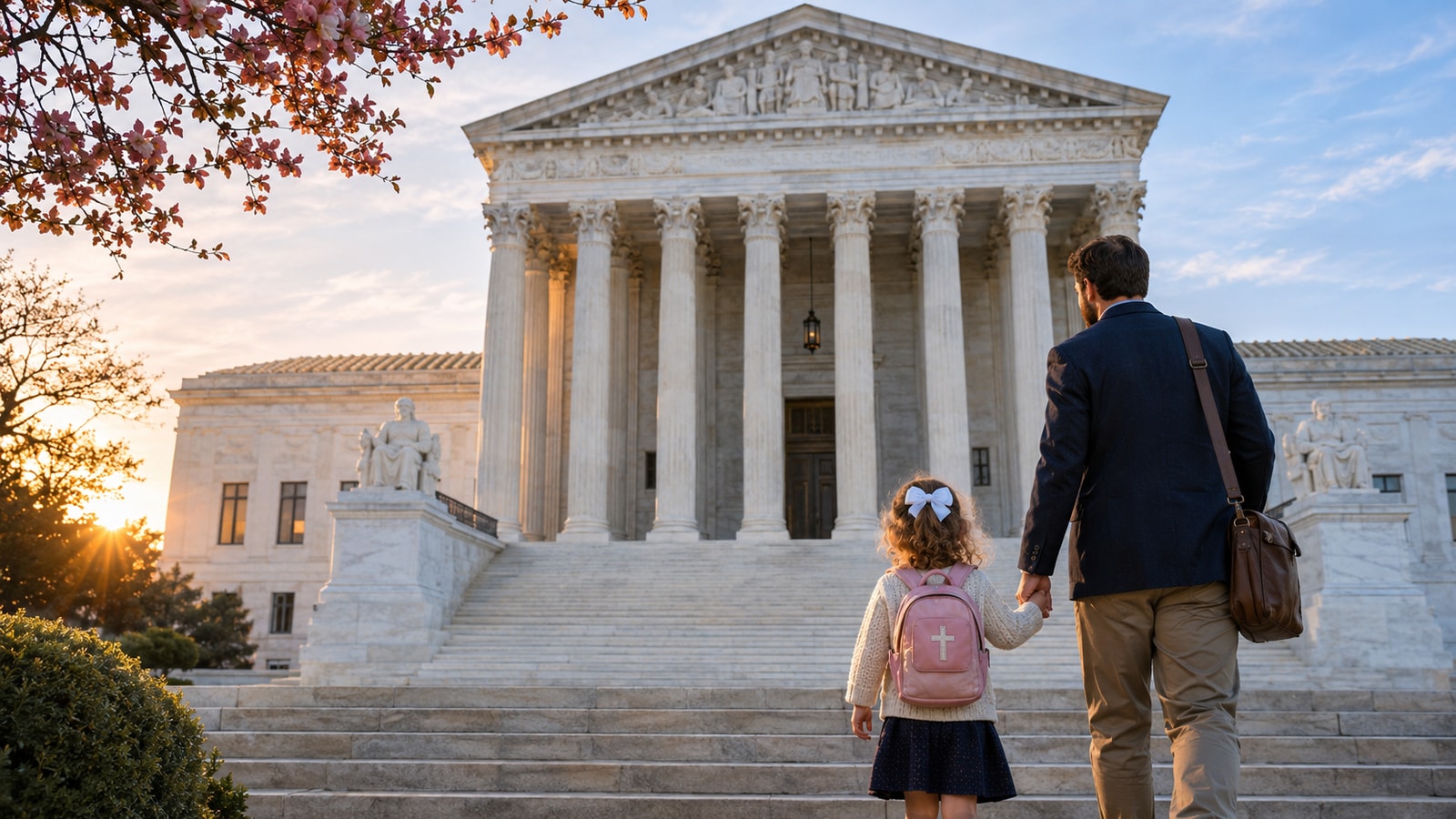
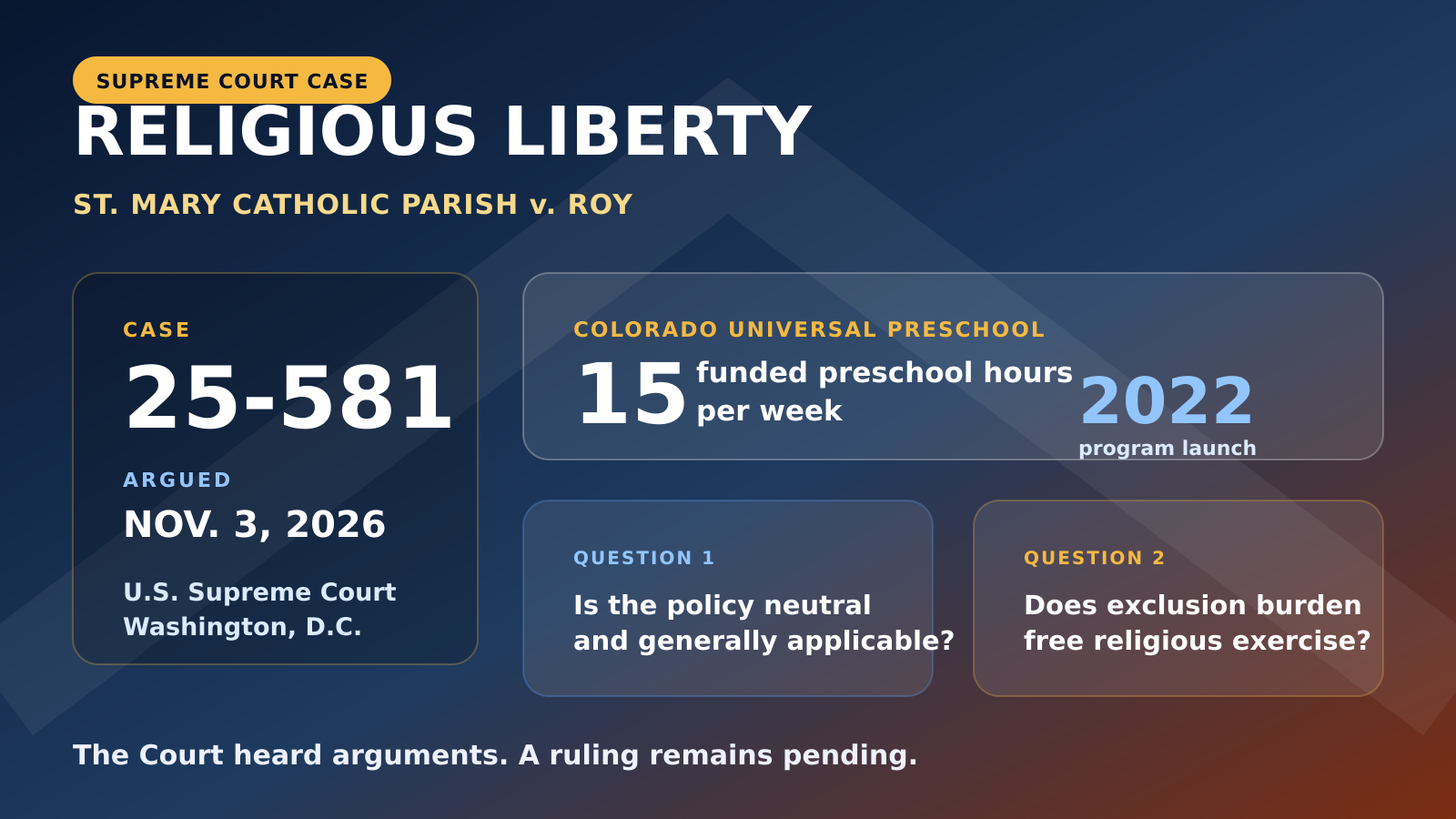
The United States Supreme Court heard oral arguments Nov. 3 in St. Mary Catholic Parish v. Roy, a dispute involving Colorado’s universal preschool program and the Free Exercise Clause. Colorado launched its program in 2022 and funds up to 15 hours of preschool education each week at participating public or private schools. Licensed faith-based preschools qualify in principle, yet every participant must follow an equal-opportunity mandate covering several protected classifications, including sexual orientation and gender identity. St. Mary Catholic Parish, St. Bernadette Catholic Parish, the Archdiocese of Denver, and two parents challenged Colorado after officials rejected their request for a religious accommodation. The schools require employees and participating families to affirm Catholic teaching concerning marriage, sexuality, and human identity. Their attorneys argue Colorado permits exemptions or enrollment preferences for certain secular purposes while denying comparable treatment for sincere religious practice. Colorado maintains its conditions govern every provider receiving program funds and protect equal access for children and families. The justices examined two connected constitutional questions. First, they considered whether lower courts used the proper framework for deciding if the policy remains neutral and generally applicable. Second, they considered whether existing Supreme Court precedent protects a religious institution when a public-benefit rule excludes it through operation rather than through an explicit religious classification. The Court has heard the arguments, but no ruling has been issued. Christian reporting should therefore separate the verified procedural facts from predictions about votes or outcomes. The dispute addresses government funding, religious identity, institutional freedom, and parental choice without resolving every disagreement surrounding preschool admissions or employment standards.
Christian leaders should watch the case because public benefits often arrive with legal duties extending beyond accounting or program administration. Churches operate preschools, schools, foster-care ministries, shelters, counseling programs, and community partnerships. Each ministry must understand whether participation rules conflict with its governing documents, employment standards, membership commitments, or doctrinal convictions. Careful preparation starts before an application. Leaders should place clear statements of faith, codes of conduct, employment expectations, admissions policies, and dispute procedures in writing. Boards should review those documents with attorneys experienced in nonprofit and religious-liberty law. Leaders should also train staff to explain convictions with accuracy and respect, since careless language weakens trust and creates avoidable legal exposure. Scripture presents civil government as a servant charged with promoting order and justice in Romans 13:1-7, while Acts 5:29 records the apostles placing obedience to God above commands opposing faithful witness. Christian wisdom rejects both reflexive hostility toward government and passive surrender of religious responsibility. Churches should seek peace, honor public officials, serve neighbors generously, and preserve their freedom to order ministry around biblical convictions. Luke Goodrich’s Free to Believe offers a useful companion because it explains modern religious-liberty disputes through legal experience and Christian responsibility. The book connection is practical rather than partisan. It helps pastors, parents, school leaders, and board members identify pressure points before conflict reaches a courtroom. Men Building Faith readers should follow the Court’s eventual opinion, examine the reasoning rather than headlines alone, and evaluate how the decision affects faith-based service. Prayer for wisdom, courage, fairness, and peaceful public engagement remains an appropriate response while the case awaits judgment.
Religious Liberty
Catholic
Church Leaders
Baptist Press
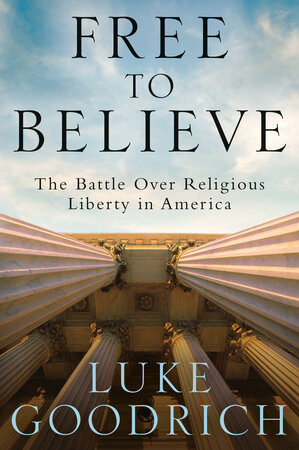
Free to Believe
Luke Goodrich
Goodrich explains present religious-liberty conflicts and equips Christian leaders to respond with legal awareness, biblical conviction, courage, and respect.