
Supreme Court Will Hear Kentucky Church’s Religious Land-Use Case
October 1, 2026
The U.S. Supreme Court has agreed to hear a Kentucky Catholic church’s challenge over plans for an outdoor Virgin Mary shrine on adjacent residential land. The case matters nationally because the justices may clarify how federal religious-land-use protections apply when local zoning rules burden a church’s ministry plans.
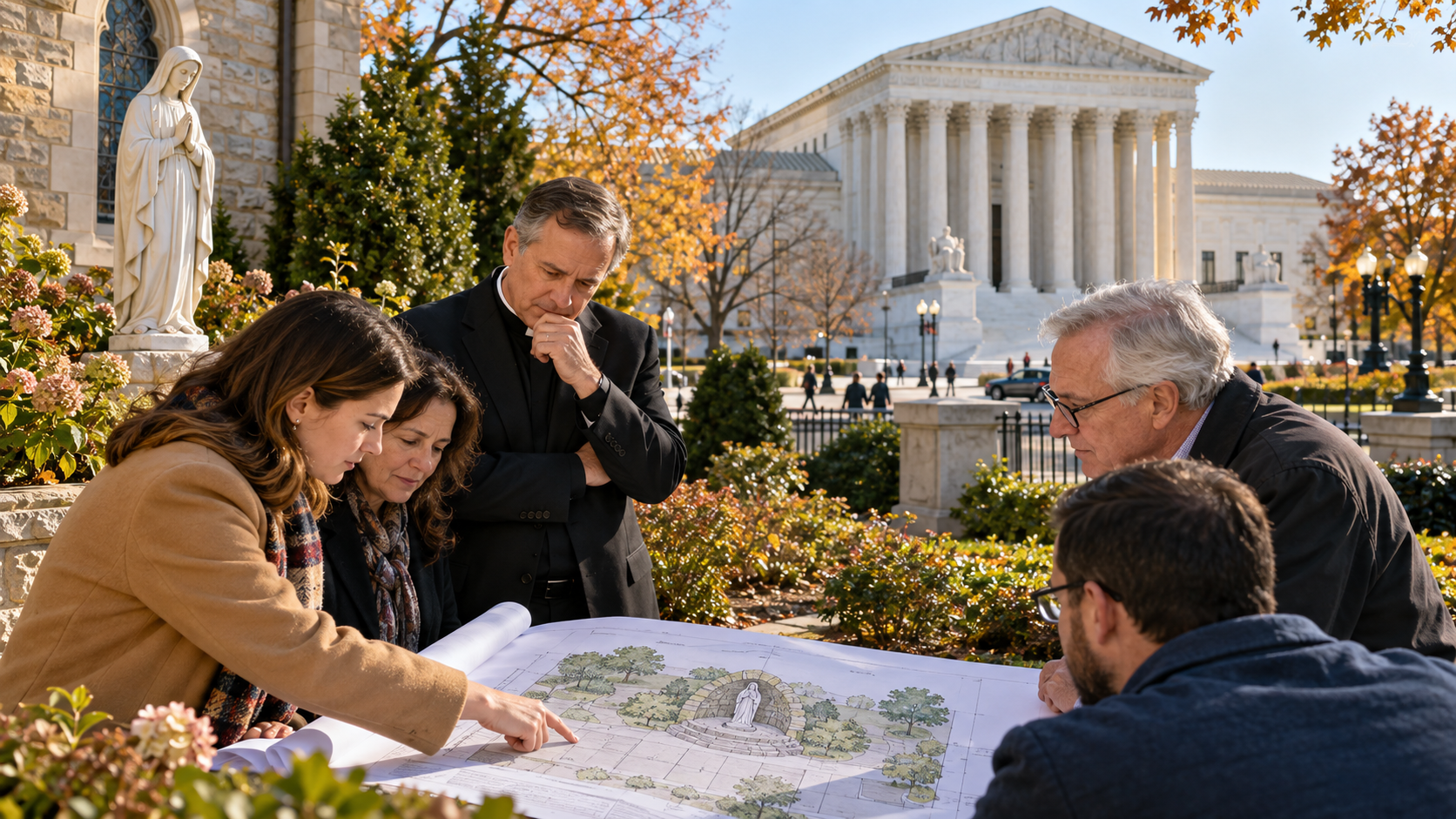
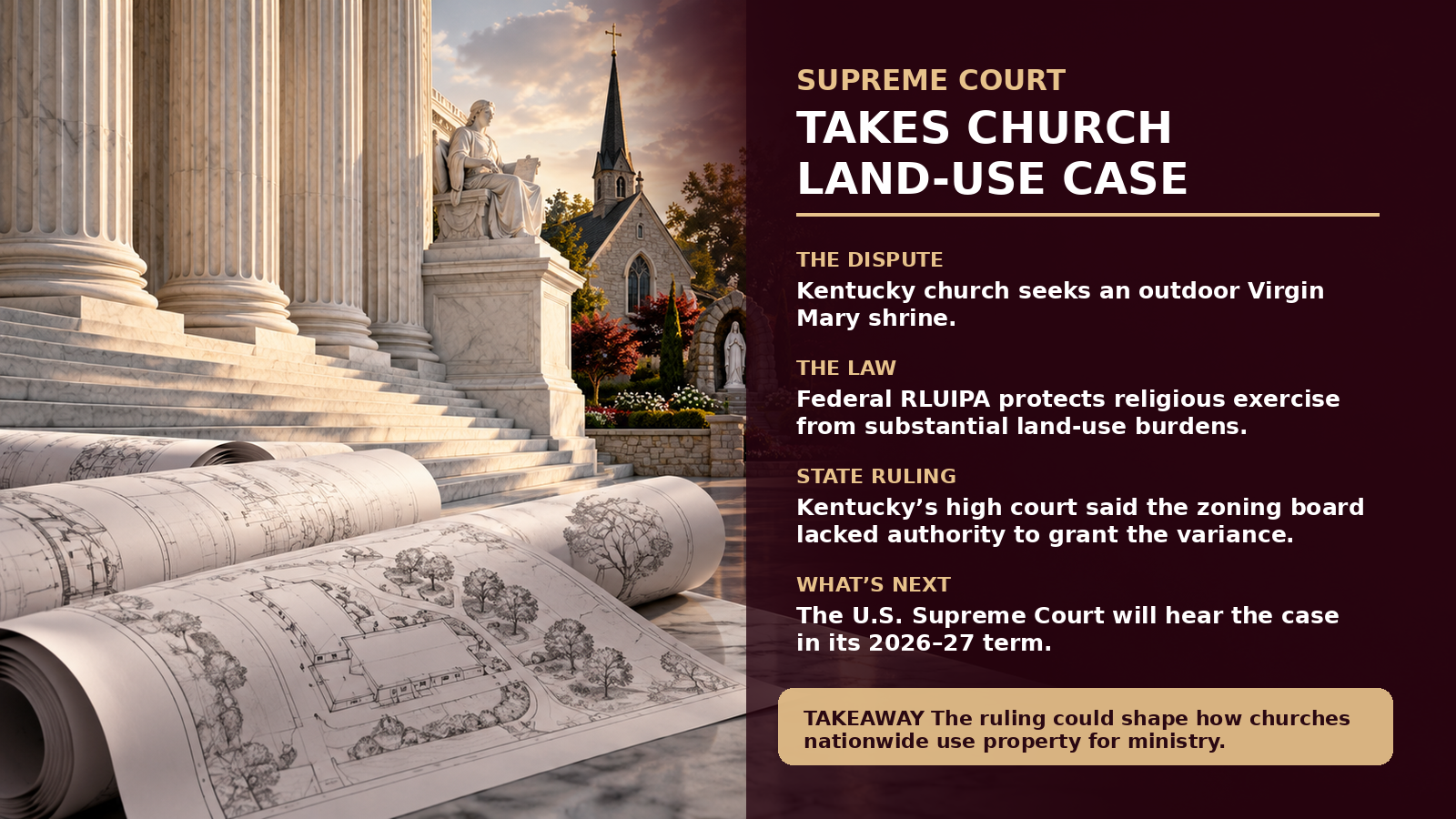
The U.S. Supreme Court has agreed to hear a church property dispute that could clarify how federal religious-liberty protections interact with local zoning authority. The Associated Press reported on October 1, 2026, that Missionaries of Saint John the Baptist, a nonprofit formed by Roman Catholic priests, wants to build an outdoor shrine to the Virgin Mary on residential property beside its Kentucky church. The group says the shrine is part of its religious mission and argues that the Kentucky Supreme Court misread federal law when it ruled against the project. The central federal statute is the Religious Land Use and Institutionalized Persons Act, commonly called RLUIPA, which can bar government land-use actions that impose a substantial burden on religious exercise unless demanding legal standards are met. The state court concluded in December 2025 that the Park Hills zoning board lacked authority to grant the requested variance for the residential tract. The church group contends that the decision conflicts with U.S. Supreme Court precedent and rulings from other appellate courts, creating uncertainty that warrants national review. The opposing neighborhood family argues that the dispute is a local zoning matter, that the church group knew about the restrictions when it acquired the land, and that it has not shown why the shrine could not be placed on existing church property. Those competing claims give the justices a concrete setting in which to consider both religious exercise and ordinary land-use governance. Although the physical project is in Kentucky, the legal question reaches churches, schools, retreat centers, ministries, and local governments across the country.
For Christian congregations, the case is significant because property is rarely only property. Sanctuaries, gardens, classrooms, fellowship halls, cemeteries, shelters, and prayer spaces are often direct expressions of worship and ministry. At the same time, churches live within communities that regulate traffic, safety, density, noise, and neighborhood use. RLUIPA was enacted to ensure that religious assemblies are not singled out or substantially burdened without sufficient justification, but courts still must determine when a burden is substantial and what remedies local officials may lawfully provide. A Supreme Court decision could therefore influence how lower courts evaluate future disputes, how zoning boards document their decisions, and how ministries prepare applications before purchasing or developing land. The case also offers church leaders a practical reminder: legal stewardship begins long before litigation. Congregations considering property projects should investigate zoning rules, engage neighbors early, explain the religious purpose of the proposed use, preserve records of government communications, and seek qualified counsel when restrictions appear discriminatory or unusually severe. None of those steps guarantees agreement, but they can reduce misunderstanding and create a clearer factual record. Christians can follow the litigation without treating neighbors or public officials as enemies. A faithful witness combines confidence in lawful religious freedom with patience, truthfulness, and concern for the common good. Whatever the Court ultimately decides, the controversy demonstrates why religious land-use law matters to local ministry and why a national ruling can shape the practical freedom of churches to use their property in service to God, neighbor, and community life.
Church Property Rights and Religious Land Use
Roman Catholic
Church Leaders, Religious Liberty Advocates, and Congregations
Associated Press

Free to Believe: The Battle Over Religious Liberty in America
Luke Goodrich
Goodrich explains religious-liberty conflicts through constitutional experience and Christian conviction, making the book a helpful companion to a church land-use case.