
U.S. Churches Confront a Growing Worship-Leader Training Gap
November 3, 2026
Christianity Today reports that churches are struggling to identify and prepare the next generation of worship leaders as many experienced leaders approach retirement. The nationwide challenge matters because congregational singing requires more than musical ability: churches need biblically formed, pastorally minded leaders who can serve people, teach sound theology, develop teams, and sustain worship ministry over time.
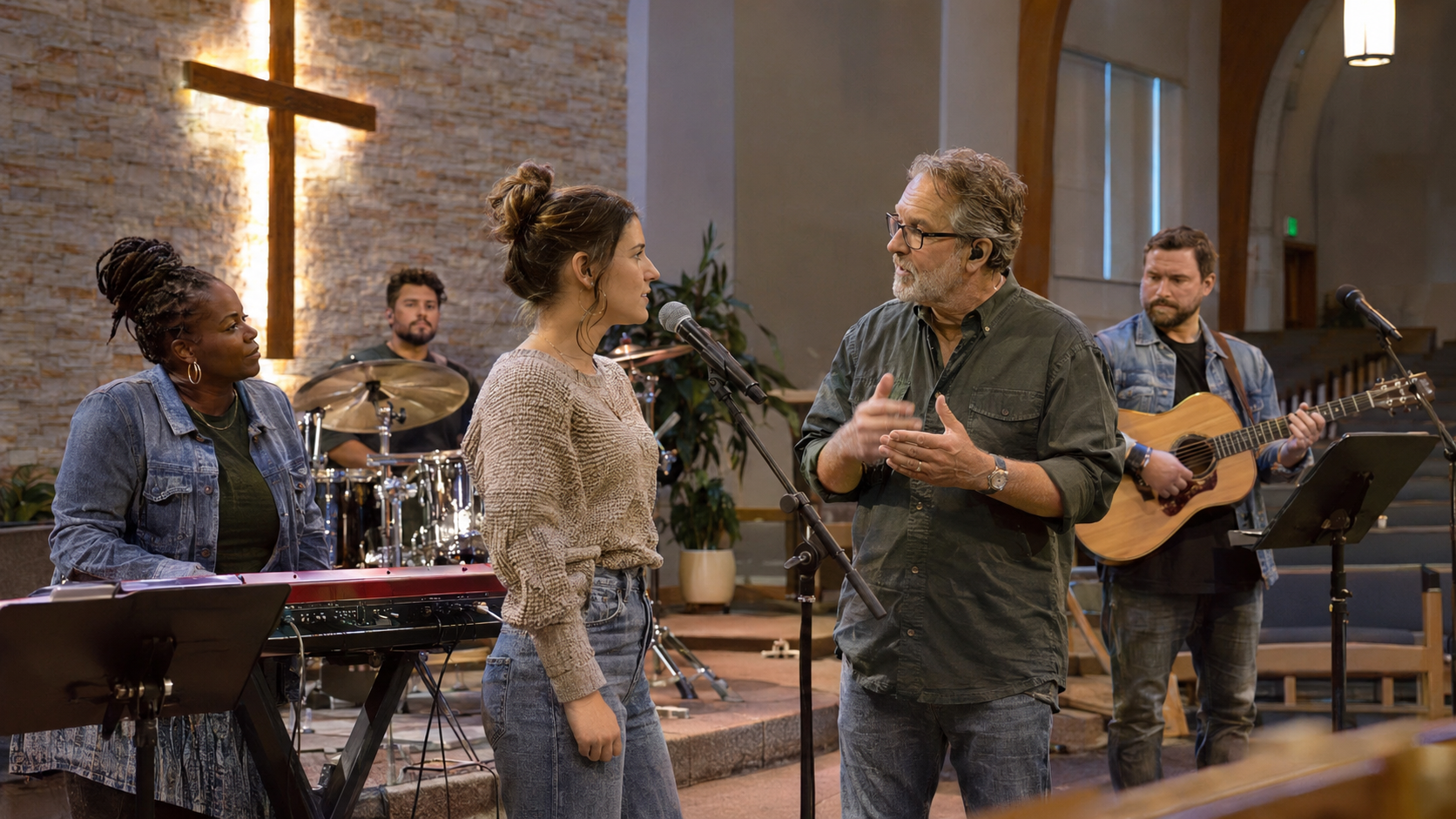
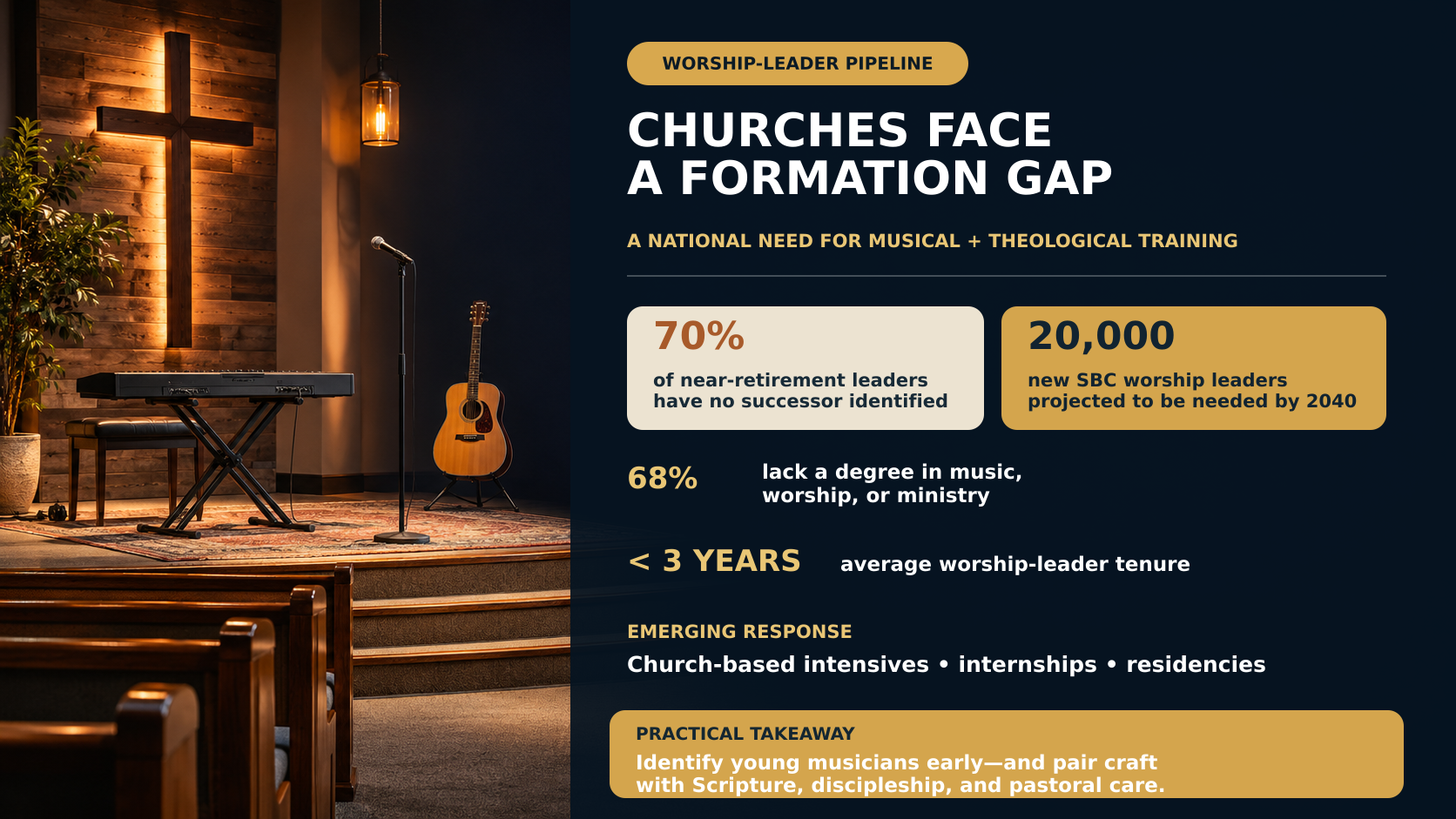
Christianity Today reported on November 3, 2026, that churches across the United States are confronting a shortage of worship leaders and reconsidering how future church musicians are recruited, trained, and sent. The article cites a study by SBC Worship finding that 70 percent of worship leaders nearing retirement age have not identified a successor. Researchers project that the Southern Baptist Convention alone, the nation’s largest Protestant denomination, could need 20,000 new worship leaders by 2040. The challenge extends beyond filling job openings. The same survey found that 68 percent of current worship leaders do not hold a degree in music, worship, or ministry, while Christianity Today noted that there is no cross-denominational credential required for the role. Churches have historically developed musicians through choirs, private instruction, and participation in congregational life, but many of those pathways have weakened as children’s and adult choirs have declined and younger musicians increasingly learn through private lessons or online media. Formal graduate programs at institutions such as Southern Baptist Theological Seminary, Dallas Theological Seminary, and Liberty University provide theological and worship studies, yet they generally serve students who already possess musical experience. The article therefore highlights church-based models that begin earlier. Candeo Church in Iowa, for example, offers a six-week worship intensive covering set planning, theology of worship, public speaking, and platform leadership, followed by internship opportunities and a two-year postgraduate residency intended to prepare leaders for other congregations and church plants. The story also reports that the average worship leader’s tenure at one church is less than three years. Together, these facts point to a national formation problem: churches need enough musicians, but they also need leaders capable of connecting Scripture, doctrine, congregational care, artistic skill, and faithful service.
For local congregations, the report offers a constructive reason to build a worship-leadership pathway before a vacancy creates a crisis. Pastors and elders can begin by clarifying what their church expects from worship ministry: careful handling of Scripture, doctrinally sound song choices, musical competence, pastoral sensitivity, collaboration, prayer, and commitment to the whole congregation rather than performance culture. They can then identify teenagers and adults who show teachability and character, provide lessons or scholarships where resources allow, invite them into rehearsals, and assign supervised responsibilities that grow gradually. A six-week course or seasonal internship does not need to imitate a large church’s program; even a small congregation can pair a developing musician with a pastor and an experienced leader for Bible study, feedback, repertoire planning, and conversations about funerals, conflict, volunteer care, and intergenerational worship. Larger churches and Christian colleges can serve nearby rural and smaller congregations by sharing training sessions, musicianship workshops, and residency placements instead of keeping every promising leader for themselves. Leaders should also address workload and continuity, because a short average tenure may reflect unclear authority, unrealistic expectations, weak supervision, or a role defined almost entirely by weekly production. The recommended book, The Worship Pastor: A Call to Ministry for Worship Leaders and Teams, is Zac M. Hicks’s 2016 softcover from Zondervan. Hicks argues that worship leaders are not merely song selectors or performers; they help shape disciples and should understand their work pastorally, theologically, and missionally. That emphasis directly complements the national need described by Christianity Today. The book cannot replace hands-on musical instruction, local-church accountability, or formal education when needed, but it can give pastors, teams, and emerging leaders a shared vocabulary for formation. A wise first step is to name one potential successor, one mentor, and one concrete training opportunity before the next ministry year begins.
Worship Leadership and Church Music
Broad Evangelical
Pastors, Worship Leaders, Musicians, Seminaries, and Church Members
Christianity Today

The Worship Pastor: A Call to Ministry for Worship Leaders and Teams
Zac M. Hicks
Hicks presents worship leadership as pastoral, theological, discipleship-focused ministry rather than performance, giving churches and emerging leaders a practical framework for the formation gap identified in the national report.