
World Week of Prayer 2026 Centers Biblical Leadership and Courage
October 12, 2026
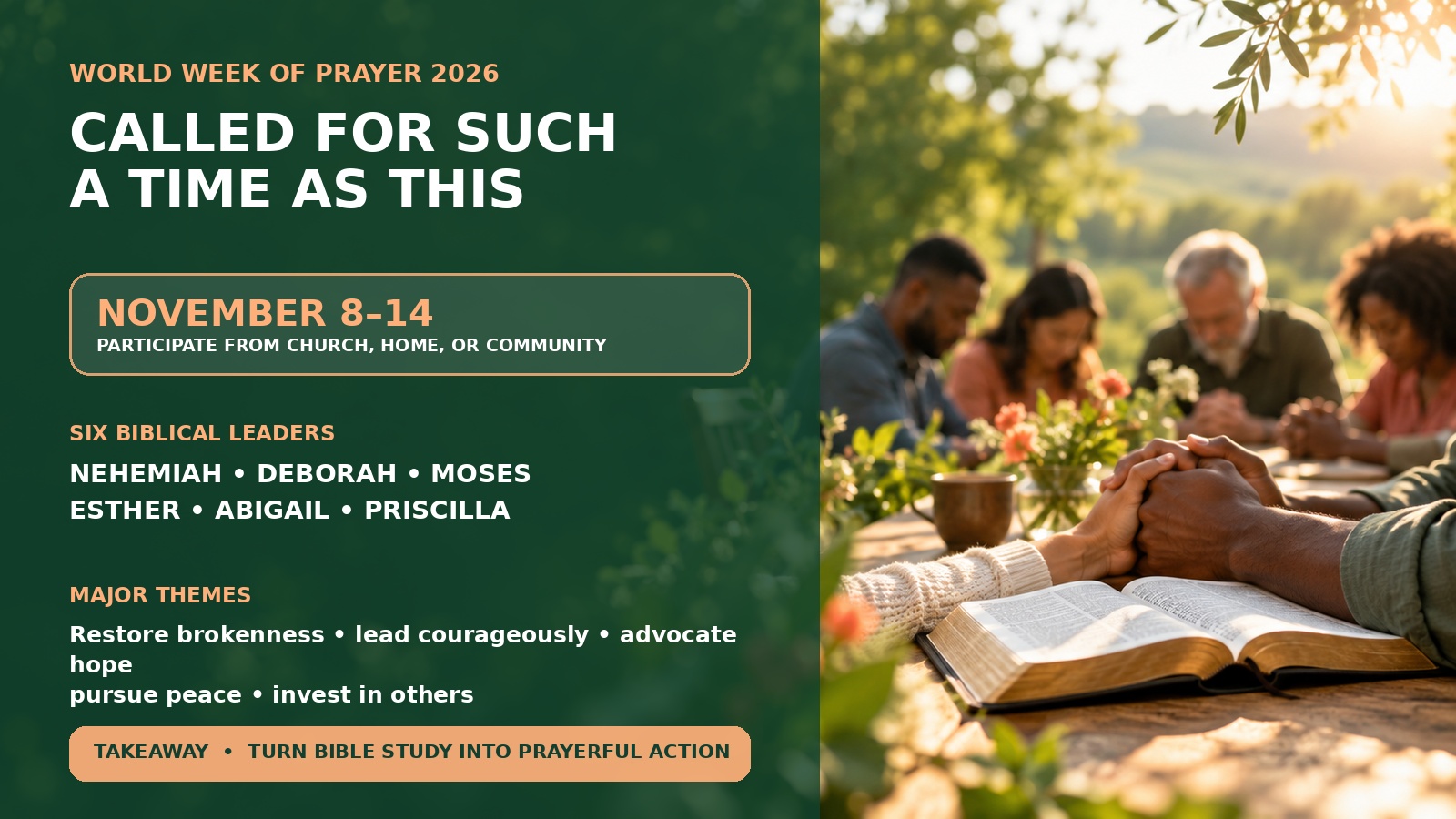
Christians can join the World YMCA and World YWCA Week of Prayer from November 8–14 through church, home, or community gatherings. Designed for youth leaders, families, congregations, and local groups, the week uses six biblical leaders to explore restoration, courage, hope, peace, and mentoring—and to turn prayerful Bible study into faithful influence in everyday life.
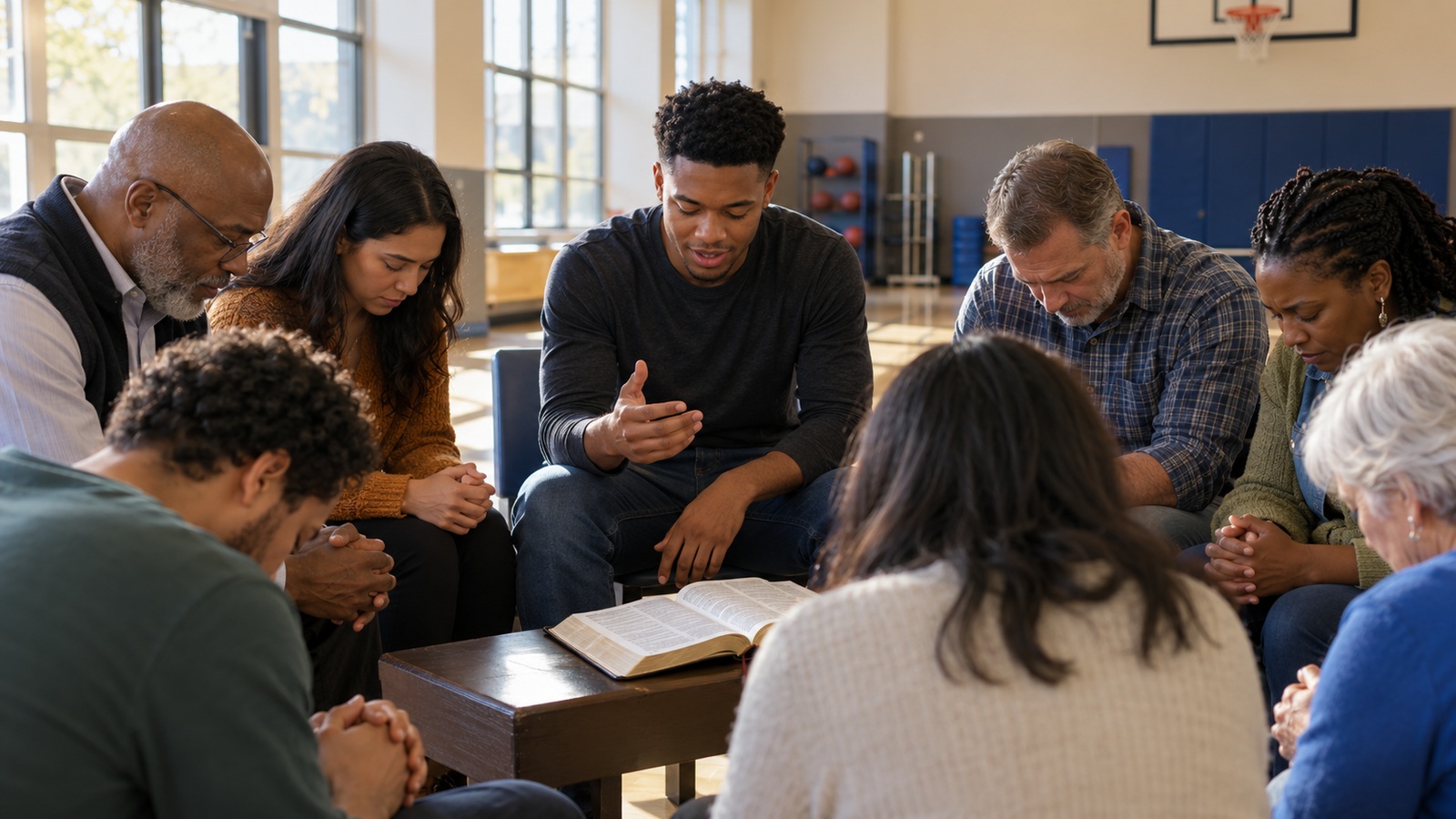
The 2026 World YMCA and World YWCA Week of Prayer and World Fellowship will take place November 8–14 under the theme “Called for Such a Time as This.” The annual observance dates to 1904 and is designed to bring communities together through prayer, theological reflection, Bible study, and a shared reading plan. This year’s material focuses on six biblical leaders whose stories connect influence with responsibility before God. Nehemiah is presented as called to restore brokenness; Deborah to lead courageously; Moses to move beyond inadequacy; Esther to advocate hope; Abigail to pursue peace; and Priscilla to invest in others. The official program identifies passages from Nehemiah, Judges, Exodus, Esther, 1 Samuel, Acts, and Romans, giving groups a clear Scriptural framework rather than a generic invitation to spirituality. Participants are encouraged to consider how God-given influence may serve families, churches, neighborhoods, and the wider world through healing, justice, reconciliation, courage, and patient investment in other people. Because the resources are intended for daily reflection and group gathering, Christians across the United States can participate in a local YMCA or YWCA community, a congregation, a campus ministry, a household, or a small group. No single national venue limits the week. Its nationwide value comes from a common theme that can be practiced in many places while remaining rooted in specific biblical texts. The intended audience includes youth leaders, young adults, Christian families, pastors, volunteers, and community members who want prayer to shape real service rather than remain separated from daily decisions.
Churches and groups can prepare by assigning the biblical passages before the week begins, identifying a facilitator for each gathering, and deciding how the daily themes connect to local needs. A group studying Nehemiah might pray about damaged relationships or neglected neighborhood institutions, then select one realistic act of restoration. Deborah’s story can open a discussion about courageous leadership without confusing courage with self-promotion. Moses can help participants name inadequacy honestly while trusting God’s provision. Esther invites careful reflection on advocacy, timing, risk, and hope. Abigail offers a model for wise peacemaking in a dangerous conflict, while Priscilla demonstrates the multiplying effect of investing truth and attention in others. The practical reason to participate is therefore not merely to add seven meetings to a calendar. The week supplies a repeatable rhythm: read the text, listen to God, pray with others, discern responsibility, and take one faithful action. Leaders should keep the gatherings explicitly Christian and Bible-centered, especially when meeting in a broad community setting. They can welcome neighbors warmly while explaining that the prayers and reflections arise from Scripture and faith in God. They should also avoid turning the themes into slogans detached from context; reading the cited passages carefully will protect the discussion from becoming motivational language alone. Families can adapt the same pattern at the dinner table, and youth groups can invite students to lead prayer or present a short reflection. Across different locations and traditions, the shared week can strengthen a sense of fellowship while leaving room for local application. Its central question is simple and demanding: if God has placed believers in particular families, institutions, and communities at this moment, how will they use their influence with humility, courage, peace, and hope?
Biblical Leadership, Prayer, and Christian Community Action
Ecumenical Christian
Churches, Christian Families, Youth Leaders, Young Adults, YMCA and YWCA Communities
The Bahamas YWCA

Esther: The Hidden Hand of God
Lydia Brownback
Lydia Brownback’s verse-by-verse Esther study helps readers examine God’s providence, courage, and deliverance in biblical context, directly supporting the week’s theme, “Called for Such a Time as This.”