

Can We Trust the Bible? Evidence Christian Men Should Know

A man may trust Scripture in church and still hesitate when a coworker asks whether the Bible has been changed. The question becomes sharper when he notices footnotes about missing verses, hears that church councils chose the books, or sees Christians using different translations. A shallow answer will not strengthen faith. Neither will pretending that every question has an easy solution.
Can we trust the Bible? A careful answer must separate several questions. We can investigate how the text was copied, how the canon developed, how translation works, how apparent contradictions should be examined, and what Scripture claims about itself. Historical study can test many facts about the Bible's transmission and reception. It cannot place divine inspiration in a laboratory. Christians receive inspiration as a theological claim that belongs to faith in the God who speaks through Scripture.
Can we trust the Bible? Start with the right questions
People often compress five different issues into one sentence. Textual reliability asks whether today's text substantially reflects the ancient writings. Canon asks why these books belong in the Bible. Translation asks how Hebrew, Aramaic, and Greek become readable English. Interpretation asks what a passage means in its literary and historical setting. Authority asks why Christians should receive Scripture as God's word.
An answer to one issue does not automatically settle the others. A manuscript comparison can help reconstruct an ancient wording, but it does not prove that God inspired the wording. A church's canon explains which books it receives, but it does not remove the need to interpret them. Clear thinking begins by naming the question you are actually asking.
What does the Bible claim about its own witness?
Luke introduces his Gospel by referring to earlier accounts, eyewitnesses, and his own careful investigation so that his reader may know the reliability of what he was taught. Luke 1:1–4 does not describe modern historical method, but it does present the Gospel as an ordered account connected to testimony and inquiry.
Second Peter 1:16–21 contrasts invented myths with apostolic eyewitness testimony about Jesus and speaks of prophecy as people moved by the Holy Spirit. Second Timothy 3:14–17 urges Timothy to continue in the sacred writings he had known from childhood and describes Scripture as God-breathed and useful for teaching, correction, and training. In context, these passages make theological claims from within the believing community. They deserve to be read carefully rather than used as one-line slogans.
1. Has the Bible been changed through centuries of copying?
The original handwritten documents of the biblical books are not available to researchers. The text survives through manuscript copies, ancient translations, and quotations in other writings. Those witnesses do not agree in every detail. Scribes misspelled words, repeated lines, skipped phrases, changed word order, and sometimes made intentional clarifications. Admitting this does not concede that the Bible was secretly rewritten. It describes why textual criticism is necessary.
Textual criticism compares surviving witnesses to evaluate which wording best explains the others. Scholars consider factors such as age, geographical distribution, scribal habits, and the reading that fits an author's language and context. The Institute for New Testament Textual Research maintains the New Testament Virtual Manuscript Room, where researchers can consult manuscript information and images. The evidence is public enough to be examined and debated.
What Bible footnotes are telling you
Modern translations often mark places where significant manuscripts differ. Two familiar examples are Mark 16:9–20 and John 7:53–8:11. Many current Bibles place brackets around these passages or add a note because the earliest manuscript evidence does not include them in the same location and form. The notes do not hide a crisis. They disclose the evidence and show where editors faced an important decision.
Do not build a doctrine on a disputed phrase alone. Read the footnote, compare several responsible translations, and ask whether the teaching appears clearly elsewhere. Also resist the opposite mistake. A textual variant deserves careful attention even when it does not overturn Christian doctrine. Honest confidence does not need to minimize the data.

2. Who decided which books belong in the Bible?
The New Testament canon did not appear as a completed table of contents on the day the final apostle died. Early Christians read apostolic writings, copied them, quoted them, exchanged them among churches, and debated some books. Recognition developed over time. That process involved questions about apostolic connection, agreement with the received rule of faith, and widespread use in worship and teaching.
Athanasius, bishop of Alexandria, named the same twenty-seven New Testament books used today in his Thirty-Ninth Festal Letter in AD 367. His list is important evidence, but it did not create those books or begin their use. His letter also distinguishes canonical books from other useful Christian writings. Read the primary source and notice what Athanasius actually says rather than relying on a meme about a secret vote.
Did the Council of Nicaea choose the Bible?
The claim that the Council of Nicaea chose the books of the Bible does not match the surviving evidence from that council. Nicaea met in AD 325 and addressed the dispute about the Son's relation to the Father along with matters of church order. Its surviving creed and canons do not record a decision that created the biblical canon. Canon recognition has a more complex history than one imperial meeting.
3. Why do Christian Bibles contain different Old Testament books?
Protestant, Roman Catholic, and Orthodox Christians do not all receive the same Old Testament canon. They agree on the twenty-seven New Testament books, but they differ over several ancient Jewish writings and how those writings function in doctrine and worship. The differences arose through long histories of Jewish and Christian reception, not through a recent attempt to add or remove inconvenient teaching.
A Protestant man should not pretend that every Christian tradition uses his table of contents. A Catholic or Orthodox man should not pretend that the boundaries were never disputed. Learn the canon your church receives, ask why it receives it, and represent other traditions accurately. This is a genuine doctrinal disagreement. Clarity and charity belong together.
4. Do many English translations make the Bible unreliable?
The biblical books were written mainly in Hebrew and Greek, with portions in Aramaic. Translation requires judgment because languages do not match word for word in grammar, idiom, sound, and cultural association. Some translations lean toward preserving the structure of the source language. Others give more weight to natural expression in the receiving language. Most combine both approaches depending on the passage.
Variation among responsible translations can expose a real interpretive question. It can also reflect different goals, reading levels, or judgments about an idiom. Compare two or three translations when a verse carries unusual weight in an argument. Read the paragraph, check the footnotes, and consult a source-language tool or qualified commentary if the wording matters. Many translations are an opportunity for comparison, not proof that any meaning is acceptable.

5. What should you do with alleged contradictions?
Some alleged contradictions disappear when the reader notices genre, speaker, chronology, or a translation choice. Others involve difficult historical or theological questions that remain debated. Do not assume that every difference is a contradiction. Do not force a harmony that ignores what each author emphasizes. Patient study gives the text enough respect to hear each account on its own terms.
Ask five fair questions
First, are the passages describing the same event or merely similar events? Second, do they make opposite claims, or does one include a detail the other omits? Third, what kind of writing is this, such as poetry, proverb, narrative, prophecy, or apocalyptic vision? Fourth, does the issue come from the ancient text, an English translation, or my assumption? Fifth, have I read the surrounding chapter and the author's larger argument?
A good answer may require more than one evening. That is not failure. Write the problem in your own words, list the passages, and identify exactly what cannot both be true. Then consult serious scholarship from more than one position. If you cannot resolve the issue, state what you know and what remains uncertain. Faith does not require pretending to possess an answer you do not have.
What historical evidence can and cannot establish
Historical evidence can test whether manuscripts exist, how they relate, when a writer cited a book, what a council recorded, and whether an author presents himself as an eyewitness or investigator. It can expose false claims about Nicaea, secret revisions, or translation. It can also identify genuine gaps and disputes.
Historical method by itself cannot prove that God breathed out Scripture or that the Holy Spirit illumines its readers. Those are theological claims. Christians connect biblical authority to the character of God, the person and resurrection of Jesus, the apostolic witness, and the Spirit's work in the church. That does not make historical evidence irrelevant. It places each kind of evidence in its proper role.
Christians use important terms differently
Christians across traditions confess Scripture's authority, yet they do not always define inspiration, inerrancy, infallibility, tradition, and interpretation in the same way. Some use inerrancy to say that Scripture in its original writings tells the truth in all it affirms, understood according to genre and authorial intent. Others prefer infallibility or speak of Scripture's saving purpose and trustworthy authority without adopting the same definition.
Do not settle the disagreement by attaching the worst possible meaning to another Christian's term. Ask what the person means, what confession or church teaching shapes that definition, and how the view handles difficult texts. The aim is not verbal victory. The aim is truthful submission to God.
A seven-day plan for investigating Bible reliability
Day 1: Define your actual question
Write one sentence that names the issue. Is it a manuscript variant, a canon claim, a translation difference, an apparent contradiction, or a question about authority? A precise question protects you from chasing unrelated objections.
Day 2: Read the disputed passage in context
Read the whole chapter in two responsible translations. Copy the footnotes. Note genre, speaker, audience, repeated words, and the author's main point. Do not begin with a social media clip.
Day 3: Check the underlying evidence
Use the New Testament Virtual Manuscript Room for manuscript information, a reputable study Bible for textual notes, or the primary historical source when a council or church father is named. Separate what the source says from what someone claims it says.
Day 4: Read a strong objection
Choose an objection from a serious scholar or informed critic, not a caricature. Summarize the argument fairly enough that its author would recognize it. This discipline reveals whether you understand the problem.
Day 5: Read a careful Christian response
Look for an answer that cites evidence, admits limits, and distinguishes probability from certainty. Reject answers that depend on insults, hidden authorities, or claims you cannot verify.
Day 6: Discuss it with a mature believer
Bring the passages and sources to a pastor, teacher, or knowledgeable Christian who welcomes honest questions. Ask where your reasoning is strong and where it assumes too much. A trustworthy guide should be able to say, 'I do not know,' and help you investigate further.
Day 7: Respond to what is clear
Do not use a difficult verse as permission to ignore every clear command. If the text exposes dishonesty, bitterness, sexual sin, neglect of family, or refusal to forgive, address that response before God. Intellectual investigation and practical obedience should not become rivals.
Questions Christian men often ask
Can I trust the Bible if we do not have the originals?
The absence of the original documents requires reconstruction from surviving witnesses. It does not make reconstruction impossible. Confidence should rest on the actual manuscript evidence and the quality of the argument at a given passage, not on a slogan that every copy is identical.
Did scribes ever change the text intentionally?
Some scribes made deliberate changes, often to clarify wording, smooth a difficulty, or align parallel passages. Other differences were accidental. Textual critics study these patterns when they compare readings. An intentional variant in a copy is not the same as evidence for a coordinated rewrite of the whole Bible.
Why are some verses missing from newer Bibles?
In many cases, newer translations place a familiar reading in a footnote because editors judge that it entered later copies. The words may appear in the main text of a translation based on a different manuscript tradition. Read the note before concluding that a publisher removed Scripture for ideological reasons.
Is trusting the Bible blind faith?
Christian faith includes trust, but biblical writers also appeal to testimony, remembered events, public proclamation, fulfilled expectation, and transformed communities. Evidence does not remove the need for trust. It gives faith something more substantial than wishful thinking.
What if investigation unsettles me?
Slow the question down. Name what changed and why. Do not make a life-altering decision from one video or one frightening claim. Seek sources, prayer, wise counsel, and time. A difficult season may expose weak assumptions, but it can also produce a more truthful and durable faith.
Confidence that welcomes investigation
You do not honor the Bible by making claims the evidence cannot support. You honor it by reading closely, telling the truth about difficult passages, and receiving correction when an argument fails. Christian confidence should be sturdy enough to examine manuscripts, canon history, translation choices, and doctrinal disagreements without fear.
The goal is more than winning an apologetics discussion. Scripture calls men to know Christ, love their families, resist sin, serve the church, and speak truth with humility. Investigate honestly, keep your conclusions proportionate to the evidence, and practice what the clear text requires.
Continue your study
Related teaching: What Is the Bible?
BibleProject's short overview explains how the Bible's diverse writings form a unified collection centered on the story that leads to Jesus. It provides a helpful orientation before deeper study of manuscripts, canon, and interpretation.
Further reading: Why Trust the Bible?
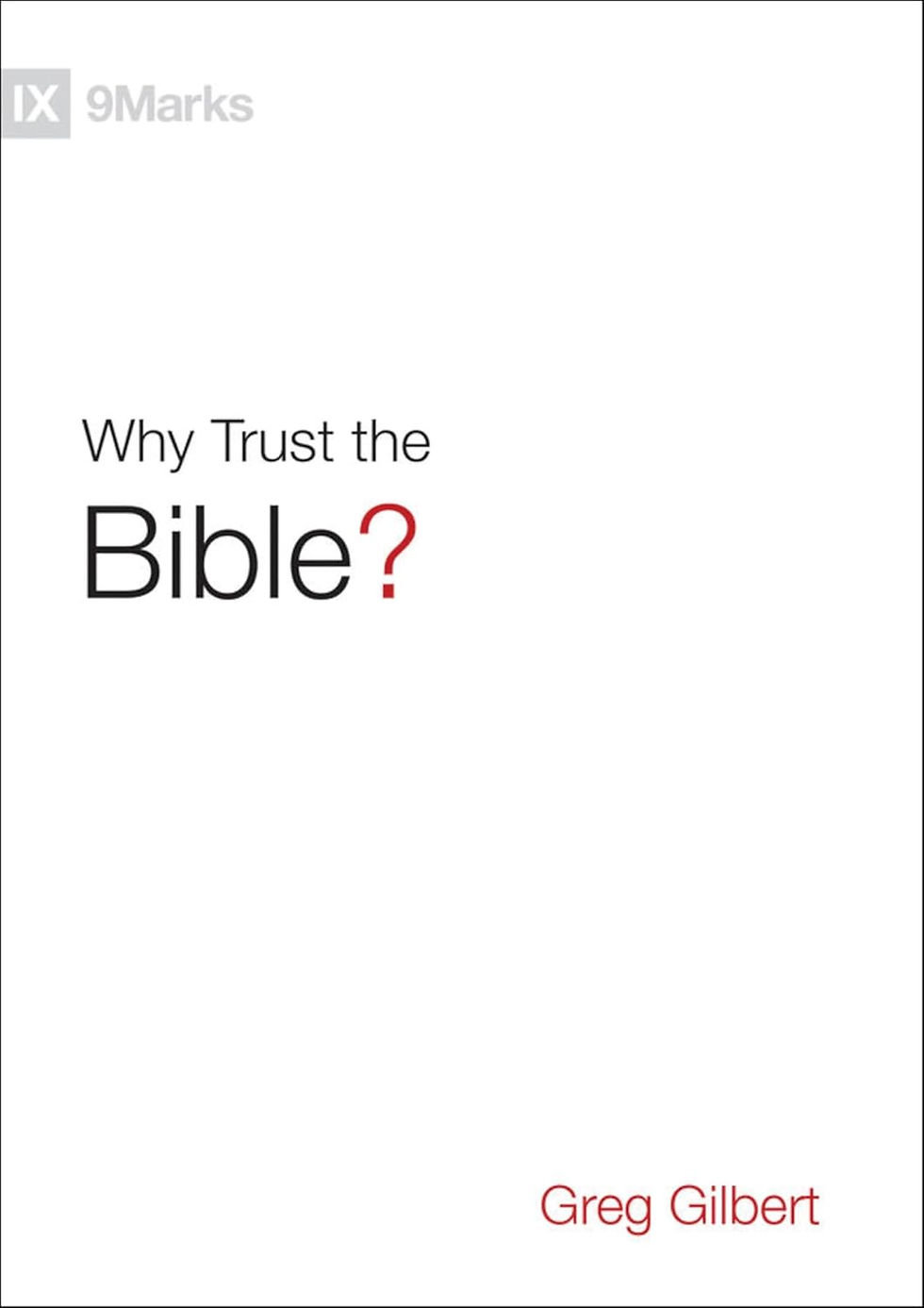
Greg Gilbert wrote Why Trust the Bible? Crossway published the 160-page hardcover on October 31, 2015. Its chapters address translation, manuscript copies, canon questions, and the credibility of biblical witnesses, making it a concise companion to this article.
As an Amazon Associate I earn from qualifying purchases.
Product Title
16 px collapsible text is perfect for longer content like paragraphs and descriptions. It’s a great way to give people more information while keeping your layout clean. Link your text to anything, including an external website or a different page. You can set your text box to expand and collapse when people click, so they can read more or less info.
$320

Product Title
16 px collapsible text is perfect for longer content like paragraphs and descriptions. It’s a great way to give people more information while keeping your layout clean. Link your text to anything, including an external website or a different page. You can set your text box to expand and collapse when people click, so they can read more or less info.
$900

Product Title
16 px collapsible text is perfect for longer content like paragraphs and descriptions. It’s a great way to give people more information while keeping your layout clean. Link your text to anything, including an external website or a different page. You can set your text box to expand and collapse when people click, so they can read more or less info.
$560
Product Title
16 px collapsible text is perfect for longer content like paragraphs and descriptions. It’s a great way to give people more information while keeping your layout clean. Link your text to anything, including an external website or a different page. You can set your text box to expand and collapse when people click, so they can read more or less info.
$280



Comments