

How to Honor Your Parents as an Adult Christian Man


A grown man may love his parents and still feel pulled in several directions. His father expects an immediate answer. His mother criticizes his wife. An aging parent needs help, but every request lands on one son. He wants to obey God without surrendering the household God has entrusted to him.
The Bible does not reduce honor to cheerful agreement. It gives adult sons a weightier task. We must treat parents as people made in God's image, speak truth without contempt, protect our marriages and children, and offer wise care when parents become vulnerable. Those duties can work together, but they require courage and judgment.
This guide explains what Scripture directly commands and marks practical conclusions as applications. It also notes an area where Christian traditions vary in emphasis. The goal is not to hand you a formula for every family. It is to help you make faithful decisions before Christ.
What the Fifth Commandment Requires
Exodus 20:12 commands Israel to honor father and mother. The command appears in the covenant law given after God rescued Israel from Egypt. Honor means giving parents real weight rather than treating them with scorn or indifference. The attached promise tied family faithfulness to life in the land God gave Israel.
Christians should not lift the promise out of its covenant setting and turn it into a guarantee of long life for every respectful son. Paul repeats the command for Christian households in Ephesians 6, which confirms its moral importance. Yet neither passage says a parent's wishes outrank God's authority.
Practical application: honor can include listening, expressing gratitude, refusing ridicule, telling the truth, and considering a parent's needs. Honor does not require pretending harmful conduct is harmless.
Adult Honor Is Not Permanent Childhood
Ephesians 6:1–4 addresses children and fathers within a household. Children are told to obey their parents in the Lord. Fathers are told not to provoke their children and to bring them up in the Lord's instruction. The command is mutual in its moral seriousness, even though the roles differ.
Genesis 2:24 says a man leaves father and mother, holds fast to his wife, and forms one flesh with her. Marriage creates a new primary human loyalty and a new household. That biblical movement from a parent's home to a married union matters when adult sons ask whether honor means ongoing obedience.
Christian traditions differ in how strongly they describe an adult child's continuing duty of deference. The Catholic Catechism says respect remains after adulthood while obedience ceases with emancipation. Many Protestant teachers reach a similar distinction from Genesis 2 and Ephesians 6. Some Christian cultures use stronger language about lifelong deference. Across those differences, no major Christian tradition teaches that a parent may command sin or take Christ's place.
My practical conclusion is that an adult man should listen respectfully and weigh wise counsel, but he must make adult decisions before God. A married man should make those decisions with his wife, not behind her back and not under parental pressure.

Put Christ and Your Marriage in the Proper Order
A parent may interpret a son's new loyalty to his wife as rejection. A son may then try to keep peace by telling each side what it wants to hear. That strategy usually deepens confusion. God calls a husband to leave, hold fast, and become one flesh. He should not make his parents the silent third partner in his marriage.
This does not mean isolating your wife from your family or assuming she is always right. It means that major choices about money, holidays, children, housing, and caregiving belong first to the marital household. Parents can offer counsel. They do not get a deciding vote.
If you need a fuller framework for this responsibility, read How to Lead Your Family Spiritually Without Pretending You Have It All Together. Biblical leadership begins with service, truth, repentance, and shared prayer. It does not use authority to avoid hard conversations.
What Respectful Boundaries Look Like
A boundary describes what you will do, what you will participate in, or what access you can safely offer. It is not a threat designed to control another person. You cannot force a parent to stop shouting. You can end a call when shouting begins and offer to talk again when both of you can speak calmly.
A useful boundary is clear, limited, and connected to conduct. It avoids diagnosing motives that you cannot know. Instead of saying, “You always manipulate everyone,” try, “I will not discuss our private finances. If the conversation returns to that subject, I will end the call and try again next week.”
For more examples of calm limits, see How to Say No as a Christian Without Guilt. A respectful no can protect a truthful yes.
How to Respond When Parents Criticize Your Wife or Children
Do not recruit your wife to absorb disrespect so you can appear peaceful. Address the conduct yourself. Speak privately when possible. Name the specific words or action, explain the effect, and state what needs to change before the next visit.
You might say, “Dad, I want you in our lives. When you insult my wife in front of the children, the visit becomes harmful. If that happens again, we will leave. I am willing to talk about concerns when we can speak respectfully.”
This wording is an application, not a verse. The biblical principles come from speaking truth in love, refusing corrupt speech, and putting away bitterness and slander in Ephesians 4. The exact boundary depends on the seriousness and pattern of the conduct.
If the conversation has already become entrenched, How to Handle Conflict as a Christian Man offers a step-by-step process for confession, listening, and repair.

Care for Aging Parents Without Enabling Harm
First Timothy 5:3–8 addresses the church's care for widows. Paul tells children and grandchildren to practice devotion toward their own family and repay their parents. He also distinguishes people who truly lack support from those whose relatives can help. The context concerns concrete care, not unlimited compliance with every request.
Practical care can include meals, rides, medical appointments, housing research, financial organization, regular calls, and coordination with siblings or church members. Wise care begins with a realistic inventory. What does your parent need? What can you and your wife give? Which needs require professional, legal, medical, or community help?
Do not promise more than your household can sustain. A grand promise followed by resentment and collapse serves no one. A written plan can divide tasks, clarify emergencies, and prevent one sibling from silently carrying everything.
Care also does not require funding addiction, hiding fraud, or lying to protect destructive behavior. You can offer food without cash, transportation to treatment without covering up relapse, and safe housing options without allowing violence in your home. Those are applications of wisdom and stewardship, not direct biblical formulas.
When There Is Abuse, Addiction, or Criminal Conduct
Serious danger changes the immediate task. If a parent threatens violence, abuses a child, drives while impaired, steals, or commits another crime, seek safety and appropriate professional help. Contact emergency services when danger is immediate. Follow reporting laws that apply where you live. A pastor can support you, but a private church conversation should not replace lawful protection or qualified care.
Scripture does not give one universal distance rule for every harmful family. Some situations may call for supervised contact. Others may require long separation or no direct contact for a time. The aim is not revenge. It is truth, safety, and a response proportionate to the danger.
Do not make a major safety decision alone if you can consult trustworthy people who understand the facts. A mature pastor, licensed counselor, attorney, physician, or law enforcement professional may see risks and responsibilities that relatives miss.
Forgiveness, Reconciliation, and Trust Are Different
Romans 12:17–21 forbids personal revenge and calls believers to overcome evil with good. That command reaches the heart. It rules out nursing a plan to make a parent suffer.
Luke 17:3–4 connects rebuke, repentance, and forgiveness. Christians differ over whether forgiveness should be described as granted unconditionally at once or promised in the heart and completed relationally when the offender repents. Both positions reject revenge. Both should also reject the idea that forgiveness automatically restores access, responsibility, or trust.
Reconciliation requires truth from both sides. Trust normally grows through demonstrated faithfulness over time. A son can pray for his father, refuse retaliation, and remain open to genuine repair while still maintaining a boundary that protects his wife and children.
A Five-Step Plan for One Hard Conversation
1. Pray for a truthful aim
Ask God to expose pride, fear, and the desire to punish. Name the specific good you seek, such as respectful visits, a workable care schedule, or an end to criticism of your wife.
2. Agree with your wife before you speak
If the issue affects your home, decide together what you can offer and what you cannot. Do not present a boundary that your wife has never heard.
3. Describe conduct, not character
Use a recent, observable example. “You called her selfish at dinner” is clearer than “You are toxic.” Specific words give the other person something concrete to address.
4. State the response you control
Explain what you will do if the conduct continues. Keep the response proportionate. Then follow through without a lecture, insult, or surprise escalation.
5. Leave a door open for honorable repair
Say what change would make renewed contact possible. If appropriate, offer another time to talk, mediation with a mature third party, or a smaller step toward rebuilding trust.
Questions Christian Men Ask
Do I have to obey my parents as an adult?
An adult should continue to honor his parents, but Scripture presents marriage and adulthood as a changed household responsibility. Listening seriously is not the same as granting parents final authority. You must obey God above every human relationship.
Is limited or no contact always sinful?
No single contact rule fits every case. Limiting contact can be a prudent response to danger or repeated harm. It can also become a weapon of revenge. Examine your motive, the actual risk, the effect on your household, and whether a less restrictive safe option exists.
Must my parents approve our marriage and parenting decisions?
Parents may offer valuable counsel, especially when they have shown wisdom. Yet a married couple bears responsibility for its own covenant and children. Seek counsel without transferring the decisions God assigned to your household.
How do I honor a parent who rejects my Christian faith?
Speak respectfully, keep ordinary commitments, and refuse to mock the parent who mocks you. Do not hide your allegiance to Christ or join conduct that violates conscience. Patient love and clear conviction can stand together.
What if caring for a parent strains my marriage?
Bring the strain into the light early. Review time, money, space, sibling help, and outside resources with your wife. Care for parents matters, and so do the duties of marriage and parenthood. A sustainable plan recognizes all of them.
Sources Used for Verification
Catechism of the Catholic Church, paragraphs 2214–2218, on continuing respect, the end of childhood obedience, and adult children's moral and material support for parents in need.
Catechism of the Catholic Church, paragraph 2232, on family ties as important but not absolute before the call of Christ.
Bible.org, “Boundaries With Family”, for a Protestant discussion that distinguishes adult honor from childhood obedience.
Focus on the Family Store listing for Boundaries Updated and Expanded Edition, used to verify the edition, authors, publisher, publication date, and ISBN.
Related Teaching: How to Honor Difficult Parents as an Adult Christian
Pastor Brandon of Alliance Church teaches on honoring difficult parents as an adult Christian. The video complements this article by addressing the tension between biblical honor and adult responsibility.
If the embedded player does not load, watch the teaching on YouTube.
Further Reading: Boundaries Updated and Expanded Edition by Henry Cloud and John Townsend
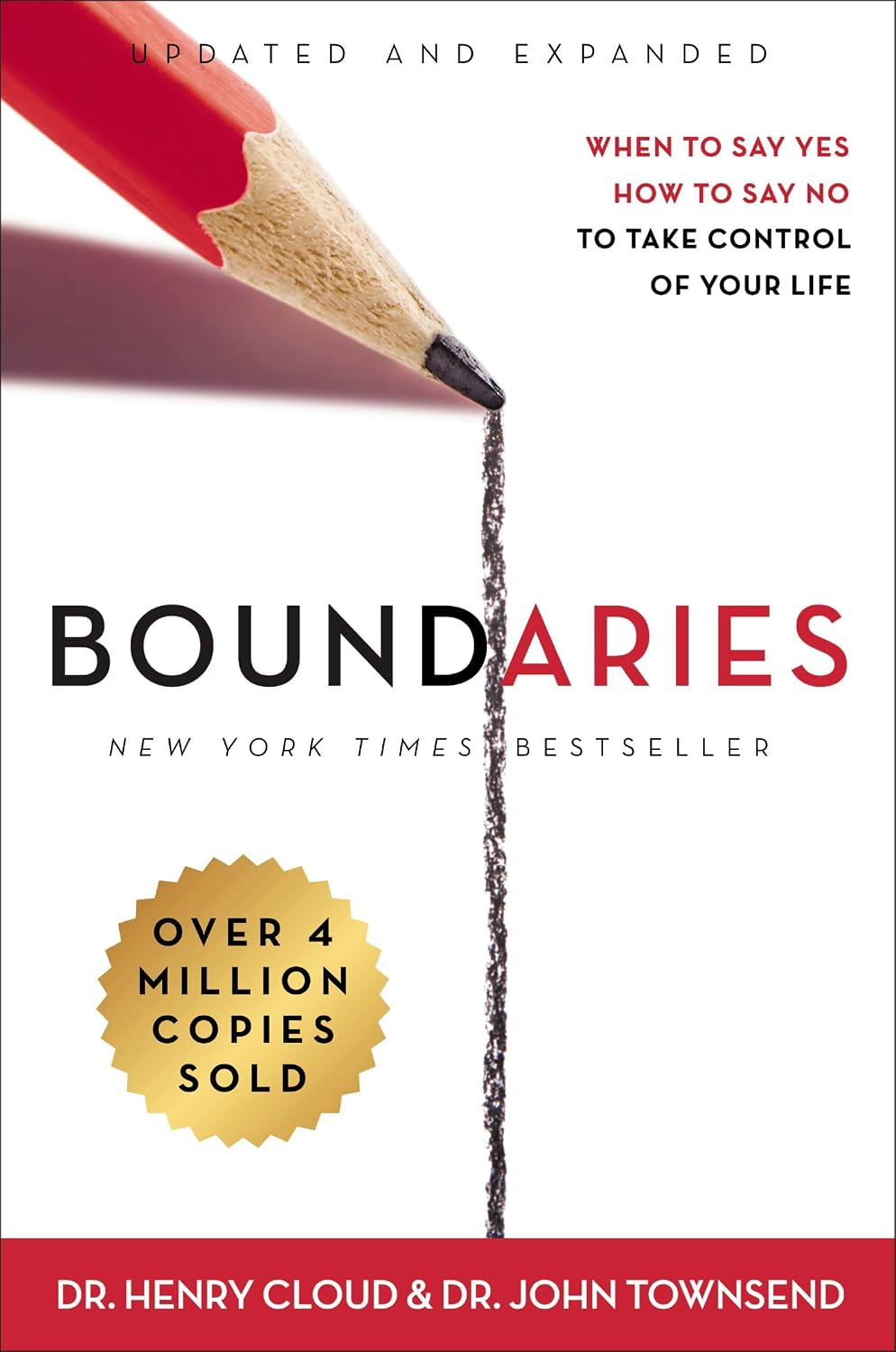
Henry Cloud and John Townsend's Boundaries Updated and Expanded Edition explains how responsibilities and limits shape healthy relationships. Zondervan published this expanded edition in 2017. Its focus on saying yes and no responsibly can help a Christian man think through family access, caregiving, and conflict. Readers should test every practical claim by Scripture and use qualified pastoral, legal, or clinical help when a situation involves abuse, danger, or complex care.
As an Amazon Associate I earn from qualifying purchases.
Honor does not demand passivity. It calls you to give parents proper weight while keeping Christ first, loving your wife, protecting your children, speaking truth, and offering care you can sustain. Choose one faithful next step, prepare your words, and carry it out without contempt.
Product Title
16 px collapsible text is perfect for longer content like paragraphs and descriptions. It’s a great way to give people more information while keeping your layout clean. Link your text to anything, including an external website or a different page. You can set your text box to expand and collapse when people click, so they can read more or less info.
$320

Product Title
16 px collapsible text is perfect for longer content like paragraphs and descriptions. It’s a great way to give people more information while keeping your layout clean. Link your text to anything, including an external website or a different page. You can set your text box to expand and collapse when people click, so they can read more or less info.
$900

Product Title
16 px collapsible text is perfect for longer content like paragraphs and descriptions. It’s a great way to give people more information while keeping your layout clean. Link your text to anything, including an external website or a different page. You can set your text box to expand and collapse when people click, so they can read more or less info.
$560
Product Title
16 px collapsible text is perfect for longer content like paragraphs and descriptions. It’s a great way to give people more information while keeping your layout clean. Link your text to anything, including an external website or a different page. You can set your text box to expand and collapse when people click, so they can read more or less info.
$280


Comments