

How to Stop Being Passive as a Christian Man


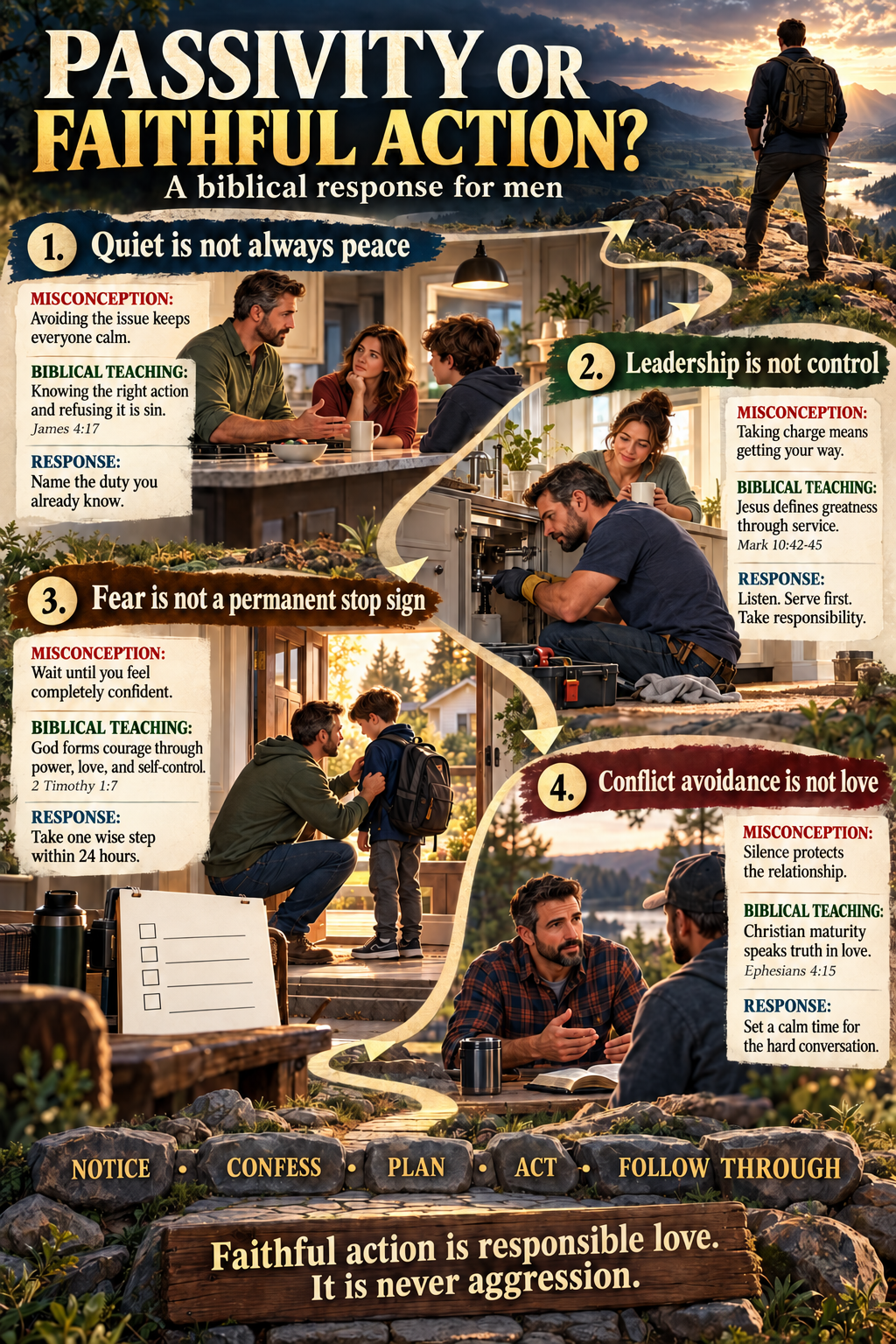
Passivity often looks harmless at first. You do not shout. You do not start arguments. You stay out of the way. Yet the decisions remain unmade, the hard conversation never happens, and someone else carries the responsibility you keep avoiding.
The Bible does not use “passive man” as a technical label. Scripture does address neglect, idleness, fear, blame, failure to speak, and refusal to do known good. In this article, passivity means a repeated pattern of withholding responsible action when love and obedience require it.
A quiet personality is not a sin. Listening is not weakness. Waiting for facts is often wise. Seeking counsel shows humility. Biblical patience stays engaged while it waits. Passivity withdraws so another person must absorb the cost.
Aggression is not the cure. Control, harshness, and intimidation reject Christ’s model of leadership. The goal is faithful action shaped by truth, love, courage, and self-control.
Start with what Scripture says about responsibility
Genesis 2:15 says God placed Adam in the garden to work it and keep it. The verse speaks directly about Adam and Eden. Some Christian teachers build a broad framework for masculine responsibility from this text. Others stress the shared human calling to exercise stewardship under God. The verse should not carry claims beyond its words.
The safe conclusion is clear. God gave human beings meaningful work and accountable stewardship. A Christian man should not treat his home, marriage, church, or daily duties as someone else’s permanent responsibility.
Genesis 3:6 says Adam was with Eve when he ate the forbidden fruit. Verse 12 records his attempt to shift blame toward the woman and toward God. Many interpreters describe Adam as passive during the serpent’s temptation. Other interpreters warn the text does not explicitly state Adam silently watched the whole exchange. We should respect this limit.
The passage still shows personal disobedience followed by blame. Those two patterns often appear together. A passive man delays action, then explains why someone else left him no choice.
Practical application: Stop with the excuses. Name the duty you neglected. Confess your part without attaching your wife’s, child’s, coworker’s, or pastor’s failure to the sentence.
Scripture context: Genesis 2:15 and Genesis 3:6–12
Passivity is not biblical meekness
Some men defend avoidance by calling it peace. Others call it meekness. Jesus shows a different kind of strength.
First Peter 2:23 says Jesus did not retaliate when He suffered. He entrusted Himself to the One who judges justly. His restraint was deliberate obedience. It was not fear of a difficult conversation. Throughout His ministry, Jesus taught publicly, confronted hypocrisy, welcomed rejected people, corrected His disciples, washed feet, and moved toward the cross.
Mark 10:42–45 rejects domineering leadership. Jesus contrasts rulers who lord authority over people with the servant who gives himself for others. Christian action does not ask, “How do I get control?” It asks, “What does love require me to do?”
Sometimes love requires silence. Sometimes it requires a clear answer, a difficult apology, a budget decision, a boundary, or a phone call you have postponed. Meekness brings strength under obedience to God. Passivity hides from responsibility.
Scripture context: Mark 10:42–45 and 1 Peter 2:21–25
Leadership means sacrificial service, not control
Ephesians 5:25 commands husbands to love their wives as Christ loved the church and gave Himself for her. The command starts with self-giving love. It offers no permission for selfish rule, manipulation, neglect, or harshness.
Christians disagree about how the household instructions in Ephesians 5 describe authority. Complementarian readers see a distinct responsibility for husbands to lead through sacrificial service. Egalitarian readers stress mutual submission in verse 21 and reject a continuing hierarchy between husband and wife. Both positions include serious differences in interpretation.
No faithful reading turns Christlike love into coercion. A husband should never use “leadership” to demand quick agreement, silence his wife, control money without accountability, or make every family decision alone.
Ask your wife a direct question: “Which responsibility have you been carrying because I failed to act?” Listen to the full answer. Do not cross-examine her. Do not offer a speech about your intentions. Choose one recurring responsibility, agree on what ownership means, and follow through.
If you want a deeper guide to serving your home spiritually, read How to Lead Your Family Spiritually: A Biblical Guide for Men.
Scripture context: Ephesians 5:21–33 and Colossians 3:19
Name the fear beneath your delay
Passivity does not always begin with laziness. Fear often drives it.
You might fear criticism. You might fear choosing poorly. You might fear discovering you lack skill. You might want everyone to approve of you. Delay feels safer because it postpones the moment when someone judges your effort.
Second Timothy 1:7 belongs to Paul’s appeal for Timothy to remain faithful in gospel ministry. Paul points Timothy toward power, love, and self-control rather than fear. The verse does not promise a faithful man will never feel afraid. It directs a fearful servant toward God-given resources for obedient action.
Write two sentences:
I am avoiding __________ because I fear __________.
Faithfulness today requires me to __________.
Do not fill the second blank with a vague promise such as “be a better leader.” Name a visible action. Schedule the appointment. Review the bill. Admit the mistake. Ask for counsel. Set a time for the conversation.
Scripture context: 2 Timothy 1:6–14
Use a 24-hour rule for known duties
James 4:17 says the person who knows the right thing to do and fails to do it sins. The surrounding paragraph confronts arrogant planning while ignoring dependence on God. The verse does not declare every delay sinful. Some decisions need prayer, facts, counsel, and time.
Once a duty is clear and a first step is available, repeated delay becomes a moral problem. The 24-hour rule is a practical tool, not a biblical command. Within one day, take the first honest step toward a known responsibility.
Use it like this:
Identify one neglected duty.
Define the smallest responsible action.
Put the action on your calendar within 24 hours.
Tell one affected person what you will do.
Report back after you finish.
The first step might take five minutes. Send the email. Make the appointment. Move the money into the correct account. Ask your son when he is free to talk. Tell your wife you need to repair what you have neglected.
Small action does not erase a long pattern. It begins a new one.
Scripture context: James 4:13–17
Speak before surface peace becomes deeper distance
Conflict avoidance often protects comfort while trust erodes. Your wife senses the issue. Your children notice the tension. Your coworker waits for a decision. Silence does not remove the problem. It forces everyone to work around it.
Ephesians 4:15 calls believers to speak truth in love as part of growing into Christ. The verse does not support blunt cruelty. It joins truth with love and places both inside Christian maturity.
Use three parts for a hard conversation:
Observation: “I have delayed this decision for three weeks.”
Responsibility: “I left you carrying the uncertainty, and I was wrong.”
Request: “I want to review the options with you tonight and decide our next step together.”
Do not attach an accusation to your confession. Avoid “I am sorry, but you always criticize me.” Tell the truth about your conduct first.
For help with tense conversations, read How to Handle Conflict as a Christian Man. If anger replaces avoidance once the conversation begins, use How to Control Anger as a Christian Man.
Scripture context: Ephesians 4:15, 25–32
Stop outsourcing your spiritual responsibilities
A husband does not need to know more Scripture than his wife before he participates in the spiritual life of the home. A father does not need a polished lesson before he talks with his children about Christ. Lack of expertise often becomes an excuse for staying absent.
Start with a simple pattern. Read a short Bible passage. Ask what it shows about God. Ask what obedience looks like today. Pray in plain language. Keep the conversation brief enough to repeat.
If your wife has stronger biblical knowledge, thank God for her wisdom. Learn from her. Active responsibility does not require pretending to possess every answer. It requires your honest presence, teachability, repentance, and participation.
If you are single, the same principle applies in your church, friendships, work, and private habits. Show up. Keep your word. Serve where you committed. Ask for help before a hidden problem grows.

Replace dramatic promises with visible follow-through
Passive men often make large promises after the consequences become painful. “I will change everything” sounds serious. It also avoids defining what happens next.
Proverbs 24:30–34 pictures a neglected field covered with thorns and a broken wall. The passage addresses sloth. Not every passive pattern comes from laziness. The image still shows how neglected responsibilities deteriorate over time.
Choose observable commitments:
“I will call the insurance company by noon.”
“I will handle the children’s bedtime on Tuesday and Thursday.”
“I will review our account with you every Friday.”
“I will ask our pastor for a meeting today.”
“I will put my phone away during dinner.”
Keep the commitment small enough to complete and important enough to matter. Then repeat it. Trust responds to steady truth and follow-through. One productive week does not purchase another person’s confidence. Remain patient while your conduct becomes dependable.
Scripture context: Proverbs 24:30–34 and Matthew 5:37
Build accountability before motivation fades
First Thessalonians 5:14 tells believers to admonish the idle, encourage the fainthearted, help the weak, and remain patient with all. The verse recognizes different people need different forms of help. A man who refuses responsibility needs honest correction. A discouraged man might need support. A weak man might need practical help.
Ask a mature Christian man to question you about one responsibility for four weeks. Give him a clear measure. “Ask whether I held the weekly budget conversation without making my wife initiate it.”
Do not choose a friend who treats every excuse as wisdom. Do not choose a man who humiliates you. Look for someone who speaks truth, respects confidentiality, understands grace, and expects follow-through.
Accountability does not perform obedience for you. It exposes the gap between your promise and your conduct while another brother helps you close it.
Scripture context: 1 Thessalonians 5:12–15 and Galatians 6:1–5
Follow a seven-day reset
This plan is a practical application. Scripture does not prescribe this schedule.
Day 1: Write down one duty you keep avoiding and the person affected by it.
Day 2: Confess the neglect to God and to the affected person. Keep the confession free from blame.
Day 3: Complete one task taking less than thirty minutes.
Day 4: Schedule the difficult conversation you keep postponing.
Day 5: Ask your wife, child, or teammate which burden your delay placed on them. Listen without defending yourself.
Day 6: Serve in one unseen way. Do the needed work without announcing it.
Day 7: Review your follow-through with a mature Christian man. Set one repeatable commitment for the next four weeks.
The plan will not repair every consequence in seven days. It moves repentance into conduct.
Questions men ask about passivity
Am I being passive or patient?
Patience remains attentive, truthful, and ready to act at the proper time. Passivity withdraws from the duty and leaves someone else to manage the cost. Ask whether you are gathering needed wisdom or avoiding discomfort.
Does biblical leadership mean I make every decision?
No. Scripture calls husbands to sacrificial love, not unilateral control. Wise marriage includes listening, shared knowledge, prayer, counsel, and decisions shaped by the good of the whole family. Christians disagree about the structure of marital authority, but no disagreement excuses selfishness or neglect.
What if my wife already handles everything?
Do not seize tasks to prove a point. Ask what shared responsibility should look like. Take ownership of agreed duties and complete them. Respect the skill she developed while you were absent.
What if I act and make the wrong choice?
Faithful action does not mean reckless action. Gather facts, seek counsel, pray, and choose within your responsibility. If you make an honest mistake, own it, learn, and correct what you are able to correct. Fear of imperfection does not justify endless delay.
What if low mood or exhaustion has affected my ability to act?
Do not diagnose every struggle as simple laziness. The National Institute of Mental Health advises seeking professional help when severe or distressing symptoms last two weeks or more, including difficulty concentrating, loss of interest, sleep problems, or inability to complete usual tasks. Speak with a health care provider and seek wise pastoral support. Receiving help is responsible action.
Choose one faithful action today
Name one responsibility you have avoided. Tell God the truth about your fear, comfort, or selfishness. Tell the affected person what you failed to do. Define the first visible step. Put it on today’s calendar. Ask one mature believer to follow up.
You do not need a new personality. You need repentance, wisdom, courage, and steady obedience under Christ. Faithful action is responsible love. It refuses both passive neglect and aggressive control.
Sources used for verification
Read Addressing the Passive Husband from the Association of Certified Biblical Counselors.
Read the National Institute of Mental Health guidance on when to seek professional help.
Related teaching: Strength, Emotions, Meekness, and Men
Costi Hinn and Owen Strachan discuss strength, emotions, meekness, courage, and control in this teaching from the For the Gospel channel. Their conversation addresses both soft passivity and harsh aggression. Compare every point with Scripture as you listen.
Further reading: The Masculine Mandate by Richard D. Phillips
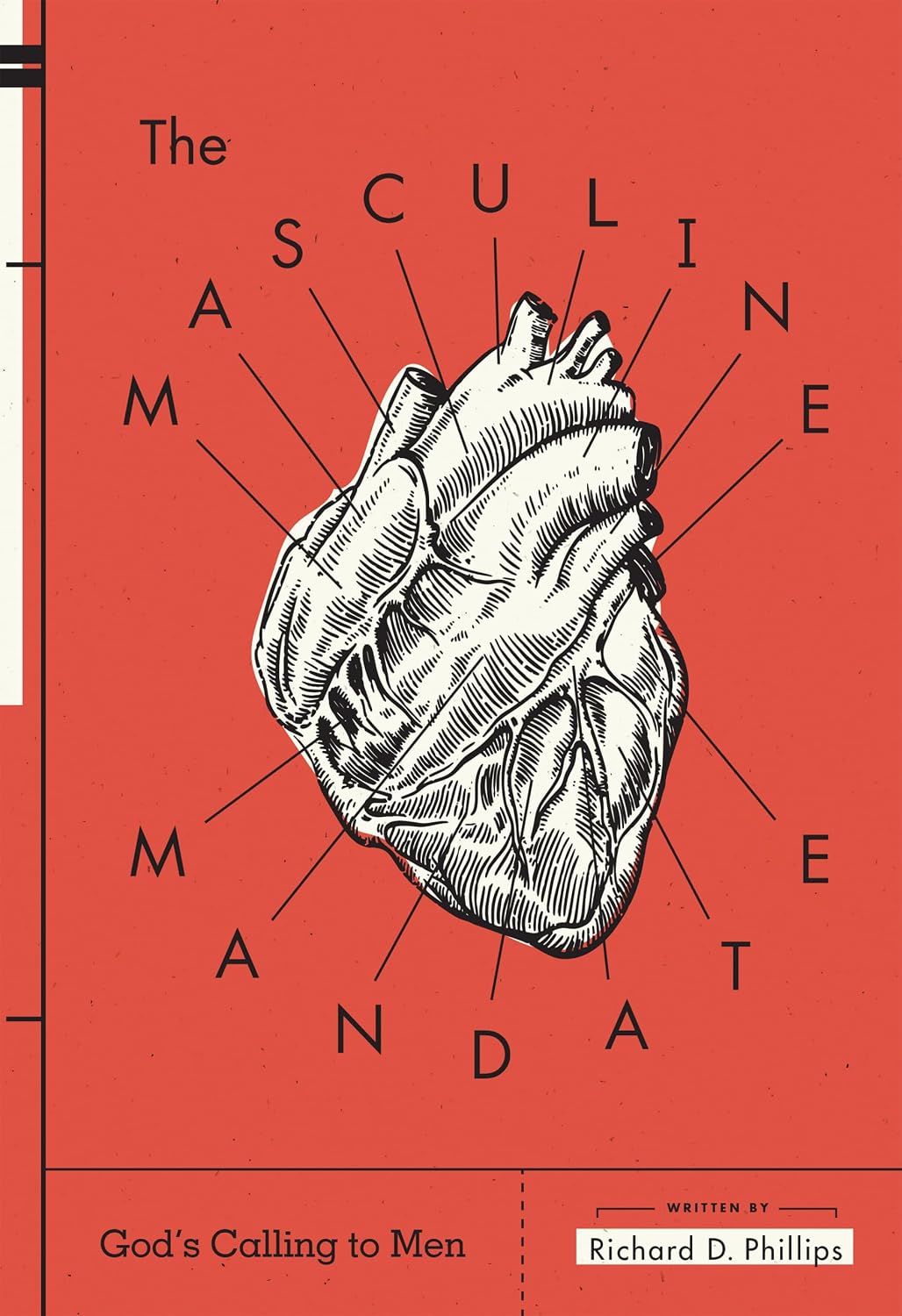
Richard D. Phillips develops a framework for Christian manhood from Genesis 2:15 and applies it to work, marriage, fatherhood, friendship, and church life. Ligonier Ministries published the 220-page paperback edition in 2016 under ISBN 9781567696844. The book fits this article because it addresses responsible service in ordinary life rather than personality performance. Read its conclusions with an open Bible and awareness Christians differ on some role and authority questions.
As an Amazon Associate I earn from qualifying purchases.
Product Title
16 px collapsible text is perfect for longer content like paragraphs and descriptions. It’s a great way to give people more information while keeping your layout clean. Link your text to anything, including an external website or a different page. You can set your text box to expand and collapse when people click, so they can read more or less info.
$320

Product Title
16 px collapsible text is perfect for longer content like paragraphs and descriptions. It’s a great way to give people more information while keeping your layout clean. Link your text to anything, including an external website or a different page. You can set your text box to expand and collapse when people click, so they can read more or less info.
$900

Product Title
16 px collapsible text is perfect for longer content like paragraphs and descriptions. It’s a great way to give people more information while keeping your layout clean. Link your text to anything, including an external website or a different page. You can set your text box to expand and collapse when people click, so they can read more or less info.
$560
Product Title
16 px collapsible text is perfect for longer content like paragraphs and descriptions. It’s a great way to give people more information while keeping your layout clean. Link your text to anything, including an external website or a different page. You can set your text box to expand and collapse when people click, so they can read more or less info.
$280


Comments