
Responsible, Courageous, Obedient, Teachable, Steady, Leading, Serving, Faithful, Mentoring, Wise
1 Kings 2:2–3 NIV
“I am about to go the way of all the earth,” he said. “So be strong, act like a man, and observe what the LORD your God requires: Walk in obedience to him, and keep his decrees and commands, his laws and regulations, as written in the Law of Moses. Do this so that you may prosper in all you do and wherever you go.”
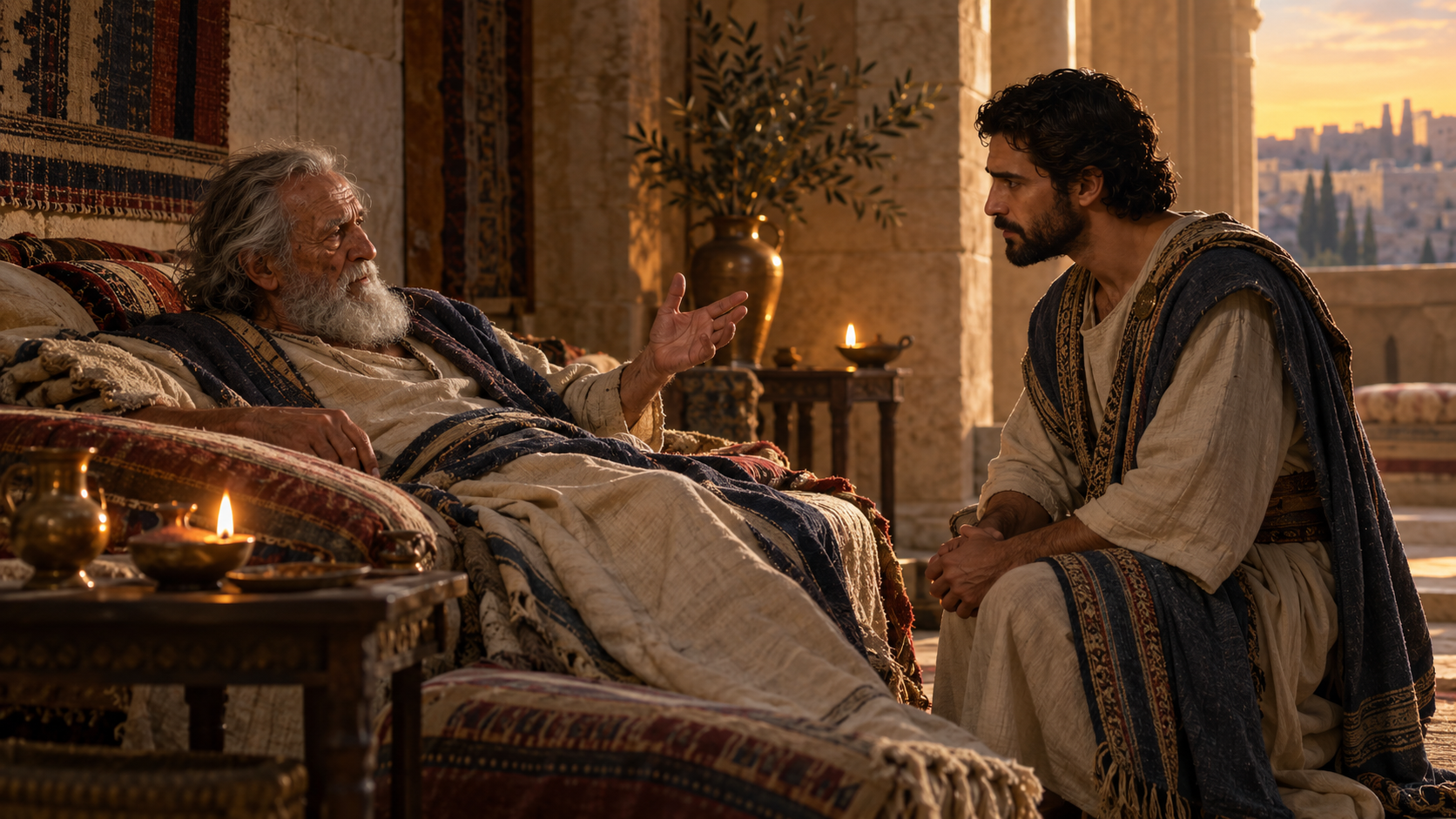
Responsibility has a way of exposing what a man trusts. When the decision is yours, the pressure is real, and other people will live with the result, confidence alone is not enough. David’s final charge to Solomon joins strength with something quieter and harder: steady obedience to God. That connection reaches into leadership, family life, work, money, private habits, and the moments when no one is impressed. Today’s lesson looks at why biblical manhood begins under God’s authority, how compromise weakens a man over time, and what faithful courage can look like in one decision you already face.
Scripture Explained
There are moments when a man cannot keep leaning on yesterday’s strength. A new responsibility lands in his hands, and the room for excuses grows smaller. Solomon stood in just such a moment. His father was near death, the kingdom had recently passed through a dangerous struggle over succession, and the young king needed more than confidence. He needed a life ordered under God.
David’s words come near the beginning of 1 Kings, after Adonijah tried to secure the throne and Solomon was established as king. Scripture does not tell us Solomon’s exact age here, so claims about his youth should be made cautiously. What is clear is the weight he inherited: a divided royal household, unfinished matters of justice, and responsibility to lead Israel in covenant faithfulness.
“Be strong, act like a man” can sound like an invitation to toughness for its own sake. David immediately explains what he means. Solomon’s strength must appear in obedience—walking in God’s ways and keeping what was written in the Law of Moses. The command resembles the charge given to Joshua, who was told to be strong and courageous by carefully doing what God had spoken. Israel’s king was also required to read the law so that he would not exalt himself above his brothers.
The promise that Solomon would prosper is not a blank check for wealth or an easy life. Prospering carries the sense of acting wisely and succeeding in the work God assigned, within the covenant promises David mentions next. The rest of Solomon’s story supplies an honest warning. God gave him remarkable wisdom, yet his later compromise and idolatry brought judgment. A strong beginning did not remove the need for lifelong obedience.
Think About This
Men often feel pressure to prove strength by taking control, hiding uncertainty, or refusing help. David points somewhere less impressive and more demanding: submit yourself to what God has said. That obedience reaches decisions nobody applauds—the contract you refuse to shade, the screen you turn off, and the promise you keep when it costs you. Biblical maturity is not loud, but it is visible over time.
David was not giving this charge as a flawless father or king. His failures had wounded his family and troubled the nation, yet God’s covenant mercy had not disappeared. That makes the scene especially sobering for fathers, grandfathers, supervisors, and older brothers in the faith. You do not need a spotless history before you can speak truth to another man. You do need humility about your failures and a present willingness to live under the same Word you commend to him.
What Should I Do
Bring one present responsibility under Scripture before you decide what success should look like. It may involve disciplining a child, responding to a difficult employee, repairing a marriage, choosing what work to accept, or handling money that feels painfully tight. Write down the decision, then identify the clear commands and principles that govern it. Prayerfully remove any option that requires disobedience, even if it appears efficient or profitable.
Name the place where you already know the right path but have delayed walking it. Strength sometimes looks like making the call, confessing the lie, canceling the hidden account, or returning what is not yours. Do not wait for a stronger feeling to arrive. Ask God for courage, take the next honest step, and invite a trusted brother to check whether you followed through.
At home and at work, let authority become service rather than self-protection. Solomon was to rule, but he first had to be ruled by God’s Word. The same order matters for a husband, father, foreman, pastor, or business owner. Listen before assuming, keep standards you expect others to honor, and use whatever influence you have to protect people rather than to preserve your image. Firmness and tenderness can belong in the same obedient decision.
Pass the charge along without turning it into a lecture. Ask a younger man what responsibility currently frightens him or exposes his inexperience. Read this paragraph from 1 Kings together, talk honestly about a failure of your own, and help him identify one faithful action. Then let him see you seek counsel too. Men learn durable courage from leaders who remain teachable while they lead.
Learn More
Read 1 Kings 1–3 to see the contested succession, David’s charge, Solomon’s early decisions, and his request for wisdom. Set those chapters beside Deuteronomy 17:14–20, where Israel’s king is commanded to keep a copy of the law and read it throughout his life. Joshua 1:7–9 and Psalm 1 add the same connection between courage, careful obedience, meditation on God’s instruction, and fruitful service.
Follow the theme into the New Testament with John 14:15 and James 1:22, where love for Christ and hearing God’s Word lead to obedience. Read 1 Corinthians 16:13–14 as well: watchfulness, courage, strength, and love are held together rather than played against one another. Jesus is the faithful King Solomon could not finally be, and union with Christ—not masculine willpower—supplies the grace to obey. Carry one question into today: where would quiet obedience make me a stronger man?




A Prayer for Strength to Obey
Father, when responsibility exposes my fear or pride, bring me back under Your Word. Give me strength that does not need to perform for others and courage to obey when compromise would be easier.
Show me the next faithful step in my home, work, and private life. Make me teachable while I lead, quick to repent when I fail, and steady enough to help another man follow You. Amen.
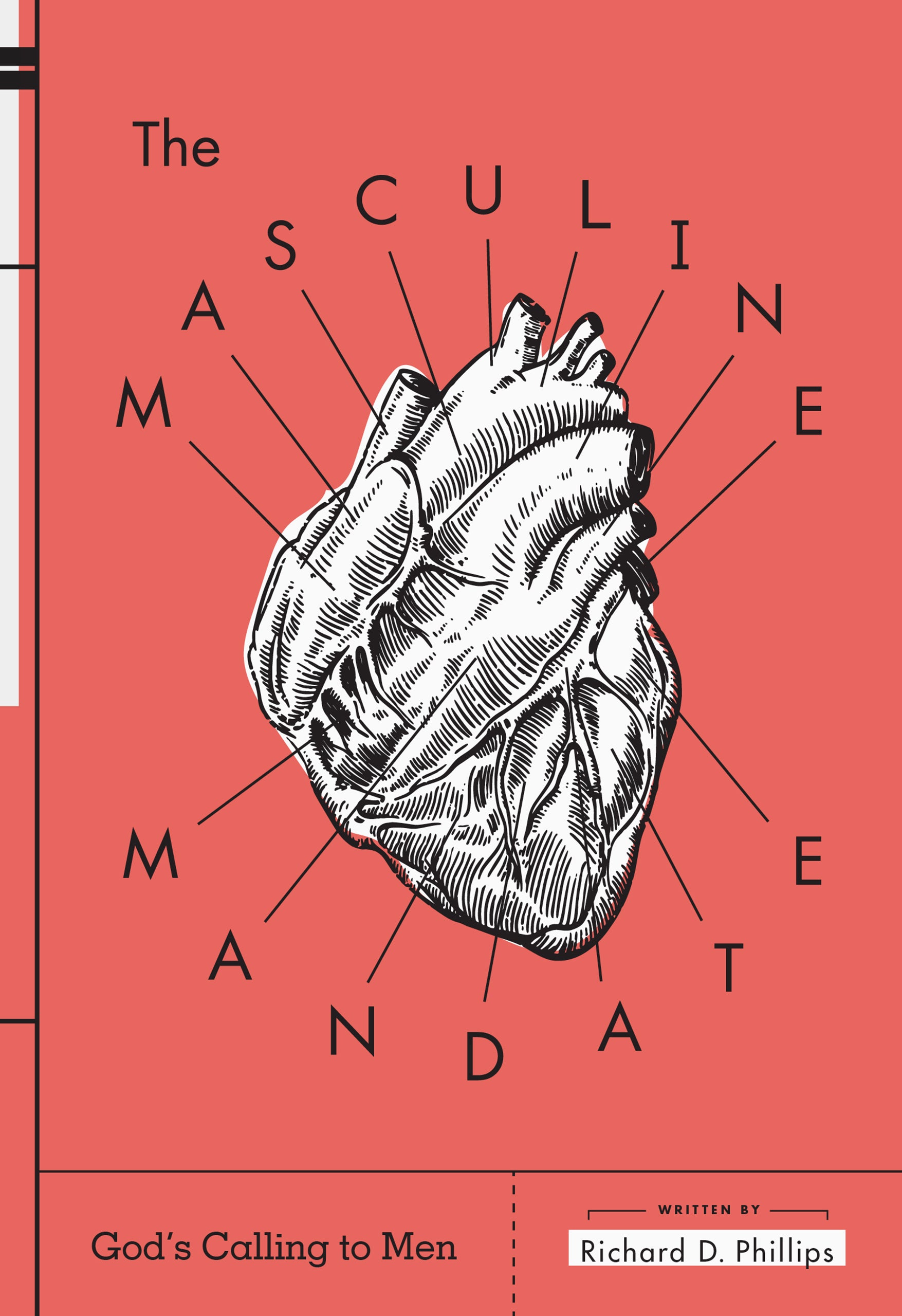
The Masculine Mandate: God’s Calling to Men by Richard D. Phillips (2016 Ligonier Paperback)
Richard D. Phillips traces biblical manhood from the call in Genesis 2:15 to cultivate and guard what God entrusts to a man, then applies that calling to work, marriage, fatherhood, friendship, and church life. It directly fits David’s charge to Solomon because it treats masculine strength as responsible service under God’s Word, not image, control, or self-reliance.
1567696848


Copyright Notice
Copyright © 2026 Men Building Faith. All rights reserved.
All content on this website, including text, articles, devotionals, blog posts, graphics, logos, designs, photographs, videos, downloads, and other original materials (collectively, “Content”), is owned by Men Building Faith and is protected by U.S. and international copyright laws.
No part of this site may be copied, reproduced, republished, uploaded, posted, publicly displayed, transmitted, distributed, sold, licensed, or otherwise exploited for any purpose without prior written permission from Men Building Faith, except for brief quotations used for noncommercial purposes with proper attribution and a link back to the original page.
NLT- Scripture quotations marked (NLT) are taken from the Holy Bible, New Living Translation, copyright ©1996, 2004, 2015 by Tyndale House Foundation. Used by permission of Tyndale House Publishers, Carol Stream, Illinois 60188. All rights reserved.
NIV- Scripture quotations taken from The Holy Bible, New International Version® NIV® Copyright © 1973, 1978, 1984, 2011 by Biblica, Inc. Used with permission. All rights reserved worldwide.
AMP- Scripture quotations taken from the Amplified® Bible (AMP), Copyright © 2015 by The Lockman Foundation. Used by permission
NKJV- Scripture taken from the New King James Version®. Copyright © 1982 by Thomas Nelson. Used by permission. All rights reserved
ESV- Scripture quotations are from the ESV® Bible (The Holy Bible, English Standard Version®), copyright © 2001 by Crossway Bibles, a publishing ministry of Good News Publishers. Used by permission. All rights reserved.