
Proud, Defensive, Overlooked, Corrected, Humble, Teachable, Serving, Trusting, Patient, Steady
1 Peter 5:5–6 NIV
In the same way, you who are younger, submit yourselves to your elders. All of you, clothe yourselves with humility toward one another, because, “God opposes the proud but shows favor to the humble.” Humble yourselves, therefore, under God’s mighty hand, that he may lift you up in due time.

Pride is easy to spot when another man is boasting and much harder to recognize when you are defending your tone, protecting your place, or refusing needed correction. Peter speaks to that quieter struggle by joining humility toward people with trust in God’s mighty hand. His words do not ask men to become passive or unsure of their responsibilities. They invite us to carry strength without making ourselves the center. The lesson will help you listen without surrendering conviction, lead without dominating, and leave recognition and timing with the God who sees faithful obedience.
Scripture Explained
Pressure reveals how badly a man wants to control the room, protect his reputation, or ensure his contribution is noticed. Peter addresses that impulse near the close of a letter to believers living as outsiders under strain. His answer is not a technique for appearing modest. He calls the church to a life in which men come under wise leadership, treat one another without rivalry, and entrust their future to God.
The immediate context begins with elders. Peter tells them to shepherd God’s people willingly, eagerly, and by example, never using authority to dominate those in their care. He then turns to younger believers and asks them to submit to their elders. Finally, he widens the command to everyone: clothe yourselves with humility toward one another. Leadership and submission are both placed beneath the same standard. No man in the church is excused from humility because of his age, title, experience, or responsibility.
Peter supports the command with Proverbs 3:34: God opposes the proud but shows favor to the humble. Pride is more than confidence or a strong personality. It is the settled instinct to place ourselves at the center, resist correction, and live as if our judgment were final. Humility is not pretending to be worthless. It is seeing God, ourselves, and other people truthfully. A humble man can use his gifts fully because he no longer needs those gifts to prove that he matters.
The phrase “under God’s mighty hand” echoes biblical language for God’s power to judge, rescue, and direct His people. Peter does not promise that humility will produce quick recognition, an easier job, or immediate relief from suffering. “In due time” leaves the timing with God. The lifting may include His help in this life, but the letter’s larger hope reaches to the glory Christ will reveal. The clear promise is that humble obedience is never forgotten by the God whose hand remains over His people.
Think About This
Humility becomes concrete when another person sees something you missed. A son questions your tone. Your wife tells you that work is receiving what your family needs from you. A younger coworker brings a better idea, or a trusted brother notices a pattern you have been defending. Pride immediately prepares a case. Humility stays in the conversation long enough to ask whether God may be using that person to tell you the truth.
Yet humility must not be confused with passivity, indecision, or silently cooperating with harm. The elders in this same chapter are forbidden to lord authority over others. Christian submission never turns sin into virtue or removes the need for wise boundaries, honest confrontation, and lawful protection. The humble man does not deny what is wrong. He refuses to make his ego the measure of what is right, and he seeks counsel when responsibility and submission seem difficult to sort out.
What Should I Do
Begin with one relationship where defensiveness has become predictable. Before the next conversation, ask God to show you what you are trying to protect. Listen without planning your rebuttal. Repeat the other person’s concern in your own words so you know you heard it accurately. If you were wrong, confess the specific wrong without adding an explanation that quietly shifts the blame. A clean apology is one of the strongest forms of humility a man can offer.
Use authority as stewardship rather than personal territory. At home, invite input before making a decision that affects everyone. At work, give public credit and private correction. In church, serve where the need is real even when the task carries no visibility. None of this requires you to become timid. Peter asks leaders to act willingly and eagerly. Humility changes the purpose of strength: it turns ability away from self-protection and toward the good of people entrusted to your care.
Place one unresolved outcome under God’s mighty hand today. Name the promotion, conflict, diagnosis, family concern, or unanswered prayer you have been trying to force. Do the next responsible thing, then release the schedule you cannot command. The next sentence after today’s reading tells believers to cast their anxiety on God because He cares for them. Humility and trust belong together; both admit that God can carry what your planning, pressure, and image management cannot.
Learn More
Read 1 Peter 5:1–11 as one movement. Notice how humble leadership, mutual submission, anxiety, spiritual alertness, suffering, and future restoration belong together. Then compare Mark 10:42–45, where Jesus contrasts domineering rulers with servants, and Philippians 2:3–8, where Christ’s self-giving becomes the pattern for believers. James 4:6–10 also quotes the same proverb and joins humility to repentance and nearness to God.
Choose one practice for the coming week: ask for honest feedback, admit a mistake promptly, give away credit, accept a necessary correction, or serve without announcing it. Keep the action small enough to obey and specific enough to remember. At the end of the week, consider what your resistance exposed and where God supplied grace. Humility usually grows through repeated acts of truth and surrender, not through one impressive moment. Christ meets men in that ordinary work and reshapes the way they carry strength.



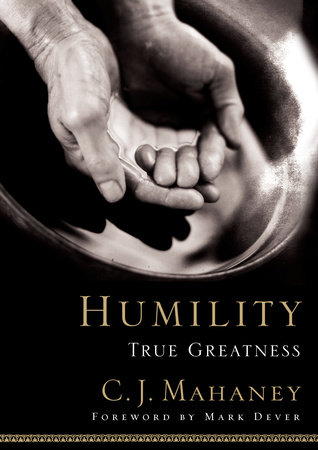
Humility: True Greatness — 2005 Multnomah Hardcover
1590523261
C. J. Mahaney traces the fight between pride and humility through Christ’s cross and turns it into concrete daily practices. Because the book opens from 1 Peter 5:5 and stays focused on resisting pride, receiving grace, and serving others, it closely matches Peter’s call to clothe ourselves with humility.
A Prayer for Humility Under God’s Hand
Father, clothe me with humility and teach me to trust Your hand.
Father, You see how quickly I protect my reputation, resist correction, and reach for control. Clothe me with humility toward the people around me. Help me listen carefully, confess cleanly, and use whatever authority I carry for their good rather than my own importance.
Place my ambitions, fears, and unfinished outcomes under Your mighty hand. Give me courage to do the next faithful thing without forcing the timing or demanding recognition. Thank You for the humility of Christ and for the grace You give to those who depend on You. Amen.




Copyright Notice
Copyright © 2026 Men Building Faith. All rights reserved.
All content on this website, including text, articles, devotionals, blog posts, graphics, logos, designs, photographs, videos, downloads, and other original materials (collectively, “Content”), is owned by Men Building Faith and is protected by U.S. and international copyright laws.
No part of this site may be copied, reproduced, republished, uploaded, posted, publicly displayed, transmitted, distributed, sold, licensed, or otherwise exploited for any purpose without prior written permission from Men Building Faith, except for brief quotations used for noncommercial purposes with proper attribution and a link back to the original page.
NLT- Scripture quotations marked (NLT) are taken from the Holy Bible, New Living Translation, copyright ©1996, 2004, 2015 by Tyndale House Foundation. Used by permission of Tyndale House Publishers, Carol Stream, Illinois 60188. All rights reserved.
NIV- Scripture quotations taken from The Holy Bible, New International Version® NIV® Copyright © 1973, 1978, 1984, 2011 by Biblica, Inc. Used with permission. All rights reserved worldwide.
AMP- Scripture quotations taken from the Amplified® Bible (AMP), Copyright © 2015 by The Lockman Foundation. Used by permission
NKJV- Scripture taken from the New King James Version®. Copyright © 1982 by Thomas Nelson. Used by permission. All rights reserved
ESV- Scripture quotations are from the ESV® Bible (The Holy Bible, English Standard Version®), copyright © 2001 by Crossway Bibles, a publishing ministry of Good News Publishers. Used by permission. All rights reserved.