
Gratitude, Thanksgiving, Trust
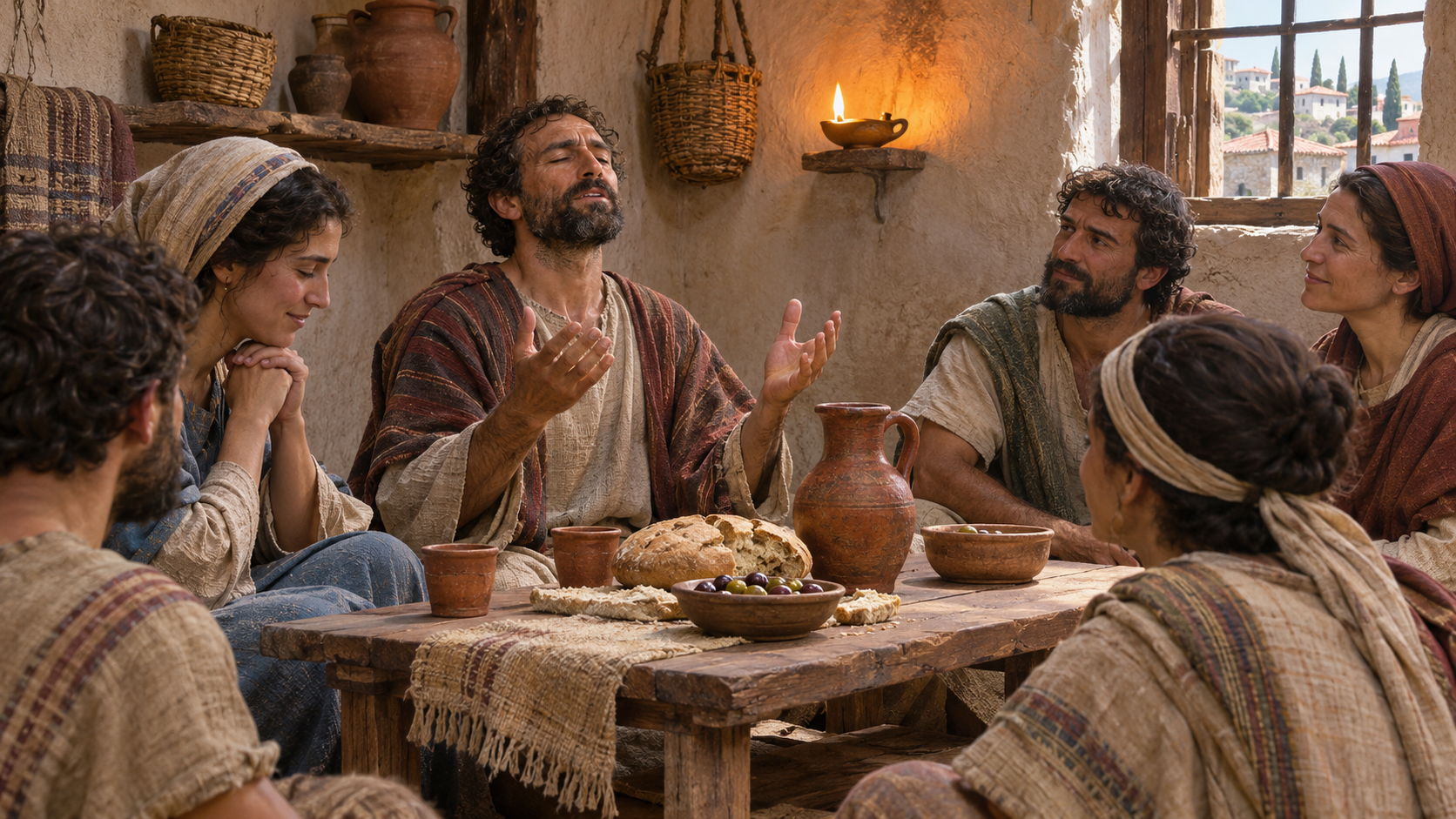
1 Thessalonians 5:18 KJV
In every thing give thanks: for this is the will of God in Christ Jesus concerning you.
You can be thankful for the people around your table and still carry a worry nobody else can see. A holiday does not erase grief, repair every relationship, or make the future certain. Paul’s call to give thanks in every circumstance makes room for a deeper kind of gratitude, one rooted in belonging to Jesus rather than having a trouble-free day. As we read 1 Thessalonians 5:18 in its setting, we can learn to notice gifts we have taken for granted, speak honestly about what hurts, and turn toward God with both our thanks and our need.
Scripture Explained
A holiday can make gratitude feel both natural and difficult. There may be food on the table and someone you love nearby, while a private worry refuses to leave you alone. Paul does not require you to settle every sorrow before giving thanks. His instruction reaches into the whole of life, including days when joy and grief share the same room. Thanksgiving becomes a way of turning toward God with the life you actually have.
Paul writes to believers in Thessalonica, a city in Macedonia, who had received the gospel amid affliction. Near the end of the letter, he calls them to encourage the fainthearted, help the weak, and remain patient. The commands to rejoice, pray, and give thanks stand together within that shared life. They are addressed to a church that needs endurance and mutual care. Gratitude belongs alongside support for struggling people, rather than replacing that support.
The words in every thing describe the circumstances in which thanks is offered. They do not require us to call cruelty good, excuse injustice, or pretend that death is harmless. Paul has already made room for grief in chapter 4, while grounding Christian hope in Jesus’ death and resurrection. Here, thanksgiving is God’s will for people who belong to Christ. Our relationship with him gives us reason to thank God even while we ask for help and lament what hurts.
Think About This
A man can grow so used to carrying responsibilities that he stops noticing how much he receives. A meal is simply expected, a faithful friend becomes part of the background, and forgiveness is remembered mainly when someone else needs to offer it. Gratitude interrupts that habit of entitlement. It helps us see people as gifts to be loved rather than resources to be used, and reminds us that even our ability to work rests on things we did not create.
At the same time, gratitude should never become a demand that a hurting person perform cheerfulness. You may be missing someone at the table, facing illness, or wondering how next month’s bills will be paid. Honest thanks can be small and specific without being shallow. You can thank God for the person who stayed beside you and still tell him that you are afraid. Neither part of that prayer needs to cancel the other.
What Should I Do
Begin with one gift you have nearly stopped seeing. Perhaps someone has quietly handled a recurring task, listened without rushing you, or made room for you after a failure. Tell God exactly what you appreciate, then thank that person in words that name what they did. A specific sentence often carries more care than a general expression of appreciation. Let the person hear how their faithfulness has helped you, without turning the moment into a speech about yourself.
If today is painful, bring the pain into the same prayer. You might say, Father, I miss him, and I thank you for the years we had together. Or admit that the future feels uncertain while thanking God for help already received. The point is not to locate a pleasant explanation for every loss. It is to remain in relationship with the God who hears you. Receive appropriate help from others rather than treating gratitude as a reason to struggle alone.
Choose one ordinary moment as a reminder to practice thanks after the holiday passes. Before a meal, during the drive home, or when you turn out the light, name a mercy from that day. Notice whether your words at home are becoming quicker to recognize help and slower to assume it is owed. When you catch yourself complaining, examine the concern honestly. Some complaints need action, but they can be brought to God without allowing resentment to become your only way of seeing.
Learn More
Read 1 Thessalonians 5:12–24 together, noticing how thanksgiving sits among patience, prayer, discernment, and God’s work of making his people holy. Earlier, 1 Thessalonians 4:13–18 speaks directly to believers who grieve. Holding those passages together guards against a version of gratitude that denies sorrow. The same Lord who receives our thanks also gives hope in loss and calls the church to comfort one another. His faithfulness supports the obedience he asks from us.
Psalm 103:1–5 remembers God’s benefits, while Philippians 4:6–7 brings thanksgiving into prayer about real concerns. Those passages can help you name both what you need and what God has already given. As you finish this day, return to Christ himself: his mercy is not a reward for having a grateful enough attitude. Give thanks for the grace that receives you, then let that grace shape one considerate word or generous action toward someone nearby.




A Prayer for Gratitude in Every Circumstance
Father, thank you for your mercy in Jesus and for the ordinary gifts I too easily overlook. Help me notice the people who care for me and speak my appreciation with honesty. Where grief or worry makes thanks difficult, receive my need as I bring it to you.
Teach me to give thanks without pretending that everything is easy or good. Keep entitlement and resentment from narrowing my sight, and help me receive the care you provide through others. Let your grace lead me toward a considerate word and a generous action today. In Jesus’ name, amen.

Choosing Gratitude: Your Journey to Joy — Nancy DeMoss Wolgemuth (2011 Moody Publishers Paperback)
Nancy DeMoss Wolgemuth explores gratitude as a response to God’s grace, with practical help for noticing gifts and expressing thanks in ordinary life. Its sustained attention to Christian thankfulness directly fits Paul’s call to give thanks in every circumstance, including days when life remains difficult.
0802432557





Copyright Notice
Copyright © 2026 Men Building Faith. All rights reserved.
All content on this website, including text, articles, devotionals, blog posts, graphics, logos, designs, photographs, videos, downloads, and other original materials (collectively, “Content”), is owned by Men Building Faith and is protected by U.S. and international copyright laws.
No part of this site may be copied, reproduced, republished, uploaded, posted, publicly displayed, transmitted, distributed, sold, licensed, or otherwise exploited for any purpose without prior written permission from Men Building Faith, except for brief quotations used for noncommercial purposes with proper attribution and a link back to the original page.
NLT- Scripture quotations marked (NLT) are taken from the Holy Bible, New Living Translation, copyright ©1996, 2004, 2015 by Tyndale House Foundation. Used by permission of Tyndale House Publishers, Carol Stream, Illinois 60188. All rights reserved.
NIV- Scripture quotations taken from The Holy Bible, New International Version® NIV® Copyright © 1973, 1978, 1984, 2011 by Biblica, Inc. Used with permission. All rights reserved worldwide.
AMP- Scripture quotations taken from the Amplified® Bible (AMP), Copyright © 2015 by The Lockman Foundation. Used by permission
NKJV- Scripture taken from the New King James Version®. Copyright © 1982 by Thomas Nelson. Used by permission. All rights reserved
ESV- Scripture quotations are from the ESV® Bible (The Holy Bible, English Standard Version®), copyright © 2001 by Crossway Bibles, a publishing ministry of Good News Publishers. Used by permission. All rights reserved.