
Anxious, Restless, Pressured, Responsible, Grateful, Trusting, Steady, Faithful
1 Timothy 6:6–8 NIV
But godliness with contentment is great gain. For we brought nothing into the world, and we can take nothing out of it. But if we have food and clothing, we will be content with that.
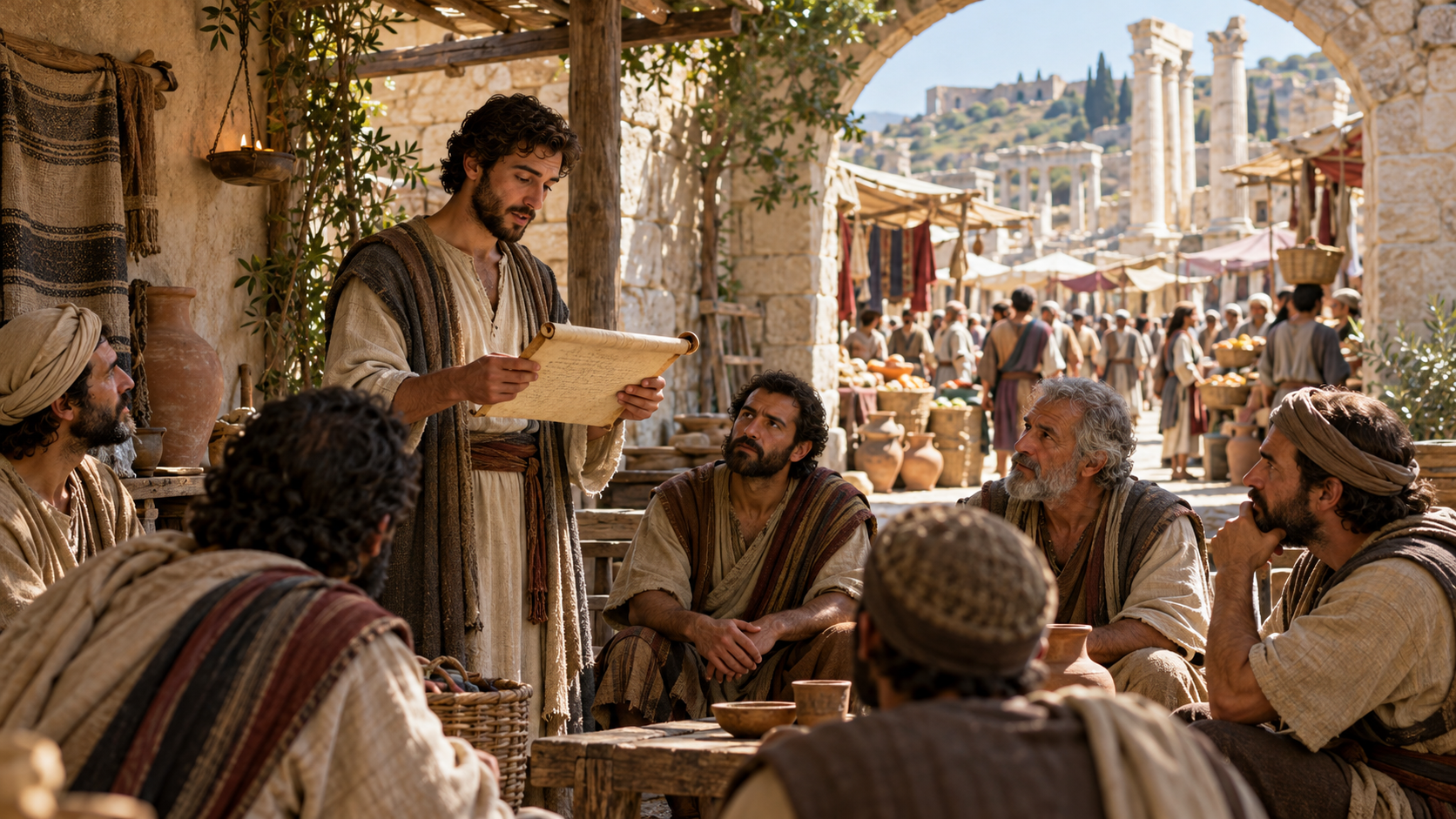
A quiet dissatisfaction can follow a man through an otherwise good day. The bills are paid, dinner is on the table, and people he loves are nearby, yet someone else’s salary, house, or progress still makes his own life feel small. Paul’s words to Timothy do not shame responsible ambition or careful provision. They expose the lie that one more purchase, promotion, or measure of recognition will finally settle the heart. In 1 Timothy 6:6–8, contentment grows alongside godliness as a man learns to receive ordinary provision with gratitude and hold every possession with open hands.
Scripture Explained
Discontent rarely announces itself as greed. It often sounds respectable: I am only trying to provide better or prove my work has counted. Paul answers that pressure by changing the definition of gain. The wealth worth pursuing is a life shaped by God and steadied by contentment, not a life whose peace rises and falls with income, possessions, or approval.
The letter addresses Timothy’s work among believers in Ephesus, where false teaching had disturbed the church. Paul describes people who imagined godliness was a means to financial gain. His answer is not that godliness has no profit, but that its true gain is joined to contentment. Faith is not a technique for getting more from God. It teaches us to treasure God without making his gifts into masters.
Verses 7 and 8 place every financial question between birth and death. A man enters the world with nothing in his hands and leaves it the same way. Food and clothing name basic provision, not an exhaustive household budget. Paul is not forbidding savings, a home, or thoughtful care for a family. Later, he tells believers with wealth to enjoy God’s provision, do good, and share rather than trust in riches.
Contentment is neither laziness nor denial. Scripture calls a man to work diligently, pay what he owes, plan wisely, and meet real needs without making “more” the condition of peace. The text does not promise comfortable circumstances, and it should never be used to dismiss hunger, exploitation, or hardship. It confronts the restless belief that possessions can carry the weight of identity, security, and hope.
Think About This
Providing for others is an honorable responsibility. Trouble begins when provision becomes a private verdict on a man’s worth. A slow month, an aging car, or a friend’s promotion can feel like evidence that he is falling behind. Contentment allows honest concern without letting comparison rewrite the story. A paycheck is a tool, not a name, and faithful work still matters when no one is impressed.
Notice what happens inside you when another man receives something you want. Gratitude may compete with envy, embarrassment, or an urge to prove yourself. Those reactions do not need spiritual camouflage. Bring them into prayer. Contentment grows as the heart tells the truth and learns again that Christ, daily bread, meaningful relationships, and opportunities to do good are not small gifts.
What Should I Do
Begin with a clear inventory of God’s present provision. Name the people, responsibilities, abilities, and ordinary comforts you would grieve if they disappeared tomorrow. Gratitude does not pretend every circumstance is easy; it refuses to let what is missing erase what has been given. Share part of that inventory with your wife, a trusted friend, or a brother in Christ so thankfulness becomes spoken practice.
Look closely at purchases, subscriptions, and goals that promise emotional relief. Before spending, ask what you expect the item to settle: boredom, insecurity, exhaustion, status, or a real need. A budget becomes an act of discipleship when it reflects honest priorities rather than image management. If debt or financial pressure is serious, seek wise help early. Contentment does not replace a plan; it helps you make one without panic or shame.
Choose one act of generosity that interrupts self-protection without neglecting your household. You might quietly meet a need, support your church, or give useful time and skill. Generosity loosens the grip of possessions by turning money from a measure of worth into a means of love. In 1 Timothy 6:17–19, Paul joins enjoyment, good works, and sharing, showing that open hands belong to a contented life.
Set a boundary around comparison. Step away from accounts that turn each evening into a showroom of other people’s success, or from conversations built on salaries, brands, and status. Give attention to the work and people entrusted to you. Ask God for ambition that serves rather than competes: a desire to grow in skill, provide faithfully, and become generous without needing another man’s life to look smaller.
Learn More
Philippians 4:11–13 shows Paul learning contentment in plenty and need through Christ’s strength; it is not a promise of unlimited achievement. Hebrews 13:5 connects freedom from the love of money with God’s presence. Matthew 6:19–34 directs anxious hearts toward the Father who knows their needs, while Proverbs 30:8–9 asks for neither poverty nor riches. Together, these passages give contentment a foundation and wise boundaries.
Return to the rest of 1 Timothy 6. Verses 9 and 10 warn about the desire to be rich, not money as an object, and verses 17–19 address those who already possess wealth. The chapter leaves room for enjoyment, work, saving, and generosity, but not for arrogance or misplaced hope. A contented man can pursue growth and carry responsibility while resting his deepest security in the God who provides and remains.




A Prayer for a Contented and Faithful Heart
Father, you have given me more reasons for gratitude than I usually notice. Forgive me for measuring my life against another man’s income, possessions, or progress, and for asking created things to give me the security only you can provide. Teach me to receive today’s provision with humility and to trust you when the future feels uncertain.
Give me wisdom to work, plan, spend, save, and provide faithfully without being ruled by fear or status. Make me generous with what you place in my hands, attentive to the needs around me, and honest about the desires beneath my choices. Let godliness and contentment grow together in me so that my peace rests in Christ rather than in having more. Amen.
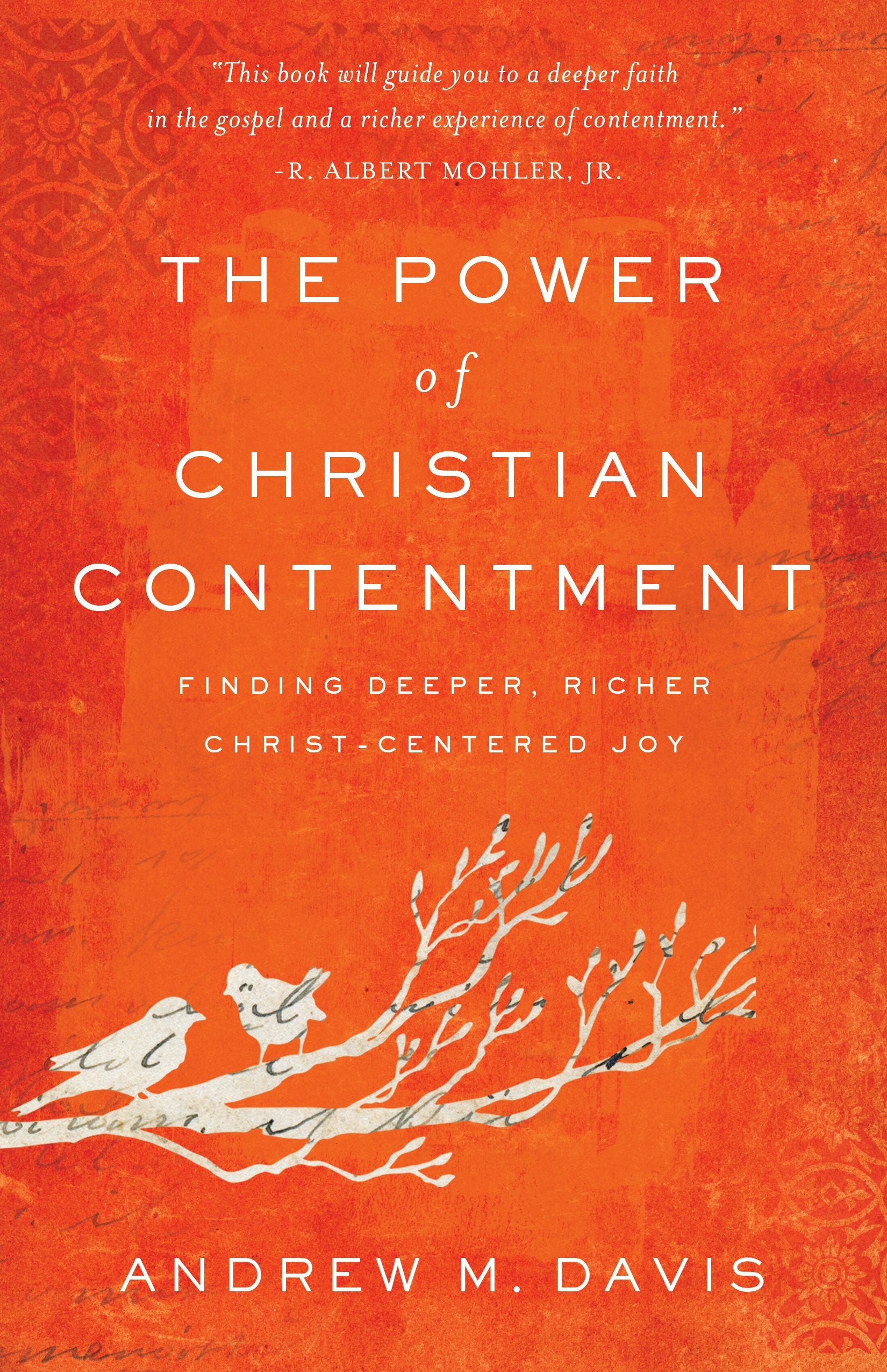
The Power of Christian Contentment: Finding Deeper, Richer Christ-Centered Joy
Andrew M. Davis explores how Christian contentment grows from the gospel rather than from improved circumstances. This 2019 Baker Books paperback addresses comparison, restless desire, gratitude, and Christ-centered joy, making it a direct companion to Paul’s teaching that godliness joined with contentment is true gain.
0801093880



Copyright Notice
Copyright © 2026 Men Building Faith. All rights reserved.
All content on this website, including text, articles, devotionals, blog posts, graphics, logos, designs, photographs, videos, downloads, and other original materials (collectively, “Content”), is owned by Men Building Faith and is protected by U.S. and international copyright laws.
No part of this site may be copied, reproduced, republished, uploaded, posted, publicly displayed, transmitted, distributed, sold, licensed, or otherwise exploited for any purpose without prior written permission from Men Building Faith, except for brief quotations used for noncommercial purposes with proper attribution and a link back to the original page.
NLT- Scripture quotations marked (NLT) are taken from the Holy Bible, New Living Translation, copyright ©1996, 2004, 2015 by Tyndale House Foundation. Used by permission of Tyndale House Publishers, Carol Stream, Illinois 60188. All rights reserved.
NIV- Scripture quotations taken from The Holy Bible, New International Version® NIV® Copyright © 1973, 1978, 1984, 2011 by Biblica, Inc. Used with permission. All rights reserved worldwide.
AMP- Scripture quotations taken from the Amplified® Bible (AMP), Copyright © 2015 by The Lockman Foundation. Used by permission
NKJV- Scripture taken from the New King James Version®. Copyright © 1982 by Thomas Nelson. Used by permission. All rights reserved
ESV- Scripture quotations are from the ESV® Bible (The Holy Bible, English Standard Version®), copyright © 2001 by Crossway Bibles, a publishing ministry of Good News Publishers. Used by permission. All rights reserved.