
Hopeless, Overwhelmed, Burdened, Exhausted, Fragile, Honest, Dependent, Relieved, Hopeful, Steady
2 Corinthians 1:8–10 ESV
For we do not want you to be unaware, brothers, of the affliction we experienced in Asia. For we were so utterly burdened beyond our strength that we despaired of life itself. Indeed, we felt that we had received the sentence of death. But that was to make us rely not on ourselves but on God who raises the dead. He delivered us from such a deadly peril, and he will deliver us. On him we have set our hope that he will deliver us again.

There are seasons where a man is not just tired; he is convinced he cannot carry one more thing and honestly wonders if life is even worth it. Paul does not hide from that kind of despair, he says straight out that he and his team “despaired of life itself” and felt like they had already heard their death sentence. This scripture refuses the lie that real men never hit that wall and instead shows how even an apostle found himself beyond his own strength. It also explains something most of us only see in hindsight, that God sometimes lets us reach the end of ourselves so that we finally lean all our weight on him. When you feel hopeless, this passage does not shame you, it names what is happening and points you toward the only place your hope can safely rest.
Scripture Explained
Paul writes this letter to the church in Corinth after a brutal stretch of ministry where he has faced pressure, opposition, and what felt like near‑death experiences in the province of Asia. He does not give all the details, but his words make it clear that whatever he went through pushed him past what he thought he could endure. When he says they “despaired of life itself,” he is not using poetic language; he is admitting that he and his team felt there was no way out and no strength left.
In that dark place, Paul learns something he could not have learned from comfort alone. He says this happened so that they would “rely not on ourselves but on God who raises the dead,” which means their hopelessness exposed how much they had still been leaning on their own stamina, plans, and resilience. The God they turned to in that moment is not a vague force but the one who raises the dead, the only one who can step into situations that feel final and impossible. Out of that experience, Paul can now say with clarity that God has delivered them before, will deliver them again, and is the one on whom they have set their hope.
Think About This
A man lies awake at 2 a.m., staring at the ceiling, doing silent math in his head. The numbers do not work, the deadlines are stacked, and the weight on his chest feels like it is not going anywhere. He has prayed before, but tonight it feels like there is nothing left to say and no way the situation can turn in time. The thought he never says out loud slips in, that maybe everyone would be better off if he just was not here to keep failing.
He gets up, walks quietly to the living room, and sits in the dark with his head in his hands. For a while he just sits there, feeling the heaviness and the shame of even thinking what he just thought. Then, almost out of desperation, he whispers, “God, I have nothing. If you do not help me, I am done.” He is still tired, the numbers have not changed, and the week ahead is still stacked, but something shifts as he admits that he is beyond his own strength and asks the God who raises the dead to carry what he cannot.
What Should I Do
If this passage feels like it is reading your mail, start by dropping the act with God. Tell him plainly where you feel “utterly burdened beyond your strength,” whether that is finances, marriage, temptation, mental health, or the pressures of work and leadership. You do not need to clean it up for him; Paul did not. Your first act of reliance is to stop pretending you are fine and bring the reality of your hopelessness into his presence.
Next, ask God to show you where you have been relying almost entirely on your own grit, intelligence, or problem‑solving, treating him as backup instead of the main support. As he brings those areas to mind, confess that and deliberately shift the weight by praying specific, direct prayers like, “God, I cannot carry this, I am asking you to.” At the same time, reach out to at least one trusted brother and tell him honestly where you are, letting him pray with you and help you think through practical steps so you are not carrying this alone. As you walk forward, keep choosing to place your hope not in a quick fix or your next idea but in the God who has already delivered you in the past and promises he will deliver you again.
Learn More
2 Corinthians 1 opens with comfort and moves straight into this story of pressure and despair, tying your deepest pain to God’s ability to comfort and rescue. As you read verses 3–11 together, notice how often Paul talks about affliction and comfort in the same breath, and how central God’s character as “the Father of mercies and God of all comfort” becomes in that tension. Let this passage reshape how you see your own desperate seasons, not as proof that God has abandoned you, but as invitations to rely more fully on the God who raises the dead and has not finished delivering you yet.
When you feel beyond your strength
Paul says he was “utterly burdened beyond our strength” and “despaired of life itself,” language that matches what many men now describe as burnout, breakdown, or feeling done. That experience did not mean he lacked faith; it was the moment that exposed the limits of his own resilience and made clear he could not muscle through on his own.
Why God allows that kind of pressure
Paul writes that this happened “to make us rely not on ourselves but on God who raises the dead,” framing his despair as God’s tool to strip away self‑reliance. Teachers note that this is not God being cruel but God forcing his servant onto a foundation that cannot collapse, because resurrection power is stronger than any circumstance or feeling.
How this shapes your hope going forward
Because Paul saw God deliver him from what felt like a death sentence, he can say, “He has delivered us… and he will deliver us. On him we have set our hope.” For a man today, that means your darkest season can become a concrete memory of God’s help, something you look back on when new pressure comes and say, “He has carried me before, and he will carry me again.”



When Life Feels Too Heavy
Lord, you see where I feel done, hopeless and out of options. I confess I have tried to push through in my own strength and I am at the end of it. I choose today to rely on you, the God who raises the dead, and I ask you to carry me and deliver me in the places I cannot fix. In Jesus’ name, Amen.
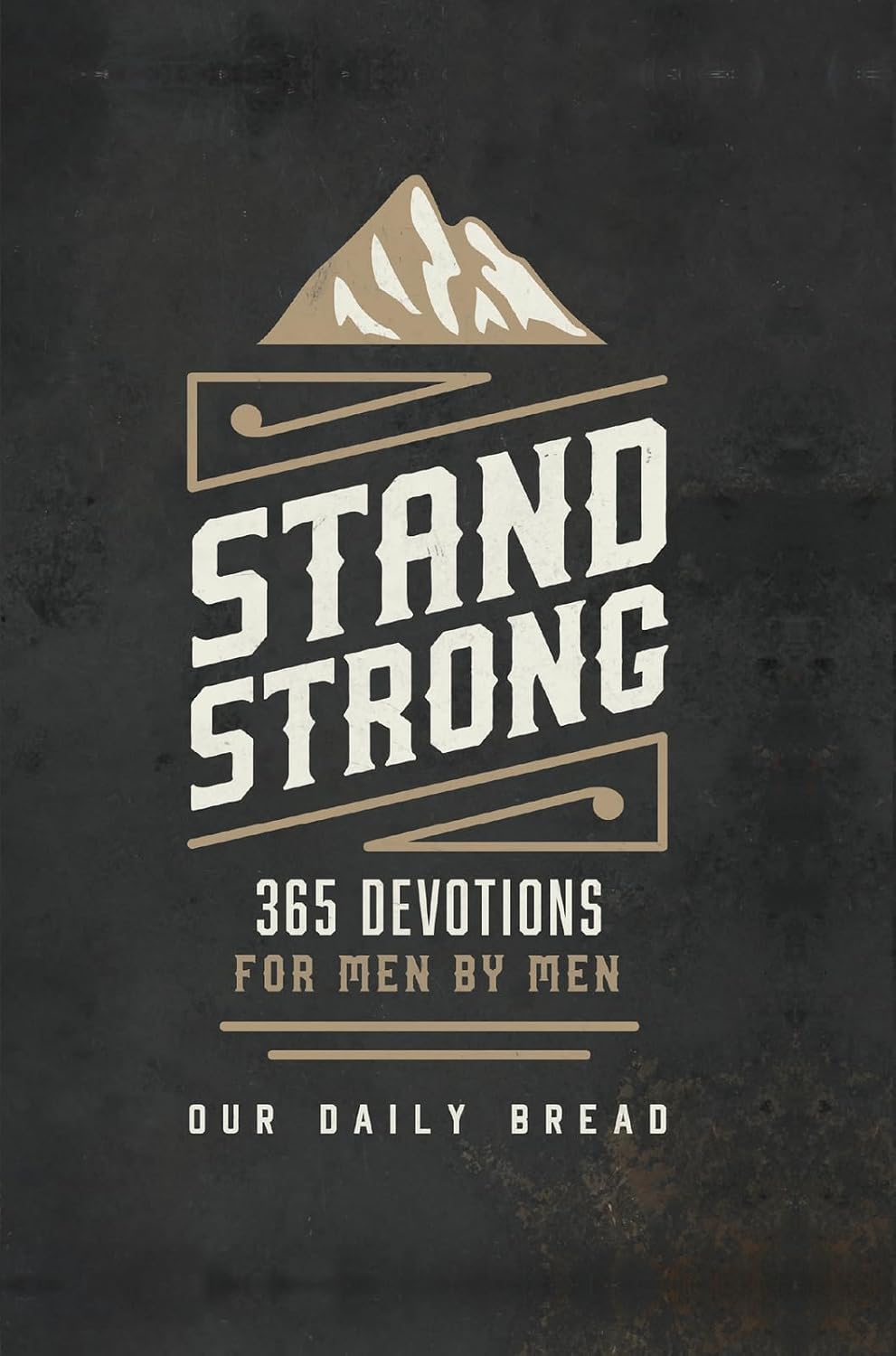
Stand Strong: 365 Devotions for Men by Men
Written by men for men, this devotional offers practical biblical encouragement for facing pressure, temptation, uncertainty, and everyday responsibilities with steady faith. It helps men face overwhelming pressure with honest dependence on God rather than pretending they are always strong.
1627079009

Copyright Notice
Copyright © 2026 Men Building Faith. All rights reserved.
All content on this website, including text, articles, devotionals, blog posts, graphics, logos, designs, photographs, videos, downloads, and other original materials (collectively, “Content”), is owned by Men Building Faith and is protected by U.S. and international copyright laws.
No part of this site may be copied, reproduced, republished, uploaded, posted, publicly displayed, transmitted, distributed, sold, licensed, or otherwise exploited for any purpose without prior written permission from Men Building Faith, except for brief quotations used for noncommercial purposes with proper attribution and a link back to the original page.
NLT- Scripture quotations marked (NLT) are taken from the Holy Bible, New Living Translation, copyright ©1996, 2004, 2015 by Tyndale House Foundation. Used by permission of Tyndale House Publishers, Carol Stream, Illinois 60188. All rights reserved.
NIV- Scripture quotations taken from The Holy Bible, New International Version® NIV® Copyright © 1973, 1978, 1984, 2011 by Biblica, Inc. Used with permission. All rights reserved worldwide.
AMP- Scripture quotations taken from the Amplified® Bible (AMP), Copyright © 2015 by The Lockman Foundation. Used by permission
NKJV- Scripture taken from the New King James Version®. Copyright © 1982 by Thomas Nelson. Used by permission. All rights reserved
ESV- Scripture quotations are from the ESV® Bible (The Holy Bible, English Standard Version®), copyright © 2001 by Crossway Bibles, a publishing ministry of Good News Publishers. Used by permission. All rights reserved.