
Unsure, Responsible, Teachable, Called to Lead
2 Timothy 2:15 NIV
Do your best to present yourself to God as one approved, a worker who does not need to be ashamed and who correctly handles the word of truth.
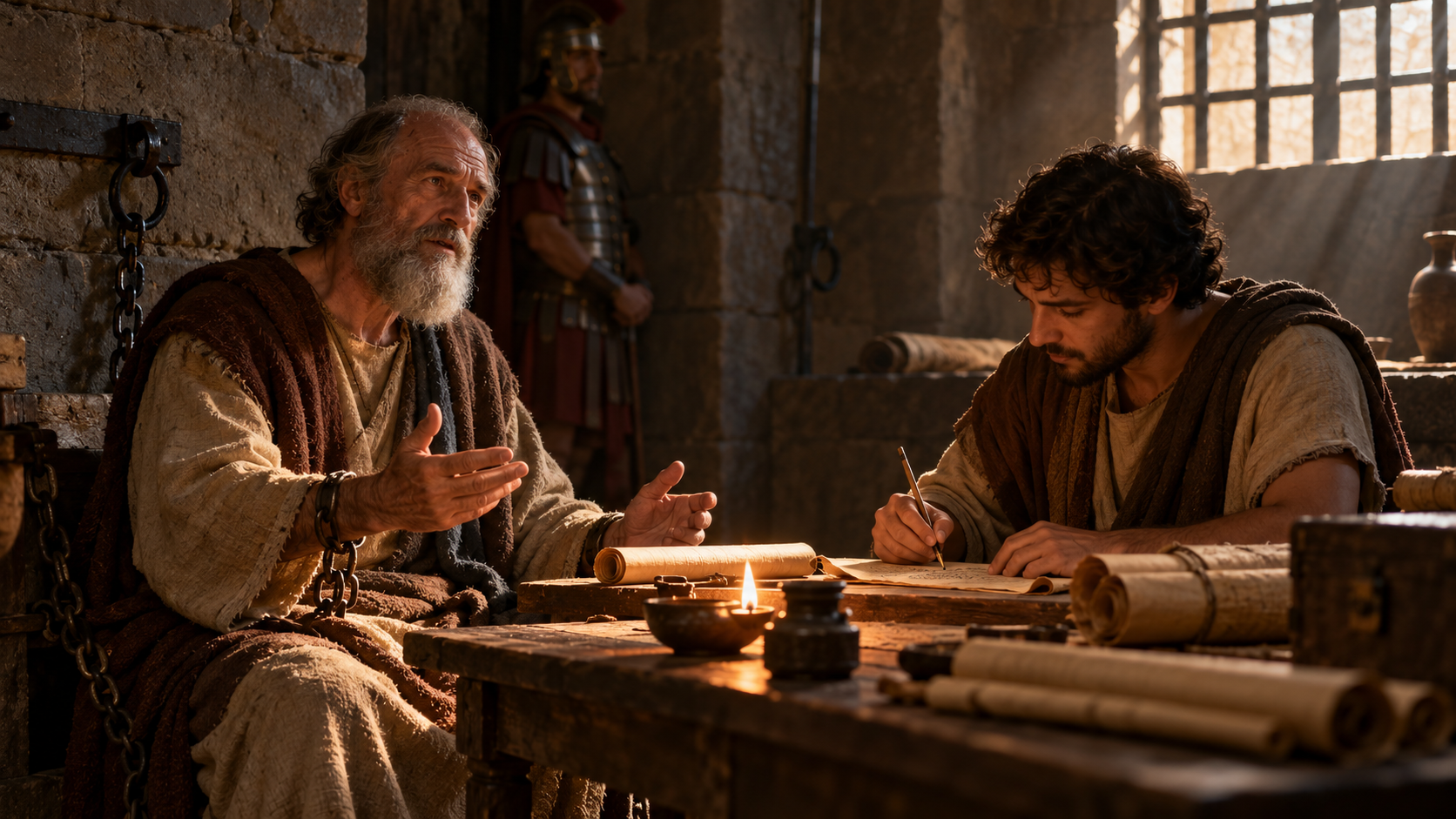
A man can repeat a Bible phrase and still miss the weight of what God is saying. That danger grows when people trust our judgment—at home, in a small group, or across a workbench conversation. Paul urges Timothy to become a workman whose careful handling of truth can stand before God without shame. The call is not reserved for pastors. It reaches every man who opens Scripture, forms an opinion, and passes that understanding to someone else. Faithful study asks for patience, humility, and the courage to let the text correct us before we use it to correct another person.
Scripture Explained
A man can speak confidently about the Bible and still avoid the patient work of understanding it. Paul’s charge addresses that gap between familiarity and faithfulness: Timothy must present himself to God as an approved worker who correctly handles truth. The audience that finally matters is God. His aim is not to sound impressive, win an argument, or borrow another teacher’s certainty, but to serve as a tested workman whose treatment of God’s message can bear honest examination.
Second Timothy presents Paul as a prisoner expecting that his ministry and life are nearing their end. Christians have long understood it as his final letter from Roman custody, although the letter does not name the prison or date, and scholars debate aspects of authorship and setting. Within the document, an older servant urgently entrusts the gospel to a younger leader. Timothy must preserve what he received and pass it to reliable teachers while hardship and false teaching press against the church.
The surrounding verses sharpen the meaning. Paul warns against word quarrels that ruin hearers, then names teachers whose claims about the resurrection were disturbing people’s faith. Correct handling therefore involves more than accurate definitions. The phrase can suggest cutting a straight path, but Paul’s emphasis is practical: Timothy must teach the apostolic message without twisting it, refuse fruitless controversy, and embody a servant’s character—kind, patient, and able to instruct opponents gently.
That balance guards us from two errors. Careful interpretation does not permit pride or combativeness, and warm sincerity does not permit making a passage mean whatever feels useful. God’s Word deserves both attention and obedience. We read sentences in their literary and historical setting, follow the author’s argument, compare related Scriptures, and ask how truth leads toward Christlike faithfulness. Then we submit ourselves to what we understand instead of using the Bible to manage other people.
Think About This
Many men learn to operate under pressure by reaching for a quick answer. At work, decisiveness can prevent delay; at home, it can feel responsible to settle a question immediately. Scripture study often requires a different pace. A familiar verse may be true, yet our use of it can still be careless when we ignore its context. Are we willing to say, “I need to look at that more closely,” when someone expects certainty from us?
Notice where shame appears in Paul’s charge. He does not tell Timothy to avoid the embarrassment of admitting uncertainty. Shame belongs to work that will not stand before God because truth was handled carelessly. Humility is part of competence. A faithful man distinguishes what the text states plainly from a reasonable conclusion and acknowledges where Christians disagree. That honesty protects people from our overconfidence and keeps our own heart teachable.
What Should I Do
Choose one passage you may discuss this week and read more than the single verse. Identify who is speaking, to whom, and why. Trace the paragraph’s main thought and ask what problem or promise the author addresses. Use cross-references after listening to the immediate context, not as an escape from it. If a study note or sermon helps, return to the text and explain the connection in your own words.
Before teaching your children, leading a group, or counseling a friend, test both your interpretation and your spirit. Can you show where the idea comes from? Does it fit Scripture’s wider witness? Have you allowed the truth to expose your own sin or fear? A man eager to correct others but resistant to correction has not handled the Word well, no matter how many facts he has gathered.
Make careful study a shared practice instead of a private performance. Ask a mature believer to question your conclusions. When you discover that you used a passage poorly, correct it plainly. That admission may feel costly when others look to you for leadership, but it builds trustworthy authority. The goal is not to become a man who never needs help. It is to become a workman who returns to God’s truth with diligence, honesty, and a willingness to be changed.
Learn More
Read 2 Timothy 2:14–26 as a whole and watch how sound teaching, holiness, and gentleness belong together. Acts 17:11 commends the Bereans for examining Scripture daily, while James 3:1 warns that teachers will be judged more strictly. Nehemiah 8:8 shows the law read clearly and its meaning explained. Bible study is neither an academic hobby nor a search for private inspiration; it is responsible service to God and our neighbors.
Peter Krol’s Knowable Word develops a practical rhythm of observing what a passage says, interpreting its author’s point, and applying that truth in light of Christ. Begin with the paragraph around 2 Timothy 2:15. Write one sentence for each step, then name one action the passage requires before you explain it to anyone else. Over time, that quiet discipline can shape how you lead conversations, answer questions, and carry God’s Word where people already trust your voice.




A Prayer to Handle God’s Word Faithfully
Father, make me a careful and humble workman. Slow me down when I want a quick answer, teach me to listen to your Word in context, and let its truth correct my own heart before I speak it to anyone else.
Guard me from pride, careless claims, and arguments that do not help. Give me courage to admit what I do not know, diligence to study well, and gentleness to handle your truth in a way that honors Christ. Amen.
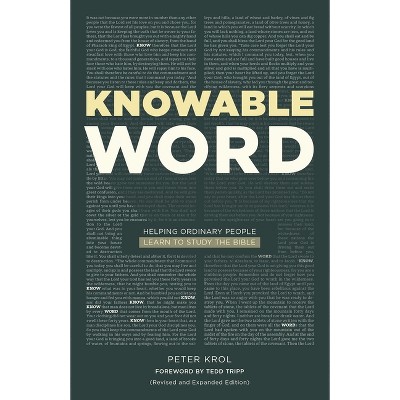
Knowable Word: Helping Ordinary People Learn to Study the Bible, Second Edition, Revised and Expanded — Peter Krol
Peter Krol gives ordinary readers a practical method for observing, interpreting, and applying Scripture while following an author’s argument and reading each passage in its wider context. The revised and expanded second edition fits 2 Timothy 2:15 directly because it helps a man move from quick impressions to careful, accountable handling of God’s Word.
1949253333

Teen to Teen: 365 Daily Devotions by Teen Guys for Teen Guys
A full year of Scripture-centered devotions written by teen guys for teen guys facing real-life pressures.

The Elijah Mandate: Biblical Courage from the Prophet Elijah for Standing Firm in a Compromising Culture
A biblical call to stand for truth, endure opposition, and discern God's direction through Elijah's example.
One-Minute Prayers for Young Men: Christian Prayer Devotional for Teen Boys Building Faith, Character, and Daily Prayer Habits
Brief, focused prayers help teen boys and young men build faith, character, purpose, and daily prayer habits.

The Stones Cry Out: Biblical Archaeology, Prophecy, and the Last Days
An evidence-focused tour of archaeological finds that illuminate biblical history and its prophetic claims.
The Jesus Discoveries: 10 Historic Finds That Bring Us Face-to-Face with Jesus
Ten archaeological and manuscript discoveries build an accessible historical case for Jesus and the gospel accounts.
Copyright Notice
Copyright © 2026 Men Building Faith. All rights reserved.
All content on this website, including text, articles, devotionals, blog posts, graphics, logos, designs, photographs, videos, downloads, and other original materials (collectively, “Content”), is owned by Men Building Faith and is protected by U.S. and international copyright laws.
No part of this site may be copied, reproduced, republished, uploaded, posted, publicly displayed, transmitted, distributed, sold, licensed, or otherwise exploited for any purpose without prior written permission from Men Building Faith, except for brief quotations used for noncommercial purposes with proper attribution and a link back to the original page.
NLT- Scripture quotations marked (NLT) are taken from the Holy Bible, New Living Translation, copyright ©1996, 2004, 2015 by Tyndale House Foundation. Used by permission of Tyndale House Publishers, Carol Stream, Illinois 60188. All rights reserved.
NIV- Scripture quotations taken from The Holy Bible, New International Version® NIV® Copyright © 1973, 1978, 1984, 2011 by Biblica, Inc. Used with permission. All rights reserved worldwide.
AMP- Scripture quotations taken from the Amplified® Bible (AMP), Copyright © 2015 by The Lockman Foundation. Used by permission
NKJV- Scripture taken from the New King James Version®. Copyright © 1982 by Thomas Nelson. Used by permission. All rights reserved
ESV- Scripture quotations are from the ESV® Bible (The Holy Bible, English Standard Version®), copyright © 2001 by Crossway Bibles, a publishing ministry of Good News Publishers. Used by permission. All rights reserved.