
Hurting, Impatient, Overlooked, Defensive, Compassionate, Kind, Humble, Gentle, Patient, Ready to Serve
Colossians 3:12 NIV
Therefore, as God’s chosen people, holy and dearly loved, clothe yourselves with compassion, kindness, humility, gentleness and patience.
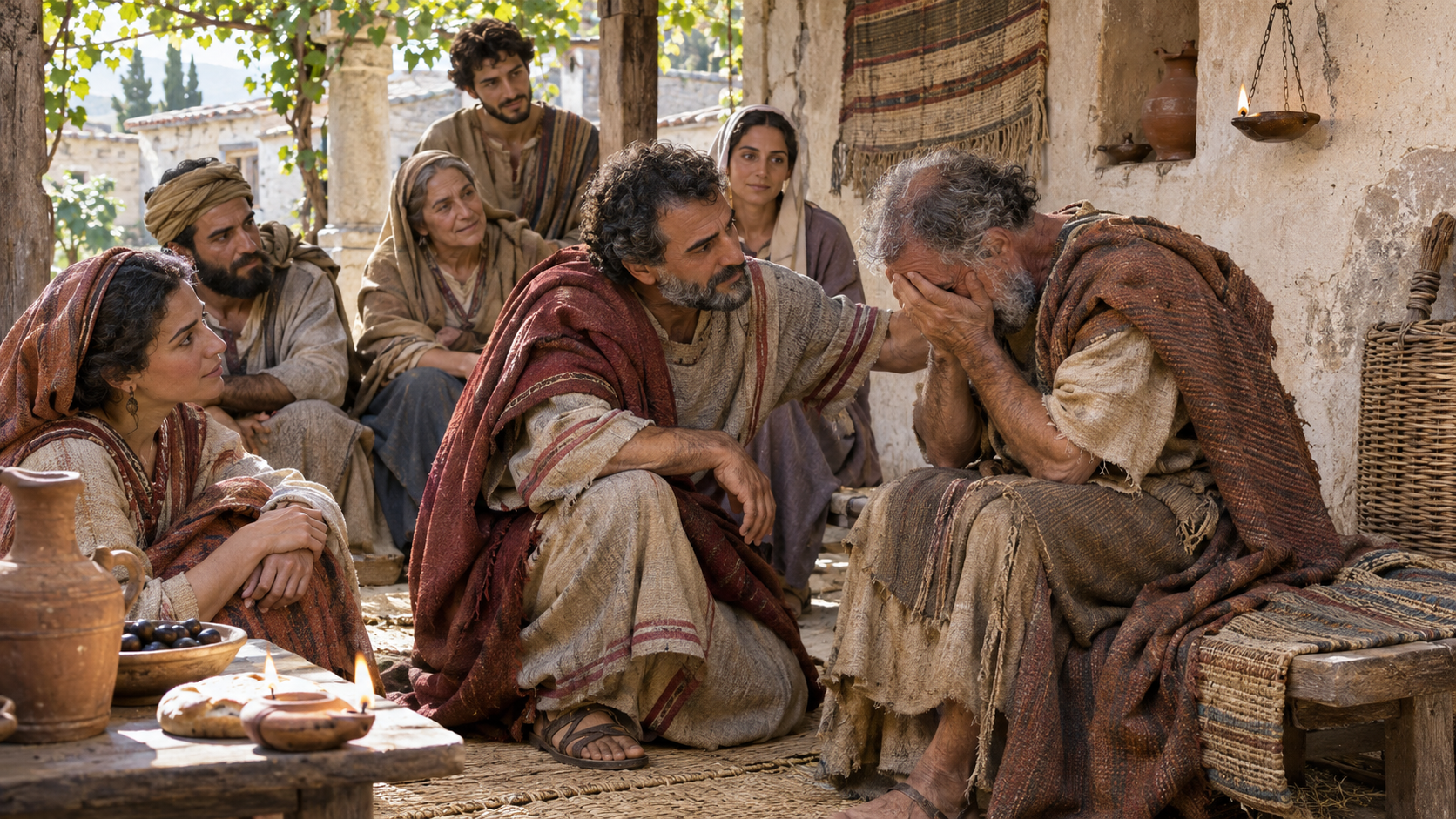
Compassion is easy to admire and much harder to wear when a conversation turns tense, a coworker disappoints us, or someone at home needs patience we feel we have already spent. Paul speaks to that ordinary pressure by reminding believers who they are before telling them how to live: chosen, set apart, and dearly loved by God. From that secure identity, a man can meet another person’s pain without rushing past it or trying to control it. Colossians 3:12 invites us to let Christ reshape the way we listen, respond, and stay present.
Scripture Explained
Pressure has a way of exposing what a man reaches for first. When another person’s need interrupts a crowded day, efficiency can crowd out mercy. Paul writes into that ordinary strain, but he does not begin with a demand to become nicer. He begins with identity: God has chosen his people, set them apart, and loved them. Compassion grows from receiving that love, not from proving that we are good men.
Colossians 3:12 belongs to a larger movement in the letter. Earlier in the chapter, believers are told to set their minds on Christ and to put to death the practices of the old life. Paul then describes the new self, renewed in the image of its Creator, where social divisions no longer determine a person’s worth. The command to clothe ourselves follows that change of identity. These qualities are the fitting clothing of people whose life is now joined to Christ.
The letter is addressed to Christians in Colossae, a city in Roman Asia Minor, and it names Paul and Timothy at the opening. Epaphras had served this church and brought news of its faith and love. The text does not give every detail about the congregation’s setting or each reader’s circumstances, so we should not invent them. We can say responsibly that these instructions were meant for a real community learning to live together under Christ’s rule amid the pressures and status differences of the Roman world.
Compassion here is joined to kindness, humility, gentleness, and patience. The next sentence speaks of bearing with one another and forgiving as the Lord forgave, which shows compassion taking shape when relationships become costly. The verse does not ask men to ignore sin, avoid necessary truth, or remain in unsafe situations. It calls us to approach people without contempt, remembering that the mercy we extend is rooted in the mercy we have received.
Think About This
Many men have learned to treat another person’s pain as a problem to solve quickly. Advice can be useful, but it can also become a way of escaping the discomfort of listening. A friend carrying grief may need someone willing to remain in the room when there is nothing clever to say. Compassion slows us enough to notice the person standing behind the problem.
Paul places God’s description of his people before his instruction about their conduct: chosen, holy, and dearly loved. That order matters when compassion feels costly. We do not have to protect our image by winning every exchange or distancing ourselves from weakness. At the same time, compassion is not passivity. Jesus could be tender with the suffering and clear about truth. A compassionate man can set a boundary, confront harm, or make a difficult decision while refusing to humiliate the person in front of him.
What Should I Do
Begin at home, where patience is tested without an audience. Choose one conversation today in which you will put down the phone, stop preparing your answer, and listen for what the other person is carrying. Ask a simple question such as, “What has been hardest about this?” Then let the answer breathe. If correction is needed, speak it after you have shown that the relationship matters more than your need to be right.
At work or church, pay attention to the person who is usually overlooked: the quiet employee, the exhausted volunteer, or the man whose recent mistakes have made others impatient. Compassion may look like sharing a burden, giving clear feedback without sarcasm, or checking in privately instead of discussing him with others. Do not promise what you cannot provide. Offer one concrete act of help, and follow through without making the recipient feel indebted.
Bring your hardest relationship before God by name. Ask where pride, hurry, fear, or old resentment has made your heart less available. If you owe an apology, make it specific and do not attach an excuse. If the situation requires a boundary, decide how to communicate it with clarity and dignity. The aim is not to manufacture warm feelings but to practice the character of Christ in the next faithful action. Clothing is put on deliberately, and so is compassion.
Learn More
Read Colossians 3:1–17 to see the full pattern of putting off the old life and putting on the new. Verse 13 connects these qualities to bearing with and forgiving one another, while verses 15–17 show the peace of Christ, the word of Christ, and gratitude shaping the whole community. Philippians 2:1–8 deepens the call to humility by pointing to Jesus, and Luke 10:25–37 shows mercy crossing social distance in the story of the Good Samaritan.
For a focused companion, Compassion: A Reflection on the Christian Life by Henri J. M. Nouwen, Donald P. McNeill, and Douglas A. Morrison explores compassion as participation in God’s own life rather than mere sentiment. Keep one practical question nearby: whose burden is God asking me to notice without taking control of that person? Pray for patience to listen, humility to serve quietly, and courage to combine mercy with truthful action this week.




A Prayer to Put On Compassion
Father, thank You for calling me chosen, set apart, and dearly loved in Christ. When pressure makes me impatient or distant, clothe me again with compassion, kindness, humility, gentleness, and patience. Help me see the person before the problem and listen without rushing to defend myself or take control.
Teach me to carry Your mercy into my home, work, church, and difficult relationships. Give me courage to speak truth without contempt, wisdom to set healthy boundaries when needed, and faithfulness to follow through on the kindness You place before me. Let the way I treat people make the character of Jesus visible. Amen.
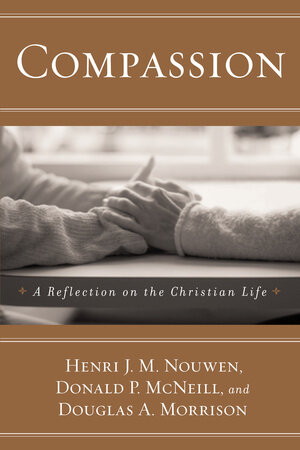
Compassion: A Reflection on the Christian Life — Henri J. M. Nouwen, Donald P. McNeill, and Douglas A. Morrison (Revised Paperback, Image, 2006)
Henri Nouwen, Donald McNeill, and Douglas Morrison move compassion beyond sentiment, tracing it through God’s character, Christian discipleship, prayer, patience, and practical action. That focus makes this revised 2006 paperback a close companion to Colossians 3:12 and its call to put on compassion as part of a believer’s new life in Christ.
0385517521


Copyright Notice
Copyright © 2026 Men Building Faith. All rights reserved.
All content on this website, including text, articles, devotionals, blog posts, graphics, logos, designs, photographs, videos, downloads, and other original materials (collectively, “Content”), is owned by Men Building Faith and is protected by U.S. and international copyright laws.
No part of this site may be copied, reproduced, republished, uploaded, posted, publicly displayed, transmitted, distributed, sold, licensed, or otherwise exploited for any purpose without prior written permission from Men Building Faith, except for brief quotations used for noncommercial purposes with proper attribution and a link back to the original page.
NLT- Scripture quotations marked (NLT) are taken from the Holy Bible, New Living Translation, copyright ©1996, 2004, 2015 by Tyndale House Foundation. Used by permission of Tyndale House Publishers, Carol Stream, Illinois 60188. All rights reserved.
NIV- Scripture quotations taken from The Holy Bible, New International Version® NIV® Copyright © 1973, 1978, 1984, 2011 by Biblica, Inc. Used with permission. All rights reserved worldwide.
AMP- Scripture quotations taken from the Amplified® Bible (AMP), Copyright © 2015 by The Lockman Foundation. Used by permission
NKJV- Scripture taken from the New King James Version®. Copyright © 1982 by Thomas Nelson. Used by permission. All rights reserved
ESV- Scripture quotations are from the ESV® Bible (The Holy Bible, English Standard Version®), copyright © 2001 by Crossway Bibles, a publishing ministry of Good News Publishers. Used by permission. All rights reserved.