
Pressured, Tired, Unnoticed, Responsible, Faithful, Steady, Diligent, Purposeful, Work, Integrity
Colossians 3:23–24 NIV
“Whatever you do, work at it with all your heart, as working for the Lord, not for human masters, since you know that you will receive an inheritance from the Lord as a reward. It is the Lord Christ you are serving.”

Some work is easy to respect because people notice it. Much of a man’s life, though, is spent doing tasks that draw little praise: correcting a mistake before anyone finds it, finishing well when the day has already run long, or serving a customer who may never remember his name. Colossians 3:23–24 reaches into that ordinary pressure and asks a deeper question than whether the boss is pleased. Paul points working men toward Christ, showing how honest effort, proper limits, and steady service can become an expression of worship even in work that feels overlooked.
Scripture Explained
A job can expose what praise has been covering. When the supervisor leaves, the customer cannot inspect the details, or the household takes good work for granted, a man discovers who he believes is watching and why the task matters. Paul does not begin by promising recognition. He redirects the worker’s attention to the Lord Christ, whose presence gives moral weight to work that other people may barely notice.
Colossians presents Jesus as supreme over creation, the church, and every power that claims ultimate authority. By chapter 3, Paul has moved from that grand confession into kitchens, workshops, marriages, families, and household relationships. Verses 23–24 belong to instructions addressed directly to enslaved workers in the Roman world. The command therefore first met people whose labor and freedom were controlled by others, not modern employees choosing among ordinary careers.
That setting must not be softened. Roman slavery could be cruel and dehumanizing, and these words must never be used to excuse trafficking, abuse, wage theft, or unsafe work. Paul does not call evil treatment good. In the next paragraph he tells masters to provide what is right and fair because they also answer to a Master in heaven. Here, enslaved believers are addressed as responsible disciples and promised an inheritance from Christ—language of dignity and belonging in a society that often denied both.
To work “with all your heart” carries the sense of giving oneself sincerely, from the inner person, rather than performing only while someone is watching. The contrast is not between paid employment and church ministry, as though one mattered to God and the other did not. It is between eye-service and Christ-service. A task may remain tiring, repetitive, or poorly managed, yet a Christian man can refuse deception, careless shortcuts, and resentment because his deepest allegiance is no longer controlled by the nearest human authority.
Think About This
Many men have learned to measure a workday by visible results: what was completed, billed, repaired, sold, or praised. Those measures have a place, but they cannot bear the full weight of identity. A slow season, missed promotion, difficult client, or unnoticed contribution can make a man feel smaller than he is. Colossians presses beneath the scorecard. Christ sees the hidden decision to tell the truth, redo weak work, share credit, and serve a person instead of merely processing a task.
The same truth also confronts overwork. Serving Christ does not mean proving worth through endless productivity. If work becomes the place where a man seeks innocence, status, or control, wholehearted effort has quietly become worship of the job. Christ is already Lord before the first task begins, and the promised inheritance comes from him rather than from flawless performance. That frees a man to work diligently, receive correction, admit limits, rest appropriately, and go home without pretending every problem depends on him.
What Should I Do
Begin with one responsibility that has grown dull or irritating. Ask what faithful service would look like if Christ were the one receiving it. The answer may be careful preparation, a returned phone call, an honest invoice, a safer repair, a clean handoff, or an apology for work done poorly. Finish that task without making a show of it. Small acts of thoroughness train the heart to value faithfulness over attention, and they protect the people who live with the consequences of our work.
Bring your motives into the light as well. Are you working mainly to be admired, to outrun anxiety, to avoid conflict at home, or to prove that no one can replace you? A trusted Christian brother can help name what you cannot see alone. Pray before the workday, ask for wisdom when pressure rises, and invite honest feedback from the people affected by your decisions. Wholehearted service includes humility; it is not stubbornly doing more of the same when correction is needed.
If you supervise, hire, or serve customers, remember that verse 24 does not leave authority unexamined. Pay fairly, communicate clearly, provide safe conditions, keep promises, and do not use another person’s faith to demand silence about wrongdoing. If you are being exploited or endangered, seeking pastoral, legal, professional, or emergency help is not a failure of devotion. Christ-service can require a respectful boundary, a documented concern, or a wise departure as surely as it can require perseverance.
Learn More
Read Colossians 3:12–4:1 as one movement from the character of Christ’s people into home and work. Genesis 1:26–28 and 2:15 show that purposeful labor belongs to God’s good creation, while Genesis 3 explains why work now includes frustration. Ephesians 6:5–9 repeats the call to sincere service and warns earthly masters that God shows no favoritism. Proverbs 11:1, Luke 16:10, and 1 Thessalonians 4:11–12 add practical wisdom about honesty, faithfulness, and a credible public life.
Every Good Endeavor: Connecting Your Work to God’s Work by Timothy Keller is a close companion to Colossians 3:23–24 because it explores work as service, stewardship, and participation in God’s care for the world. Keller addresses excellence, ambition, frustration, idolatry, and the difference the gospel makes in ordinary jobs, helping men connect faithful craftsmanship with love of neighbor rather than status or self-justification.




A Prayer for Wholehearted Work
Lord Jesus, you see the work no one notices and the motives I can hide behind good results. Teach me to serve you with a sincere heart, to refuse careless shortcuts, and to remember that my worth rests in you rather than in praise, promotion, or productivity.
Give me strength to work carefully, humility to receive correction, and wisdom to honor proper limits. Help me treat every person affected by my work with fairness and respect, and let the ordinary tasks in front of me become quiet evidence that you are my true Lord. Amen.
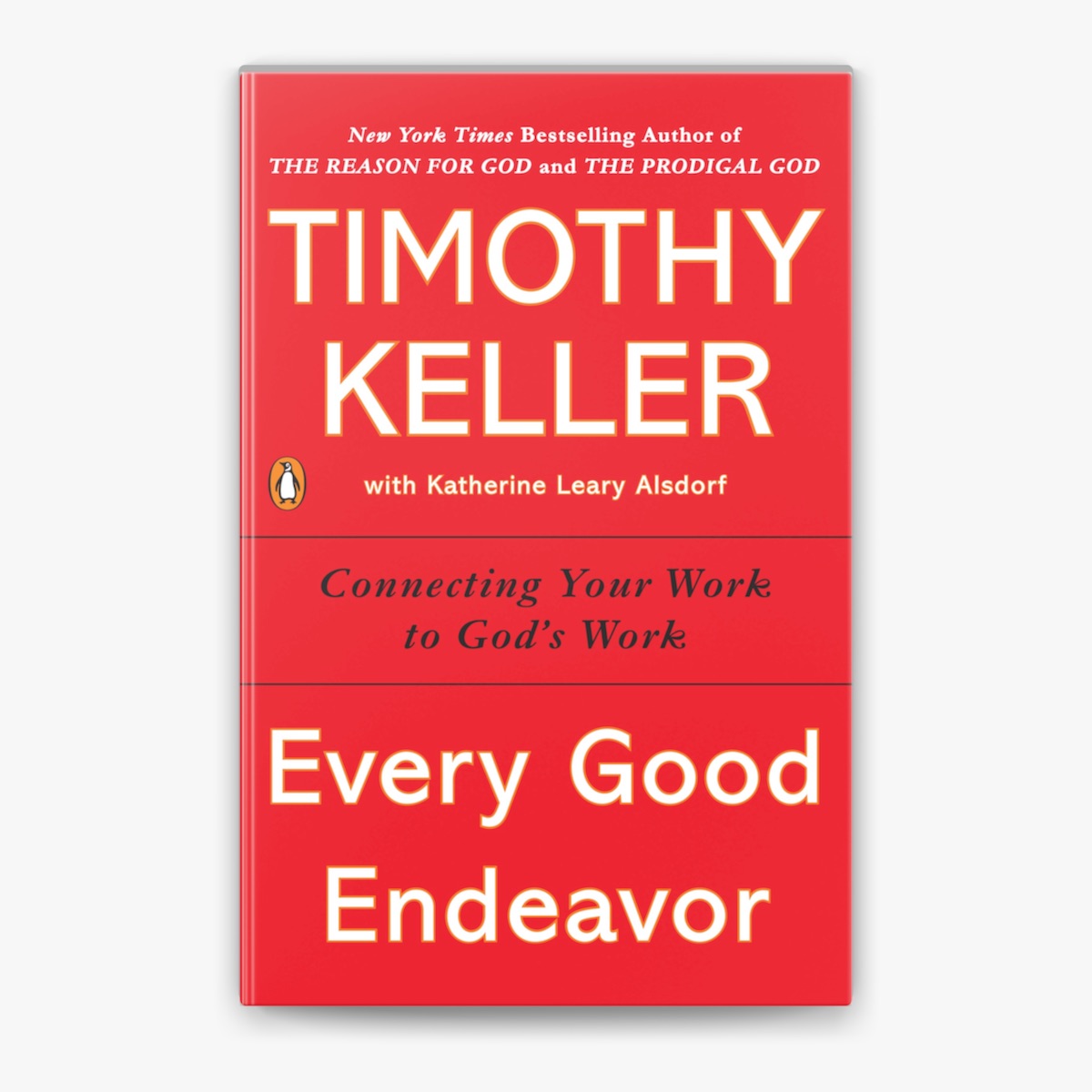
Every Good Endeavor: Connecting Your Work to God's Work by Timothy Keller with Katherine Leary Alsdorf (2014 Penguin Paperback)
Keller shows how the gospel reshapes ambition, excellence, frustration, and purpose in ordinary work. The book closely fits Colossians 3:23–24 because it helps men see craftsmanship and service as love of neighbor under Christ, without turning a career into the source of identity or worth.
1594632820





Copyright Notice
Copyright © 2026 Men Building Faith. All rights reserved.
All content on this website, including text, articles, devotionals, blog posts, graphics, logos, designs, photographs, videos, downloads, and other original materials (collectively, “Content”), is owned by Men Building Faith and is protected by U.S. and international copyright laws.
No part of this site may be copied, reproduced, republished, uploaded, posted, publicly displayed, transmitted, distributed, sold, licensed, or otherwise exploited for any purpose without prior written permission from Men Building Faith, except for brief quotations used for noncommercial purposes with proper attribution and a link back to the original page.
NLT- Scripture quotations marked (NLT) are taken from the Holy Bible, New Living Translation, copyright ©1996, 2004, 2015 by Tyndale House Foundation. Used by permission of Tyndale House Publishers, Carol Stream, Illinois 60188. All rights reserved.
NIV- Scripture quotations taken from The Holy Bible, New International Version® NIV® Copyright © 1973, 1978, 1984, 2011 by Biblica, Inc. Used with permission. All rights reserved worldwide.
AMP- Scripture quotations taken from the Amplified® Bible (AMP), Copyright © 2015 by The Lockman Foundation. Used by permission
NKJV- Scripture taken from the New King James Version®. Copyright © 1982 by Thomas Nelson. Used by permission. All rights reserved
ESV- Scripture quotations are from the ESV® Bible (The Holy Bible, English Standard Version®), copyright © 2001 by Crossway Bibles, a publishing ministry of Good News Publishers. Used by permission. All rights reserved.