
Family, Leadership, Faith
Deuteronomy 6:6–7 NIV
These commandments that I give you today are to be on your hearts. Impress them on your children. Talk about them when you sit at home and when you walk along the road, when you lie down and when you get up.
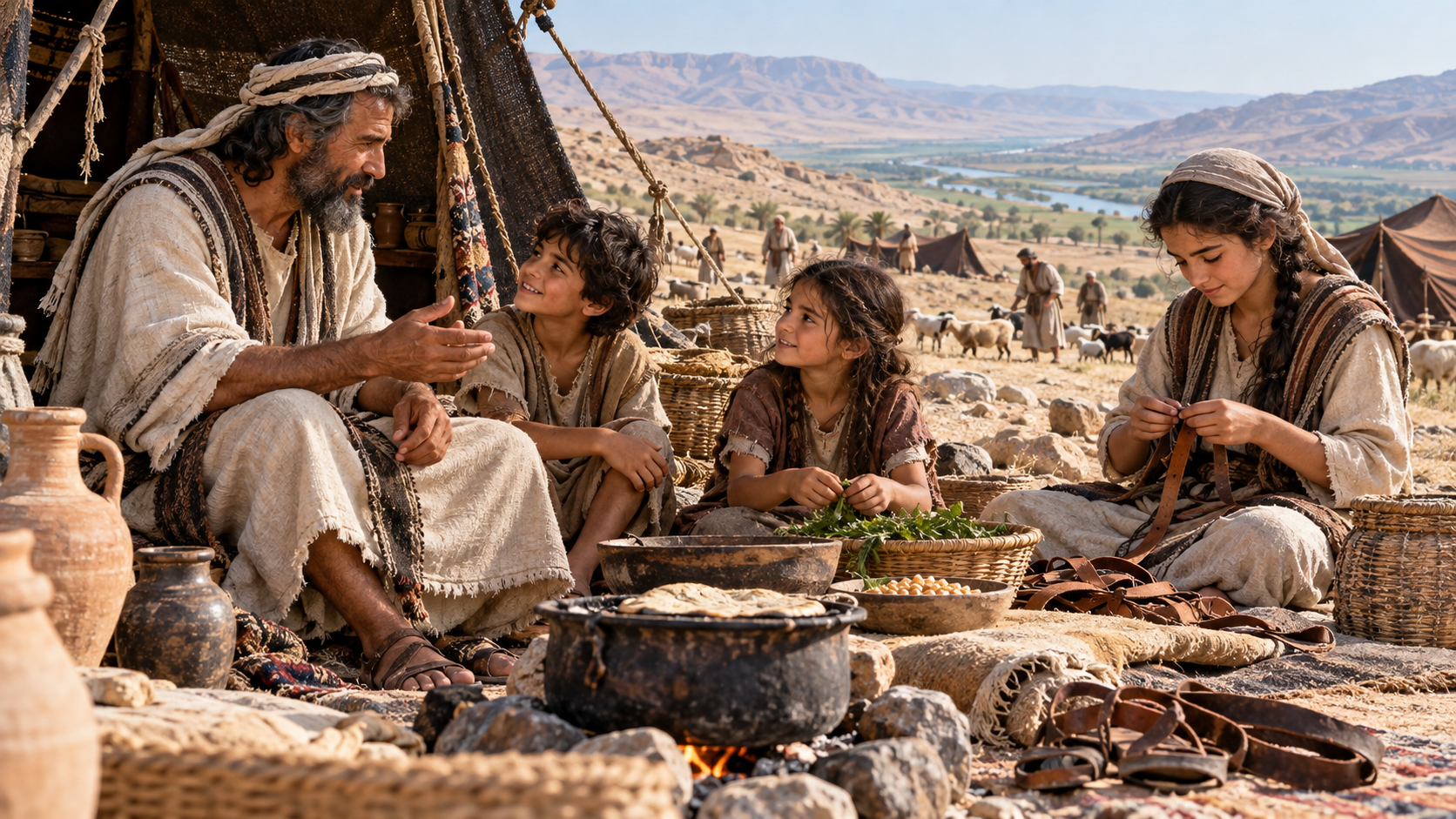
Many fathers carry the pressure to provide, protect, and keep the household moving, yet spiritual leadership can slip to the edge of an already crowded week. Deuteronomy 6:6–7 brings faith back into ordinary life. Moses does not picture fathers delivering occasional speeches; he describes God’s words living in the heart and entering the day through conversation, routine, and example. The lesson is not about turning every meal into a lecture. It is about letting children see that God belongs in the choices, questions, failures, and hopes a family actually shares.
Scripture Explained
A man can work hard for his family, keep the bills paid, and still feel unsure about how to lead at home spiritually. The pressure often comes from imagining that leadership requires a polished lesson or an answer to every question. Moses offers a different picture. God’s truth is meant to enter the ordinary traffic of family life, where children watch how a father responds to stress, handles failure, makes decisions, and speaks about what matters most.
Deuteronomy presents Moses addressing Israel on the plains of Moab before the people crossed into the promised land. The book does not give a modern calendar date for this speech, and interpreters differ about questions surrounding its composition, but its literary setting is clear: a new generation is preparing to live in settled towns after years in the wilderness. In Deuteronomy 6:4–9, the command to teach children follows the call to love the Lord with heart, soul, and strength.
That order matters. The commandments are first to be on the hearts of the adults who teach them. Children are not merely being handed information; they are seeing whether God’s word has taken root in the people closest to them. A father does not need to pretend that he has arrived. His honest repentance, patient obedience, and willingness to keep learning can show his children what it looks like for grace to reshape a real person over time.
The language of impressing these words on children carries the idea of diligent repetition. Moses names sitting at home, traveling the road, lying down, and rising up—the recurring rhythms that fill a normal day. He is not promising that faithful parenting guarantees a child will never wander, nor is he assigning the work to fathers alone. The command was given to Israel as a covenant people, while parents bear a particular responsibility within the wider life of God’s community.
Think About This
Children usually learn what a family worships by noticing what receives its strongest attention. They hear the tone used when money is tight, see what happens after an argument, and watch whether Sunday worship connects with Monday choices. That can feel exposing, but it is also hopeful. Spiritual formation does not depend only on creating ideal moments. It grows as God’s truth becomes part of the honest conversations already happening around work, friendship, disappointment, temptation, gratitude, and forgiveness.
Some men hear a call to family discipleship and immediately measure themselves against another household. That comparison rarely produces faithful love. A single father, a grandfather raising grandchildren, a stepfather earning trust, or a man whose children are grown will not share the same routine. The faithful question is smaller and more personal: where has God already placed me near people I can serve, and how can his word become more visible and more natural in the life we actually share?
What Should I Do
Begin with one rhythm you can keep. Choose a meal, a drive, or bedtime and read a short portion of Scripture together two or three times this week. Ask what the passage shows about God, what it reveals about us, and where it touches the day ahead. Five attentive minutes can be more useful than a long meeting everyone dreads. Consistency gives children room to ask questions later, when the subject no longer feels like a special performance.
Look for the moments Moses describes rather than waiting for a formal setting. When a child admits fear, connect that fear to God’s presence without dismissing it. When someone is hurt by a friend, talk about truth, forgiveness, and wise boundaries. When the family receives something good, name the Giver together. The aim is not to force a Bible verse into every sentence, but to let Scripture shape how the household understands the events already arriving at the door.
Let repentance become part of your leadership. If you speak harshly, return and ask forgiveness without explaining away your sin. If you do not know an answer, say so and search for it together. Invite another mature believer and your local church into the work rather than carrying it alone. Children need to see that Christian faith includes correction, community, and dependence on Christ—not a father protecting an image of competence.
Learn More
Read Deuteronomy 6:4–9 as a whole and notice how love for God, personal obedience, and teaching the next generation belong together. Psalm 78:5–7 adds the purpose: children are told God’s works so they may set their hope in him. Ephesians 6:4 warns fathers against provoking their children while calling them to the Lord’s instruction, keeping spiritual leadership joined to patience and care.
Second Timothy 1:5 and 3:14–15 show faith being modeled across generations in Timothy’s family, while also making clear that Scripture points toward salvation through faith in Christ. Before this day ends, choose one ordinary moment in your weekly routine and decide how you will make room for a genuine conversation about God there. Keep it simple enough to repeat, pray for the people in your care, and trust God with the growth you cannot produce.



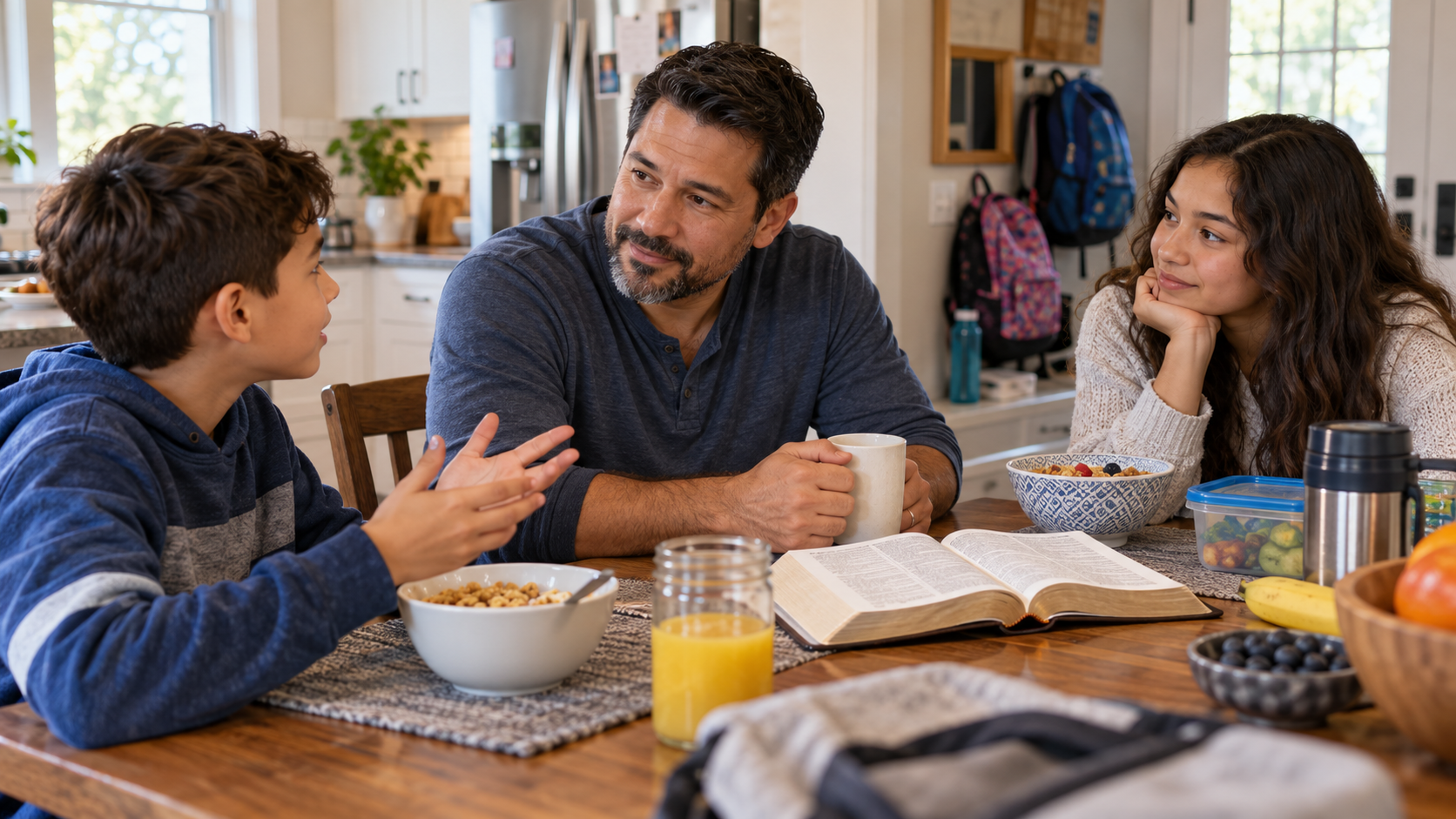
A Prayer to Lead My Home in Faith
Father, let your word settle deeply in my own heart before I try to speak it into anyone else’s life. Give me patience to listen, humility to repent, and courage to bring you into the ordinary conversations of our home.
Help me lead without performing or controlling. Use my words, habits, and honest dependence on Christ to point my family toward you, and keep me faithful in the small moments where trust is built over time. Amen.
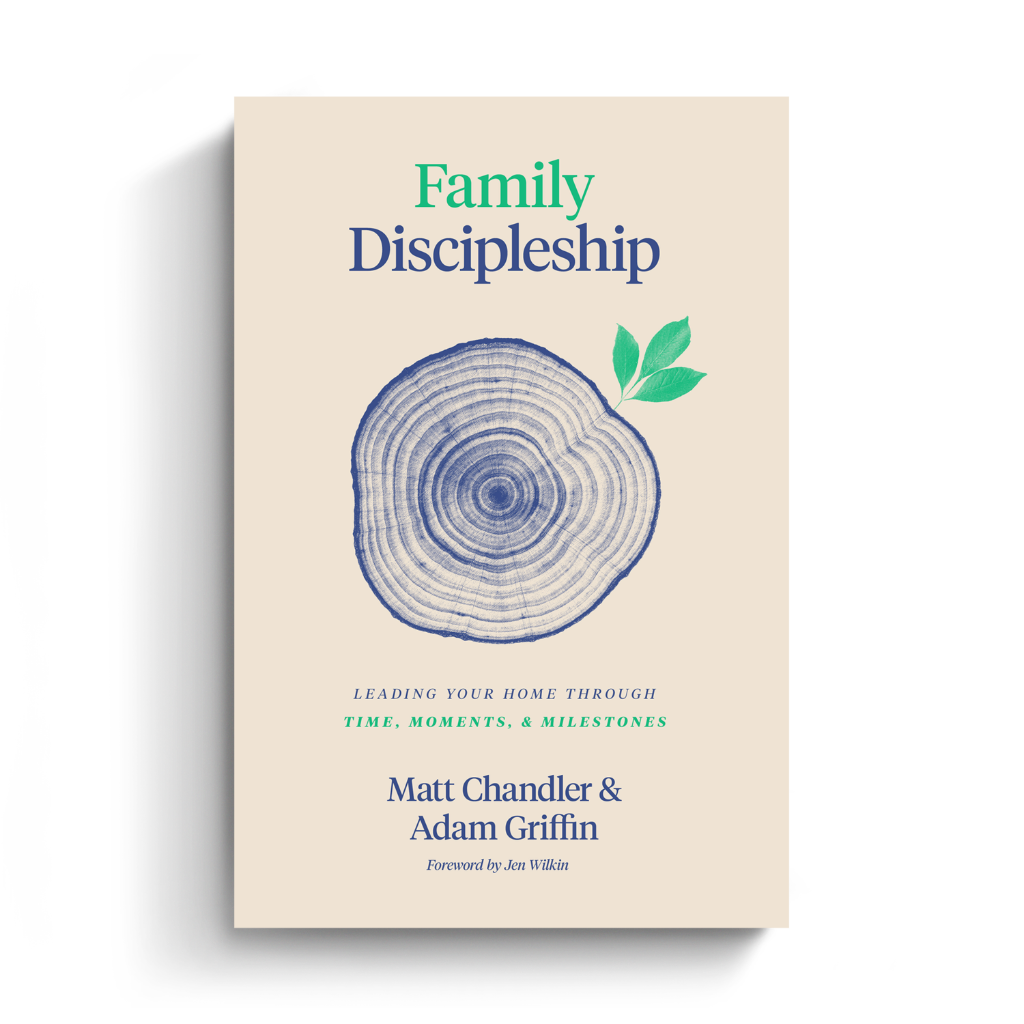
Family Discipleship: Leading Your Home through Time, Moments, and Milestones — Matt Chandler and Adam Griffin (Hardcover, Crossway, 2020)
Matt Chandler and Adam Griffin give parents a practical framework for leading their homes through planned time, everyday moments, and meaningful milestones. Its focus on ordinary, repeatable family discipleship makes it a direct companion to Deuteronomy 6:6–7, where God’s word is carried into the daily rhythms children share with their parents.
143356629X



Copyright Notice
Copyright © 2026 Men Building Faith. All rights reserved.
All content on this website, including text, articles, devotionals, blog posts, graphics, logos, designs, photographs, videos, downloads, and other original materials (collectively, “Content”), is owned by Men Building Faith and is protected by U.S. and international copyright laws.
No part of this site may be copied, reproduced, republished, uploaded, posted, publicly displayed, transmitted, distributed, sold, licensed, or otherwise exploited for any purpose without prior written permission from Men Building Faith, except for brief quotations used for noncommercial purposes with proper attribution and a link back to the original page.
NLT- Scripture quotations marked (NLT) are taken from the Holy Bible, New Living Translation, copyright ©1996, 2004, 2015 by Tyndale House Foundation. Used by permission of Tyndale House Publishers, Carol Stream, Illinois 60188. All rights reserved.
NIV- Scripture quotations taken from The Holy Bible, New International Version® NIV® Copyright © 1973, 1978, 1984, 2011 by Biblica, Inc. Used with permission. All rights reserved worldwide.
AMP- Scripture quotations taken from the Amplified® Bible (AMP), Copyright © 2015 by The Lockman Foundation. Used by permission
NKJV- Scripture taken from the New King James Version®. Copyright © 1982 by Thomas Nelson. Used by permission. All rights reserved
ESV- Scripture quotations are from the ESV® Bible (The Holy Bible, English Standard Version®), copyright © 2001 by Crossway Bibles, a publishing ministry of Good News Publishers. Used by permission. All rights reserved.