
Supported, Connected, Honest, Teachable, Steady, Known, Available, Faithful, Brotherhood, Friendship
Ecclesiastes 4:9–10 NIV
Two are better than one, because they have a good return for their labor: If either of them falls down, one can help the other up. But pity anyone who falls and has no one to help them up.
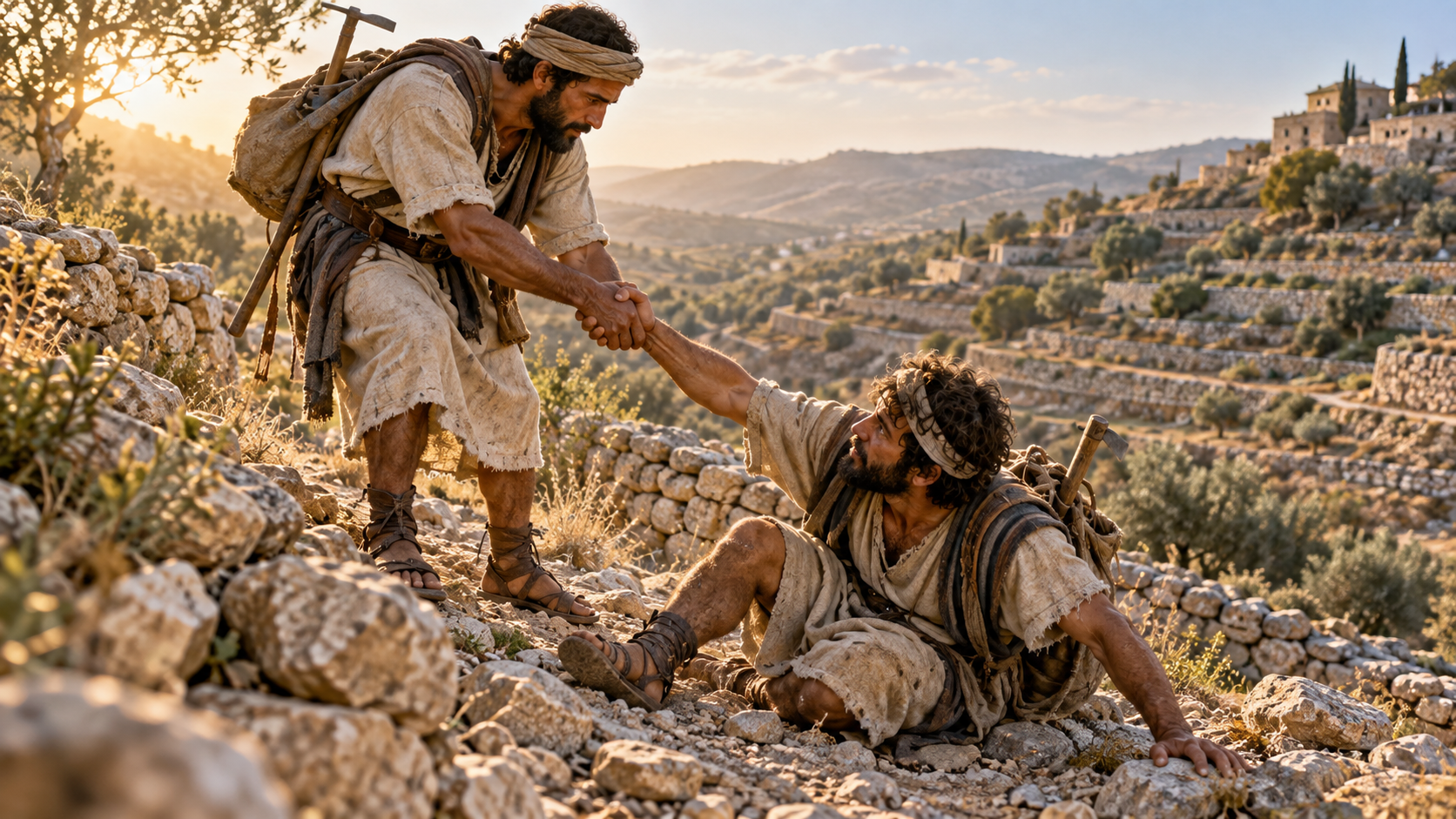
Some burdens grow heavier because a man has quietly decided he should carry them alone. Ecclesiastes looks straight at that lonely instinct and names the gift we often resist: another person close enough to share the work and steady us when we lose our footing. The Teacher is not promising an easy life or sentimental friendship. He is showing how God’s ordinary provision often arrives through faithful companionship. A trusted brother cannot remove every hardship, but he can help you face the truth, recover from a fall, and keep walking when isolation would leave you exposed.
Scripture Explained
Many men know the pressure of appearing capable even when life is coming apart behind the scenes. Ecclesiastes speaks into that tension after describing oppression without comfort, rivalry that drives exhausting labor, and a solitary worker who has no one with whom to share the fruit. Against that bleak picture, the Teacher says two are better than one. Companionship is part of God’s wise answer to the limits and loneliness of human strength.
Ecclesiastes belongs to Israel’s wisdom literature and presents the reflections of Qoheleth, often translated “the Teacher” or “the Preacher.” Christian tradition has long associated the book with Solomon, though its precise authorship and date remain debated. The repeated phrase “under the sun” examines life in a world where work, pleasure, status, and even wisdom cannot overcome death or finally secure our future.
The examples in 4:9–12 are practical. Two workers gain more from their labor; two travelers are safer when one falls; shared warmth matters on a cold night; and companionship strengthens a person facing attack. The “good return” is not a promise that partnership will make every venture profitable. It describes the ordinary fruit of shared effort and the help another person brings where self-sufficiency reaches its limit.
These lines are often used at weddings, but their context is broader than marriage. The Teacher commends faithful companionship in work, danger, and daily life, so friendship, family, church fellowship, and healthy partnership all fit the wisdom. The text does not say that two people will never fail or that every relationship is safe. It does say that isolation leaves a man especially vulnerable when hardship knocks him down.
Think About This
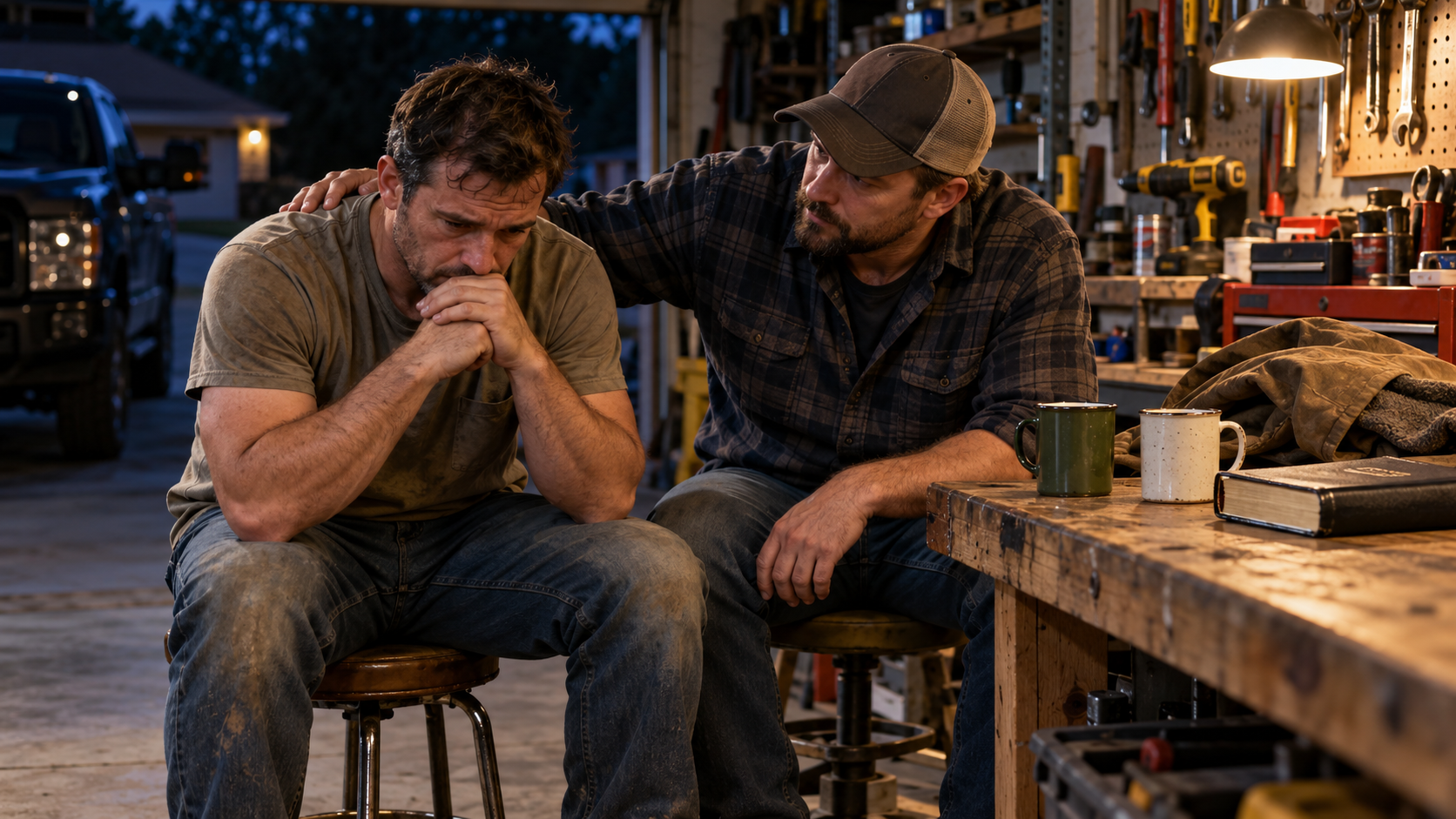
A man can be surrounded by coworkers, relatives, church members, and online contacts while remaining largely unknown. He may talk about projects or schedules yet avoid the sentence that exposes his real condition: “I am not doing well.” Pride calls that restraint maturity, and fear calls it protection. Ecclesiastes is more honest. If no one knows where you are weak, tired, tempted, or discouraged, no one can offer the help God may already be providing through them.
You are not only the man who may fall; you may also be nearby when someone else does. Faithful friendship pays attention without prying, asks a second question when the first answer sounds rehearsed, and stays present after the crisis is no longer interesting. Helping another man rise does not mean controlling his decisions or pretending you can fix everything. It means refusing to leave him alone on the ground.
What Should I Do
Name one area where you have been trying to manage alone: financial pressure, anger at home, a hidden temptation, grief, exhaustion, or a difficult decision. Then choose one mature and trustworthy man and tell him the truth plainly. You do not need a dramatic confession or polished explanation. Give him enough honesty to understand the burden, and ask for specific help—prayer, counsel, accountability, or a steady conversation.
Build friendship before a crisis makes it urgent. Dependable brotherhood usually grows through ordinary repeated contact: working on a project, serving at church, walking after dinner, or calling during the commute. Ask questions that make room for more than an update, and listen without rushing to a solution. Trust grows as both men discover that honest weakness will be met with grace, wisdom, and appropriate confidentiality.
Notice the men already within reach. A friend who has become quiet, a younger man carrying new responsibility, or a father stretched thin may not ask directly for support. Offer a definite next step instead of a vague promise: “Can I call tonight?” or “I can help Saturday morning.” If the need involves danger, abuse, addiction, or severe depression, friendship should help him reach qualified pastoral, medical, or professional care rather than trying to replace it.
Bring your friendships under Christ’s authority. Galatians 6:2 calls believers to bear one another’s burdens, James 5:16 joins confession with prayer, and Hebrews 10:24–25 urges the church toward love and good works. Christian brotherhood is more than emotional support; it helps men return to truth, repentance, courage, and hope. Pray for a friend by name, asking God to make you both humble enough to receive help and dependable enough to give it.
Learn More
Mark 2:1–5 shows friends whose faith becomes practical. They carry a paralyzed man to Jesus, persist when the doorway is blocked, and open the roof so he can be brought near. Their actions do not save him; Christ does. Yet their loyalty places a helpless man before the Savior. Friendship belongs in that humble place: we carry one another to the Lord who alone can forgive, restore, and make whole.
Jesus deepens friendship in John 15:13–15, where he calls his disciples friends and points toward the love he will display at the cross. Begin there, because no human friend can bear the full weight of your soul. Then read Ecclesiastes 4:7–12, Proverbs 17:17, Proverbs 27:9, and 1 Thessalonians 5:11. Ask which relationship needs greater honesty, which brother needs your presence, and what action would move that friendship from good intention to shared life.




Made for Friendship: The Relationship That Halves Our Sorrows and Doubles Our Joys by Drew Hunter (2018 Crossway Paperback)
143355819X
Drew Hunter develops a biblical vision of friendship, showing why men need relationships deeper than shared interests and how faithful friends help carry sorrow, strengthen joy, and keep one another from isolation. Its mix of theology and practical guidance fits Ecclesiastes 4:9–10 directly: God often provides help through another person who is close enough to notice when a man falls and committed enough to help him stand again.
A Prayer for a Faithful Friend
Help me receive and offer faithful friendship.
Father, thank You for knowing that I was not made to carry every burden alone. Free me from the pride and fear that keep my struggles hidden, and give me the humility to receive help from trustworthy brothers You place in my life.
Make me attentive when another man is slipping. Teach me to listen well, speak truth with grace, pray faithfully, and stay present when support costs time. Let my friendships lead us closer to Christ and help us stand again when either of us falls. Amen.


Copyright Notice
Copyright © 2026 Men Building Faith. All rights reserved.
All content on this website, including text, articles, devotionals, blog posts, graphics, logos, designs, photographs, videos, downloads, and other original materials (collectively, “Content”), is owned by Men Building Faith and is protected by U.S. and international copyright laws.
No part of this site may be copied, reproduced, republished, uploaded, posted, publicly displayed, transmitted, distributed, sold, licensed, or otherwise exploited for any purpose without prior written permission from Men Building Faith, except for brief quotations used for noncommercial purposes with proper attribution and a link back to the original page.
NLT- Scripture quotations marked (NLT) are taken from the Holy Bible, New Living Translation, copyright ©1996, 2004, 2015 by Tyndale House Foundation. Used by permission of Tyndale House Publishers, Carol Stream, Illinois 60188. All rights reserved.
NIV- Scripture quotations taken from The Holy Bible, New International Version® NIV® Copyright © 1973, 1978, 1984, 2011 by Biblica, Inc. Used with permission. All rights reserved worldwide.
AMP- Scripture quotations taken from the Amplified® Bible (AMP), Copyright © 2015 by The Lockman Foundation. Used by permission
NKJV- Scripture taken from the New King James Version®. Copyright © 1982 by Thomas Nelson. Used by permission. All rights reserved
ESV- Scripture quotations are from the ESV® Bible (The Holy Bible, English Standard Version®), copyright © 2001 by Crossway Bibles, a publishing ministry of Good News Publishers. Used by permission. All rights reserved.