
Pressured, Identity, Restless, Exposed, Responsible, Faith, Surrendered, Free, Steady, Faithful
Galatians 2:20 NIV
I have been crucified with Christ and I no longer live, but Christ lives in me. The life I now live in the body, I live by faith in the Son of God, who loved me and gave himself for me.
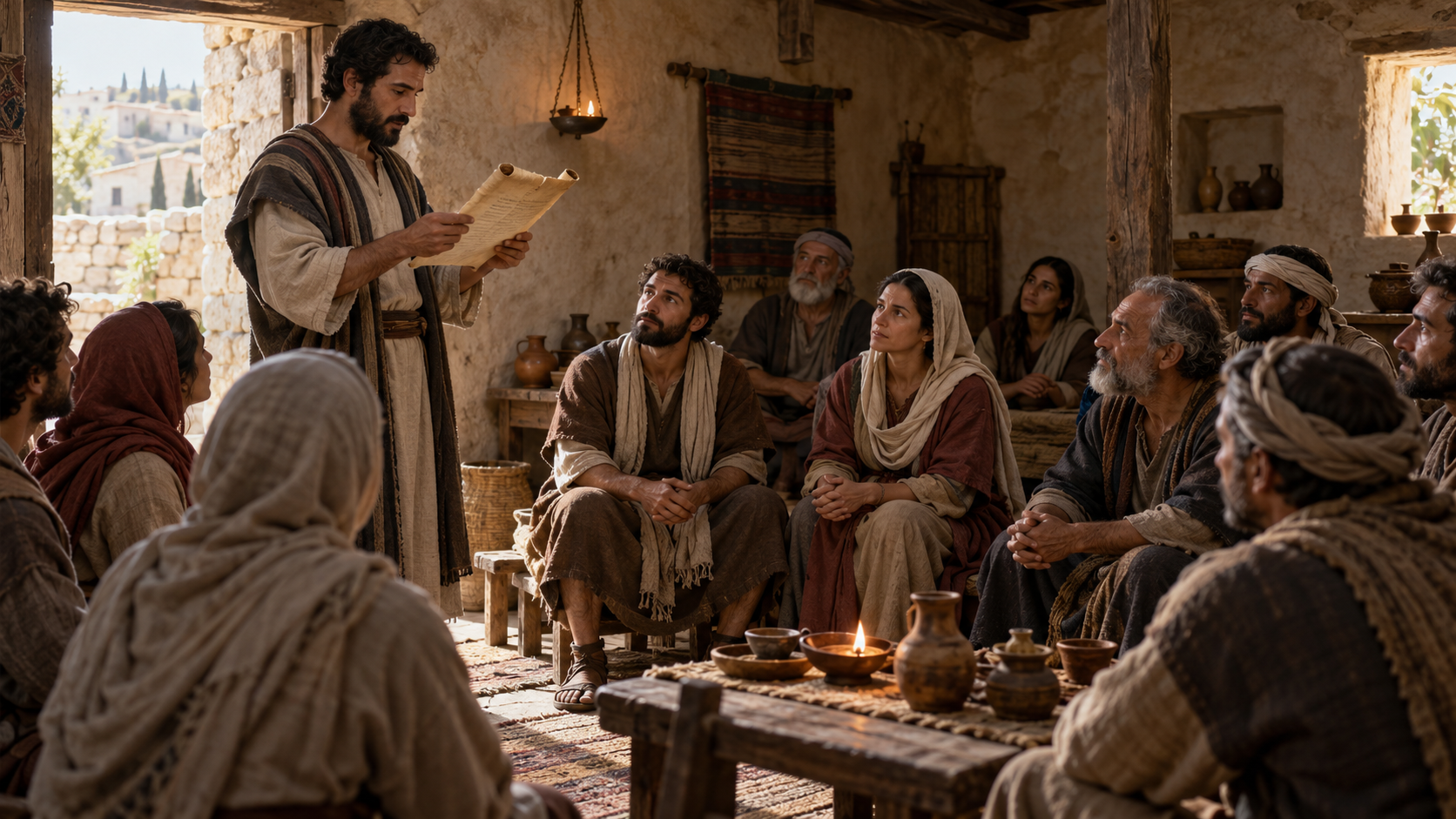
A man can spend years building a name that feels strong enough to hold him—career, competence, reputation, even religious discipline—then discover how fragile it is when work changes, failure comes, or someone sees behind the polished surface. Paul offers something sturdier than a better self-image. In Galatians 2:20, he describes a life joined to Christ so deeply that the old courtroom of proving and comparing loses its authority. The man still wakes up to real responsibilities, but he no longer has to manufacture his worth. Christ’s love becomes the center from which he works, leads, repents, and endures.
Scripture Explained
Many men know the quiet pressure of feeling that usefulness must be proved and respect earned again every morning. Galatians 2:20 speaks into that pressure, but Paul was not offering stronger self-esteem. He was recounting his confrontation with Peter, also called Cephas, at Antioch. Peter had eaten with Gentile believers, then withdrew when certain Jewish Christians arrived, making the gospel look as though Gentiles were second-class unless they adopted Jewish boundary markers.
Paul frames the rebuke around justification: a person is not justified by works of the law but through faith in Jesus Christ. To be “crucified with Christ” means Paul’s former basis for standing—law performance, inherited privilege, and self-achieved righteousness—has met its end at the cross. Personality and responsibility have not disappeared; Paul still lives in the body. Yet Christ’s death now defines him, and Christ’s risen life animates the obedience that follows.
The words “Christ lives in me” describe union with Christ, not self-deification or passivity. Paul remains a man who works, suffers, reasons, and acts; the same sentence says he lives by faith. Faith is ongoing reliance on the Son of God. Because Jesus “loved me and gave himself for me,” Christian identity rests in completed, self-giving love rather than in a record that rises and falls with each day’s results.
Galatians was written to churches in Roman Asia Minor, although interpreters debate whether Paul addressed northern or southern Galatia and its exact date. That uncertainty does not blur the argument. Teachers were pressing Gentile believers to accept circumcision and law observance as marks of full belonging. Paul refuses because adding a human credential to Christ as the basis of acceptance empties grace. If righteousness could come through the law, he says next, Christ died for nothing.
Think About This
Performance can take respectable forms. A provider may believe he can never ask for help; a leader may think he must always have the answer; a disciplined Christian may hide struggle because confession feels like defeat. Good responsibilities become cruel masters when asked to secure worth. Success feeds superiority, while failure feels like personal extinction. The cross tells the truth about sin that self-improvement cannot cure, yet Christ’s love gives a man an identity that failure cannot revoke.
Union with Christ also corrects the error of treating grace as permission to disengage. Paul says, “The life I now live,” pointing toward embodied faithfulness. Work, fatherhood, friendship, and church service still matter, but they no longer carry the weight of proving a man’s value. He can apologize without collapsing and receive correction without becoming defensive. Such freedom grows as he learns to live from Christ’s love rather than bargain for acceptance.
What Should I Do
Begin by naming the courtroom where you keep trying to win a verdict. It may be your supervisor’s approval, a father’s voice you still hear, comparison with another man’s success, or the private standard that says one mistake makes you a fraud. Write the verdict you fear and place Galatians 2:20 beside it. Do not deny weakness or avoid needed repair. Stop asking achievement, image, or religious effort to pronounce the acceptance that God gives only in Christ.
Bring one ordinary responsibility under this life of faith. Before the next difficult meeting, hard conversation, or financial decision, pray: “Christ, you loved me and gave yourself for me; help me act from that love.” Then choose the faithful action rather than the one most likely to protect your image. Tell the truth, ask the question, admit what you do not know, or finish the uncelebrated task. Faith becomes visible when confidence in Christ changes how a man carries a real obligation.
Let your new center reshape a relationship, not only private thoughts. Tell a trusted brother where you have been performing, hiding, or measuring yourself against others, and invite him to ask again. If appearing strong has made you distant at home, offer a specific apology without explaining it away. Christ living in you does not make accountability unnecessary; it makes honesty possible. You are free to be known because the most important truth about you is settled by the One who gave himself for you.
Learn More
Read Galatians 2:11–21 as one argument so the famous sentence remains connected to table fellowship, justification, and grace. Romans 6:1–11 develops the believer’s participation in Christ’s death and resurrection, while Colossians 3:1–4 describes a life hidden with Christ in God. Together they show that union with Christ is neither positive thinking nor an excuse for passivity. It is God’s gracious reality, giving both a secure identity and a new direction for daily obedience.
John 15:1–5 adds Jesus’ picture of branches abiding in the vine, and Philippians 3:7–11 shows Paul releasing his credentials to know Christ. Christian maturity is not the erasure of effort but the end of self-salvation. Rankin Wilbourne’s Union with Christ: The Way to Know and Enjoy God explores this theme across Scripture and ordinary life. It fits Galatians 2:20 because it asks how Christ’s life becomes the anchor and energy of a believer’s identity, purpose, and faithfulness.




A Prayer for Identity Rooted in Christ
Lord Jesus, I have often tried to build my worth from performance, approval, and control. Thank you for loving me and giving yourself for me. Put an end to the old striving that keeps me proud when I succeed and ashamed when I fail, and teach me to receive my life from you.
Live your life in me as I work, lead, serve, repent, and rest. Give me faith for the next honest step, courage to be known by trusted brothers, and humility to love my family without making them carry the burden of my identity. Amen.
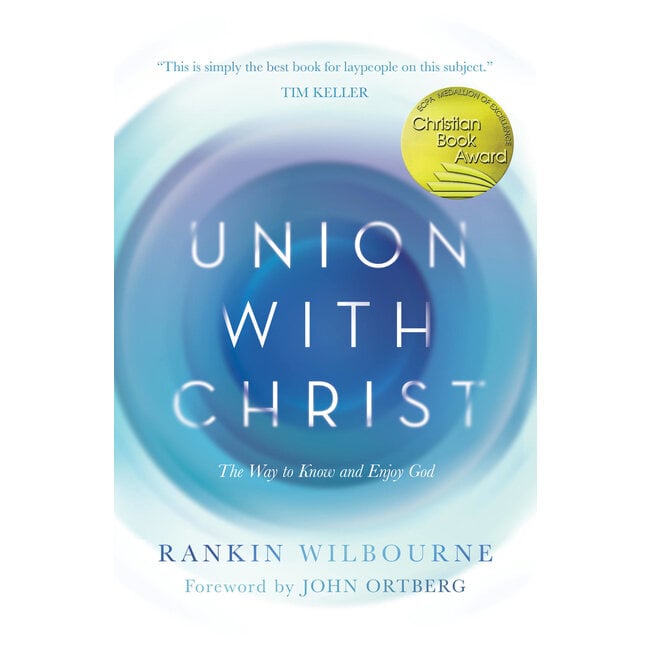
Union with Christ: The Way to Know and Enjoy God by Rankin Wilbourne (2016 Hardcover)
Rankin Wilbourne explains the biblical doctrine of union with Christ and follows its implications for identity, purpose, assurance, and daily obedience. The 2016 hardcover directly fits Galatians 2:20 because it explores what it means to be in Christ and to have Christ living in the believer.
1434709388



Copyright Notice
Copyright © 2026 Men Building Faith. All rights reserved.
All content on this website, including text, articles, devotionals, blog posts, graphics, logos, designs, photographs, videos, downloads, and other original materials (collectively, “Content”), is owned by Men Building Faith and is protected by U.S. and international copyright laws.
No part of this site may be copied, reproduced, republished, uploaded, posted, publicly displayed, transmitted, distributed, sold, licensed, or otherwise exploited for any purpose without prior written permission from Men Building Faith, except for brief quotations used for noncommercial purposes with proper attribution and a link back to the original page.
NLT- Scripture quotations marked (NLT) are taken from the Holy Bible, New Living Translation, copyright ©1996, 2004, 2015 by Tyndale House Foundation. Used by permission of Tyndale House Publishers, Carol Stream, Illinois 60188. All rights reserved.
NIV- Scripture quotations taken from The Holy Bible, New International Version® NIV® Copyright © 1973, 1978, 1984, 2011 by Biblica, Inc. Used with permission. All rights reserved worldwide.
AMP- Scripture quotations taken from the Amplified® Bible (AMP), Copyright © 2015 by The Lockman Foundation. Used by permission
NKJV- Scripture taken from the New King James Version®. Copyright © 1982 by Thomas Nelson. Used by permission. All rights reserved
ESV- Scripture quotations are from the ESV® Bible (The Holy Bible, English Standard Version®), copyright © 2001 by Crossway Bibles, a publishing ministry of Good News Publishers. Used by permission. All rights reserved.