
Generosity, Service, Compassion, Worship
Hebrews 13:16 KJV
But to do good and to communicate forget not: for with such sacrifices God is well pleased.
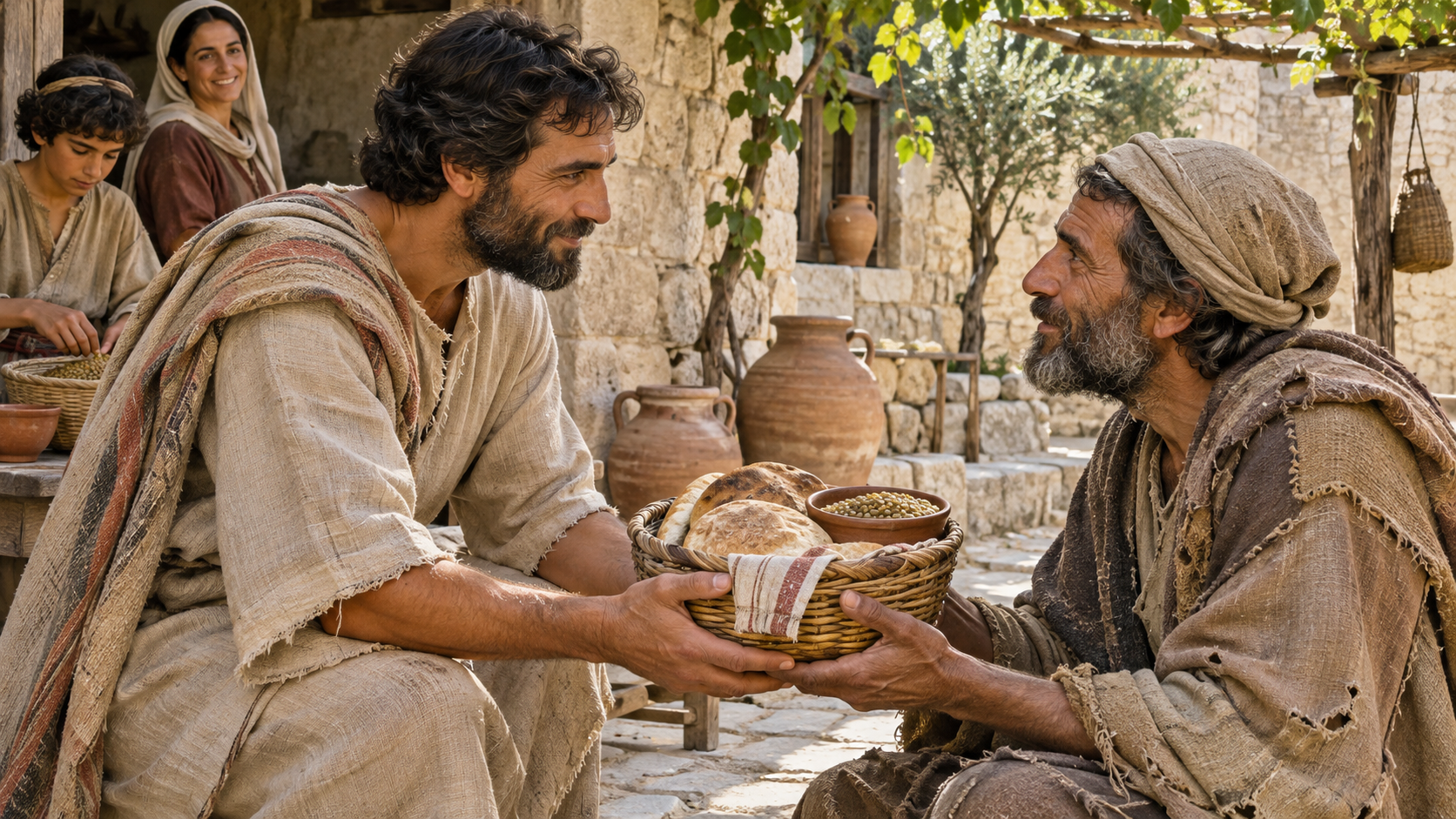
You may have enough on your own list already: a repair waiting at home, a bill coming due, and work that seems to follow you through the weekend. When another person needs help, it is easy to assume that generosity belongs to a less crowded season. Hebrews 13:16 invites a closer look at what God has already placed within your reach. A useful skill, a shared meal, or a small gift can become part of faithful worship when it answers a real need with love and respects the person receiving it.
Scripture Explained
A need can become familiar enough that we stop seeing it. You know the neighbor is recovering from surgery, the family at church is stretched thin, or the younger coworker lacks a tool you could lend. Nothing about the situation feels dramatic. Hebrews 13:16 brings those ordinary opportunities into our understanding of worship. Doing good and sharing what we have matter to God, even when the help never becomes a story anyone else hears.
The closing chapter of Hebrews gives practical directions for a community learning to persevere in faith. Brotherly love, hospitality, care for prisoners, faithfulness in marriage, and freedom from the love of money appear nearby. The writer then speaks of Jesus’ suffering and calls believers to offer praise through him. Doing good and sharing follow directly after that call. Worship expressed with our lips belongs alongside care expressed through the resources and attention we give.
In the King James wording, communicate means sharing here, rather than simply exchanging information. The verse describes generosity as a sacrifice that pleases God. It does not suggest that a gift purchases forgiveness or adds something missing from Christ’s work. Hebrews has already emphasized the sufficiency of Jesus’ offering. The practical sacrifice of a believer grows from received mercy. We do not know the writer’s identity with certainty, and this instruction names no single recipient or occasion.
Think About This
When you are responsible for bills, repairs, and people who depend on you, holding tightly to your resources can seem like simple prudence. Sometimes caution is necessary. Yet there is a difference between planning responsibly and assuming that generosity can wait until nothing feels uncertain. You may never reach that point. A useful question is whether you have made any room for another person’s good within the responsibilities God has already placed in your hands.
Sharing also tests what kind of recognition we want. A quiet grocery delivery may seem less satisfying than a public donation because it gives us little credit. Hebrews directs our attention toward God’s pleasure rather than an audience. That helps protect the dignity of the person receiving help. Generosity becomes distorted when we use a gift to demand gratitude, gain influence, or make someone feel permanently indebted. Love asks what will actually serve the neighbor.
What Should I Do
Think of one real need you already understand, rather than searching for an impressive project. Ask the person what would be useful before deciding for him. A ride to an appointment may matter more than another bag of food, and help repairing a loose step may restore independence. Listening first can prevent a well-meant gift from becoming another burden. Choose something you can offer freely and reliably without making promises you will struggle to keep.
Consider the resources available to you today. Money is one, but a spare room, a useful skill, an hour of attention, or equipment you can safely lend may also help. Protect commitments to your household and be honest about limits. If the need exceeds what you can responsibly provide, bring it discreetly to a trusted church leader or appropriate local service. Sharing responsibility can accomplish more than a private attempt to become everyone’s rescuer.
Make the next step concrete enough to happen. Set aside the amount, arrange the ride, or agree on a time to help with the repair. Keep the person’s circumstances private unless he has agreed otherwise. If a gift would create an unhealthy dependency or conceal serious harm, seek wise counsel about a better form of assistance. Faithful generosity combines compassion with judgment; it does not require abandoning discernment in order to prove that you care.
Learn More
Read Hebrews 13:1–6 and 13:12–16 together. Notice how the call to share sits within love for others and confidence in God’s care. Then read James 2:14–17, which challenges words of goodwill that leave a brother or sister without practical help. Neither passage invites us to measure our worth by how much we distribute. Both refuse a separation between professed faith and the way we respond to a person standing before us in need.
Second Corinthians 8:12–15 offers a useful companion: willingness is considered according to what someone has, and the aim is mutual care rather than crushing one household to relieve another. First John 3:16–18 connects Christ’s love with tangible action. Before the day ends, follow through on the specific help you have chosen. Offer it without a speech about your sacrifice, and thank God that something entrusted to you can become a means of care for someone else.




A Prayer for a Generous and Willing Heart
Father, thank you for the mercy you have shown me through Jesus and for the resources you have entrusted to my care. Open my eyes to a real need I can help meet. Free me from indifference, fear, and the desire to be noticed for what I give.
Give me wisdom to serve without neglecting my responsibilities or diminishing another person’s dignity. Help me listen before deciding what is useful, keep my promises, and share with a willing heart. May the good I do today honor you and bring practical care to my neighbor. In Jesus’ name, amen.

The Treasure Principle, Revised and Updated: Unlocking the Secret of Joyful Giving — Randy Alcorn (2017 Hardcover)
Randy Alcorn explores Jesus’ teaching about treasure and invites readers to practice generous stewardship with lasting priorities. This revised Multnomah hardcover fits Hebrews 13:16 by helping a man examine his attachment to possessions and make room for joyful giving. It offers a focused companion for turning resources entrusted by God into practical care for other people.
0735290326




Copyright Notice
Copyright © 2026 Men Building Faith. All rights reserved.
All content on this website, including text, articles, devotionals, blog posts, graphics, logos, designs, photographs, videos, downloads, and other original materials (collectively, “Content”), is owned by Men Building Faith and is protected by U.S. and international copyright laws.
No part of this site may be copied, reproduced, republished, uploaded, posted, publicly displayed, transmitted, distributed, sold, licensed, or otherwise exploited for any purpose without prior written permission from Men Building Faith, except for brief quotations used for noncommercial purposes with proper attribution and a link back to the original page.
NLT- Scripture quotations marked (NLT) are taken from the Holy Bible, New Living Translation, copyright ©1996, 2004, 2015 by Tyndale House Foundation. Used by permission of Tyndale House Publishers, Carol Stream, Illinois 60188. All rights reserved.
NIV- Scripture quotations taken from The Holy Bible, New International Version® NIV® Copyright © 1973, 1978, 1984, 2011 by Biblica, Inc. Used with permission. All rights reserved worldwide.
AMP- Scripture quotations taken from the Amplified® Bible (AMP), Copyright © 2015 by The Lockman Foundation. Used by permission
NKJV- Scripture taken from the New King James Version®. Copyright © 1982 by Thomas Nelson. Used by permission. All rights reserved
ESV- Scripture quotations are from the ESV® Bible (The Holy Bible, English Standard Version®), copyright © 2001 by Crossway Bibles, a publishing ministry of Good News Publishers. Used by permission. All rights reserved.