
Mercy, Grace, Temptation, Weakness, Prayer, Confidence, Perseverance, Shame, Help, Compassion
Hebrews 4:15 NIV
For we do not have a high priest who is unable to empathize with our weaknesses, but we have one who has been tempted in every way, just as we are—yet he did not sin.
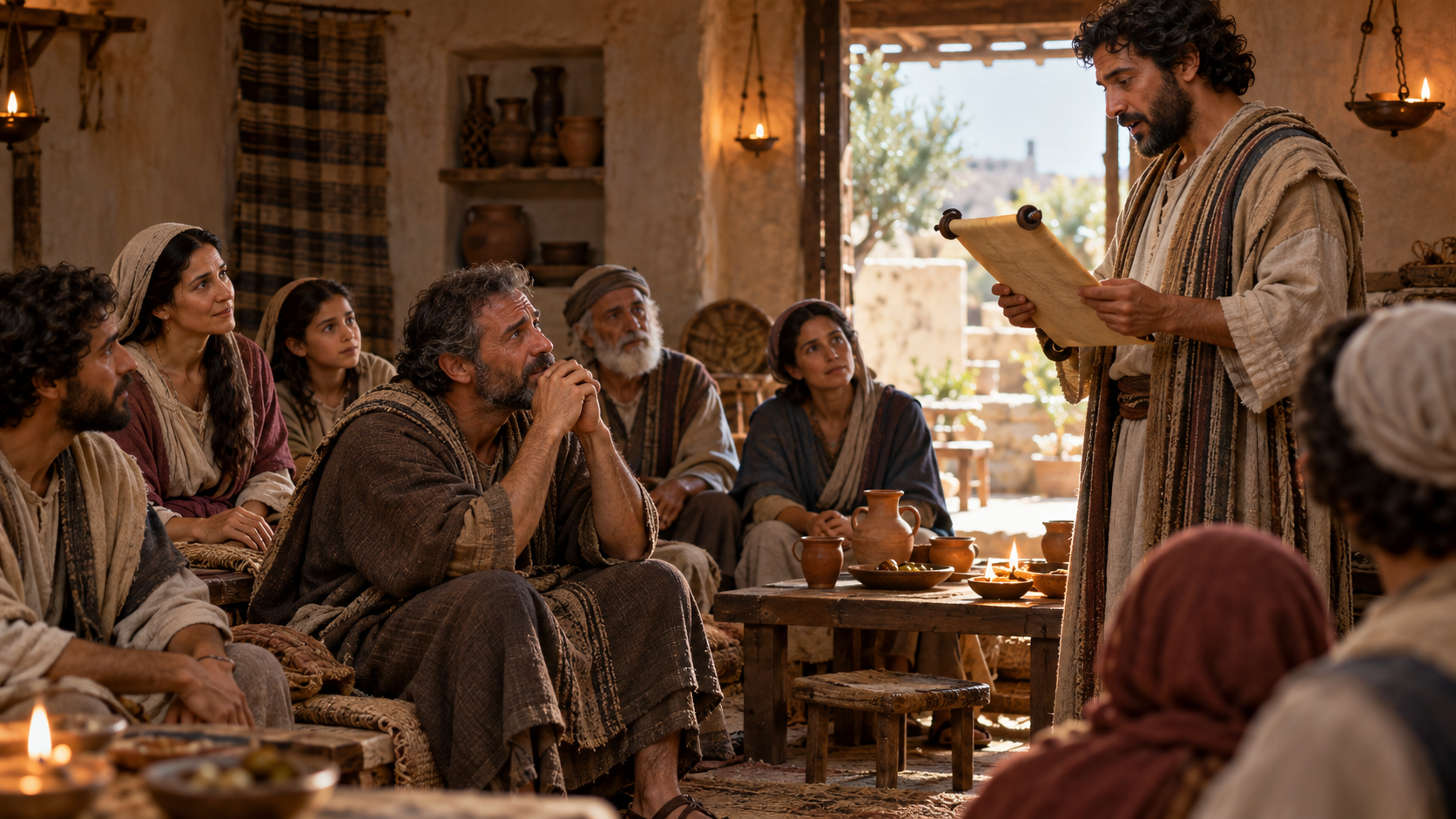
Pressure has a way of narrowing a man’s choices. When shame, temptation, grief, or fatigue closes in, many of us either hide the struggle or try to muscle through it alone. Hebrews offers a better place to turn: Jesus, our great high priest, understands what it costs to remain faithful under testing. He does not wait at a distance for us to get ourselves together. Because of him, weary men may come honestly before God, receive mercy for what has gone wrong, and find grace for the next faithful step when their own strength is no longer enough.
Scripture Explained
Men often feel pressure to appear steady when something inside is coming apart. After saying that God’s word exposes the heart, the writer does not leave his hearers ashamed before a searching God. He points them to Jesus, the great high priest who has passed through the heavens, and tells them to hold firmly to their confession. Honest exposure is followed by a gracious invitation.
Israel’s high priest represented the people and entered the Most Holy Place on the Day of Atonement with sacrificial blood. Hebrews draws on that pattern while showing that Jesus is greater. Chapters 5 through 10 explain that he is God’s Son, his sacrifice is complete, and his ministry gives believers lasting access to God. The letter’s author and first audience are not identified, but the recipients were under pressure to drift from their confession.
Jesus sympathizes with human weakness because he truly endured temptation and suffering. “Tempted in every way” does not mean he lived every modern circumstance or felt every sinful desire in exactly the form we do. It means that testing placed upon faithful human obedience was not foreign to him. He knew hunger, exhaustion, rejection, grief, injustice, and the cost of choosing the Father’s will, yet he did not sin. His compassion is informed by experience, and his sinlessness makes him our trustworthy savior.
Approaching God’s throne “with confidence” is not permission for swagger or presumption. The word carries the sense of open, unreserved access. Because Jesus stands for his people, the throne where guilty men might expect judgment is named a throne of grace. There we receive mercy for failure and grace for timely help. Hebrews does not promise that every hardship will immediately disappear; it promises that needy believers will find God ready to meet them through Christ.
Think About This
Many men delay prayer until they can describe the problem neatly or show progress. Shame says weakness must be hidden, while pride says effort will make help unnecessary. Both instincts keep a man alone. Hebrews calls us to come in our need. Jesus is not shocked by the pressure you are under or impatient with an honest confession: “I am close to giving in, and I need help now.”
Coming near to God changes how a man handles responsibility. Mercy does not excuse sin, erase consequences, or replace the work of repair. Grace supplies what is needed to tell the truth, leave a tempting situation, apologize without defending yourself, seek wise counsel, or endure another day without becoming bitter. A man who receives help from Christ can stop treating vulnerability as failure and see it as a doorway to dependence on God.
What Should I Do
Name the pressure before God without polishing it. Describe the temptation, fear, resentment, grief, or weariness, then ask for mercy and grace for the next hour. An honest prayer in the car, at a workbench, or beside the bed can interrupt secrecy. Confidence is trusting that Christ has opened the way for you to bring the truth into God’s presence.
Match prayer with one concrete act of obedience. If anger is building, pause before sending the message. If a screen has become a doorway to temptation, move away and call someone you trust. If you have wounded someone, confess the wrong without explaining it away and ask how to begin repairing the damage. Grace is God’s help arriving where obedience has become costly.
Let another mature believer know where you are weak. A trusted brother, pastor, counselor, or small-group leader cannot replace Christ, but he can help you stop hiding. Choose someone who will listen, pray, tell you the truth, and follow up. When the burden includes addiction, trauma, depression, or danger, seeking qualified professional care is not a denial of faith. It can be one means through which God provides timely help.
Return to this invitation before the crisis peaks. Approach God while the day is quiet, bringing gratitude and need. At home, let your family see a man who depends on grace rather than pretending to be invulnerable. At work or church, lead without demanding that others hide their limits. Christ’s sympathy gives room for honesty, while his sinlessness gives direction: come near, receive help, and keep choosing faithful obedience.
Learn More
Hebrews 2:17–18 says Jesus became like us so he could be a merciful and faithful high priest, able to help those who are tempted. Hebrews 7:25 adds that he intercedes for those who draw near to God through him. Hebrews 10:19–22 returns to the same gift of access, urging believers to draw near because Christ opened the way. The invitation rests on his completed work and continuing ministry.
Luke 22:39–46 shows Jesus under severe pressure in Gethsemane, praying honestly while submitting to the Father. Psalm 103:13–14 describes God’s compassion and knowledge of our frailty, while 1 John 1:9 connects confession with forgiveness and cleansing. Notice the pattern: God does not ask needy men to pretend. He calls them into the light, provides mercy through Christ, and gives grace for the next decision, conversation, and responsibility.




Gentle and Lowly: The Heart of Christ for Sinners and Sufferers by Dane Ortlund (2020 Crossway Hardcover)
1433566133
Dane Ortlund traces Christ’s tender heart toward sinners, sufferers, and weary believers through twenty-three biblical reflections, including a chapter titled “Able to Sympathize.” It fits Hebrews 4:15 closely because it helps a man see that Jesus is not distant from weakness; he understands testing and meets needy people with compassion.
A Prayer to Bring My Weakness to Jesus
Teach me to trust Christ’s compassion when I am tested.
Lord Jesus, thank you for not standing distant from my weakness. You know the pressure I hide and the temptation I struggle to explain because you endured real testing without sin. Give me courage to bring the truth to you and trust your compassion when I feel ashamed or alone.
Help me take the next faithful step without pretending I can carry everything alone. Lead me away from temptation, into honest confession, and toward the people who can walk with me. Let your faithful example and present help shape the way I lead, work, speak, and care for those you have placed in my life. Amen.





Copyright Notice
Copyright © 2026 Men Building Faith. All rights reserved.
All content on this website, including text, articles, devotionals, blog posts, graphics, logos, designs, photographs, videos, downloads, and other original materials (collectively, “Content”), is owned by Men Building Faith and is protected by U.S. and international copyright laws.
No part of this site may be copied, reproduced, republished, uploaded, posted, publicly displayed, transmitted, distributed, sold, licensed, or otherwise exploited for any purpose without prior written permission from Men Building Faith, except for brief quotations used for noncommercial purposes with proper attribution and a link back to the original page.
NLT- Scripture quotations marked (NLT) are taken from the Holy Bible, New Living Translation, copyright ©1996, 2004, 2015 by Tyndale House Foundation. Used by permission of Tyndale House Publishers, Carol Stream, Illinois 60188. All rights reserved.
NIV- Scripture quotations taken from The Holy Bible, New International Version® NIV® Copyright © 1973, 1978, 1984, 2011 by Biblica, Inc. Used with permission. All rights reserved worldwide.
AMP- Scripture quotations taken from the Amplified® Bible (AMP), Copyright © 2015 by The Lockman Foundation. Used by permission
NKJV- Scripture taken from the New King James Version®. Copyright © 1982 by Thomas Nelson. Used by permission. All rights reserved
ESV- Scripture quotations are from the ESV® Bible (The Holy Bible, English Standard Version®), copyright © 2001 by Crossway Bibles, a publishing ministry of Good News Publishers. Used by permission. All rights reserved.