
Confession, Prayer, Friendship
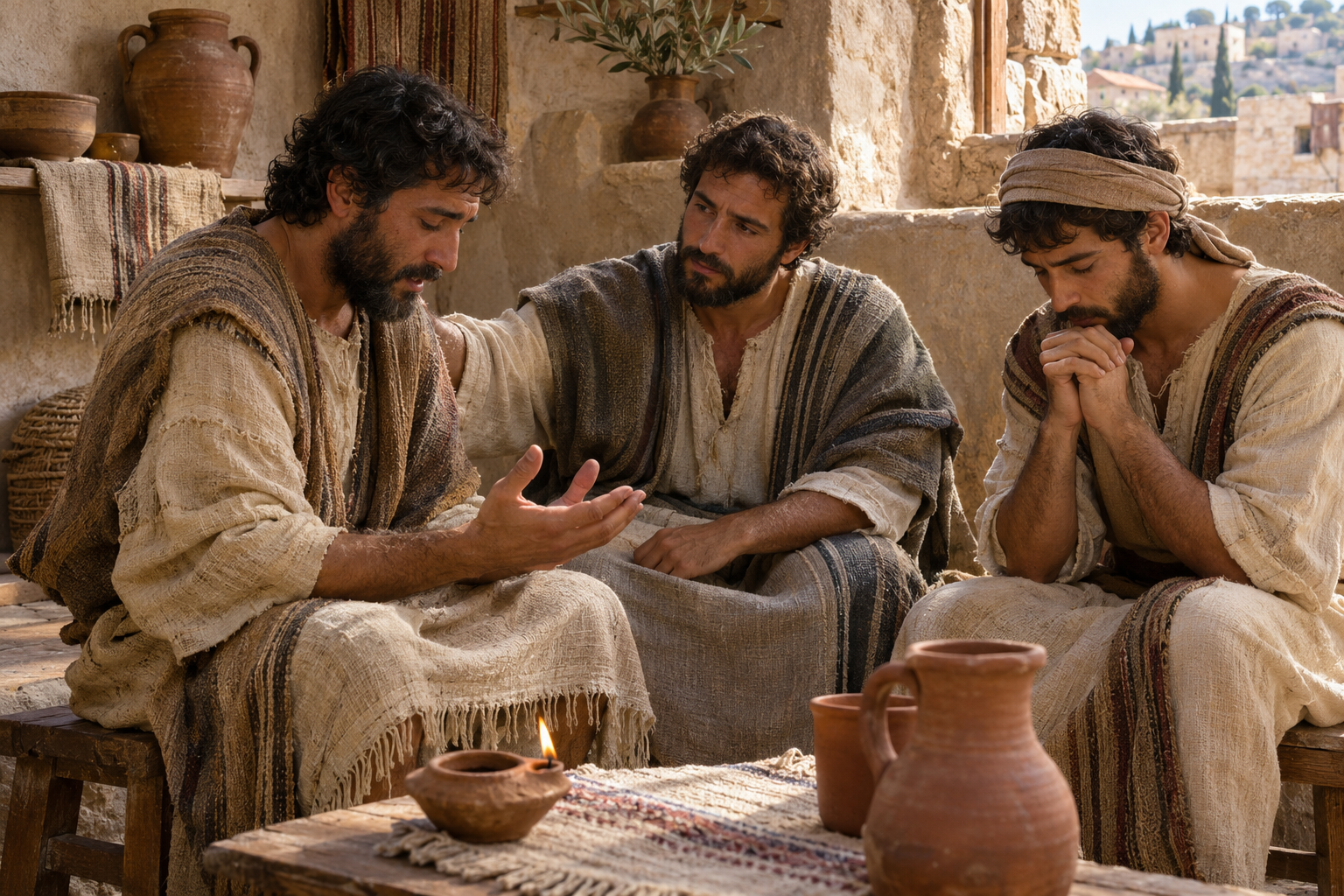
James 5:16 KJV
Confess your faults one to another, and pray one for another, that ye may be healed. The effectual fervent prayer of a righteous man availeth much.
It can be easier to help another man move a couch than to tell him what is happening in your own heart. You may know how to show up with tools and still struggle to admit that you need prayer. James invites believers into a shared life where honesty is met with care, and where weakness does not have to stay hidden. His words ask us to consider both sides of that friendship: the courage to speak truthfully about our own sin and the patience to bring another man’s need before God.
Scripture Explained
A man may spend a difficult week making sure nobody notices how much he is struggling. He answers questions about work, laughs at the usual jokes, and leaves church with the same burden he carried in. James describes a different kind of life together. Believers are to acknowledge their sins and pray for each other, trusting that God is able to bring help where secrecy has left them isolated.
The letter addresses the twelve tribes scattered abroad, using language rooted in Israel’s story. In its closing chapter, James speaks to suffering people about patience, truthful speech, and prayer. Those who are sick are to call the church’s elders for prayer. The instruction to confess and pray for one another follows within that setting of shared care. It is a call to the believing community, rather than a technique for a spiritually impressive individual.
Confession means naming our wrongdoing honestly, without dressing it up as someone else’s fault. Yet James does not teach that every illness proves a particular hidden sin, or that recovery depends on finding the right words. God remains the one who heals, and prayer expresses dependence on him. The example of Elijah that follows emphasizes that he was a human being like us. Effective prayer rests on God’s power, not a reputation for exceptional spirituality.
Think About This
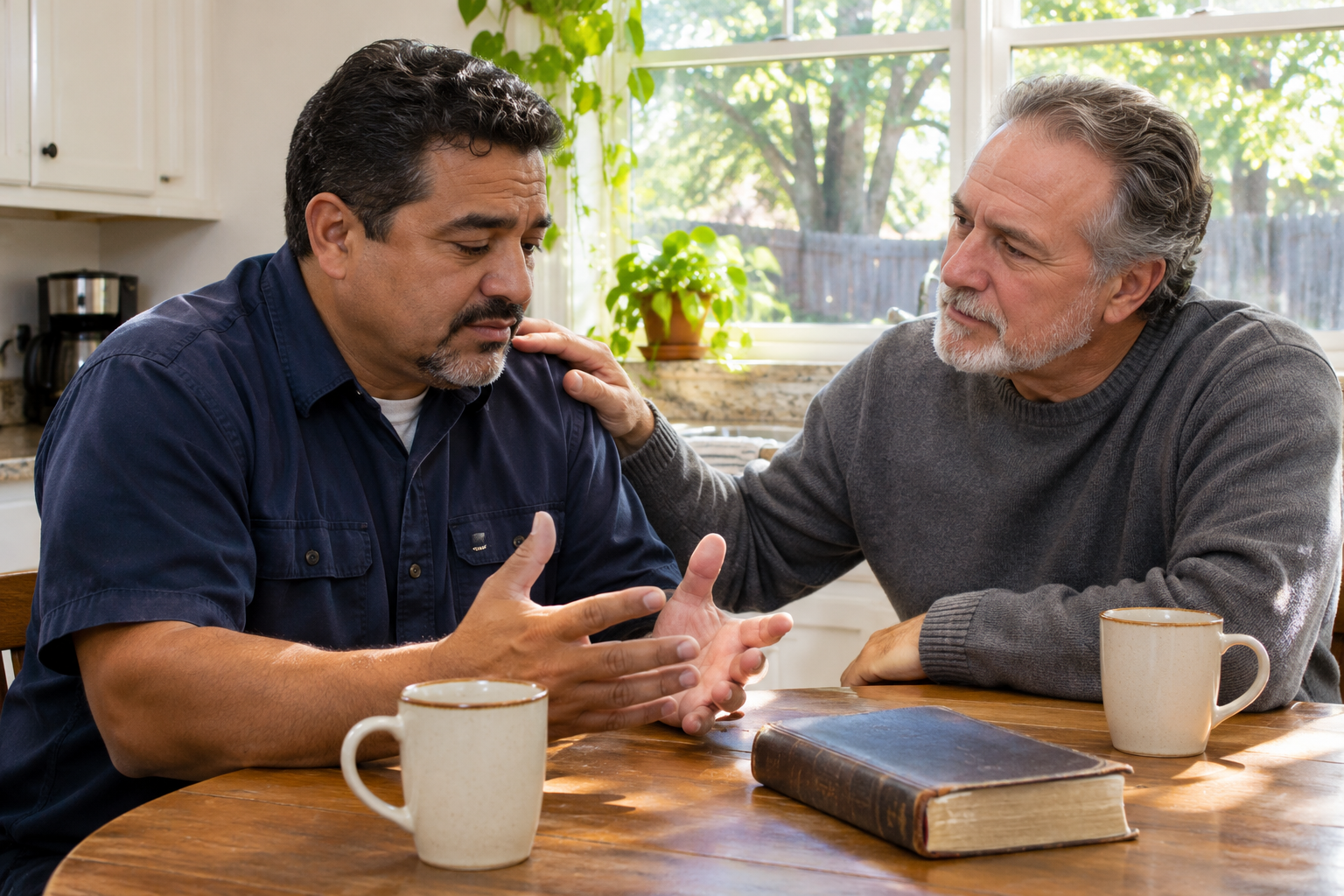
There is a difference between protecting someone’s privacy and protecting our own image. You may rightly avoid sharing another person’s private struggles, while also using discretion as a reason never to admit your own. A trusted Christian friend does not need every detail of your life to pray meaningfully. He does need enough truth to understand where you are tempted, whom you have hurt, and what obedience will require next.
The words one another also place responsibility on the man who listens. Someone may finally admit that he has been dishonest, resentful, or afraid, and our quick advice can close the conversation before we have understood it. Prayerful care makes room for serious listening and appropriate accountability. It neither excuses wrongdoing nor treats another man’s confession as an interesting story to repeat. Trust grows when truth receives patient attention and a faithful response.
What Should I Do
Consider one struggle you have kept describing in vague terms. If you have been harsh at home, confess the words you used and the harm they caused, rather than blaming a stressful schedule. Bring that sin to God, seek forgiveness from the person you wronged, and ask a mature believer to pray with you. Choose someone who handles confidence wisely and will help you follow through with change.
When a brother speaks honestly, ask what he would like you to understand before offering a solution. You can pray in ordinary words, asking God for mercy, wisdom, healing, and strength to obey. If the situation involves sickness, encourage the care of church elders as James instructs. Prayer can accompany medical treatment and practical support; the passage gives no reason to shame a person who needs either.
Arrange a specific time to speak again, so the conversation becomes part of an ongoing relationship. You might ask whether he made the apology, attended the appointment, or sought the help he needed. Where someone is being harmed, caring faithfully includes seeking appropriate protection and help rather than promising secrecy. Your role is to walk beside a brother under Christ’s care, while recognizing when a pastor or another qualified person should be involved.
Learn More
Read James 5:13–20 as a whole and notice how suffering, sickness, confession, prayer, and restoration belong together. Then return to James 4:13–16, where plans are submitted to the Lord’s will. These passages help us pray with confidence in God without claiming control over the outcome. A delayed recovery is not permission to accuse a suffering believer of having too little faith.
First John 1:8–9 connects honest acknowledgment of sin with God’s faithfulness to forgive and cleanse. Galatians 6:1–2 describes gentle restoration and the sharing of burdens, while warning each helper to watch himself. Together, these passages offer a practical direction for the next conversation: speak truthfully, listen humbly, pray specifically, and remain available. Ask God to show you one person with whom you can begin that kind of honest friendship.



A Prayer for Honest Confession and Mutual Care
Father, you know the sins I struggle to name and the burdens I try to carry alone. Through Jesus, give me courage to confess honestly and seek forgiveness where I have done harm. Help me welcome the prayer and wise care of trustworthy believers.
Teach me to listen with patience when another man opens his heart. Guard my words, keep me humble, and make me faithful in prayer and practical help. Bring healing according to your wisdom, and lead us together in obedience to Christ. In Jesus’ name, amen.

Caring for One Another: 8 Ways to Cultivate Meaningful Relationships — Edward T. Welch (2018 Crossway Illustrated Paperback)
Edward T. Welch offers eight short lessons on building caring relationships in the church, including listening, prayer, suffering, and honest conversations about sin. It fits James 5:16 closely by helping readers move from keeping struggles private toward mutual prayer and thoughtful, continuing support.
1433561093





Copyright Notice
Copyright © 2026 Men Building Faith. All rights reserved.
All content on this website, including text, articles, devotionals, blog posts, graphics, logos, designs, photographs, videos, downloads, and other original materials (collectively, “Content”), is owned by Men Building Faith and is protected by U.S. and international copyright laws.
No part of this site may be copied, reproduced, republished, uploaded, posted, publicly displayed, transmitted, distributed, sold, licensed, or otherwise exploited for any purpose without prior written permission from Men Building Faith, except for brief quotations used for noncommercial purposes with proper attribution and a link back to the original page.
NLT- Scripture quotations marked (NLT) are taken from the Holy Bible, New Living Translation, copyright ©1996, 2004, 2015 by Tyndale House Foundation. Used by permission of Tyndale House Publishers, Carol Stream, Illinois 60188. All rights reserved.
NIV- Scripture quotations taken from The Holy Bible, New International Version® NIV® Copyright © 1973, 1978, 1984, 2011 by Biblica, Inc. Used with permission. All rights reserved worldwide.
AMP- Scripture quotations taken from the Amplified® Bible (AMP), Copyright © 2015 by The Lockman Foundation. Used by permission
NKJV- Scripture taken from the New King James Version®. Copyright © 1982 by Thomas Nelson. Used by permission. All rights reserved
ESV- Scripture quotations are from the ESV® Bible (The Holy Bible, English Standard Version®), copyright © 2001 by Crossway Bibles, a publishing ministry of Good News Publishers. Used by permission. All rights reserved.