
Servant Leadership, Humility, Responsibility, Purpose, Selflessness, Courage, Compassion, Influence, Obedience, Sacrifice
Mark 10:45 NIV
For even the Son of Man did not come to be served, but to serve, and to give his life as a ransom for many.
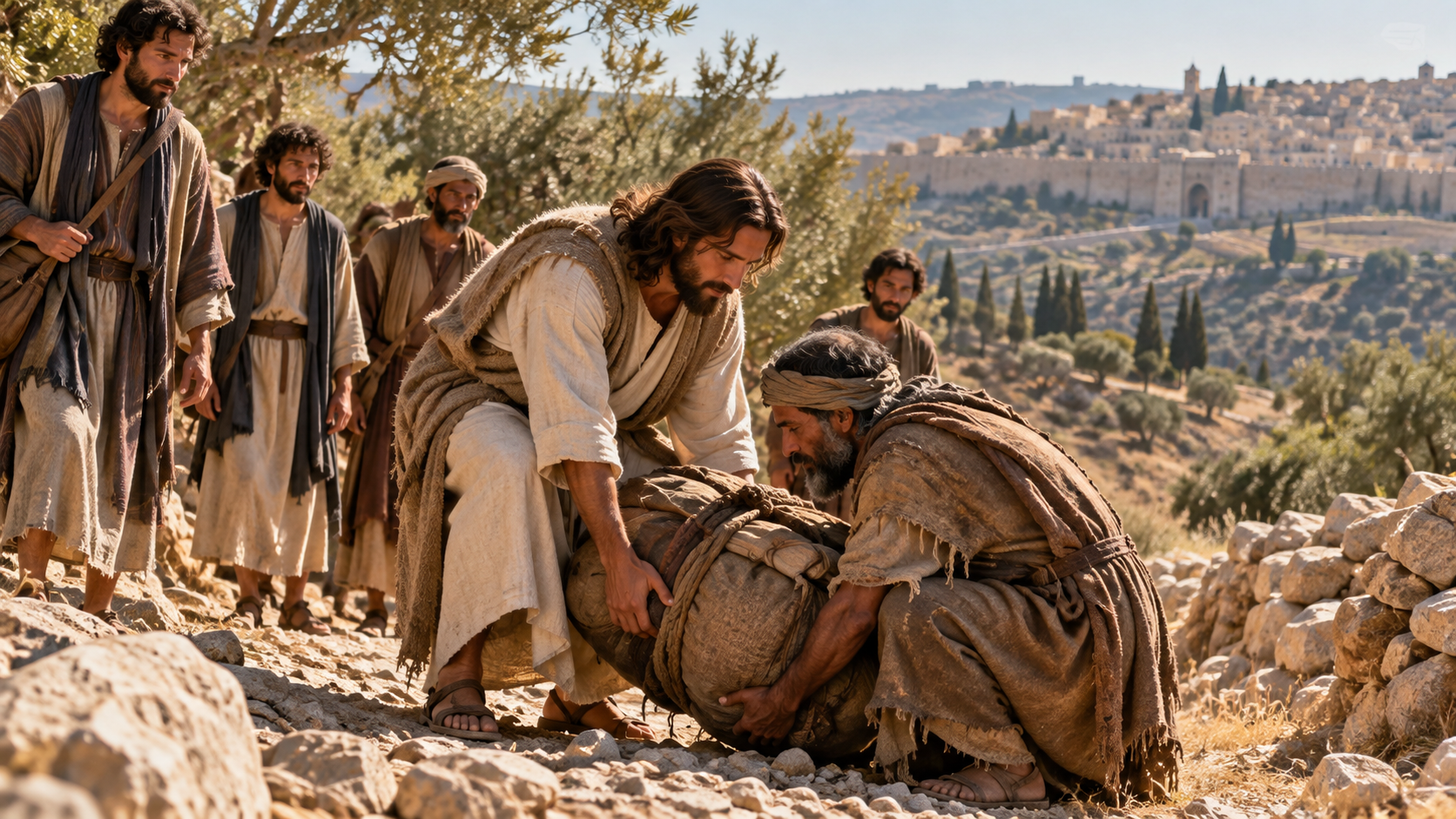
Leadership often reveals what a man believes he deserves. When responsibility grows, so can the expectation of recognition, comfort, or control. Jesus turns that instinct around without pretending authority is unimportant. On the road to Jerusalem, with his own suffering drawing near, he describes greatness as service and points to his life as the pattern. His words reach the office, the jobsite, the church, and the kitchen table. A man who follows Christ does not stop leading; he learns to use strength, position, and time for the good of people who may never repay or applaud him.
Scripture Explained
Mark places these words on the road to Jerusalem, after Jesus has told the Twelve that suffering, death, and resurrection await him. James and John then ask for the highest seats beside him in glory. Even after hearing about sacrifice, they are still thinking about rank. When the other ten become angry, Jesus gathers them and exposes the pattern beneath the conflict: they are measuring greatness by the same ladder used around them.
Jesus points to Gentile rulers who “lord it over” others and contrasts their way with life in his kingdom. In the Roman world, authority was often displayed through status and the power to command those beneath you. Jesus does not say leadership has no place. He changes the measure: whoever would become great must become a servant, and whoever would be first must become a slave of all. Responsibility remains, but it is redirected toward another person’s good.
Then Jesus identifies himself as the pattern: the Son of Man came not to be served but to serve. The title carries the authority and glory associated with Daniel 7, yet his royal mission moves through humility and suffering. The one with the highest claim to honor chooses the costly path of obedience. Christian service begins with Christ’s character and work, not with a man trying to prove that he is indispensable.
His life is given “as a ransom for many.” A ransom was a price paid to release someone from bondage, and Mark’s wording recalls the suffering servant of Isaiah 53. The statement does not explain every detail of the atonement, but it plainly treats Jesus’ death as purposeful, saving, and offered for others. We do not serve to purchase forgiveness or imitate the cross as though we could repeat it. We serve because the King has rescued sinners who could not rescue themselves.
Think About This
Men can carry real responsibility and still hunger to be noticed for it. That hunger appears in resentment when no one thanks us, impatience when our plans are questioned, or a habit of keeping score at home. At work, it can make a title feel more important than the people affected by our decisions. Jesus asks what our influence is for and whether people near us are strengthened or simply managed.
Servant leadership is not passivity or permission for abuse. Jesus acts with truth, courage, boundaries, and purpose. A father may need to make a difficult decision, a supervisor may need to correct poor work, and a church leader may need to protect vulnerable people. The question is whether authority preserves ego and comfort or pursues what is genuinely good, even when that costs the leader time, approval, or ease.
What Should I Do
Begin with one decision at home or work where another person bears most of the consequences. Ask what you have not heard because you were moving too quickly or defending your preferred answer. Listening does not surrender responsibility; it gives you the truth needed to carry it wisely. Pray for the freedom to choose what serves people rather than what makes you look decisive.
Choose one necessary task that usually falls to someone else and do it without making an announcement. Help with the late cleanup, make the difficult call, cover a weary coworker, or handle household work you have overlooked. Hidden service exposes our need for applause. It also teaches that no honest work is beneath a man whose Lord washed feet and walked toward a cross.
Where your leadership has become controlling, make a specific confession. Avoid a vague apology about being “too busy.” Name the sharp words, dismissed concern, or decision made to protect your image. Then ask what repair would help. Repentance does not weaken a man’s authority; it places that authority back under Christ and makes trust possible where defensiveness has worn it thin.
Build service into the way you lead rather than saving it for occasional generosity. Give clear expectations, share credit, protect reasonable rest, develop another person’s gifts, and accept responsibility when the group falls short. At home, be present for the unglamorous needs that keep family life steady. In church, serve where the need is real, not only where the role is visible. These habits turn Mark 10:45 into a pattern others can experience.
Learn More
Philippians 2:3–8 shows the movement from status toward self-giving obedience: Christ does not exploit his position but humbles himself for our sake. John 13:12–17 places a towel in the hands of the Teacher and Lord, making humble service concrete without erasing his authority. Read them alongside Mark 10:35–45 and notice how Jesus addresses both the desire for prominence and the daily posture of a disciple.
Isaiah 53:10–12 deepens the background to Jesus giving his life for many, while 1 Peter 5:2–3 warns leaders against domineering those entrusted to them. Galatians 5:13 shows Christian freedom becoming an opportunity to serve through love. Together, these texts keep service rooted in the gospel. A man does not serve to earn a place with Christ; because Christ has rescued him, he can spend his strength for others without needing their praise to establish his worth.



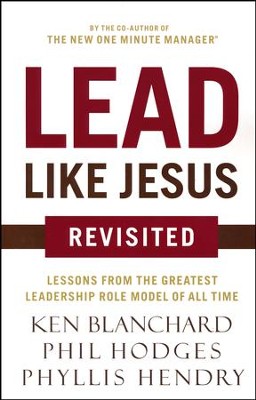
Lead Like Jesus Revisited: Lessons from the Greatest Leadership Role Model of All Time by Ken Blanchard, Phil Hodges, and Phyllis Hendry (2016 Thomas Nelson Revised Paperback)
0718077253
Ken Blanchard, Phil Hodges, and Phyllis Hendry examine Jesus’ leadership from the inside out—heart, head, hands, and habits—and show how his example reshapes influence at home, work, church, and in the community. The book fits Mark 10:45 directly because it moves leadership away from status and self-interest toward the kind of purposeful service Jesus both taught and embodied.
A Prayer to Lead by Serving
Teach me to use strength and responsibility for the good of others.
Lord Jesus, you possessed all authority, yet you came to serve and gave your life to rescue sinners like me. Expose the places where I use responsibility to protect my comfort, demand recognition, or control the people around me. Root my worth in your grace so I no longer need applause to feel secure.
Teach me to listen well, speak truthfully, and carry the costly work that love requires. Give me courage to confess selfish leadership, wisdom to use authority for another person’s good, and patience for the hidden tasks that rarely receive thanks. Let my family, coworkers, church, and neighbors experience something of your care through the way I lead.






Copyright Notice
Copyright © 2026 Men Building Faith. All rights reserved.
All content on this website, including text, articles, devotionals, blog posts, graphics, logos, designs, photographs, videos, downloads, and other original materials (collectively, “Content”), is owned by Men Building Faith and is protected by U.S. and international copyright laws.
No part of this site may be copied, reproduced, republished, uploaded, posted, publicly displayed, transmitted, distributed, sold, licensed, or otherwise exploited for any purpose without prior written permission from Men Building Faith, except for brief quotations used for noncommercial purposes with proper attribution and a link back to the original page.
NLT- Scripture quotations marked (NLT) are taken from the Holy Bible, New Living Translation, copyright ©1996, 2004, 2015 by Tyndale House Foundation. Used by permission of Tyndale House Publishers, Carol Stream, Illinois 60188. All rights reserved.
NIV- Scripture quotations taken from The Holy Bible, New International Version® NIV® Copyright © 1973, 1978, 1984, 2011 by Biblica, Inc. Used with permission. All rights reserved worldwide.
AMP- Scripture quotations taken from the Amplified® Bible (AMP), Copyright © 2015 by The Lockman Foundation. Used by permission
NKJV- Scripture taken from the New King James Version®. Copyright © 1982 by Thomas Nelson. Used by permission. All rights reserved
ESV- Scripture quotations are from the ESV® Bible (The Holy Bible, English Standard Version®), copyright © 2001 by Crossway Bibles, a publishing ministry of Good News Publishers. Used by permission. All rights reserved.