
Careless, Angry, Defensive, Embarrassed, Heard, Calm, Patient, Wise, Honest, Gracious
Proverbs 18:21 NIV
“The tongue has the power of life and death, and those who love it will eat its fruit.”
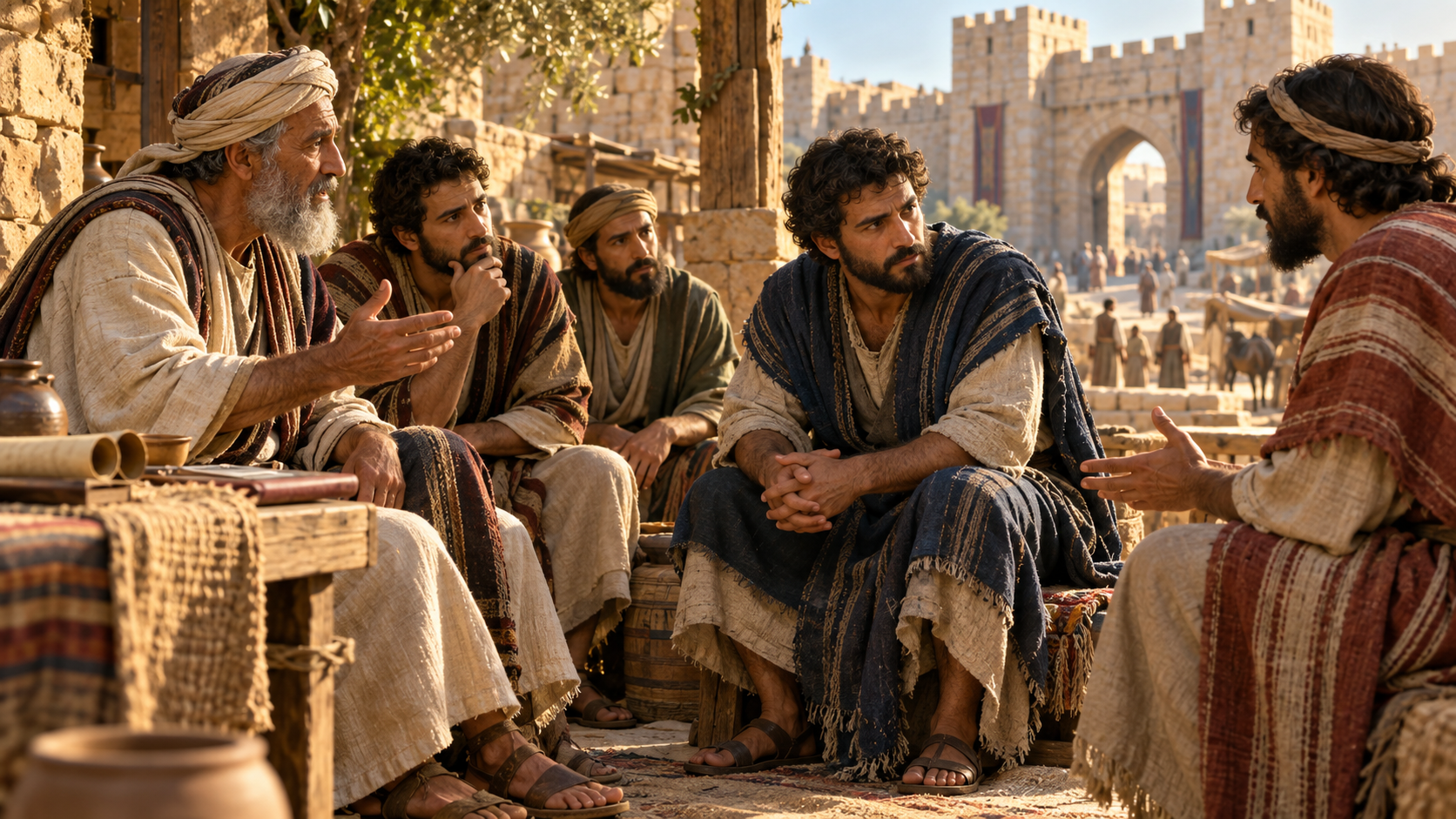
Some words disappear almost as soon as they are spoken; others stay in a room for years. A father’s impatience can become the sentence a son remembers, while a supervisor’s careful correction can steady a man who expected to be humiliated. Proverbs does not treat speech as harmless noise. It asks us to notice what our words set in motion, both in other people and in our own character. The lesson here is not to become timid or evasive, but to speak truth with enough humility and care that our mouths serve life instead of feeding damage we later wish we could undo.
Scripture Explained
Proverbs 18 gathers observations about quarrels, listening, pride, and speech. Its brief sayings are not disconnected slogans; the chapter repeatedly shows people revealing their hearts through the way they listen and answer. Verse 21 brings that pattern into sharp focus: “The tongue has the power of life and death, and those who love it will eat its fruit.” A few words can shelter another person, deepen a wound, or begin repairing one.
The phrase “life and death” describes the serious reach of human speech, not a technique for making events happen by verbal force. Proverbs deals in wisdom: the moral grain of God’s world, where repeated choices bear fruit. Words can protect a reputation or destroy it, invite repentance or harden resistance, give honest testimony or spread an accusation. Careful speech cannot control another person’s response, but it remains our responsibility.
The closing line turns the warning back toward the speaker. To “eat its fruit” is to live with what our habits of speech produce. A man who enjoys sarcasm may find that nobody trusts him with a tender subject. One who tells the truth without embarrassing people can become trusted when the stakes are high. Not every consequence arrives quickly or neatly, but the mouth is never detached from character, relationships, and accountability before God.
Proverbs includes material associated with collectors and contributors. Chapter 18 falls within the collection introduced as “the proverbs of Solomon” in Proverbs 10:1, although the occasion for this saying is not identified. That uncertainty should keep us from inventing a scene. Israel’s wisdom tradition trained people for daily faithfulness—in family decisions, public disputes, business dealings, friendship, and worship—where spoken words could preserve justice or do lasting harm.
Think About This
Many men can remember a sentence that still has a voice attached to it. It may have come from a father who never apologized, a coach who saw more than anyone else did, or a boss who corrected an error without stripping away dignity. Our words are entering somebody else’s memory. That should not make us afraid to speak; it should make us honest about the difference between necessary clarity and the pleasure of making another person feel our displeasure.
Pressure exposes the speech habits we have been rehearsing. Fatigue shortens patience, embarrassment reaches for blame, and a screen makes it easy to send what we would hesitate to say across a table. The deeper question is not simply, “Did I use a bad word?” It is, “What was I trying to accomplish?” We may be defending truth, or protecting pride. Often the people closest to us know the difference before we admit it.
What Should I Do
Begin by slowing down one conversation that normally runs ahead of your judgment. James 1:19–20 joins quick listening with slow speech and slow anger because those disciplines belong together. When tension rises, ask one honest question before giving your conclusion. Repeat what you heard, especially with your wife, child, coworker, or brother in Christ. Listening does not surrender conviction; it helps ensure that your conviction answers the person in front of you rather than the argument in your head.
Pay attention to the setting as well as the sentence. Necessary correction may belong in private, where a man can hear it without performing for an audience. A difficult email may need to wait until morning. If your words have wounded someone, make the apology plain: name what you said, acknowledge what it did, and ask forgiveness without adding a defense. Repair cannot erase every consequence, but humility can keep us from adding fresh damage.
Finally, give your mouth better material. Jesus taught that words overflow from the heart, so restraint alone will not carry the burden. Bring resentment, envy, and fear before God instead of letting them draft your next sentence. Then practice Ephesians 4:29—words fitted to the moment and able to benefit the hearer. That may sound like encouragement, a firm warning, a confession, or a refusal to join gossip. Life-giving speech is not always soft, but it is governed by love.
Learn More
James 3:2–12 pictures the tongue as a bit, a rudder, and a fire: something small with power far beyond its size. Proverbs 12:18 sets reckless words beside the healing speech of the wise. Read those passages with Matthew 12:36–37, where Jesus says our words matter before God. Together they keep us from treating conversation as merely a social skill. Speech belongs to discipleship because it reveals what rules the heart and affects the people God has placed near us.
Colossians 4:6 adds an important balance: gracious speech should also be seasoned and responsive, not vague or flattering. Notice the conversations in which you are tempted to win, withdraw, or wound. Choose one relationship where your words need repair or greater care, pray before you speak, and take the next honest step. The aim is not flawless conversation by tomorrow, but a mouth increasingly submitted to Christ, so that truth and grace are heard together when your voice enters the room.



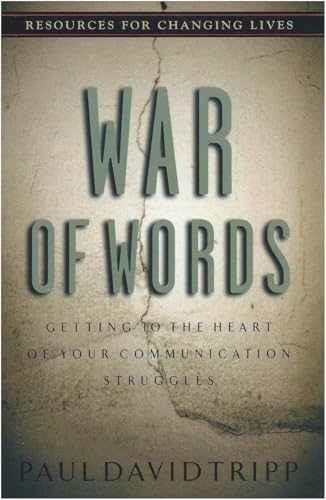
War of Words: Getting to the Heart of Your Communication Struggles — 2001 Paperback
0875526047
Paul David Tripp examines why communication problems begin in the heart and shows how the gospel reshapes everyday speech. Its focus on the blessing, danger, and responsibility carried by our words makes this 2001 P&R paperback a direct companion to Proverbs 18:21 rather than a general Christian-living recommendation.
A Prayer for Life-Giving Words
Lord, teach me to speak truth with grace.
Father, You know how quickly I can speak when I feel pressured, overlooked, or certain that I am right. Search the motives beneath my words, and teach me to listen long enough to understand. Give me courage to tell the truth without using it as a weapon, and humility to apologize plainly when my speech has wounded someone.
Let my voice bring steadiness to my home, honesty to my work, and grace to difficult conversations. Guard me from gossip, sarcasm, and careless anger. Fill my heart with the wisdom of Christ so that what comes from my mouth helps others stand, repent, heal, and hope. Amen.

Copyright Notice
Copyright © 2026 Men Building Faith. All rights reserved.
All content on this website, including text, articles, devotionals, blog posts, graphics, logos, designs, photographs, videos, downloads, and other original materials (collectively, “Content”), is owned by Men Building Faith and is protected by U.S. and international copyright laws.
No part of this site may be copied, reproduced, republished, uploaded, posted, publicly displayed, transmitted, distributed, sold, licensed, or otherwise exploited for any purpose without prior written permission from Men Building Faith, except for brief quotations used for noncommercial purposes with proper attribution and a link back to the original page.
NLT- Scripture quotations marked (NLT) are taken from the Holy Bible, New Living Translation, copyright ©1996, 2004, 2015 by Tyndale House Foundation. Used by permission of Tyndale House Publishers, Carol Stream, Illinois 60188. All rights reserved.
NIV- Scripture quotations taken from The Holy Bible, New International Version® NIV® Copyright © 1973, 1978, 1984, 2011 by Biblica, Inc. Used with permission. All rights reserved worldwide.
AMP- Scripture quotations taken from the Amplified® Bible (AMP), Copyright © 2015 by The Lockman Foundation. Used by permission
NKJV- Scripture taken from the New King James Version®. Copyright © 1982 by Thomas Nelson. Used by permission. All rights reserved
ESV- Scripture quotations are from the ESV® Bible (The Holy Bible, English Standard Version®), copyright © 2001 by Crossway Bibles, a publishing ministry of Good News Publishers. Used by permission. All rights reserved.