
Integrity, Leadership, Family, Home, Responsibility, Character, Repentance, Discipline, Wisdom, Faithfulness
Psalm 101:2 NIV
I will be careful to lead a blameless life—when will you come to me? I will conduct the affairs of my house with a blameless heart.
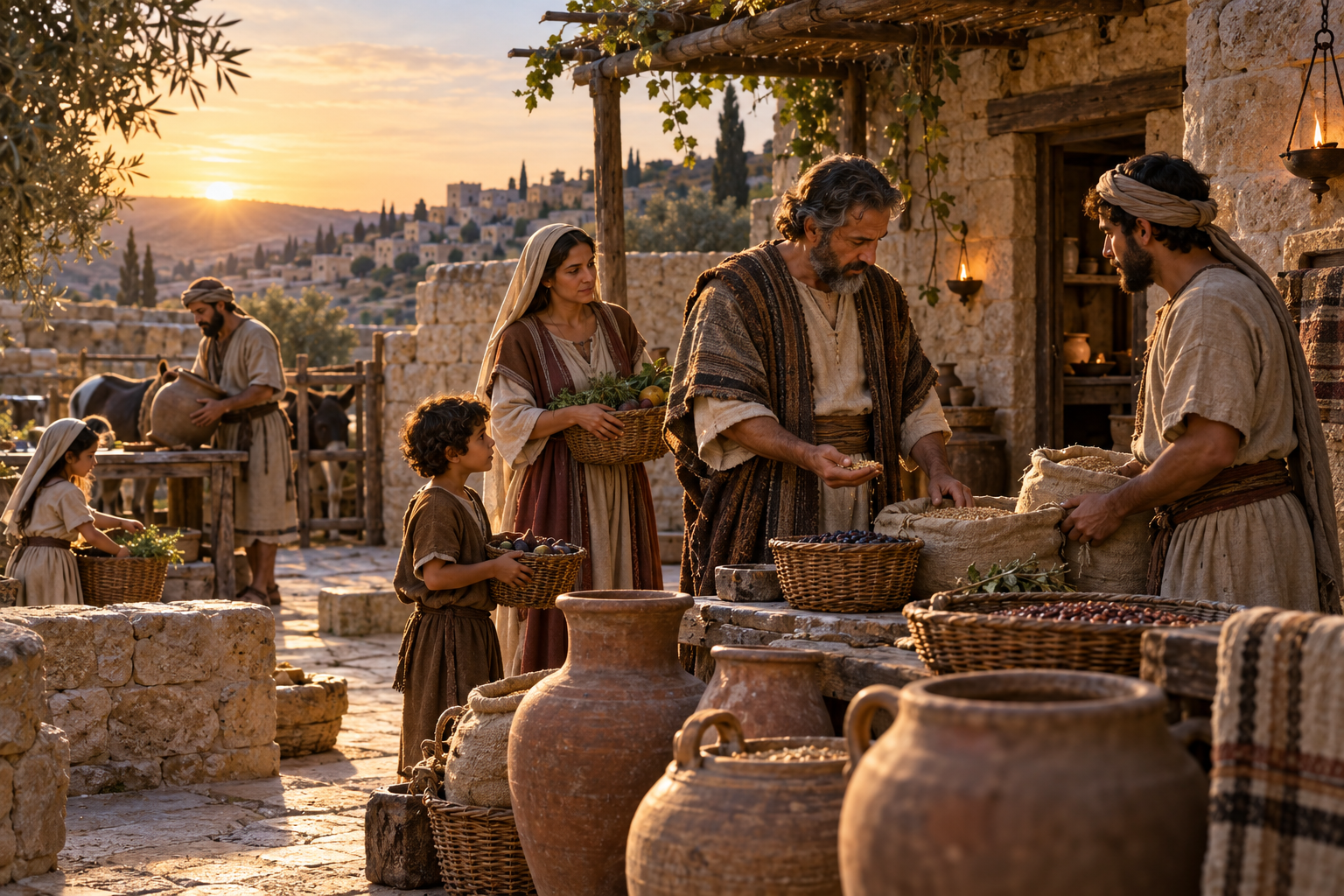
Responsibility at home often reveals what public competence can hide. A man might be respected at work yet impatient at the dinner table, dependable in church yet careless with the people nearest to him. Psalm 101 brings integrity into that private space. David’s pledge joins wise conduct with a blameless heart, while his question to God admits that such leadership depends on God’s presence. The call is neither control nor image management. It is a steady life in which worship, decisions, apologies, boundaries, and ordinary attention all come under the same faithful Lord.
Scripture Explained
Responsibility often exposes the distance between a man’s public reputation and his private character. A leader can sound measured in a meeting, serve faithfully at church, and still bring impatience or neglect through the front door. Psalm 101 speaks into that gap. David describes the life he intends to live before God, then brings that commitment into the household where habits are difficult to disguise and character is felt closely.
The superscription identifies Psalm 101 as a psalm of David. Its language sounds like a royal pledge: he praises God’s love and justice, rejects corrupt influence, and refuses deceit within his administration. Scripture does not say when David wrote it or whether it belonged to a coronation ceremony, so the setting remains uncertain. The movement is clear: public justice begins with the ruler’s own conduct and the culture of his house.
David says he will be careful to lead a blameless life. Here, blamelessness does not mean sinless perfection. It points toward integrity, a life not divided between devotion to God and tolerated evil. His question, “when will you come to me?” places the pledge inside dependence rather than self-confidence. Then the focus tightens from kingdom to household: “I will conduct the affairs of my house with a blameless heart.” Inner loyalty and daily management belong together.
An ancient household often included relatives, servants, workers, guests, and other dependents. David’s words therefore carry social weight. They do not grant a man permission to dominate his family or pretend that every husband is a king. Nor do they make him responsible for controlling another person’s faith. They call him to govern his own conduct, use entrusted authority justly, and build a home where deceit is not protected.
Think About This
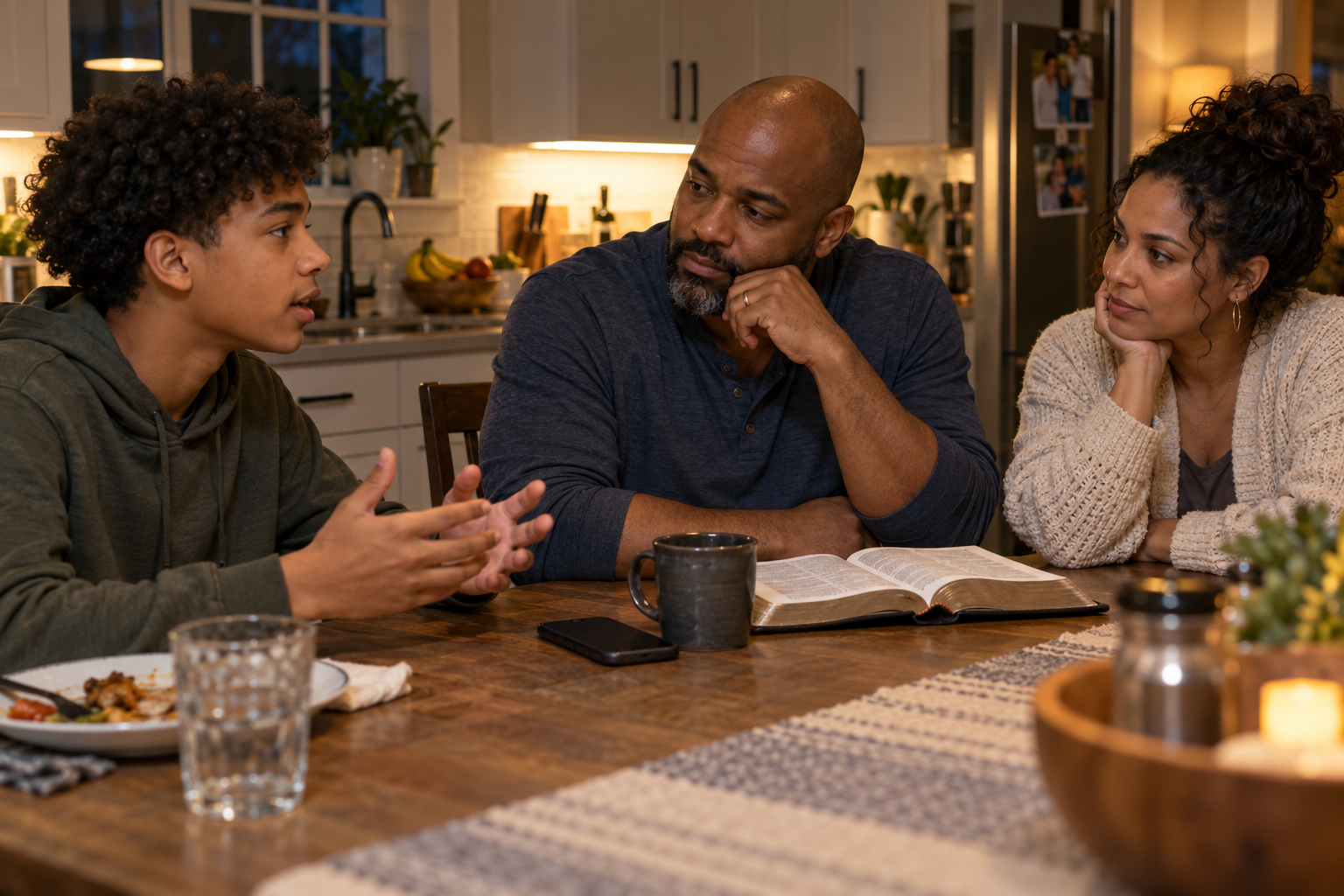
Home often receives what is left after work, ministry, and public demands have taken their share. The people nearest a man see the unguarded tone, distracted listening, or promise that slips to tomorrow. Psalm 101 asks whether the character others admire survives inside the house. Integrity is not proved by never failing. It becomes visible when a man tells the truth about failure, seeks forgiveness without excuses, and changes the pattern that caused harm.
A blameless heart also challenges the urge to manage appearances. A respectable image can coexist with hidden resentment, secret habits, financial dishonesty, or emotional absence. God is forming a whole man whose worship reaches his calendar, screen, spending, words, and attention. That work begins with grace. David’s question about God coming near reminds us that faithful household leadership grows from dependence on the Lord, not force of personality.
What Should I Do
Notice where your household experiences a different version of you. Ask your wife, children, roommate, or another person who sees you closely one question: “Where does my conduct make it harder for you to trust me?” Listen without cross-examining the answer. Bring what you hear to God, name the wrong plainly, and make a specific apology. Humble repentance establishes more safety than a speech about leadership.
Choose one ordinary responsibility and make it dependable. Pay the bill you keep postponing, keep the promise about bedtime, finish the repair, or put the phone away during a needed conversation. Psalm 101 joins a blameless heart with the affairs of a house. Integrity therefore belongs in schedules and follow-through, not only in intentions. A small duty done consistently tells the people around you that their needs matter.
Set a boundary against one influence that feeds division in your private life. Remove access to sexual content, refuse gossip, reconsider how alcohol is used, or step away from media that keeps shaping your tone toward anger. David’s wider psalm is alert to what enters his sight and whom he allows near his leadership. Wise boundaries are practical ways of protecting attention, honesty, and peace.
Build a simple rhythm of spiritual care that serves rather than controls. Read a short portion of Scripture, pray for the concerns your household actually carries, and welcome questions you do not rush to answer. If you live alone, practice the same integrity through hospitality, friendship, and stewardship of your space. Household leadership becomes faithful when people under your care are treated as neighbors to love, not projects to manage.
Learn More
Read all of Psalm 101 and watch how personal resolve, household order, and public justice reinforce one another. Deuteronomy 6:4–9 places love for God within the ordinary rhythms of home. Joshua 24:14–15 joins household commitment with a rejection of rival gods. Ephesians 5:21–6:4 frames family relationships with reverence for Christ, sacrificial love, honor, and restraint. These texts keep leadership rooted in worship and responsibility rather than privilege.
Psalm 15 and Psalm 24 describe the integrity fitting for life in God’s presence, while Proverbs 20:7 connects a righteous walk with the blessing experienced by one’s children. First Timothy 3:4–5 treats household care as evidence for church leadership. None offers a technique for producing a flawless family. They direct a man back to his own walk: seek God, reject hidden compromise, repair damage, and practice faithful love where life is known best.



A Prayer for Integrity at Home
Father, bring my private life under your loving rule. Search the habits and reactions I excuse at home, and give me a blameless heart that seeks wholeness instead of appearances. Keep me from using responsibility as control. Teach me to lead through truth, patience, repentance, and steady care.
Let the people closest to me meet the same man I present in public. Help me listen before defending myself, keep my word, set wise boundaries, and ask forgiveness quickly. Make my home a place where your character is honored in ordinary choices, and let my leadership begin with dependence on you. Amen.
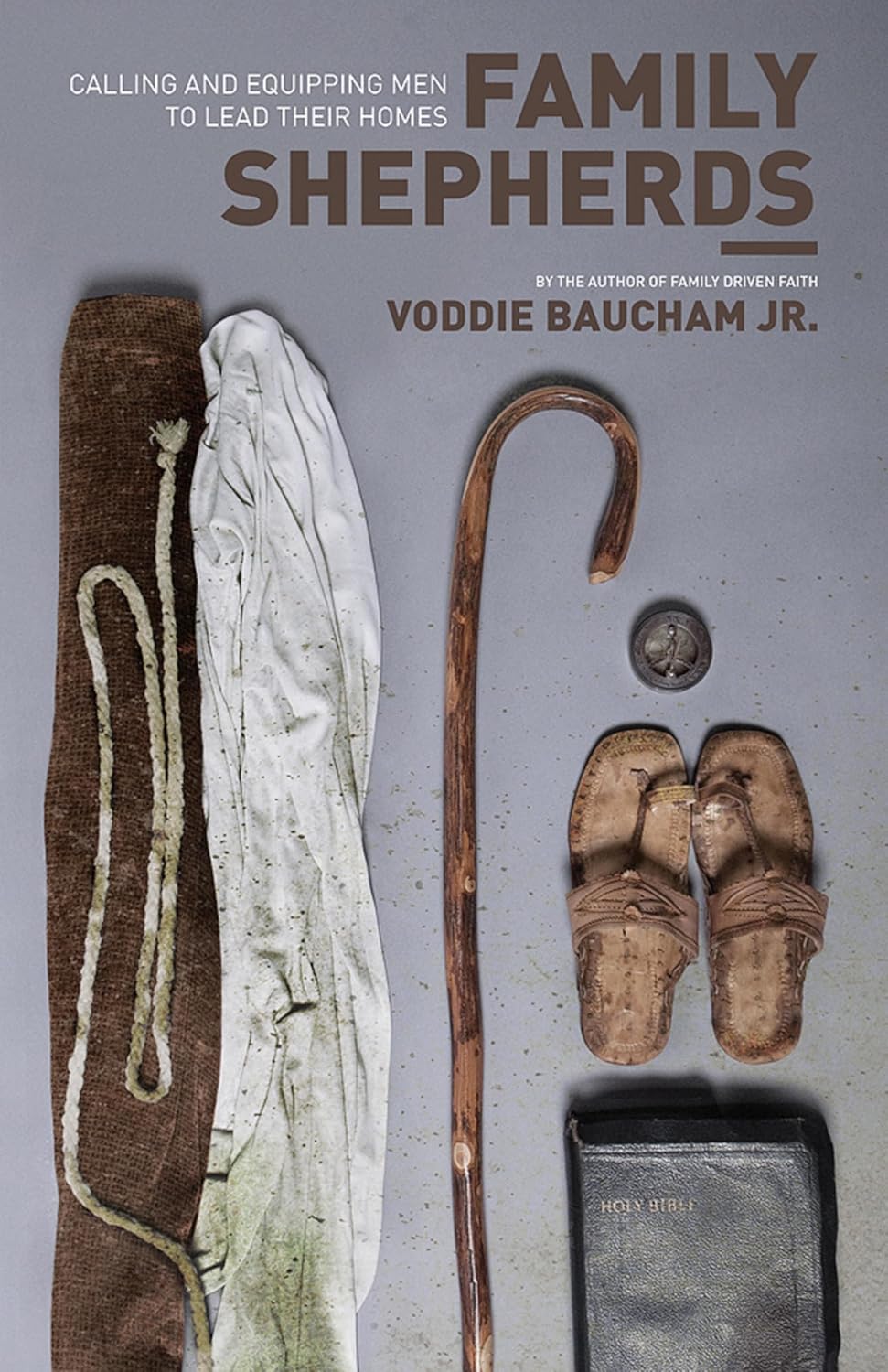
Family Shepherds: Calling and Equipping Men to Lead Their Homes by Voddie Baucham Jr. (2011 Crossway Paperback)
Voddie Baucham Jr. gives husbands and fathers a biblical framework for shepherding their families through marriage, discipleship, worship, and difficult household dynamics. Its focus fits Psalm 101:2 directly: faithful leadership begins inside the home, where a man’s conduct, care, and spiritual responsibility become visible to those closest to him.
1433523698

Copyright Notice
Copyright © 2026 Men Building Faith. All rights reserved.
All content on this website, including text, articles, devotionals, blog posts, graphics, logos, designs, photographs, videos, downloads, and other original materials (collectively, “Content”), is owned by Men Building Faith and is protected by U.S. and international copyright laws.
No part of this site may be copied, reproduced, republished, uploaded, posted, publicly displayed, transmitted, distributed, sold, licensed, or otherwise exploited for any purpose without prior written permission from Men Building Faith, except for brief quotations used for noncommercial purposes with proper attribution and a link back to the original page.
NLT- Scripture quotations marked (NLT) are taken from the Holy Bible, New Living Translation, copyright ©1996, 2004, 2015 by Tyndale House Foundation. Used by permission of Tyndale House Publishers, Carol Stream, Illinois 60188. All rights reserved.
NIV- Scripture quotations taken from The Holy Bible, New International Version® NIV® Copyright © 1973, 1978, 1984, 2011 by Biblica, Inc. Used with permission. All rights reserved worldwide.
AMP- Scripture quotations taken from the Amplified® Bible (AMP), Copyright © 2015 by The Lockman Foundation. Used by permission
NKJV- Scripture taken from the New King James Version®. Copyright © 1982 by Thomas Nelson. Used by permission. All rights reserved
ESV- Scripture quotations are from the ESV® Bible (The Holy Bible, English Standard Version®), copyright © 2001 by Crossway Bibles, a publishing ministry of Good News Publishers. Used by permission. All rights reserved.