
Discouraged, Grieving, Weary, Lonely, Waiting, Honest, Heard, Trusting, Hopeful, Comforted
Psalm 13:5 NIV
But I trust in your unfailing love; my heart rejoices in your salvation.

Waiting becomes especially painful when you have prayed honestly and still see no change. You keep doing what needs doing, yet the unanswered question follows you home and returns when the house grows quiet. Psalm 13 gives language to a man living in this tension. David brings his sorrow to God before speaking of trust, and the psalm never tells us his circumstances improved first. His prayer helps us approach God without pretending, remember His love without dismissing our pain, and remain faithful while the answer remains beyond our sight.
Scripture Explained
Some prayers become harder to repeat because the situation has stayed the same for so long. Psalm 13 begins in precisely this kind of distress. David asks how long God will seem absent, how long sorrow will occupy his thoughts, and how long his enemy will prevail. The title identifies the psalm with David and addresses the director of music, but it names no particular crisis. Assigning it to a specific battle or family tragedy would go beyond the text.
Across six verses, the prayer moves from complaint to petition and then to trust. David does not begin by pretending to feel peaceful. He speaks to God from within his anguish, asks for an answer, and recognizes how vulnerable he is. By verse 5, his attention turns toward God's unfailing love and saving help. Nothing in the psalm reports a changed circumstance between his questions and his declaration of trust.
God's unfailing love gives David a reason to keep praying when his experience supplies no easy reassurance. Rejoicing in God's salvation is not the same as enjoying his suffering or predicting immediate relief. He entrusts himself to the God whose goodness he remembers in verse 6. For Christians, the death and resurrection of Jesus give further assurance of God's love, without turning David's prayer into a promise of comfort on our preferred schedule.
Think About This
A delayed answer sometimes begins to feel like a personal rejection. You pray for reconciliation, wait for work to improve, or watch someone you love continue to struggle. Eventually, another ordinary morning arrives, and you wonder whether God has heard anything you said. David's prayer makes room for this ache. His questions remain addressed to God, so his lament keeps the relationship open instead of withdrawing into silence.
You do not need to choose between honest sorrow and faithful trust. The difficult question is whether you will bring both into God's presence. At home, hiding pain behind irritability leaves your family guessing about what is wrong. At church, giving an automatic cheerful answer keeps others from knowing where you need support. Psalm 13 invites a more truthful response, one which admits the struggle without treating the struggle as the final verdict on God's character.
What Should I Do
Choose one unresolved burden and put it into an honest prayer today. Rather than describing your entire life as a disaster, name the particular loss, fear, or delay hurting you. Ask God for the help you need, using language you would recognize as your own. If words will not come, slowly pray through Psalm 13, pausing wherever David's questions express something you have struggled to say.
After naming the burden, recall one concrete expression of God's care. Perhaps another believer stayed beside you, a needed conversation brought clarity, or Scripture corrected a conclusion you had drawn in exhaustion. Remembering does not erase the present difficulty. It helps you resist judging God's whole character by one painful season. Above those personal memories, keep returning to Jesus, whose self-giving love does not depend on today's outcome.
Let someone trustworthy know what you are carrying before the pressure comes out in your next conversation. You might tell your wife, a pastor, or a mature friend where you feel discouraged and ask him or her to pray with you. Then attend to the responsibility directly before you, whether it involves an apology, an appointment, or finishing necessary work. Faithful action and honest lament belong together while you wait.
Learn More
Read all six verses of Psalm 13, noticing where David describes his distress, asks for help, and expresses trust. Then compare Psalm 42:5, where the speaker addresses his own downcast soul and directs his hope toward God. Neither prayer treats sadness as proof of spiritual failure. Together they offer language for staying in conversation with God when your emotions do not quickly follow what you believe.
Romans 8:32 connects assurance of God's care with His giving of His Son, and Hebrews 4:14–16 invites believers to seek mercy through Jesus, our sympathetic high priest. Those passages deepen Christian confidence without supplying a timetable for relief. Before the day ends, return to your named burden and pray again. You are not required to manufacture a different mood before approaching the Father who receives you through Christ.



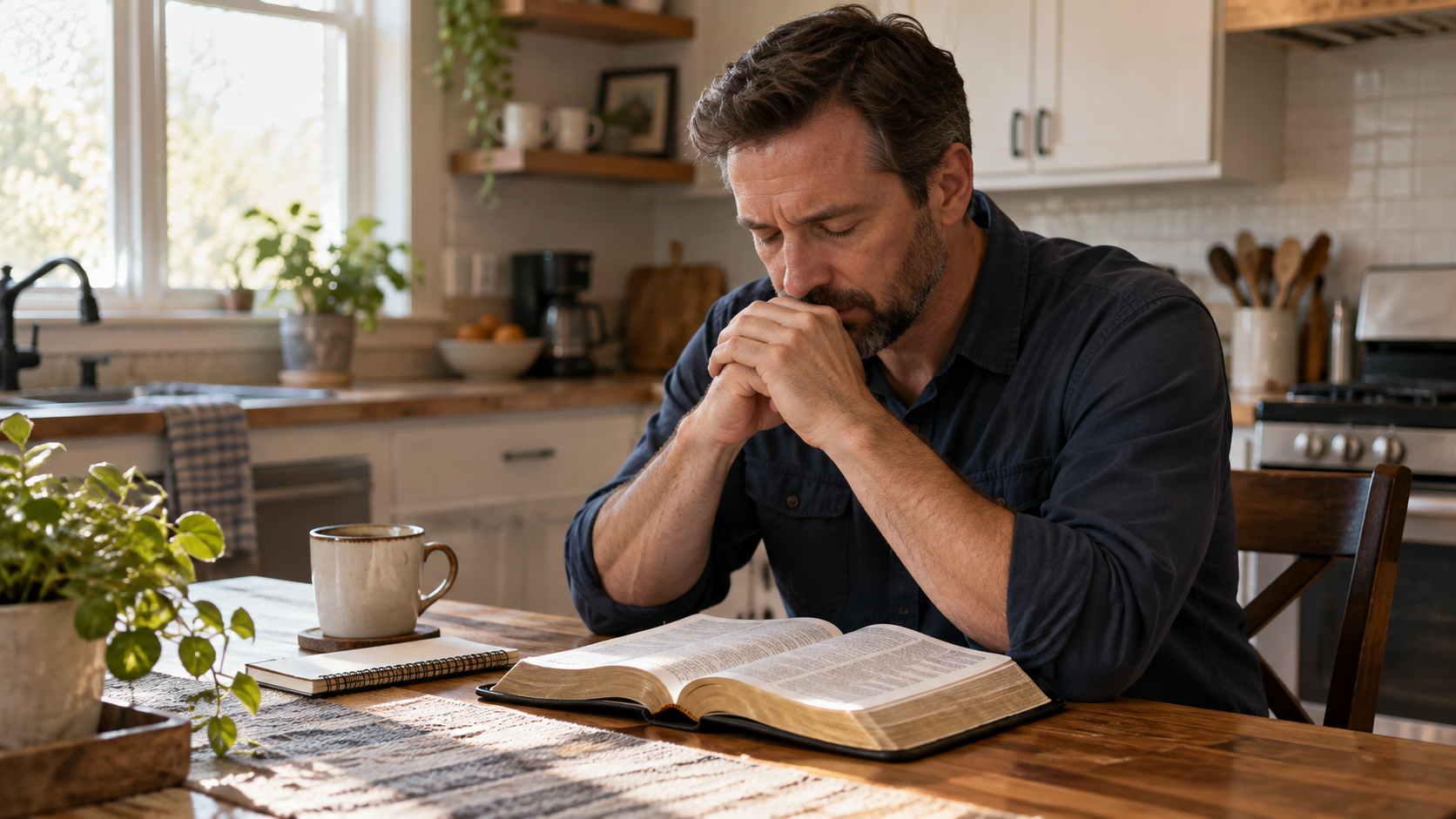
A Prayer to Trust God's Love While I Wait
Father, You know the burden I keep bringing before You and the discouragement I have struggled to admit. Receive my questions without letting me withdraw from You. Teach me to trust Your unfailing love while I wait, and help me remember Your care when sorrow occupies my thoughts.
Lord Jesus, thank You for giving Yourself for me and welcoming me when I feel weak. Guide my next faithful step, give me courage to ask for support, and keep my pain from becoming harshness toward the people I love. Help me rejoice in Your salvation without pretending the struggle has ended. Amen.

Dark Clouds, Deep Mercy: Discovering the Grace of Lament by Mark Vroegop (2019 Crossway paperback)
Mark Vroegop explains how biblical lament gives honest sorrow a place in prayer. Drawing on Psalms and Lamentations, he helps readers speak their grief, ask God for help, and grow in trust without minimizing loss. His chapter on Psalm 13 makes this a particularly close companion to today's teaching. The reflection questions also offer a useful starting point for prayer or a conversation with another believer.
1433561484


Copyright Notice
Copyright © 2026 Men Building Faith. All rights reserved.
All content on this website, including text, articles, devotionals, blog posts, graphics, logos, designs, photographs, videos, downloads, and other original materials (collectively, “Content”), is owned by Men Building Faith and is protected by U.S. and international copyright laws.
No part of this site may be copied, reproduced, republished, uploaded, posted, publicly displayed, transmitted, distributed, sold, licensed, or otherwise exploited for any purpose without prior written permission from Men Building Faith, except for brief quotations used for noncommercial purposes with proper attribution and a link back to the original page.
NLT- Scripture quotations marked (NLT) are taken from the Holy Bible, New Living Translation, copyright ©1996, 2004, 2015 by Tyndale House Foundation. Used by permission of Tyndale House Publishers, Carol Stream, Illinois 60188. All rights reserved.
NIV- Scripture quotations taken from The Holy Bible, New International Version® NIV® Copyright © 1973, 1978, 1984, 2011 by Biblica, Inc. Used with permission. All rights reserved worldwide.
AMP- Scripture quotations taken from the Amplified® Bible (AMP), Copyright © 2015 by The Lockman Foundation. Used by permission
NKJV- Scripture taken from the New King James Version®. Copyright © 1982 by Thomas Nelson. Used by permission. All rights reserved
ESV- Scripture quotations are from the ESV® Bible (The Holy Bible, English Standard Version®), copyright © 2001 by Crossway Bibles, a publishing ministry of Good News Publishers. Used by permission. All rights reserved.