
Pressured, Reactive, Defensive, Angry, Guarded, Patient, Gracious, Faithful
Psalm 141:3 NIV
Set a guard over my mouth, Lord; keep watch over the door of my lips.

A tense conversation rarely announces the moment when wisdom is needed most. Pressure rises, a careless remark lands, and the next sentence forms before the heart has caught up. David knew danger did not come only from enemies around him. His own mouth needed God’s watchful care. Psalm 141:3 gives men a prayer for meetings, marriages, parenting, conflict, and every place where words carry weight. Guarded speech is not timid silence. It is strength brought under God’s direction, willing to pause, listen, and speak in a way that protects truth and people at the same time.
Scripture Explained
A hard conversation often turns on a few seconds. A man feels challenged, misunderstood, or disrespected, and his reply begins forming before he has decided whether it is wise. David’s prayer speaks directly to that moment. He does not assume strong convictions will produce careful words. He asks the Lord to stand watch over his mouth because he knows speech needs more than good intentions.
Psalm 141 is identified as a psalm of David, though the text does not name the precise event behind it. The setting feels urgent. David calls for God to come quickly, compares his prayer to evening incense, and asks for protection from evil people and their traps. In the middle of those external threats, he also recognizes an internal danger. His lips and heart need guarding.
The picture of a guard and a door is deliberate. A city gate did not remain open to every traveler, and a household door was not left unattended during danger. David wants the same vigilance at his mouth. He is not praying for permanent silence or polished speech. He is asking God to govern what leaves him, especially when pressure, fear, or anger makes an immediate response feel necessary.
The next lines connect speech with desire. David asks God not to let his heart be drawn toward evil, then welcomes correction from a righteous person as kindness. His concern reaches deeper than vocabulary. Hurtful words usually begin before the tongue moves. Resentment, pride, envy, and the need to win shape the sentence. Guarded speech starts with a heart willing to be corrected.
Think About This
Men often regret words spoken when they felt cornered. The argument at home, the sharp reply to an employee, or the message sent late at night might feel justified in the moment. Later, the damage becomes clearer. Truth still matters, yet truth delivered to punish someone serves a different purpose from truth spoken to restore clarity. God cares about both the content and the intention behind our words.
Restraint does not require weakness. At times, silence protects fear and avoids a needed conversation. David’s prayer points toward something stronger. He remains ready to speak, receive correction, and oppose evil, while refusing to trust his impulses. A guarded mouth belongs to a man who wants his words to answer to God before they answer his emotions.
What Should I Do
Notice the situations where your speech changes fastest. Perhaps criticism makes you defensive, fatigue shortens your patience, or conflict with one person draws out sarcasm. Name the pattern without excusing it. A specific weakness gives you a place to pray and prepare. Vague regret rarely changes a habit, but honest attention helps you recognize the moment before the old response takes control.
Use David’s words before a difficult meeting or family conversation. Pray them slowly, then decide what the other person needs from you. You might need to state a boundary, admit fault, ask a direct question, or say something uncomfortable. Plan the truth you need to communicate, along with the tone and timing that will keep the conversation from becoming a contest.
Build practical guards around your weakest moments. Delay an angry text until morning. Step outside before answering when your body feels tense. Refuse to argue through a phone when the issue deserves a face-to-face conversation. Ask a trusted brother whether your words sound honest and fair. These habits do not replace the Holy Spirit. They place your choices where obedience receives room to work.
When you speak wrongly, repair the harm without defending your motive. Name the words, acknowledge their effect, and ask forgiveness without attaching an explanation designed to reduce your responsibility. Then consider what the failure revealed in your heart. Christ offers forgiveness for sinful speech, and his grace also trains you to return to the conversation with humility, patience, and truth.
Learn More
Proverbs 10:19 warns that many words increase the opportunity for sin, while Proverbs 15:1 describes the power of a gentle answer. James 1:19 calls believers to listen quickly, speak slowly, and become angry slowly. James 3 then shows why such care matters by comparing the tongue to a fire. Together, these writings treat speech as a serious part of Christian maturity.
Joseph M. Stowell’s The Weight of Your Words: Measuring the Impact of What You Say examines truthfulness, gossip, boasting, anger, patience, and the connection between the heart and the tongue. Its focus closely matches David’s prayer because Stowell treats controlled speech as spiritual formation rather than a communication technique. The book helps a man examine both what he says and what his words reveal.




A Prayer for Guarded Words
Lord, place Your guard over my mouth when pressure rises and I feel the need to answer quickly. Search the anger, pride, fear, or impatience beneath my words. Help me listen carefully and speak truth without using it to wound, control, or prove myself right.
Give me courage for conversations I should not avoid and restraint when silence is wiser. When I fail, lead me to confess it plainly and repair the harm I caused. Shape my speech through Your Spirit so the people closest to me hear honesty, patience, and grace. In Jesus’ name, amen.
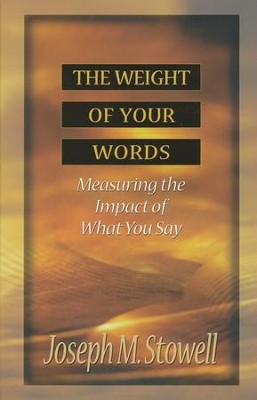
The Weight of Your Words: Measuring the Impact of What You Say
Joseph M. Stowell examines truthfulness, gossip, boasting, anger, patience, and the way speech exposes the heart. The book fits Psalm 141:3 directly because it treats guarded words as evidence of spiritual maturity and dependence on the Holy Spirit.
0802490158

Copyright Notice
Copyright © 2026 Men Building Faith. All rights reserved.
All content on this website, including text, articles, devotionals, blog posts, graphics, logos, designs, photographs, videos, downloads, and other original materials (collectively, “Content”), is owned by Men Building Faith and is protected by U.S. and international copyright laws.
No part of this site may be copied, reproduced, republished, uploaded, posted, publicly displayed, transmitted, distributed, sold, licensed, or otherwise exploited for any purpose without prior written permission from Men Building Faith, except for brief quotations used for noncommercial purposes with proper attribution and a link back to the original page.
NLT- Scripture quotations marked (NLT) are taken from the Holy Bible, New Living Translation, copyright ©1996, 2004, 2015 by Tyndale House Foundation. Used by permission of Tyndale House Publishers, Carol Stream, Illinois 60188. All rights reserved.
NIV- Scripture quotations taken from The Holy Bible, New International Version® NIV® Copyright © 1973, 1978, 1984, 2011 by Biblica, Inc. Used with permission. All rights reserved worldwide.
AMP- Scripture quotations taken from the Amplified® Bible (AMP), Copyright © 2015 by The Lockman Foundation. Used by permission
NKJV- Scripture taken from the New King James Version®. Copyright © 1982 by Thomas Nelson. Used by permission. All rights reserved
ESV- Scripture quotations are from the ESV® Bible (The Holy Bible, English Standard Version®), copyright © 2001 by Crossway Bibles, a publishing ministry of Good News Publishers. Used by permission. All rights reserved.