
Hurting, Confused, Waiting, Discouraged, Grieving, Hopeful, Trusting, Called, Held
Romans 8:28 NIV
And we know that in all things God works for the good of those who love him, who have been called according to his purpose.
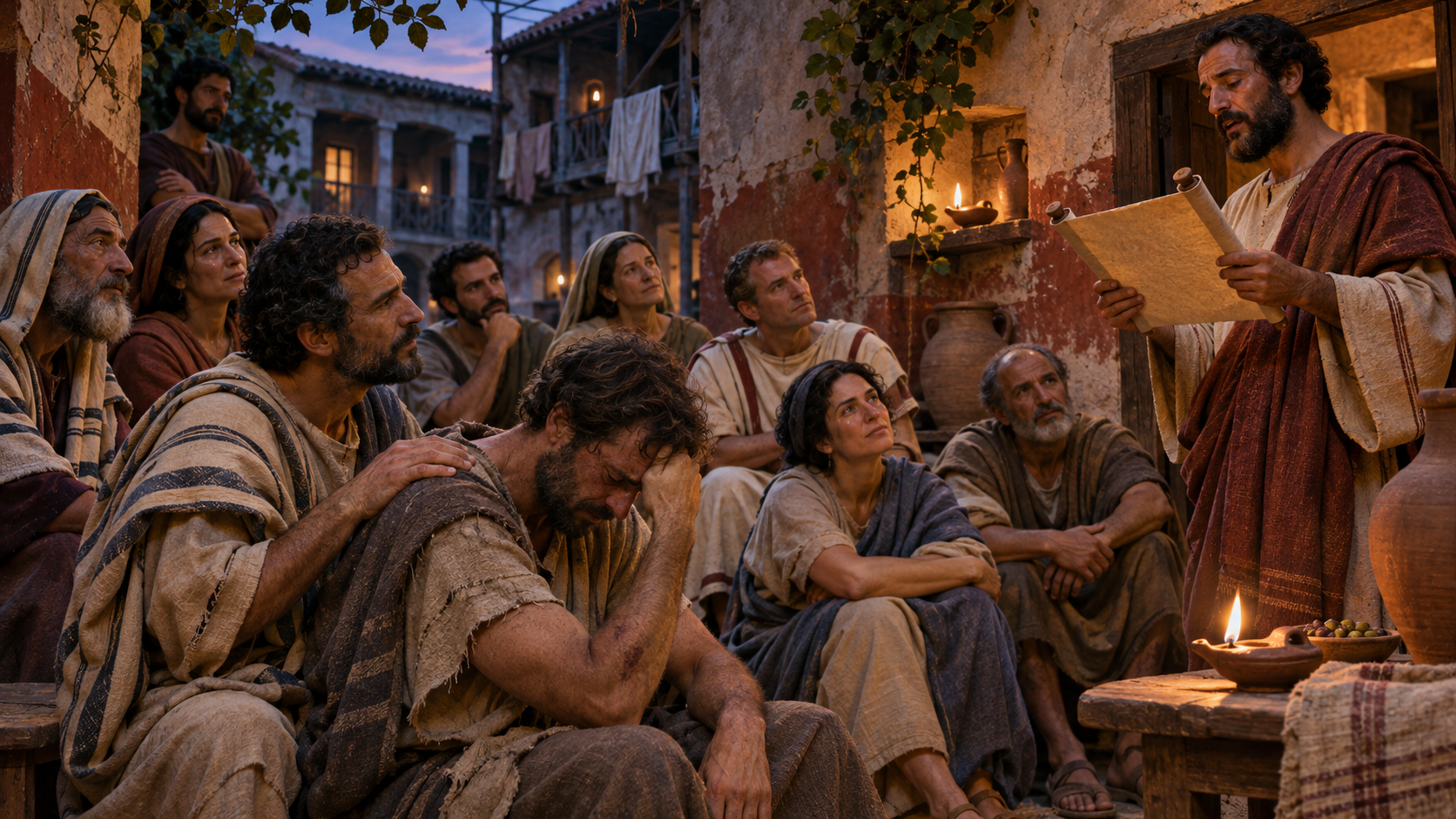
Some losses refuse to be explained on a clean timetable. A diagnosis changes the room, work disappears, a relationship breaks, or a prayer remains unanswered long after a man has run out of confident words. Romans 8:28 does not ask us to call those wounds good. Paul points instead to the God who is still at work inside a story we cannot yet read. His purpose reaches beyond immediate relief toward making His people like Christ. That promise gives a man room to grieve honestly, keep obeying the next faithful step, and trust that suffering will not have the final word over a life held by God.
Scripture Explained
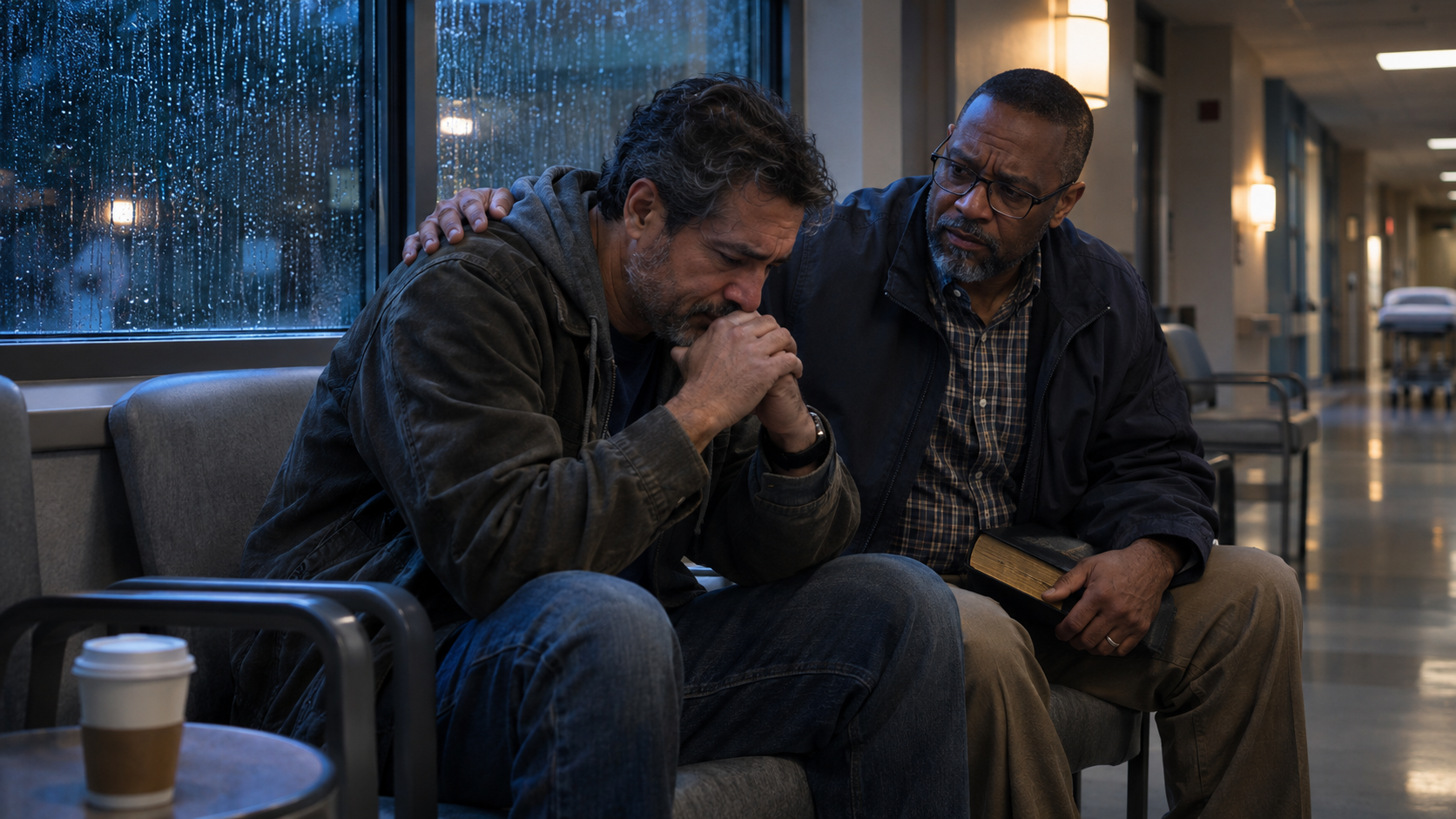
A man may reach the end of a hospital corridor, a hard meeting, or a sleepless night with no way to make the pieces fit. Romans 8:28 is sometimes offered as though it explains the pain or promises a quick reversal. Paul makes a steadier claim. He does not say every event is good; he says God remains at work in all things, including circumstances His people would never have chosen.
The surrounding chapter keeps the promise honest. Romans 8 speaks of present sufferings, a creation groaning under decay, believers groaning as they wait, and prayers too burdened for words. The Spirit meets Christians in that weakness and intercedes according to God’s will. Verse 28 therefore belongs in the room with grief, not outside it. Confidence in God does not silence lament; it keeps lament from becoming the whole story.
Paul also defines the promised good in the next sentence: God is shaping His people into the likeness of His Son. That good can include rescue, provision, restored relationships, or changed circumstances, but the text does not guarantee any of them on our preferred schedule. Its center is Christlike character and final salvation. The promise belongs to those who love God and are called according to His purpose, not to a vague optimism that every plan will eventually succeed.
Romans was written to believers in the imperial capital and is commonly dated to the mid-to-late 50s, although the letter does not identify every circumstance its first readers faced. Jewish and Gentile Christians were learning to live as one people under the lordship of Christ. Paul grounds their security in God’s saving action—from calling and justification toward glorification—not in Rome’s stability or their control. Their future rests with the God who has already acted for them in Christ.
Think About This
Men often feel pressure to fix what hurts or at least explain it. When neither is possible, we may reach for a religious sentence that closes the conversation too soon. Romans 8:28 should never be used to hurry a grieving man past tears or to defend the evil done to him. A wiser question is harder: can I trust God’s character while admitting that I do not yet understand what He is doing?
That question also reaches our regrets. God can redeem consequences without approving the choices that produced them. His providence does not remove responsibility to repent, repair harm, seek counsel, or accept a difficult result. It means failure need not become the final definition of a repentant man’s life. Grace can form honesty, patience, courage, and dependence on Christ in places where self-confidence has finally run out.
What Should I Do
Name the hard thing plainly before God. Describe what happened, what you fear, and what remains unknown instead of polishing your prayer. Then ask for the next faithful step rather than a complete map. It may be calling the doctor, telling the truth at work, apologizing at home, meeting with a counselor, or asking a brother to sit with you. Obedience today is not denial; it is trust practiced within the limits of today.
Anchor your interpretation of life in God’s revealed character, not in the latest outcome. Return to Romans 8:18–39 and notice how suffering, the Spirit’s help, God’s purpose, and inseparable love belong together. Keep a simple record of what is true, what is still unknown, and where grace is producing endurance. That practice will not make pain small, but it can keep fear from writing conclusions Scripture has not given you.
Offer the same patient faith to another man. Show up without explaining his loss, bring a meal, cover a practical task, listen longer than feels efficient, and pray without promising a result God has not promised. If he needs professional, medical, or pastoral care, help him reach it. Christian brotherhood becomes credible when we carry one another through uncertainty and refuse to use sound doctrine as a way to remain emotionally distant.
Learn More
Read Genesis 50:20 alongside Romans 8 and notice the difference between human evil and God’s redemptive purpose. Romans 5:3–5 and James 1:2–4 describe endurance being formed through trials, while 2 Corinthians 4:16–18 sets present affliction beside eternal glory. Finish with Romans 8:31–39, where Paul’s confidence rests not in an easy life but in a love from which suffering cannot separate those who belong to Christ.
Jerry Bridges’s Trusting God examines God’s sovereignty, wisdom, and love without pretending adversity is painless. Over the next seven days, read Romans 8:18–39 slowly and write three headings: what is true, what is unknown, and the next faithful step. Share the page with a trusted Christian man and ask him to pray with you. God may not explain the whole road, but He has not abandoned His purpose or the man He is forming along it.



A Prayer to Trust God When I Cannot See the Good
Father, I bring You the part of my life I cannot make sense of. I do not want to call pain good or hide behind easy answers, but I choose to believe that You are still at work. Hold me steady when fear, grief, or disappointment narrows my view, and shape me into the likeness of Christ through what I would never have chosen.
Give me grace for the next faithful step and humility to receive help from others. Keep me from bitterness, false promises, and the need to explain everything before I obey. Let Your Spirit meet me in my weakness, and make my life a quiet witness that Your purpose is stronger than suffering. Amen.
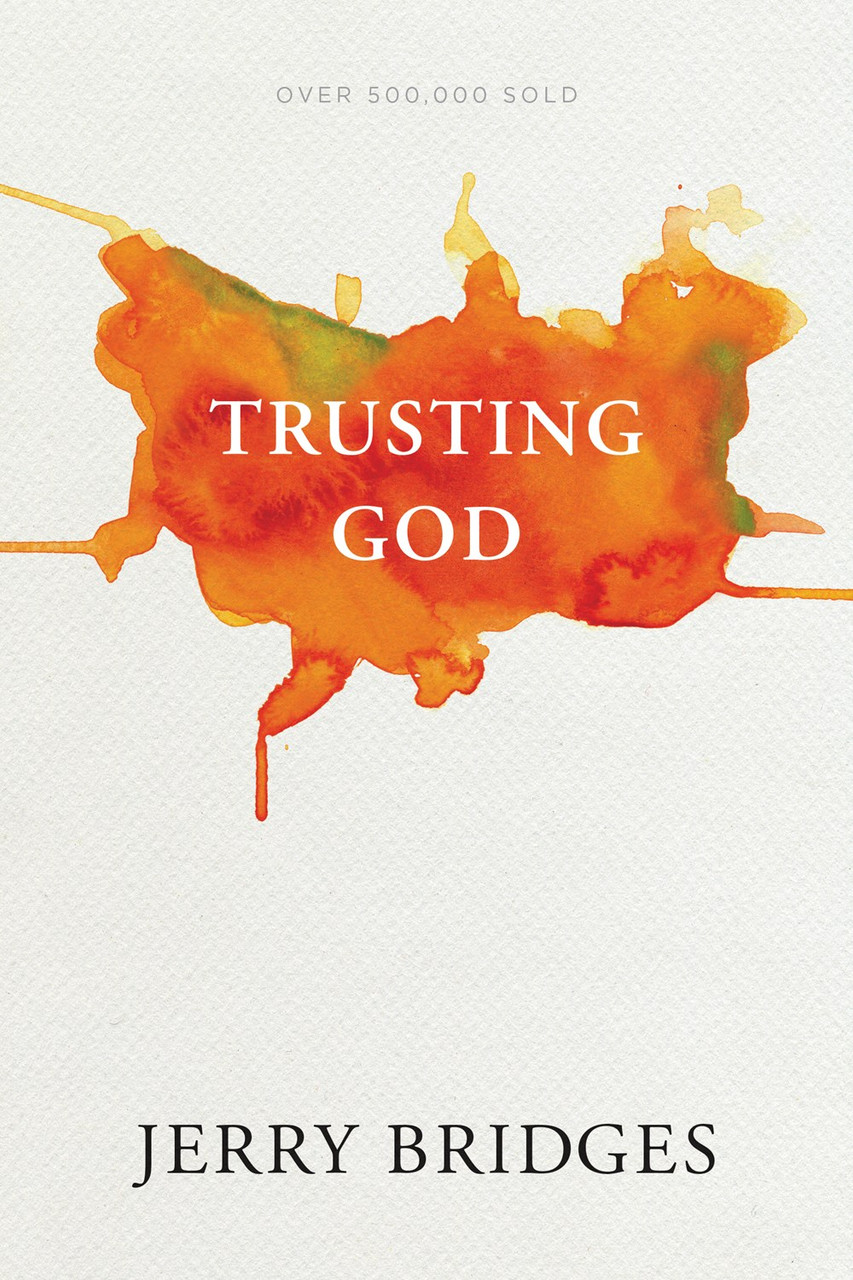
Trusting God — Jerry Bridges (Reprint Softcover with Study Guide, NavPress, 2017)
Jerry Bridges faces the questions men ask when suffering makes no sense: Is God in control, can He be trusted, and what faithful responsibility remains when circumstances hurt? His careful treatment of God’s sovereignty, wisdom, and love makes this edition a direct companion to Romans 8:28, helping readers trust God without pretending that painful events are good or easy.
1631467921

Copyright Notice
Copyright © 2026 Men Building Faith. All rights reserved.
All content on this website, including text, articles, devotionals, blog posts, graphics, logos, designs, photographs, videos, downloads, and other original materials (collectively, “Content”), is owned by Men Building Faith and is protected by U.S. and international copyright laws.
No part of this site may be copied, reproduced, republished, uploaded, posted, publicly displayed, transmitted, distributed, sold, licensed, or otherwise exploited for any purpose without prior written permission from Men Building Faith, except for brief quotations used for noncommercial purposes with proper attribution and a link back to the original page.
NLT- Scripture quotations marked (NLT) are taken from the Holy Bible, New Living Translation, copyright ©1996, 2004, 2015 by Tyndale House Foundation. Used by permission of Tyndale House Publishers, Carol Stream, Illinois 60188. All rights reserved.
NIV- Scripture quotations taken from The Holy Bible, New International Version® NIV® Copyright © 1973, 1978, 1984, 2011 by Biblica, Inc. Used with permission. All rights reserved worldwide.
AMP- Scripture quotations taken from the Amplified® Bible (AMP), Copyright © 2015 by The Lockman Foundation. Used by permission
NKJV- Scripture taken from the New King James Version®. Copyright © 1982 by Thomas Nelson. Used by permission. All rights reserved
ESV- Scripture quotations are from the ESV® Bible (The Holy Bible, English Standard Version®), copyright © 2001 by Crossway Bibles, a publishing ministry of Good News Publishers. Used by permission. All rights reserved.