
Responsible, Observed, Honest, Steady, Teachable, Faithful, Mentoring, Integrity, Serving, Leading
Titus 2:7 NIV
In everything set them an example by doing what is good. In your teaching show integrity, seriousness
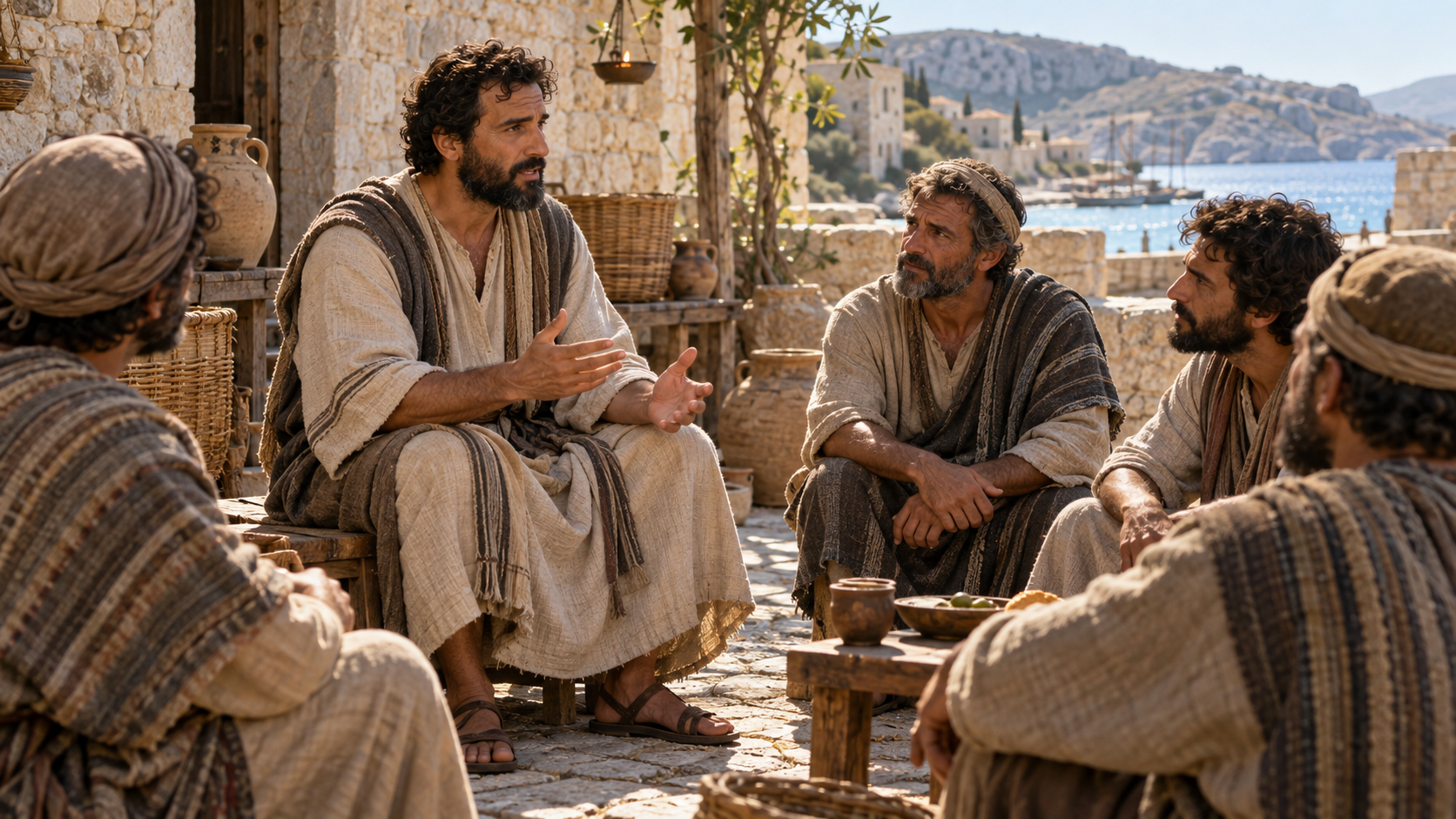
A man’s words carry weight when his daily conduct supports them. Paul told Titus to teach younger men while giving them a living example of goodness, integrity, and seriousness. The same pressure reaches your home, workplace, church, and private decisions. People notice whether you keep promises, admit mistakes, and practice the standards you expect from others. Today’s lesson looks at the difference between protecting a good image and building a credible life. It will help you identify one gap, repair it honestly, and lead from conduct others are safe to follow.
Scripture Explained
Most men know the tension of being watched. A son notices whether his father keeps a promise. A crew notices whether the boss admits an error. A church hears a man speak about truth and watches how he handles money, anger, and inconvenience. Paul addresses the gap between instruction and conduct. Titus was to teach, but his life also had to give the teaching a believable shape.
Paul had left Titus in Crete to strengthen young churches and appoint qualified elders. The letter does not give a date or account of every problem Titus faced, so we should avoid pretending to know more than the text says. It does show communities needing sound teaching and orderly leadership. In chapter 2, Paul speaks to older men, older women, younger women, younger men, and bondservants. Faith had to reach ordinary relationships.
Titus 2:7 follows the instruction for younger men to be self-controlled. Paul then turns to Titus. He is not told to demand from others what he refuses to practice. Doing good means a pattern of conduct, not one impressive moment. Integrity in teaching means the message is handled honestly and carried seriously. A leader’s choices either support his words or give people a reason to dismiss them.
The command does not teach salvation by good behavior. Paul grounds Christian change in the grace of God that brings salvation and trains believers to reject ungodliness. Good works are the fruit of grace, not payment for it. Christ redeems a people who are eager to do good. Titus therefore represents more than moral effort. His example should show what grace produces when it reaches a man’s habits, speech, and responsibilities.
Think About This
Your influence is often strongest where you feel least impressive. People remember whether you arrived when you said you would, finished work you agreed to complete, returned money that was not yours, and spoke respectfully when frustrated. Those moments rarely feel spiritual, yet they reveal what governs you. If your public convictions disappear under private pressure, the problem is deeper than reputation. The men closest to you are learning what you truly believe.
Being an example does not require pretending to be flawless. Titus needed integrity, not an image of perfection. A credible man admits sin without excuses, corrects false words, and repairs damage while there is still time. Concealment makes failure heavier because it adds deception to the original wrong. Honest repentance gives younger men, children, coworkers, and fellow believers a truthful picture of Christian maturity: grace received, responsibility owned, and obedience resumed.
What Should I Do
Choose one place where your words have moved ahead of your conduct. It might involve punctuality, spending, sexual purity, patience at home, quality at work, or a promise you keep postponing. Name the gap plainly before God. Resist the urge to explain why it happened before you have admitted what happened. Clarity is the first step toward a life in which belief and behavior agree.
Make one repair today. If you owe an apology, give it without attaching blame to the other person. If your work fell short, correct it before someone forces the issue. If you made a commitment, schedule the action and follow through. Integrity becomes visible when truth costs time, money, comfort, or pride. The cost does not purchase forgiveness. It shows that repentance has reached the decision you once avoided.
Let your teaching begin with practice. Before you correct a son, employee, or brother, ask whether your conduct gives him a fair picture of the standard. You do not need identical circumstances, but you do need the same honesty. Explain what obedience requires, then let him see you live under that authority too. Men receive correction differently when the man speaking is clearly accountable to the same Lord.
Invite one trusted Christian man to examine an area you tend to protect. Give him enough detail to ask useful questions, and answer without managing the impression you make. Keep the relationship practical. Review the commitment, the pressure points, and the next faithful action. Accountability works best when it helps you tell the truth early, before a private compromise hardens into a pattern that damages other people.
Learn More
Read Titus 2 as a complete argument. Verses 1 through 10 connect sound teaching with conduct across age, family, work, and church life. Verses 11 through 14 explain the source of that change: saving grace trains God’s people to live upright lives while they wait for Christ. Verse 15 then returns Titus to his teaching responsibility. The chapter holds doctrine, character, grace, and leadership together instead of allowing any one of them to stand alone.
Compare this instruction with 1 Timothy 4:12, where Timothy is told to set an example in speech, conduct, love, faith, and purity. Read Matthew 5:16 alongside it, remembering that good works should direct attention to the Father rather than build a personal brand. Then consider James 3:1, which warns that teachers face stricter judgment. Carry one question into the week: where does my life make the truth easier to believe, and where does it place an obstacle in the way?


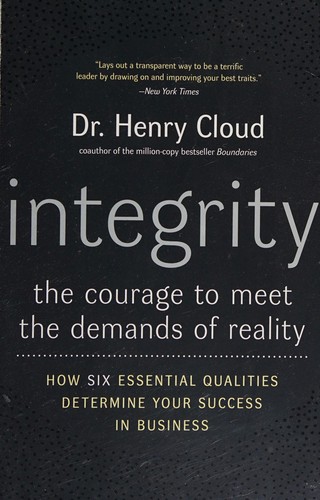
Integrity: The Courage to Meet the Demands of Reality by Henry Cloud
006084969X
Henry Cloud examines six qualities that shape trustworthy character, including facing reality, building trust, finishing well, and living beyond self-interest. His practical study fits Titus 2:7 because it presses integrity beyond public words into the choices people see at work, at home, and under pressure.
A Prayer to Become a Trustworthy Example
Living with integrity where your faith is seen most clearly
Father, make my life agree with the truth I speak. Show me where excuses, hidden compromise, or pride have weakened my example, and give me honesty to confess what needs to change.
Teach me to do good when no one applauds, to handle your Word with integrity, and to lead my family, coworkers, and brothers with steady humility. Help me repair what I have damaged and live today in a way others are safe to follow. Amen.




Copyright Notice
Copyright © 2026 Men Building Faith. All rights reserved.
All content on this website, including text, articles, devotionals, blog posts, graphics, logos, designs, photographs, videos, downloads, and other original materials (collectively, “Content”), is owned by Men Building Faith and is protected by U.S. and international copyright laws.
No part of this site may be copied, reproduced, republished, uploaded, posted, publicly displayed, transmitted, distributed, sold, licensed, or otherwise exploited for any purpose without prior written permission from Men Building Faith, except for brief quotations used for noncommercial purposes with proper attribution and a link back to the original page.
NLT- Scripture quotations marked (NLT) are taken from the Holy Bible, New Living Translation, copyright ©1996, 2004, 2015 by Tyndale House Foundation. Used by permission of Tyndale House Publishers, Carol Stream, Illinois 60188. All rights reserved.
NIV- Scripture quotations taken from The Holy Bible, New International Version® NIV® Copyright © 1973, 1978, 1984, 2011 by Biblica, Inc. Used with permission. All rights reserved worldwide.
AMP- Scripture quotations taken from the Amplified® Bible (AMP), Copyright © 2015 by The Lockman Foundation. Used by permission
NKJV- Scripture taken from the New King James Version®. Copyright © 1982 by Thomas Nelson. Used by permission. All rights reserved
ESV- Scripture quotations are from the ESV® Bible (The Holy Bible, English Standard Version®), copyright © 2001 by Crossway Bibles, a publishing ministry of Good News Publishers. Used by permission. All rights reserved.