
Tired, Numb, Curious, Skeptical, Hungry, Weary, Hopeful, Searching, Disciplined, Stretched
Romans 15:4 ESV
For whatever was written in former days was written for our instruction, that through endurance and through the encouragement of the Scriptures we might have hope.

A lot of men wonder if the Bible truly can meet them right where they are. They are confronted with old stories, strange names, and distant cultures. They are trying to function in a world full of emails, bills, social media, and constant stress. Paul doesn't consider the Bible to be background noise. He says it was written for a reason that is still going on today. These words say that the pages in front of you are meant to teach you, help you get through hard times, and give you real hope on days when you feel heavy or numb. This verse is for the man who opens his Bible when he's worn out, doubtful, or not paying attention. It reminds him that God wants to do real work in him through what he reads.
Scripture Explained
Paul's letter to the Romans is a long, detailed explanation of the gospel. He wrote it for believers in Rome who were both Jews and Gentiles who were dealing with tension, suffering, and questions about how to get along. In chapter 15, he tells the "strong" to put the needs of the "weak" ahead of their own wants and to follow Christ's example of self-denial. He quotes the Old Testament about Christ bearing insults in verse 4, and then he broadens the scope to say that "whatever was written in former days" was written with people like you in mind.
The reasoning is clear and strong. What was written then was meant to teach us so that we could have hope through endurance and the encouragement of the Scriptures. The Bible isn't just a book of facts; it's God's way of building endurance and giving hope. God wants you to see how He deals with His people throughout history so that you can learn to trust Him and stick with your own story. He is not far away from your long week; He speaks to you through the same words He gave many long ago.
Think About This
Alarm, shower, coffee, commute, work, errands, home, screen, bed. Somewhere in that loop sits a Bible on a shelf or a glowing app icon on his phone. Some days he taps it, reads a few verses, and feels nothing move. Other days he skips it entirely, telling himself he already knows the basic stories and does not have the mental space for more words. The pressure he feels in his body and mind seems more concrete than the ink on thin pages.

One week, the weight gets heavier. A deal falls through, a kid starts to drift, a doctor calls back with news that unsettles everything. He opens his Bible almost by habit and lands in a story where God carries people through disappointment, silence, or threat. He sees that they waited longer than he has, that they failed and were restored, that God stayed faithful when they could not see what He was doing. The circumstances are different, but the patterns line up. Without fireworks or emotion, something solid rises in him: if God carried them, He can carry me. That is Romans 15:4 in real time.
What Should I Do
You can start by changing how you see Scripture in your day. Ask God to shift your mindset from “optional religious content” to “training ground for endurance and source of encouragement.” Build a simple, consistent reading pattern that fits your real life: a chapter in the morning, a psalm at lunch, or a gospel scene at night. Do not chase novelty; let the same truths work on you again and again.
When you read, look specifically for two things this verse highlights: endurance and encouragement. Ask, “What did this person or group have to endure, and how did God meet them?” and “What about God here is meant to encourage me right now?” Write down even one line you can carry into your day. This turns reading from checking a box into linking your story to God’s track record. Over weeks and months, that habit builds hope that is not built on circumstances.
You also need to let Scripture speak into places you would rather numb out. When you feel the urge to escape into endless scrolling, constant entertainment, or unhealthy habits, choose instead to pause with God’s Word, even briefly. Tell Him honestly, “I do not feel like reading, but I need what You say this will give me: endurance, encouragement, hope.” Over time, those choices will rewire where you go for strength when life squeezes you.
Learn More
Romans 15 ties this verse to real community: bearing with the weak, refusing self‑pleasing, and living in harmony like Christ. The verses that follow ask the “God of endurance and encouragement” to give believers unity and hope together. Sitting in the whole chapter will show you how Scripture is meant not just to prop up your private life, but to shape a shared life of perseverance, encouragement, and hope among brothers.
For Leaders:
This Scripture trains how you lead under pressure
Paul says everything “written in former days” was written for our instruction. That means the way God dealt with leaders in Scripture is meant to shape how you handle authority, conflict, and risk now.
You see men like Moses, David, Nehemiah, and Paul leading with courage and also failing, repenting, and adjusting.
Their stories become case studies. You learn what happens when a leader prays before acting, when he listens to counsel, when he ignores warning, or when he leads from fear or pride.
Leadership challenges today look different on the surface, but the core issues are the same: trust, obedience, humility, courage, and endurance. Scripture is meant to train those muscles in you.
Scripture builds endurance when leadership gets long and lonely
Paul connects Scripture to “endurance.” Leadership for a man often means carrying weight others do not see, absorbing pressure, and staying steady when outcomes are slow.
Through the Word, you watch:
People wait years for promises to unfold.
Leaders walk through opposition, misunderstanding, and dry seasons.
God remain faithful when circumstances scream the opposite.
That history is not trivia. It builds your tolerance for long obedience. When business is tight, your kid is wandering, or your ministry feels stalled, those accounts keep you from quitting or cutting corners. You are reminded that you are not the first man to lead through fog.
Scripture gives encouragement when leadership exposes your weakness
Romans 15:4 says Scripture gives “encouragement.” That matters because leadership constantly reveals where you are not enough: limited wisdom, limited energy, limited control.
In Scripture you see:
God use imperfect leaders who know they need Him.
Grace extended after failure, not just before.
Promises that God will never leave, will give wisdom, and will complete His work.
That encouragement does not flatter you. It strengthens you to keep leading when you feel exposed, because your hope is not in your flawless performance, but in God’s steady character.
Scripture anchors your hope beyond results
Paul’s line ends “that we might have hope.” Leadership challenges can erode hope: plans shift, people disappoint you, and outcomes do not match effort.
Scripture re‑anchors hope in:
Who God is, not just how the quarter went.
His larger story, not just your current role.
His promises to build His church, sustain His people, and reward quiet faithfulness.
For a man leading at home, at work, or in church, that kind of hope keeps you from turning cynical or hard when things do not move as fast as you want.
Concrete ways to live this as a leader
You can bring Romans 15:4 straight into your leadership by:
Building a non‑negotiable rhythm in the Word, not just for personal comfort but as leadership training.
Reading narratives of biblical leaders and asking, “What would it look like to respond this way in my team, my business, or my home?”
Letting Scripture define success: faithfulness, endurance, obedience, and love, not just numbers or applause.
Using Scripture in conversations with those you lead, so their hope is tied to God’s Word, not to your personality.
In short, Romans 15:4 says your leadership challenges are not supposed to be carried with bare willpower. God intends His Word to instruct you, toughen you, encourage you, and anchor your hope while you lead.



Holding On When You’re Tired
Heavenly Father, I see how often I treat Your Word as background noise instead of the place You promised to train my endurance and give me encouragement. I confess that I run to distraction and comfort before I run to Scripture, then wonder why my hope feels thin when life presses in. You say what was written long ago was meant to instruct me and build hope, so teach me to open my Bible hungry, to listen carefully, and to let You strengthen me through what You’ve already spoken. In Jesus’ name, Amen.
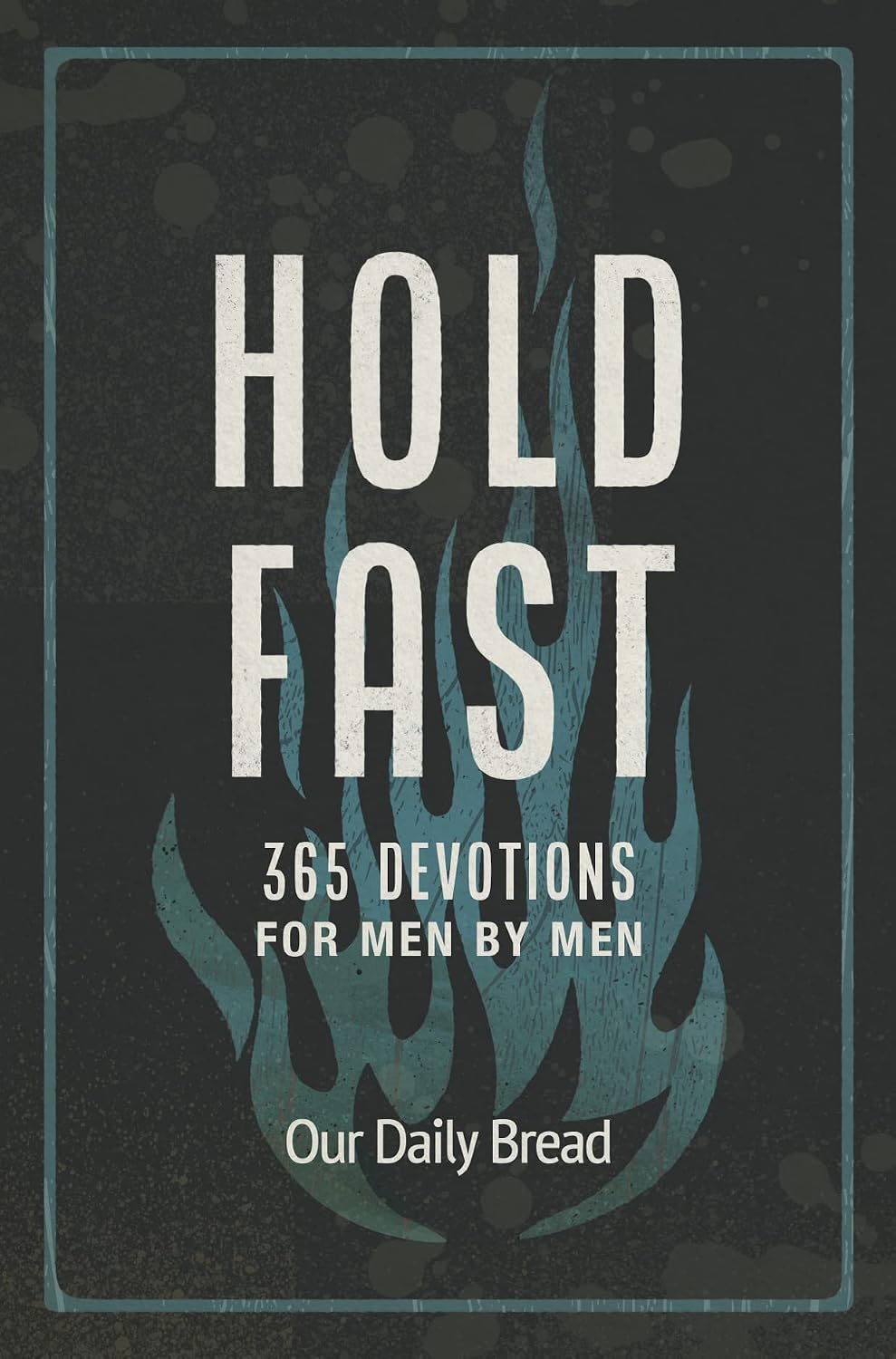
Hold Fast: 365 Devotions for Men by Men
This yearlong devotional helps men remain faithful through difficult seasons. Each reading brings Scripture into the real pressures men carry at home, at work, and within themselves. It helps men hold onto hope and endurance by returning to the truth and encouragement found in Scripture.
1640702296

Copyright Notice
Copyright © 2026 Men Building Faith. All rights reserved.
All content on this website, including text, articles, devotionals, blog posts, graphics, logos, designs, photographs, videos, downloads, and other original materials (collectively, “Content”), is owned by Men Building Faith and is protected by U.S. and international copyright laws.
No part of this site may be copied, reproduced, republished, uploaded, posted, publicly displayed, transmitted, distributed, sold, licensed, or otherwise exploited for any purpose without prior written permission from Men Building Faith, except for brief quotations used for noncommercial purposes with proper attribution and a link back to the original page.
NLT- Scripture quotations marked (NLT) are taken from the Holy Bible, New Living Translation, copyright ©1996, 2004, 2015 by Tyndale House Foundation. Used by permission of Tyndale House Publishers, Carol Stream, Illinois 60188. All rights reserved.
NIV- Scripture quotations taken from The Holy Bible, New International Version® NIV® Copyright © 1973, 1978, 1984, 2011 by Biblica, Inc. Used with permission. All rights reserved worldwide.
AMP- Scripture quotations taken from the Amplified® Bible (AMP), Copyright © 2015 by The Lockman Foundation. Used by permission
NKJV- Scripture taken from the New King James Version®. Copyright © 1982 by Thomas Nelson. Used by permission. All rights reserved
ESV- Scripture quotations are from the ESV® Bible (The Holy Bible, English Standard Version®), copyright © 2001 by Crossway Bibles, a publishing ministry of Good News Publishers. Used by permission. All rights reserved.